
 |
|
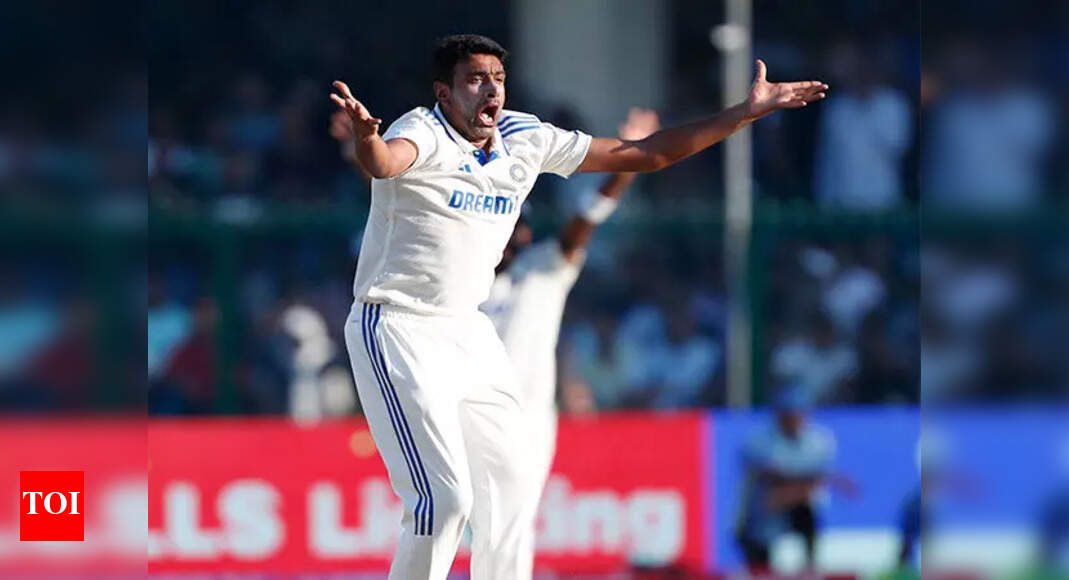
Ravichandran Ashwin's story is a compelling narrative of how academic excellence and sporting prowess can coexist and complement each other. It’s a tale of unwavering dedication, strategic innovation, and the sheer will to overcome obstacles. From the bustling streets of Chennai to the hallowed grounds of international cricket stadiums, Ashwin's journey reflects the harmonious blend of intellect and passion, providing valuable lessons for aspiring athletes and students alike. His recent announcement of retirement from the Indian Premier League (IPL) marks the end of an era, prompting reflection on the remarkable career he built, all while maintaining a strong academic foundation. Ashwin's story begins in Madras (now Chennai), where he was born on September 17, 1986. Cricket was deeply ingrained in his family, with his father, Ravichandran, being a medium-pace bowler at the club level. This early exposure to the sport ignited Ashwin’s passion, but unlike many of his peers who solely focused on sports, Ashwin managed to balance his cricketing ambitions with his academic pursuits. He attended Padma Seshadri Bala Bhavan and later St. Bede’s Anglo-Indian Higher Secondary School, initially showcasing his talents as an opening batter. However, at the age of 18, a pivotal decision reshaped his career trajectory – he shifted his focus to off-spin bowling. This decision would ultimately define his future and set him on the path to becoming one of India’s most celebrated all-rounders. Alongside his burgeoning cricket career, Ashwin pursued higher education at the Sri Sivasubramaniya Nadar College of Engineering in Chennai. He successfully graduated in 2008 with a bachelor’s degree in Information Technology. This achievement is a testament to his discipline and time management skills, demonstrating that excellence in academics and sports can indeed coexist. Ashwin’s success serves as an inspiration to students, proving that it is possible to excel in both fields with proper focus and planning. His professional cricket career took off in 2006 when he made his debut for Tamil Nadu in the Ranji Trophy. In his first-class match against Haryana, he showcased his talent by claiming six wickets, marking a promising start to his domestic career. By February 2007, he had made his List A debut, followed by a Twenty20 debut two months later. His leadership qualities soon became apparent, as he captained Tamil Nadu to the Vijay Hazare Trophy title in 2008–09 and again led them to the semifinals in 2015–16. These early successes laid the foundation for his future achievements and solidified his reputation as a talented and versatile cricketer.
Ashwin's rise in the Indian Premier League (IPL) was a gradual but spectacular journey. He was picked by the Chennai Super Kings (CSK) in 2008, but his initial appearances were sporadic. However, in 2010, he had a breakthrough season, taking 13 wickets and playing a crucial role in CSK’s triumph in clinching their first IPL trophy. His ability to bowl with precision in powerplay overs and at the death, combined with his innovative “carrom ball,” made him one of the most feared spinners in the tournament. The carrom ball, a leg-break disguised as an offbreak, was an improvisation of the soduku ball he perfected while playing street cricket in Chennai. This innovation is a testament to how creativity nurtured in small spaces can lead to global acclaim. Ashwin's ability to adapt and innovate his bowling style set him apart from his peers, making him a valuable asset to any team he played for. Over the years, Ashwin played for multiple IPL franchises, including Rising Pune Supergiant, Punjab Kings (as captain), Delhi Capitals, and Rajasthan Royals. His contributions to each team were significant, and he consistently showcased his skills as a world-class spinner. Today, he ranks among the top 10 wicket-takers in IPL history, a testament to his longevity and sustained excellence in the league. His journey in international cricket began in June 2010 when he made his One Day International (ODI) debut against Sri Lanka. In that match, he took two wickets and scored a quick 38 runs, demonstrating his all-round capabilities. Later that year, he debuted in Twenty20 Internationals (T20Is) and was part of the Indian squad that won the 2010 Asia Cup. He also featured in India’s 2011 ODI World Cup-winning team, playing two matches, and later in the 2013 ICC Champions Trophy-winning squad. While his role in these tournaments was limited, it provided him with valuable experience and exposure on the international stage. Ashwin's Test debut in November 2011 against the West Indies was a defining moment in his career. He took nine wickets, including six in an innings, and scored a century in the series, immediately cementing his reputation as a world-class all-rounder. His ability to contribute with both bat and ball made him an invaluable asset to the Indian team and a force to be reckoned with in Test cricket.
Over the next decade, Ashwin continued to break records and achieve milestones at an astonishing pace. He became the fastest Indian to reach 50 Test wickets, collected multiple Player of the Series awards (equaling Muttiah Muralitharan’s record of 11), and surpassed milestones of 250, 300, 350, 400, 450, and 500 Test wickets. His mastery of spin bowling and his ability to read the game made him a formidable opponent for batsmen around the world. By the time he announced his retirement from international cricket in December 2024, Ashwin had claimed 537 Test wickets in 106 matches and scored 3,503 runs, including six centuries. He is one of only three players in history to have taken over 500 Test wickets while also scoring more than 3,000 runs, a record shared with Shane Warne and Stuart Broad. This achievement highlights his exceptional all-round abilities and his contribution to the sport. Ashwin's dominance against left-handed batters is another remarkable aspect of his career. He has dismissed 268 left-handed batters in Tests, showcasing his strategic planning and execution against specific types of batsmen. Additionally, his rare feat of scoring a century while taking five wickets in the same Test match underscores his all-round brilliance and his ability to perform under pressure. Ashwin's story is more than just statistics and accolades; it is a testament to the balance of education and passion. Graduating with an IT degree while chasing cricketing excellence, he demonstrates that academic grounding can coexist with sporting ambition. This balance has undoubtedly contributed to his success, providing him with a unique perspective and analytical skills that he has applied to his game. Students and aspiring athletes can take away several key lessons from his journey. Firstly, discipline in dual pursuits is crucial. Excelling in both studies and sport is possible with focus and planning. Ashwin's ability to manage his time effectively and prioritize his commitments allowed him to succeed in both fields. Secondly, innovation in practice is essential. From the streets of Chennai to global stadiums, creativity and hard work can set you apart. Ashwin's development of the carrom ball is a prime example of how innovation can lead to success. Thirdly, persistence through setbacks is vital. Injuries, team changes, and form slumps didn’t stop Ashwin from breaking records. His resilience and determination allowed him to overcome challenges and achieve his goals. From a bright-eyed IT graduate to one of India’s most prolific spinners, Ravichandran Ashwin’s journey is a masterclass in balancing intellect and passion. His story reminds aspiring cricketers and students alike that education and sports can go hand in hand, and that discipline, curiosity, and relentless hard work can turn dreams into records. As he steps away from the IPL, Ashwin leaves behind more than wickets and centuries; he leaves a blueprint for how talent, determination, and knowledge can combine to build a truly legendary career. His legacy will continue to inspire generations of cricketers and students to pursue their dreams with passion and dedication.