
 |
|
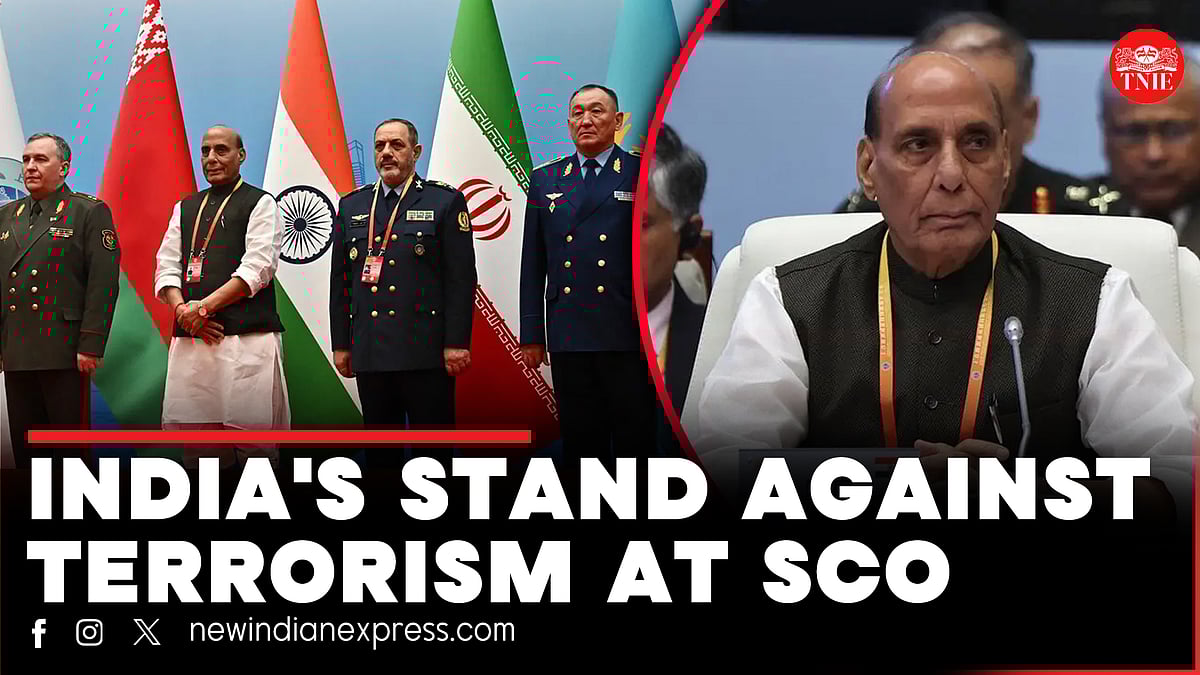
The recent decision by India to abstain from signing the Joint Declaration at the Shanghai Cooperation Organisation (SCO) Summit, following the Defence Ministers’ Meeting in Qingdao, China, underscores the complexities and challenges inherent in international collaborations, particularly when dealing with sensitive issues like terrorism. This move, reportedly a protest against the perceived dilution of India's stance on terrorism, highlights the divergent perspectives and priorities among SCO member states. The SCO, established in 2001, aims to promote regional security, economic cooperation, and cultural exchange among its members, which include China, Russia, India, Pakistan, Kazakhstan, Kyrgyzstan, Tajikistan, and Uzbekistan. While the organization provides a platform for dialogue and cooperation on various fronts, disagreements and differing interpretations of critical issues can hinder consensus and collective action. India's decision to stand apart from the Joint Declaration reflects its commitment to its own definition and understanding of terrorism, a stance that it seemingly found incompatible with the consensus reached among other member states. This incident serves as a reminder that achieving true multilateral cooperation requires not only shared goals but also a willingness to address fundamental differences in perspectives and approaches. The implications of India's decision are far-reaching. Firstly, it casts a spotlight on the diverse security concerns and threat perceptions among SCO members. While all member states recognize the threat of terrorism, their definitions, priorities, and approaches to combating it may vary significantly. This divergence can stem from historical experiences, geopolitical considerations, and domestic political factors. For instance, India has long been a victim of cross-border terrorism, particularly emanating from Pakistan, and has consistently advocated for a strong and unequivocal condemnation of all forms of terrorism, without any distinction or justification. Other member states, however, may have different threat assessments and priorities, leading to a more nuanced or diluted approach to the issue. Secondly, India's decision may have implications for the future direction and effectiveness of the SCO. While the organization has made progress in promoting regional cooperation on various fronts, its ability to address complex security challenges like terrorism depends on the willingness of member states to overcome their differences and forge a common approach. India's decision serves as a wake-up call, highlighting the need for greater dialogue, understanding, and compromise among member states to ensure the SCO's continued relevance and effectiveness. Thirdly, this incident may have broader geopolitical implications. India's decision to stand apart from the Joint Declaration could be interpreted as a signal of its growing assertiveness and independence in foreign policy. While India remains committed to multilateralism and regional cooperation, it is also increasingly willing to pursue its own national interests and values, even if it means diverging from the consensus of other international organizations. This trend reflects India's growing economic and strategic weight in the world, as well as its increasing confidence in its ability to shape the international order. The specific details of the diluted stand on terrorism remain unclear from the article, but one can infer that India was not satisfied with the language used or the actions proposed in the declaration. The Indian government likely felt that the declaration did not adequately address its concerns about cross-border terrorism, or that it was too lenient in its condemnation of certain terrorist groups or activities. It is also possible that India disagreed with the proposed mechanisms for combating terrorism, or that it felt that the declaration did not adequately address the root causes of terrorism. Whatever the specific reasons, it is clear that India felt strongly enough about the issue to take the unusual step of abstaining from the Joint Declaration, even at the risk of causing friction within the SCO. This action underscores the importance that India places on the issue of terrorism, and its willingness to stand up for its principles, even in the face of international pressure. It also highlights the challenges of achieving consensus on sensitive issues within multilateral organizations, particularly when member states have divergent interests and priorities. The incident at the SCO Summit serves as a reminder that effective international cooperation requires not only shared goals, but also a willingness to engage in frank and open dialogue, to address fundamental differences in perspectives and approaches, and to find common ground that respects the interests and values of all member states. Only through such efforts can multilateral organizations like the SCO truly contribute to regional peace, security, and prosperity.
The implications of India's protest extend beyond the immediate context of the SCO summit. It raises broader questions about the effectiveness of multilateral organizations in addressing complex global challenges. The SCO, like many other international bodies, faces the challenge of balancing the diverse interests and priorities of its member states while striving to achieve common goals. This often requires compromise and a willingness to accommodate different perspectives, but it can also lead to watered-down resolutions and declarations that fail to adequately address the underlying issues. India's decision to abstain from the Joint Declaration highlights the tension between the need for consensus and the desire for meaningful action. It underscores the importance of ensuring that multilateral organizations are not simply platforms for empty rhetoric, but rather forums for genuine cooperation and effective problem-solving. In order for the SCO to remain relevant and effective, it must find ways to bridge the gap between the diverse interests and priorities of its member states. This requires a commitment to open dialogue, mutual understanding, and a willingness to address fundamental differences in perspectives and approaches. It also requires a recognition that true multilateralism is not about simply agreeing to the lowest common denominator, but rather about finding innovative solutions that address the concerns of all member states. Furthermore, India's protest serves as a reminder of the importance of national sovereignty and the right of each state to determine its own foreign policy. While multilateral organizations can play a valuable role in promoting cooperation and addressing global challenges, they should not be used to undermine the sovereignty of individual states or to impose external pressures on their decision-making processes. India's decision to stand apart from the Joint Declaration was a clear assertion of its right to pursue its own national interests and values, even when they diverge from the consensus of other international organizations. This is a principle that should be respected by all members of the international community. The incident at the SCO Summit also raises questions about the role of China in the organization. As the dominant power in the SCO, China has a responsibility to ensure that the organization operates in a fair and transparent manner, and that the interests of all member states are taken into account. China's approach to the issue of terrorism, in particular, has been a source of concern for India. China has been accused of shielding Pakistan from international pressure over its support for terrorist groups, and of failing to adequately address the threat of terrorism emanating from its own Xinjiang region. If the SCO is to be an effective force for regional security and stability, China must be willing to address these concerns and to work with other member states to develop a common approach to combating terrorism. The long-term implications of India's protest remain to be seen. It is possible that this incident will lead to a reassessment of the SCO's approach to terrorism, and that it will ultimately result in a stronger and more effective framework for combating this threat. It is also possible that it will further exacerbate tensions between India and China, and that it will lead to a weakening of the SCO's overall effectiveness. The outcome will depend on the willingness of all member states to engage in constructive dialogue and to address the underlying issues that led to India's protest.
Ultimately, the India-SCO situation is a microcosm of the broader challenges facing multilateralism in the 21st century. The world is becoming increasingly multipolar, with a growing number of states asserting their own interests and values on the international stage. This makes it more difficult to achieve consensus on complex global challenges, and it requires a new approach to multilateralism that is more flexible, inclusive, and responsive to the needs of all member states. Multilateral organizations must be able to adapt to the changing geopolitical landscape, and to find innovative solutions that address the diverse interests and priorities of their members. They must also be able to resist the temptation to simply agree to the lowest common denominator, and to instead strive for meaningful action that can make a real difference in the world. India's decision to abstain from the SCO Joint Declaration is a reminder that multilateralism is not an end in itself, but rather a means to an end. The ultimate goal of multilateral cooperation should be to promote peace, security, and prosperity for all, and to address the complex global challenges that no single state can solve on its own. If multilateral organizations are unable to achieve these goals, they risk becoming irrelevant and ineffective. The incident at the SCO Summit should serve as a wake-up call to all those who believe in the importance of multilateralism. It is a reminder that effective international cooperation requires not only shared goals, but also a willingness to engage in frank and open dialogue, to address fundamental differences in perspectives and approaches, and to find common ground that respects the interests and values of all member states. Only through such efforts can multilateral organizations truly contribute to a more peaceful, secure, and prosperous world. The future of the SCO, and of multilateralism in general, depends on the willingness of all member states to learn from this experience and to work together to build a more effective and responsive international order. This requires a commitment to transparency, accountability, and a willingness to compromise. It also requires a recognition that the world is changing, and that multilateral organizations must adapt to these changes if they are to remain relevant and effective. India's actions show the importance of independent thinking and sticking to core principles in the international arena. It also illuminates the delicate balance of cooperation and national interest that all nations must navigate. The SCO will need to find new ways to address these challenges if it is to remain a valuable platform for regional and global collaboration in the future. This includes refining the mechanisms for defining and combating terrorism, as well as fostering greater trust and understanding between its member states.
Source: India refuses to sign the SCO joint declaration; protests diluted stand on terrorism