
 |
|
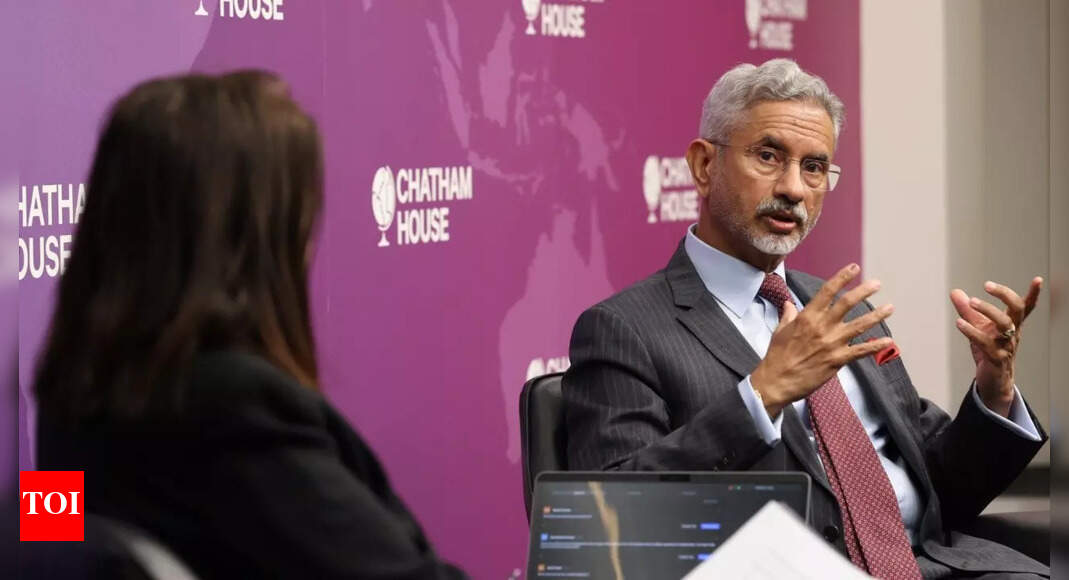
In a world increasingly defined by shifting geopolitical landscapes and complex international relations, India's approach to foreign policy remains anchored in the principles of national interest and strategic autonomy. External Affairs Minister S. Jaishankar's recent statements, particularly concerning India's relationship with the United States and his warnings to Europe regarding terrorism, underscore this unwavering commitment. The core tenet of India's foreign policy is to advance its own interests, irrespective of the personalities or administrations in power in other countries. This pragmatic approach is not a reflection of distrust or skepticism but rather a calculated strategy to ensure India's security, economic growth, and global standing. The relationship with the United States, in particular, is viewed as being of immense importance due to its potential to further India's strategic objectives. Jaishankar's response to a question about whether India trusts Donald Trump is telling. He emphasizes that the relationship is not contingent on any specific individual but is instead based on a broader assessment of mutual benefits and shared interests. This approach allows India to navigate the complexities of international relations with a degree of flexibility and adaptability, ensuring that its long-term goals are not compromised by short-term political fluctuations. The emphasis on national interest is not unique to India; it is a fundamental principle that guides the foreign policies of most countries. However, India's articulation of this principle is particularly significant given its historical experience and its aspirations to play a more prominent role on the global stage. India's foreign policy is also shaped by its unique geopolitical environment, particularly its relationship with Pakistan and China. The issue of cross-border terrorism emanating from Pakistan is a constant source of concern for India, and Jaishankar's remarks in Brussels highlight the gravity of the threat. He pointedly recalled the presence of Osama bin Laden in Pakistan, questioning why the world's most wanted terrorist felt safe living in a Pakistani military town. This is not merely an India-Pakistan issue, he argues, but a global issue that will eventually come back to haunt those who ignore it. This warning is particularly directed at Europe, which has experienced its own share of terrorist attacks in recent years. Jaishankar's message is clear: terrorism is a shared threat that requires a concerted global effort to combat. Ignoring the problem or downplaying its severity will only embolden terrorists and make future attacks more likely. In addition to the threat of terrorism, India also faces challenges from China, particularly in the realm of trade and supply chains. Jaishankar noted that many European companies are increasingly careful about where they locate their data, preferring to place it somewhere secure and trustworthy rather than simply prioritizing efficiency. This concern reflects a growing awareness of the potential risks associated with relying on untrusted actors for critical infrastructure and data management. India is positioning itself as a safe and reliable alternative for companies looking to de-risk their supply chains and protect their sensitive data. This strategy is not only aimed at attracting foreign investment but also at strengthening India's own economic security and technological capabilities. India's relationship with Russia is another area of focus in Jaishankar's remarks. He pushed back against European criticism of India's ties with Russia, arguing that every country considers its own experience, history, and interests when shaping its foreign policy. He pointedly reminded his European counterparts that Western countries were evasive or reticent when Pakistan invaded Kashmir shortly after India's independence. This historical context is important for understanding India's current foreign policy priorities. India is not willing to be lectured by countries that have not always acted in its best interests. Instead, it will pursue its own course, guided by its own assessment of its needs and priorities. Jaishankar's remarks reflect a broader trend in Indian foreign policy, which is characterized by a greater assertiveness and a willingness to challenge the conventional wisdom. India is no longer content to be a passive observer in international affairs; it is actively shaping the global agenda and promoting its own interests. This approach is not without its challenges. India faces a complex and rapidly changing geopolitical environment, and it must navigate a web of competing interests and conflicting priorities. However, by remaining true to its core principles and pursuing a pragmatic and strategic approach to foreign policy, India can continue to advance its interests and play a more prominent role on the global stage.
The essence of Jaishankar's perspective lies in the pragmatic recognition that international relations are rarely, if ever, solely dictated by personal affinity or ideological alignment. Instead, nations operate within a framework of calculated self-interest, where the pursuit of strategic objectives takes precedence. India's engagement with the United States, therefore, is not contingent upon the personality of the incumbent president, but rather upon the alignment of mutual interests and the potential for collaborative advancement. This approach reflects a broader trend in Indian foreign policy, characterized by a strategic autonomy that allows the nation to navigate the complexities of the global landscape without being beholden to any particular power bloc. The concept of national interest, as articulated by Jaishankar, encompasses a multifaceted range of considerations, including economic growth, national security, regional stability, and the promotion of India's global influence. These objectives are pursued through a combination of diplomatic engagement, strategic partnerships, and a commitment to multilateralism. India's relationship with the United States, for example, is driven by a shared interest in countering terrorism, promoting economic prosperity, and maintaining a balance of power in the Indo-Pacific region. These shared goals provide a foundation for cooperation, regardless of the political dynamics in either country. The issue of terrorism, particularly that emanating from Pakistan, remains a central concern for India. Jaishankar's forceful condemnation of Pakistan's support for cross-border terrorism underscores the urgency of the threat and the need for a concerted international response. His reference to Osama bin Laden's presence in Pakistan serves as a stark reminder of the country's checkered history with terrorism and the need for greater accountability. Jaishankar's warning to Europe about the potential repercussions of ignoring the threat of terrorism reflects a growing recognition that terrorism is a global phenomenon that transcends national borders. He argues that failure to address the root causes of terrorism and to take decisive action against terrorist groups will only embolden them and increase the risk of future attacks. This message is particularly relevant for Europe, which has experienced a series of devastating terrorist attacks in recent years. In addition to the threat of terrorism, India also faces challenges from China, particularly in the economic and technological spheres. Jaishankar's comments about European companies relocating their data to India reflect a growing concern about data security and the potential risks associated with entrusting sensitive information to untrusted actors. India is positioning itself as a safe and reliable alternative for companies looking to de-risk their supply chains and protect their data. This strategy is not only aimed at attracting foreign investment but also at strengthening India's own technological capabilities and promoting digital sovereignty. India's relationship with Russia is another area of strategic importance. Jaishankar's defense of India's ties with Russia reflects a recognition of the historical and geopolitical factors that have shaped the relationship. He argues that India's engagement with Russia is based on a pragmatic assessment of its own interests and priorities, and that it is not subject to external pressure or interference. This stance underscores India's commitment to strategic autonomy and its refusal to be drawn into the orbit of any particular power bloc. Jaishankar's remarks, therefore, provide valuable insights into the underlying principles and priorities that guide India's foreign policy. His emphasis on national interest, strategic autonomy, and a pragmatic approach to international relations reflects a recognition of the complex and ever-changing nature of the global landscape. By remaining true to its core values and pursuing its own strategic objectives, India can continue to play a more prominent role on the world stage and contribute to a more stable and prosperous future.
Furthermore, Jaishankar's perspective is crucial for understanding the nuances of India's foreign policy decisions, particularly in a world characterized by increasing uncertainty and geopolitical realignments. His emphasis on national interest serves as a guiding principle that enables India to navigate complex relationships and prioritize its own strategic objectives. This approach is not rooted in isolationism or a rejection of international cooperation, but rather in a pragmatic assessment of the challenges and opportunities that exist in the global arena. India's relationship with the United States, for example, is not simply a matter of shared values or ideological alignment. While these factors certainly play a role, the relationship is primarily driven by mutual interests in areas such as counterterrorism, economic cooperation, and regional security. These shared interests provide a strong foundation for collaboration, regardless of the political dynamics in either country. Jaishankar's emphasis on the importance of advancing relationships that serve India's interests is particularly relevant in the context of the United States. He recognizes that the United States remains a key player in the global arena, and that India has much to gain from working closely with Washington on a range of issues. However, he also makes it clear that India will not blindly follow the United States or sacrifice its own interests in the process. This approach reflects a growing trend in Indian foreign policy, characterized by a greater assertiveness and a willingness to challenge the conventional wisdom. India is no longer content to be a passive observer in international affairs; it is actively shaping the global agenda and promoting its own interests. The issue of terrorism, particularly that emanating from Pakistan, remains a major concern for India. Jaishankar's forceful condemnation of Pakistan's support for cross-border terrorism underscores the gravity of the threat and the need for a more effective international response. His reference to Osama bin Laden's presence in Pakistan serves as a reminder of the country's checkered history with terrorism and the need for greater accountability. Jaishankar's warning to Europe about the potential consequences of ignoring the threat of terrorism is also noteworthy. He argues that terrorism is a global phenomenon that transcends national borders, and that failure to address the root causes of terrorism will only embolden terrorist groups and increase the risk of future attacks. This message is particularly relevant for Europe, which has experienced a series of devastating terrorist attacks in recent years. In addition to the threat of terrorism, India also faces challenges from China, particularly in the economic and technological spheres. Jaishankar's comments about European companies relocating their data to India reflect a growing concern about data security and the potential risks associated with entrusting sensitive information to untrusted actors. India is positioning itself as a safe and reliable alternative for companies looking to de-risk their supply chains and protect their data. This strategy is not only aimed at attracting foreign investment but also at strengthening India's own technological capabilities and promoting digital sovereignty. India's relationship with Russia is another area of strategic importance. Jaishankar's defense of India's ties with Russia reflects a recognition of the historical and geopolitical factors that have shaped the relationship. He argues that India's engagement with Russia is based on a pragmatic assessment of its own interests and priorities, and that it is not subject to external pressure or interference. This stance underscores India's commitment to strategic autonomy and its refusal to be drawn into the orbit of any particular power bloc. In conclusion, Jaishankar's remarks provide valuable insights into the underlying principles and priorities that guide India's foreign policy. His emphasis on national interest, strategic autonomy, and a pragmatic approach to international relations reflects a recognition of the complex and ever-changing nature of the global landscape. By remaining true to its core values and pursuing its own strategic objectives, India can continue to play a more prominent role on the world stage and contribute to a more stable and prosperous future. His articulation of India's foreign policy objectives provides a framework for understanding the nation's approach to international relations and its role in shaping the global order.
Source: Does India trust Donald Trump? EAM Jaishankar says national interest is the pivot, not personalities