
 |
|
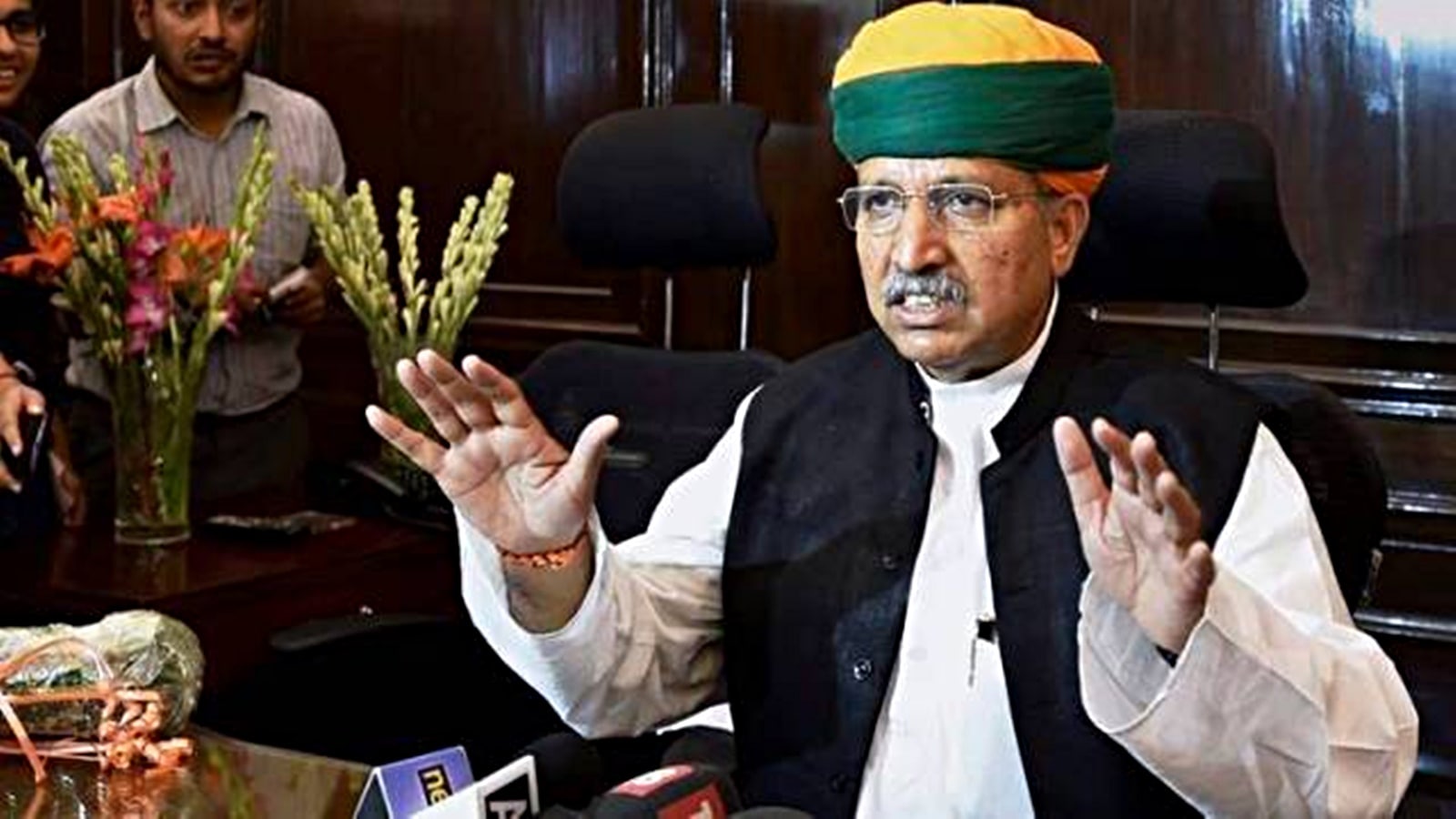
The article delves into the constitutional powers of the Indian Parliament regarding the removal of judges from the Supreme Court and High Courts. Union Law Minister Arjun Ram Meghwal, in an interview with PTI, clarified that while the Parliament possesses the constitutional right to remove a judge, the impetus for initiating such a removal process lies squarely with the Members of Parliament (MPs), not with the government. This statement is particularly relevant given the current context of growing speculation surrounding the potential impeachment of Justice Yashwant Varma, reportedly linked to allegations of misconduct involving a cash-related controversy. The minister's pronouncements serve to delineate the separation of powers and the specific responsibilities held by the legislature versus the executive branch in the judicial oversight process. He explicitly stated that the government plays no role in bringing forward an impeachment motion against a judge, emphasizing that any such action must be led independently by the MPs. This assertion seeks to address potential concerns about executive interference in the judiciary and to uphold the principle of judicial independence, a cornerstone of a functioning democracy. The article implicitly raises several important questions about the impeachment process itself, the grounds upon which a judge can be impeached, and the checks and balances in place to prevent abuse of this power. It highlights the delicate balance between accountability and judicial independence. The impeachment of a judge is a serious matter with significant ramifications for the judiciary and the broader legal system. It requires careful consideration of the evidence, adherence to due process, and a clear understanding of the constitutional framework governing the process. The public discourse surrounding the possible impeachment of Justice Varma underscores the importance of transparency and accountability in the judiciary. It also raises questions about the role of the media in reporting on such matters and the potential for bias or misinformation to influence public opinion. The Law Minister’s statement can be interpreted as an attempt to manage public perception and to assure the judiciary of the government's commitment to respecting its independence. However, it also places the onus on the MPs to act responsibly and judiciously should they decide to initiate an impeachment motion. The entire process is shrouded in legal complexities and requires a thorough understanding of constitutional law and parliamentary procedure. It is a process that demands a high degree of integrity and impartiality from all involved. The media's role in disseminating information to the public is also crucial, as it helps to ensure that the public is informed and can participate in the debate surrounding the issue. The public has a right to know about the allegations against Justice Varma and the potential implications of his impeachment. Ultimately, the decision of whether or not to impeach Justice Varma rests with the Parliament. It is a decision that must be made based on the evidence presented and the principles of justice and fairness. The Law Minister’s statement serves as a reminder of the importance of upholding the rule of law and protecting the independence of the judiciary. It also underscores the responsibilities of the government, the Parliament, and the media in ensuring that the justice system functions effectively and fairly.
The constitutional provisions governing the removal of judges are designed to ensure that the process is fair and impartial. These provisions typically require a high threshold for impeachment, such as a supermajority vote in both houses of Parliament. This requirement is intended to prevent the impeachment process from being used for political purposes. The grounds for impeachment are also typically limited to serious misconduct or violations of the constitution. This ensures that judges are not removed from office for minor transgressions or disagreements with their judicial philosophy. In India, the Constitution outlines the process for the removal of judges under Article 124(4) and (5). It states that a judge can be removed only on the grounds of proved misbehavior or incapacity. The process involves a motion being introduced in either House of Parliament, supported by at least 100 members in the Lok Sabha (lower house) or 50 members in the Rajya Sabha (upper house). If the motion is admitted, a committee is formed to investigate the allegations. This committee typically consists of a judge of the Supreme Court, a chief justice of a High Court, and an eminent jurist. If the committee finds the judge guilty of misbehavior or incapacity, the motion for impeachment is then put to a vote in each House of Parliament. A special majority, which is a majority of the total membership of the House and a majority of not less than two-thirds of the members present and voting, is required to pass the motion in each House. If the motion is passed by both Houses, the President of India issues an order removing the judge from office. This process is designed to be rigorous and time-consuming, reflecting the seriousness of removing a judge from office. It is also intended to protect the independence of the judiciary by ensuring that judges are not removed for arbitrary or politically motivated reasons. The Law Minister's emphasis on the role of MPs in initiating the impeachment process highlights the importance of their responsibility in upholding the integrity of the judiciary. MPs must act judiciously and impartially, ensuring that their decisions are based on evidence and a thorough understanding of the constitutional provisions. They must also be mindful of the potential impact of their decisions on the judiciary and the broader legal system.
The context surrounding the potential impeachment of Justice Yashwant Varma adds another layer of complexity to the situation. The reported allegations of misconduct involving a cash-related controversy raise serious questions about the judge's integrity and impartiality. It is crucial that these allegations are thoroughly investigated and that due process is followed to ensure that Justice Varma is given a fair opportunity to defend himself. The in-house committee set up by the then Chief Justice of India (CJI) Sanjiv Khanna to look into the allegations against Justice Varma, as mentioned in the original article, has already submitted its report. The findings of this report will likely play a significant role in shaping the debate surrounding the potential impeachment. The Law Minister's statement can be seen as an attempt to preempt any potential criticism that the government is interfering in the judicial process. By emphasizing the independence of the Parliament in initiating impeachment proceedings, he is signaling that the government is committed to upholding the separation of powers. However, the situation remains fluid, and it is unclear what action, if any, the Parliament will ultimately take. The decision will likely be influenced by a number of factors, including the findings of the in-house committee, the strength of the evidence against Justice Varma, and the political climate at the time. The potential impeachment of Justice Varma also raises broader questions about the need for greater transparency and accountability within the judiciary. While the judiciary plays a crucial role in upholding the rule of law, it is also important that judges are held accountable for their actions. This can be achieved through a number of mechanisms, including judicial review, internal disciplinary procedures, and, in extreme cases, impeachment. The Law Minister's statement serves as a reminder of the importance of these mechanisms and the need to ensure that they are effective in preventing judicial misconduct. The issue of judicial accountability is a complex and sensitive one, but it is essential for maintaining public trust in the judiciary. A fair and impartial justice system is a cornerstone of a democratic society, and it is the responsibility of all stakeholders, including the government, the Parliament, and the media, to ensure that it functions effectively and fairly.
Moreover, the unfolding events surrounding Justice Varma's case and the Law Minister's comments highlight a broader narrative concerning the relationship between the judiciary, the executive, and the legislature in a democratic framework. The principle of separation of powers, a fundamental tenet of many constitutional democracies, seeks to prevent the concentration of power in any one branch of government. This principle mandates that each branch – the executive, the legislative, and the judicial – should have distinct and independent functions, with checks and balances in place to ensure that no single branch becomes overly dominant. The Law Minister's emphasis on the Parliament's role in initiating impeachment proceedings underscores this separation of powers. By clarifying that the government does not have a direct role in bringing forward an impeachment motion, the minister is seemingly attempting to reinforce the idea that the executive branch respects the independence of the judiciary and the legislative branch's prerogative to oversee judicial conduct. However, the reality is often more nuanced. While the formal legal framework may delineate clear boundaries between the branches of government, the practical interactions and influence that each branch exerts on the others can be complex and multifaceted. For example, the executive branch, through its power to appoint judges, can significantly shape the composition and ideological orientation of the judiciary. The legislative branch, through its power to legislate and amend laws, can influence the scope and interpretation of judicial decisions. And the judiciary, through its power to interpret laws and review the constitutionality of government actions, can serve as a check on the power of both the executive and the legislative branches. The potential impeachment of Justice Varma serves as a reminder that the separation of powers is not merely an abstract legal concept but a dynamic and ongoing process of negotiation and accommodation among the different branches of government. The way in which this particular case is handled will have implications for the future of judicial independence and accountability in India. A key question that arises is how to strike the right balance between ensuring that judges are held accountable for misconduct and protecting them from political interference. An overly aggressive or politicized impeachment process could undermine the independence of the judiciary and discourage judges from making unpopular decisions. On the other hand, a failure to hold judges accountable for serious misconduct could erode public trust in the judicial system. The Law Minister's comments can be interpreted as an attempt to navigate this delicate balance by emphasizing the importance of both judicial independence and parliamentary oversight. Ultimately, the outcome of the Justice Varma case will depend on a number of factors, including the strength of the evidence against him, the political considerations at play, and the willingness of the different branches of government to cooperate in a fair and transparent manner.
Furthermore, the article indirectly highlights the critical importance of public perception and the role of the media in shaping the narrative surrounding such sensitive legal and political issues. In an era of instant communication and widespread social media engagement, the public's perception of the judiciary and its integrity can be significantly influenced by the information that is disseminated through various media channels. The media, therefore, has a crucial responsibility to report on judicial matters accurately, fairly, and without sensationalism. Sensationalized or biased reporting can erode public trust in the judiciary and undermine the rule of law. In the case of Justice Varma's potential impeachment, the media's portrayal of the allegations against him will likely play a significant role in shaping public opinion. If the media focuses solely on the allegations without providing a balanced account of the facts and the context surrounding them, it could create a public perception of guilt even before any formal investigation or impeachment proceedings have taken place. This could prejudice the process and make it more difficult for Justice Varma to receive a fair hearing. On the other hand, if the media downplays the allegations or fails to hold Justice Varma accountable for his actions, it could erode public trust in the judiciary and create the impression that judges are above the law. The ideal scenario is for the media to provide objective and unbiased reporting that allows the public to form its own informed opinion based on the available evidence. This requires journalists to conduct thorough investigations, to seek out multiple perspectives, and to avoid sensationalizing the story for the sake of attracting readers or viewers. In addition to the mainstream media, social media platforms also play a significant role in shaping public opinion on judicial matters. Social media can be a powerful tool for disseminating information and raising awareness about important issues, but it can also be a breeding ground for misinformation and biased commentary. It is important for social media users to be critical of the information that they encounter online and to avoid spreading rumors or unverified allegations. The Law Minister's statement can be seen as an attempt to manage public perception by clarifying the government's position on the potential impeachment of Justice Varma. By emphasizing the independence of the Parliament in initiating impeachment proceedings, he is signaling that the government is committed to upholding the rule of law and ensuring that the process is fair and transparent. However, ultimately, the public's perception of the situation will depend on the way in which the media reports on the story and the way in which individuals interpret the available information.
Ultimately, the examination of this article extends beyond the immediate issue of Justice Varma's potential impeachment and delves into the foundational principles of a democratic society. It raises crucial questions about the balance of power between the judiciary, the executive, and the legislature, the importance of judicial independence and accountability, and the role of the media in shaping public opinion. The Law Minister's statement serves as a focal point for exploring these broader themes and considering the challenges and complexities of upholding the rule of law in a modern democracy. The case of Justice Varma, regardless of its ultimate outcome, will likely serve as a precedent for future situations involving judicial misconduct. It will shape the way in which the impeachment process is perceived and implemented in India. It is therefore essential that all stakeholders involved in the process act responsibly and judiciously, keeping in mind the long-term implications for the judiciary and the broader legal system. The emphasis on judicial independence highlights the importance of protecting judges from political interference and ensuring that they are free to make decisions based on the law without fear of reprisal. This independence is essential for maintaining public trust in the judiciary and ensuring that the justice system functions fairly and impartially. The concurrent emphasis on judicial accountability underscores the need to hold judges responsible for their actions and to ensure that they are subject to the same standards of conduct as other public officials. This accountability is essential for preventing judicial misconduct and maintaining the integrity of the judiciary. The Law Minister's comments can be seen as an attempt to strike a balance between these two competing principles. He is signaling that the government is committed to upholding judicial independence while also recognizing the importance of holding judges accountable for their actions. The success of this balancing act will depend on the way in which the Justice Varma case is handled and the precedents that it sets for future situations. The article implicitly underscores the ongoing need for dialogue and debate about the role of the judiciary in a democratic society. These dialogues should involve all stakeholders, including judges, lawyers, academics, policymakers, and the public. The goal should be to develop a shared understanding of the challenges and opportunities facing the judiciary and to identify ways to strengthen its independence, accountability, and effectiveness.