
 |
|
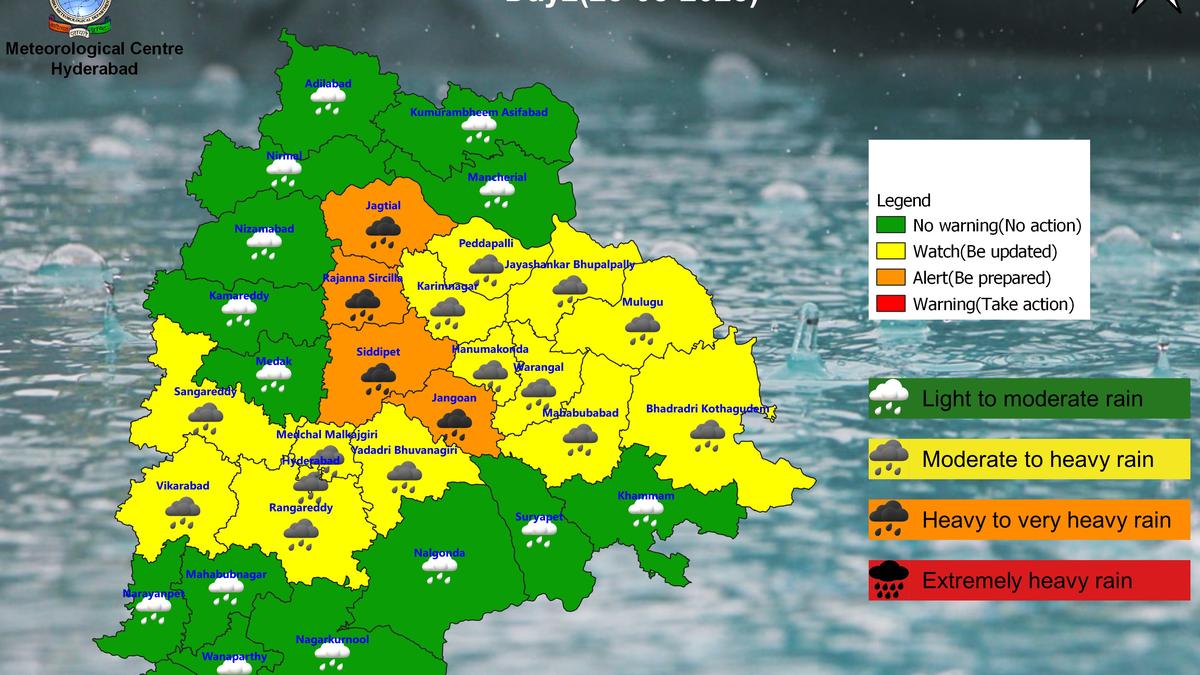
The India Meteorological Department (IMD) has issued a warning for Telangana, forecasting heavy rainfall across several districts. This advisory comes in the form of both orange and yellow alerts, indicating varying levels of expected precipitation and potential impact. The orange alert, the more severe of the two, has been issued for Jagtial, Rajanna Sircilla, Jangaon, and Siddipet districts, signifying a high probability of heavy to very heavy rainfall in these areas. This level of rainfall can lead to significant disruptions, including localized flooding, traffic congestion, and potential damage to infrastructure. Residents in these districts are advised to take necessary precautions, such as avoiding unnecessary travel, securing loose objects, and staying informed about the latest weather updates. The yellow alert, while indicating a lower level of risk compared to the orange alert, still necessitates vigilance. It has been issued for Karimnagar, Peddapalli, Jayashankar Bhupalpally, Mulugu, Bhadradri Kothagudem, Mahabubabad, Warangal, Hanamkonda, Yadadri Bhongir, Rangareddy, Hyderabad, Medchal Malkajgiri, Vikarabad, and Sangareddy districts. This alert signals the likelihood of heavy rainfall in isolated places within these districts, which could still result in localized flooding and disruptions to daily life. The inclusion of Hyderabad, the state capital, in the yellow alert highlights the potential for widespread impact. The IMD's bulletin further elaborates on the expected weather conditions for Hyderabad and its surrounding areas over the next 24 hours. It predicts generally cloudy skies with light to moderate rain accompanied by gusty winds. Additionally, hazy conditions are expected to prevail during the morning hours. The maximum temperature is likely to hover around 31 degrees Celsius, while the minimum temperature is expected to be around 24 degrees Celsius. These conditions suggest a relatively humid and potentially uncomfortable day for residents of Hyderabad. The issuance of these weather alerts underscores the importance of preparedness and awareness during the monsoon season. Heavy rainfall can quickly overwhelm drainage systems, leading to urban flooding and traffic chaos. It can also pose a threat to low-lying areas and vulnerable populations. Therefore, it is crucial for individuals and communities to heed the warnings issued by the IMD and take appropriate measures to mitigate the potential risks. This includes staying informed about the latest weather forecasts, avoiding unnecessary travel during periods of heavy rainfall, and securing homes and properties against potential flooding. Furthermore, it is essential for local authorities to be prepared to respond to emergencies and provide assistance to those affected by the heavy rainfall. This may involve deploying rescue teams, providing shelter to displaced individuals, and clearing roads and drainage systems to ensure the smooth flow of traffic. The combination of orange and yellow alerts across various districts of Telangana indicates a significant weather event that requires careful monitoring and proactive action. The IMD's timely dissemination of information plays a crucial role in enabling individuals and communities to prepare for and respond to the potential impacts of heavy rainfall. By staying informed and taking appropriate precautions, residents of Telangana can minimize the risks associated with the predicted weather conditions and ensure their safety and well-being.
The implications of such widespread rainfall alerts extend beyond immediate disruptions and potential damage. Prolonged periods of heavy rainfall can have significant consequences for various sectors, including agriculture, transportation, and public health. In the agricultural sector, excessive rainfall can lead to waterlogging of fields, which can damage crops and reduce yields. This can have a detrimental impact on farmers' livelihoods and the overall food security of the region. The transportation sector is also vulnerable to the effects of heavy rainfall. Flooded roads and railway tracks can disrupt transportation networks, causing delays and inconveniences for commuters and businesses. In extreme cases, heavy rainfall can even lead to landslides and mudslides, which can further damage infrastructure and block transportation routes. Public health is another area of concern during periods of heavy rainfall. Stagnant water can create breeding grounds for mosquitoes, increasing the risk of vector-borne diseases such as malaria and dengue fever. Additionally, contaminated water supplies can lead to waterborne diseases such as cholera and typhoid fever. To mitigate these potential risks, it is essential for the government and other stakeholders to take proactive measures to address the underlying causes of flooding and waterlogging. This includes investing in infrastructure improvements, such as upgrading drainage systems and building flood control barriers. It also involves promoting sustainable agricultural practices that reduce the risk of soil erosion and waterlogging. Furthermore, it is crucial to improve public health infrastructure and sanitation practices to prevent the spread of waterborne diseases. The current weather alerts serve as a reminder of the importance of investing in resilience and adaptation measures to cope with the impacts of climate change. As climate change continues to intensify, extreme weather events such as heavy rainfall are likely to become more frequent and severe. Therefore, it is essential for governments and communities to take steps to prepare for these events and minimize their potential impacts. This includes developing early warning systems, implementing disaster preparedness plans, and investing in climate-resilient infrastructure. The IMD's role in providing timely and accurate weather forecasts is crucial in enabling individuals and communities to prepare for and respond to extreme weather events. By leveraging advanced technologies and scientific expertise, the IMD can provide valuable information that helps to protect lives and livelihoods. However, the effectiveness of these forecasts depends on the ability of individuals and communities to understand and act upon them. Therefore, it is essential to promote public awareness and education about weather hazards and the importance of preparedness. This can be achieved through various channels, such as public service announcements, educational programs, and community outreach initiatives. By working together, governments, communities, and individuals can build a more resilient and sustainable future in the face of climate change.
Source: Telangana braces for heavy rain today: orange alert in 4 districts, yellow in 15 districts