
 |
|
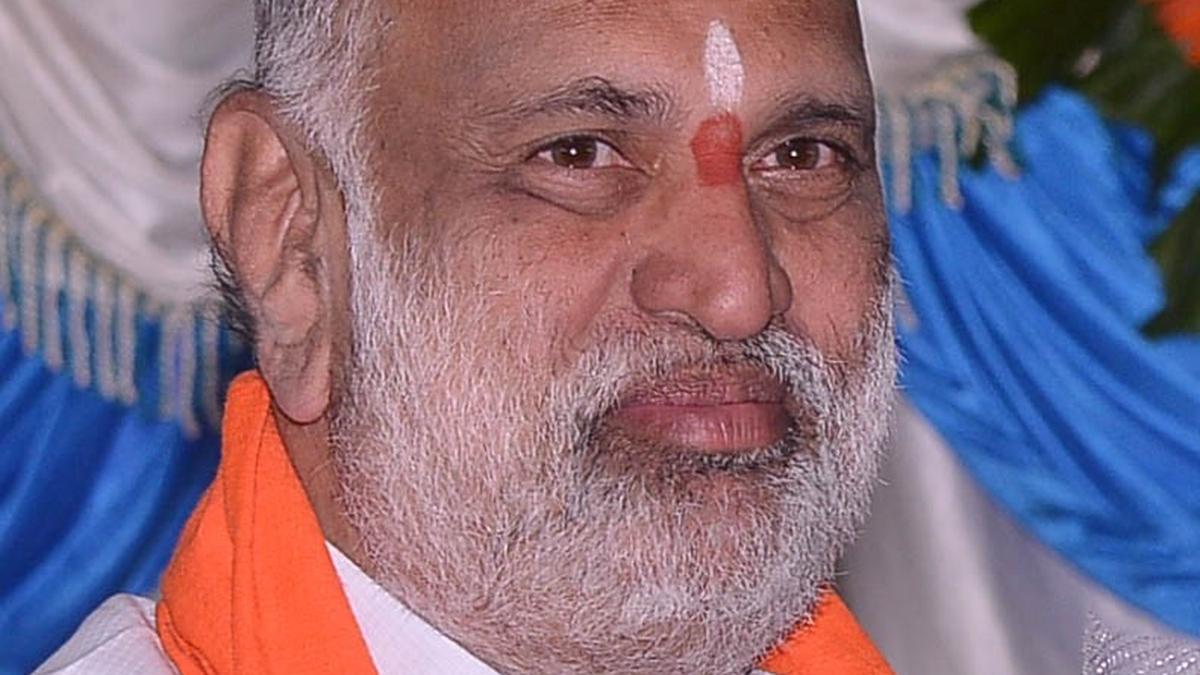
The Bharatiya Janata Party (BJP) has taken decisive action against two of its Members of the Legislative Assembly (MLAs), S.T. Somashekar and Arabail Shivaram Hebbar, by expelling them from the party for a period of six years. This move comes after a prolonged period of perceived anti-party activities by the two legislators, who previously held ministerial positions within the Karnataka state government. The expulsion signifies the BJP's attempt to reassert party discipline and strengthen its organization in the face of upcoming local body elections. Somashekar and Hebbar, both of whom were originally members of the Congress party before defecting to the BJP in 2019 through what was termed "Operation Lotus," had increasingly distanced themselves from the BJP's agenda and aligned themselves with the opposition Congress party. Their actions, including voting against the BJP's official candidates in legislative council and Rajya Sabha elections, attending Congress Legislature Party meetings, and publicly criticizing the BJP leadership, had created significant embarrassment for the party. The situation came to a head when Somashekar defended his close ties with Chief Minister Siddaramaiah and Deputy Chief Minister D.K. Shivakumar of the Congress party, justifying his actions as necessary to secure developmental grants for his constituency. This public display of affinity with the opposition, coupled with their consistent refusal to adhere to the BJP's line in the Assembly, prompted calls for disciplinary action from within the party. Prior to their expulsion, the BJP central disciplinary committee had issued show-cause notices to Somashekar and Hebbar, giving them an opportunity to explain their conduct. While both MLAs responded to the notices, their explanations were evidently deemed insufficient to mitigate the severity of their actions. The final decision to expel them for six years, effective from Tuesday, underscores the BJP's determination to address internal dissent and maintain party unity. This decision was partly influenced by the upcoming local body elections, where the BJP aims to perform strongly and consolidate its position in the state. The party leadership believes that taking firm action against rebel MLAs will send a clear message to other members and discourage similar acts of defiance. The timing of the expulsion, ahead of the local body polls, suggests a strategic move to present a united front and project an image of strength and decisiveness. The BJP State unit president, B.Y. Vijayendra, emphasized that the decision to expel Somashekar and Hebbar was not taken lightly and that they had been given ample opportunity to rectify their behavior. He stated that an appeal had been made to the high command to initiate disciplinary action against them, highlighting the seriousness with which the party viewed their transgressions. The expulsion of Somashekar and Hebbar raises questions about the future political trajectories of these two former ministers. Somashekar, who represents Yeshwanthpur in Bengaluru, and Hebbar, who was elected from Yellapur in Uttara Kannada district, now face a period of political uncertainty. While Somashekar acknowledged that the expulsion was expected and suggested that he and Hebbar had been made scapegoats, he also hinted at a potential political move in the future, stating that there was ample time before the next Assembly elections to make a decision. Hebbar, on the other hand, remained more circumspect, welcoming the action but declining to reveal his future plans, leaving open the possibility of joining another party or pursuing an independent course. The expulsion has also elicited reactions from other political figures within the BJP. Former Chief Minister B.S. Yediyurappa welcomed the action, stating that nobody was above the party and that everyone should adhere to party discipline. This statement reflects the sentiment within the BJP that maintaining party unity and discipline is paramount, even if it means taking action against senior leaders. However, the expulsion has also drawn criticism from within the party. Basanagouda Patil R. Yatnal, another expelled rebel leader, questioned the BJP's decision to act against Somashekar and Hebbar while allegedly ignoring other instances of misconduct within the party, specifically referring to accusations against MLA Munirathna. This criticism suggests that there may be underlying tensions and disagreements within the BJP regarding the application of disciplinary measures and the treatment of different individuals. The expulsion of Somashekar and Hebbar is a significant development in Karnataka politics. It underscores the BJP's determination to enforce party discipline and prevent internal dissent, particularly in the lead-up to crucial local body elections. The move also highlights the challenges faced by political parties in managing internal factions and maintaining unity in the face of differing ideologies and personal ambitions. The future political trajectories of Somashekar and Hebbar remain uncertain, but their expulsion from the BJP marks a new chapter in their political careers.
The broader context of this expulsion needs to be understood within the framework of Karnataka's political landscape. The "Operation Lotus" episode in 2019, where several Congress and Janata Dal (Secular) MLAs defected to the BJP, ultimately led to the collapse of the coalition government and the installation of a BJP-led administration. While these defections were instrumental in bringing the BJP to power, they also created a complex dynamic within the party, with some long-standing BJP members potentially feeling sidelined by the influx of newcomers. The subsequent allocation of ministerial berths to the defectors further fueled these tensions. Somashekar and Hebbar, as beneficiaries of this political maneuvering, were granted significant positions within the government, leading to resentment among some traditional BJP loyalists. The events leading to their expulsion can be seen as a culmination of these underlying tensions. Their increasing alignment with the Congress party, coupled with their public criticism of the BJP leadership, represented a direct challenge to the party's authority and unity. The BJP's decision to tolerate their behavior for a prolonged period can be attributed to several factors. Firstly, there was a strategic consideration that expelling them would reduce the party's numerical strength in the Legislative Assembly. Secondly, there may have been a desire to avoid further alienating other potentially dissenting voices within the party. However, as the local body elections approached, the BJP leadership recognized the need to address the issue decisively. The upcoming elections provide an opportunity for the BJP to demonstrate its strength and popularity at the grassroots level. A strong performance in these elections would not only consolidate the party's position in the state but also send a message to the opposition parties about its resilience and electoral prospects. In this context, the expulsion of Somashekar and Hebbar can be viewed as a necessary step to ensure party unity and project an image of strength and decisiveness. The BJP leadership likely calculated that the benefits of taking firm action against the rebel MLAs outweighed the potential risks of reducing the party's numerical strength in the Assembly. The expulsion also serves as a deterrent to other potential dissenters within the party, signaling that such behavior will not be tolerated. The reactions to the expulsion have been varied, reflecting the different perspectives and interests within the BJP. While some leaders have welcomed the action as a necessary step to maintain party discipline, others have expressed concerns about the timing and the potential consequences for party unity. The criticism from Basanagouda Patil R. Yatnal, who questioned the selective application of disciplinary measures, highlights the potential for factionalism and internal rivalries within the party. The future political trajectories of Somashekar and Hebbar remain uncertain, but their expulsion from the BJP marks a significant turning point in their careers. They now face the challenge of rebuilding their political careers outside the BJP fold. While they may consider joining another political party, such as the Congress, they also have the option of pursuing an independent course. Their success in the future will depend on their ability to adapt to the new political landscape and maintain the support of their constituencies. The expulsion of Somashekar and Hebbar is a reminder of the inherent challenges of coalition politics and the importance of maintaining party discipline. Political parties must constantly navigate the delicate balance between accommodating diverse viewpoints and enforcing a common agenda. The BJP's decision to expel these two rebel MLAs underscores the importance of loyalty and unity in achieving its political goals. It remains to be seen how this decision will impact the party's prospects in the upcoming local body elections and its overall position in Karnataka politics.
The long-term implications of the BJP's decision to expel Somashekar and Hebbar extend beyond the immediate context of the local body elections. This action could potentially reshape the political dynamics in Karnataka and influence the behavior of other political actors in the state. One key implication is the potential impact on the stability of the BJP government. While the expulsion of two MLAs does not pose an immediate threat to the government's majority, it could embolden other dissenting voices within the party and create an environment of uncertainty. If more MLAs were to follow suit and defect to other parties, the BJP government could face a more serious challenge to its survival. Another implication is the potential impact on the political alignment in the state. The expulsion of Somashekar and Hebbar could prompt other MLAs who are dissatisfied with their current parties to consider switching allegiances. This could lead to a realignment of political forces in Karnataka, with new alliances forming and existing alliances weakening. The Congress party, in particular, could benefit from this realignment, as it may be able to attract disgruntled MLAs from the BJP and other parties. The expulsion could also influence the behavior of political parties in the future. Parties may become more cautious about admitting defectors from other parties, as they may be seen as unreliable and prone to switching allegiances. This could lead to a more stable political environment, with parties focusing on nurturing their own members rather than relying on defections to gain power. However, the expulsion could also have the opposite effect, with parties becoming more aggressive in their efforts to poach MLAs from other parties. This could lead to a more volatile political environment, with frequent defections and realignments of political forces. The response of Somashekar and Hebbar to their expulsion will also be crucial in shaping the future political landscape in Karnataka. If they choose to join another political party, such as the Congress, they could significantly strengthen that party's position in the state. Alternatively, if they choose to pursue an independent course, they could become influential figures in their respective constituencies and potentially play a kingmaker role in future elections. The expulsion of Somashekar and Hebbar also raises questions about the role of money and muscle power in Karnataka politics. The "Operation Lotus" episode in 2019, which led to the defection of several MLAs to the BJP, was widely criticized for allegedly involving the use of money and coercion to induce defections. The expulsion of Somashekar and Hebbar could be seen as an attempt to address this issue and send a message that such behavior will not be tolerated. However, it remains to be seen whether this action will have a lasting impact on the role of money and muscle power in Karnataka politics. The future of Karnataka politics will depend on a variety of factors, including the performance of the BJP government, the response of Somashekar and Hebbar to their expulsion, and the behavior of other political actors in the state. The expulsion of these two rebel MLAs is a significant event that could have far-reaching consequences for the political landscape in Karnataka. It is a reminder of the complex and often unpredictable nature of politics, and the importance of maintaining party unity and discipline in achieving political goals. Ultimately, the success of the BJP in Karnataka will depend on its ability to adapt to the changing political environment and effectively address the challenges it faces. This includes maintaining party unity, delivering on its promises to the people, and effectively competing with other political parties in the state. The expulsion of Somashekar and Hebbar is just one chapter in the ongoing story of Karnataka politics, and it remains to be seen how this story will unfold in the years to come.
Source: After giving them a long rope, BJP expels two rebel MLAs for anti-party activity