
 |
|
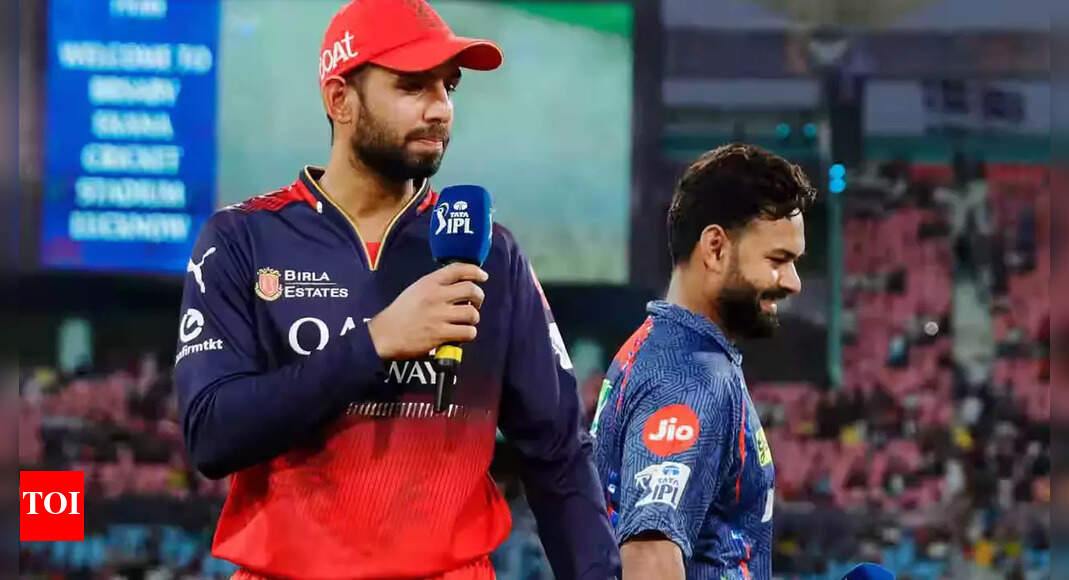
The Indian Premier League (IPL) is renowned for its high-octane clashes, nail-biting finishes, and moments of sheer brilliance. However, sometimes it's the unexpected blunders and dramatic incidents that add a unique flavor to the tournament. The Match 70 encounter between Royal Challengers Bengaluru (RCB) and Lucknow Super Giants (LSG) at the Bharat Ratna Shri Atal Bihari Vajpayee Ekana Cricket Stadium witnessed one such incident during the toss, involving RCB's stand-in captain, Jitesh Sharma. Winning the toss, Sharma opted to field first, citing the favorable conditions for chasing. Both teams had made changes to their playing XIs, with RCB notably resting Rajat Patidar, their regular skipper, on the bench, intending to utilize him as an Impact Substitute. Josh Hazlewood was also omitted, despite recovering from injury, while Liam Livingstone replaced Tim David, and Nuwan Thushara came in for Lungi Ngidi, who had reportedly left the team. LSG, led by Rishabh Pant, also made two alterations, bringing in Matthew Breetzke and Digvesh Rathi. Pant emphasized the team's commitment to an aggressive style of play and their determination to learn from each match, regardless of the outcome. However, the real drama unfolded when Jitesh Sharma inadvertently handed over the wrong team sheet to the match referee. The initial team sheet had Rajat Patidar listed among the starting XI, despite the intention of using him as an Impact Player in the second innings. This confusion stemmed from Sharma's mistake of submitting RCB's batting-first team sheet. The error was quickly identified, and the correct team sheet was submitted after obtaining approval from the LSG team management. The entire incident was picked up and narrated by the commentators on live television, adding to the spectacle. The match itself, of course, proceeded beyond this initial moment of confusion. The implications of such a blunder, however, highlight the pressure and scrutiny that players and captains face in the high-stakes environment of the IPL. The toss, though seemingly a simple procedure, is a crucial moment in the game, setting the tone for the match and influencing the strategic decisions of both teams. A mistake at this stage, as witnessed in the RCB-LSG encounter, can potentially have significant repercussions, affecting team morale and potentially impacting the outcome of the game. Moreover, the incident serves as a reminder of the importance of attention to detail and clear communication, especially in a fast-paced and demanding tournament like the IPL. The incident also underscores the role of the commentators and the media in shaping the narrative around the game. The commentators' immediate recognition and narration of the blunder amplified the drama, turning it into a talking point for fans and analysts alike. In conclusion, the toss drama involving RCB's stand-in captain, Jitesh Sharma, added an unexpected twist to the IPL clash against LSG. While the error was quickly rectified, it highlighted the pressure, scrutiny, and importance of attention to detail in the high-stakes world of professional cricket. The incident served as a reminder that even the simplest of procedures can have significant implications and that the commentators play a crucial role in shaping the narrative of the game. Furthermore, the substitutions of players due to various reasons such as injury, strategic team changes, or players leaving the team shows the depth and dynamism of the squads in the IPL. The ability of teams to adapt and make effective changes is often a key determinant of their success in the tournament. The use of Impact Players is a relatively new feature of the IPL, adding another layer of strategic complexity to the game. The decision of when and how to use the Impact Player can significantly influence the outcome of the match. In the RCB-LSG match, the initial confusion surrounding Rajat Patidar's role as an Impact Player highlights the importance of clear communication and understanding of the rules regarding Impact Players. The overall incident provides a glimpse into the behind-the-scenes complexities and challenges faced by teams and captains in the IPL. While the focus is often on the on-field action, the off-field preparations, strategic decisions, and communication are equally crucial for success.
The broader context of the IPL incident involving RCB and LSG extends beyond a simple team sheet error. It touches upon the evolving dynamics of leadership within cricket teams, the pressures faced by stand-in captains, and the increasing scrutiny that every action undergoes in the highly televised and analyzed world of professional sports. Jitesh Sharma, stepping in as captain, likely felt the weight of responsibility to not only lead the team effectively but also to manage the intricate details of team selection and communication with the match officials. His mistake, while seemingly minor, underscores the potential for human error even at the highest levels of competition. Moreover, the incident highlights the importance of having robust systems in place to prevent such errors from occurring. While the mistake was quickly corrected, it raises questions about the checks and balances that teams employ to ensure accuracy in team selection and communication. Are there designated individuals responsible for verifying the team sheet before it is submitted? Are there clear protocols for communicating changes to the team lineup to the match officials? The incident also raises broader questions about the role of technology in preventing such errors. Could digital team sheets and electronic submission systems help to reduce the risk of human error? While technology can undoubtedly play a role in improving accuracy and efficiency, it is important to remember that technology is only as good as the people who use it. Ultimately, the responsibility for ensuring accuracy lies with the team management and the captain. The reaction to the incident, both within the stadium and on social media, also provides insights into the culture of professional sports. While some fans may have seen the incident as a humorous gaffe, others may have viewed it as a sign of disorganization or lack of professionalism. The media, as always, played a significant role in shaping public perception of the incident. By highlighting the drama and confusion surrounding the toss, the media amplified the impact of the error and turned it into a major talking point. In conclusion, the IPL incident involving RCB and LSG is more than just a simple team sheet error. It is a microcosm of the challenges and pressures faced by teams and captains in the high-stakes world of professional cricket. The incident highlights the importance of leadership, communication, attention to detail, and robust systems to prevent errors from occurring. It also underscores the role of the media in shaping public perception of sporting events. Looking ahead, it is likely that teams will take steps to learn from this incident and to improve their processes for team selection and communication. The goal will be to minimize the risk of similar errors occurring in the future and to ensure that the focus remains on the on-field action, rather than off-field blunders.
The impact of the IPL's financial structure on player roles and team dynamics is a significant factor underlying incidents like the team sheet blunder. The auction system, salary caps, and the freedom to retain players create a complex web of player valuations and team compositions. This system can lead to situations where teams heavily rely on certain players while others face pressure to perform despite limited opportunities. In the case of RCB, the team management's decision to utilize Rajat Patidar as an Impact Player, despite his regular skipper status, highlights the strategic calculations involved in maximizing the value of each player within the constraints of the IPL's financial rules. The auction system often results in players being valued based on their perceived potential and past performance, rather than their current form or suitability for a particular role. This can create disparities in player salaries and expectations, leading to pressure on players to justify their price tags. Furthermore, the limited number of overseas players allowed in each team forces teams to make difficult choices about which international stars to include in their playing XI. This can result in talented players being left out of the team, despite their ability to contribute significantly. The impact of these financial and strategic considerations on team morale and player performance should not be underestimated. The pressure to perform, the competition for playing time, and the awareness of individual player valuations can all create a stressful environment for players. In the case of the team sheet blunder, it is possible that the pressure of managing the team's resources and making strategic decisions contributed to the error made by the stand-in captain. The IPL's financial structure also has implications for the development of young talent. While the tournament provides opportunities for young players to showcase their skills, the focus on winning can sometimes lead to teams prioritizing experienced players over developing young talent. This can limit the opportunities for young players to gain valuable experience and progress in their careers. In conclusion, the IPL's financial structure plays a significant role in shaping player roles, team dynamics, and the overall environment of the tournament. The auction system, salary caps, and the freedom to retain players create a complex web of player valuations and strategic considerations that can impact player performance and team morale. Understanding these underlying financial and strategic factors is crucial for interpreting incidents like the team sheet blunder and for appreciating the challenges faced by teams and captains in the IPL. The ongoing evolution of the IPL's financial structure and its impact on the game will continue to be a topic of discussion and debate in the years to come.
Moving beyond the immediate incident and its financial underpinnings, the role of technology in modern cricket and its potential for both assistance and error augmentation deserves consideration. The Decision Review System (DRS), Hawk-Eye, and other technologies are now integral to the game, aiming to improve accuracy in umpiring decisions and provide viewers with a more comprehensive understanding of the on-field action. However, technology is not infallible, and its reliance on human input and interpretation can still lead to errors and controversies. The team sheet incident, though seemingly unrelated to on-field technology, highlights the broader issue of technology's impact on human performance. The increased reliance on technology in all aspects of the game can create a sense of complacency and a decreased reliance on human judgment. This can lead to situations where errors are overlooked or not detected until it is too late. In the case of the team sheet blunder, it is possible that the reliance on computer-generated team sheets and electronic communication contributed to the error. The increased complexity of the game, with its multiple formats, strategic nuances, and data-driven analysis, can also overwhelm players and officials. This can lead to cognitive overload and an increased risk of errors. The use of artificial intelligence (AI) in cricket is also becoming increasingly prevalent. AI is being used to analyze player performance, predict match outcomes, and develop training strategies. While AI has the potential to revolutionize the game, it also raises ethical concerns about fairness, transparency, and the role of human judgment. The increasing reliance on AI could lead to a situation where the game is overly influenced by algorithms and data, rather than by human skill and intuition. The future of cricket will likely involve a closer integration of technology and human performance. However, it is important to ensure that technology is used to enhance, rather than replace, human judgment and that the focus remains on the skill, athleticism, and strategic thinking of the players. The team sheet incident serves as a reminder that technology is a tool, not a solution, and that human vigilance and attention to detail remain crucial for preventing errors and ensuring the integrity of the game. The ethical considerations surrounding the use of AI in cricket also need to be carefully addressed to ensure that the game remains fair, transparent, and accessible to all.
The cultural and societal impact of the IPL extends far beyond the realm of cricket, transforming the sport into a major entertainment spectacle and a significant economic force in India. The league's blend of sports, entertainment, and celebrity culture has attracted a massive following, both within India and around the world. The IPL has become a platform for brands to connect with consumers, for artists to showcase their talent, and for communities to come together and celebrate. The league's success has also had a significant impact on the development of cricket infrastructure and talent in India. The influx of money into the sport has allowed for the construction of world-class stadiums, the development of training academies, and the provision of opportunities for young players to pursue their dreams. The IPL has also created a new generation of cricket fans, many of whom were not previously interested in the sport. The league's high-octane format, its emphasis on entertainment, and its accessibility to a wide range of audiences have made it a popular pastime for millions of Indians. The IPL's success has also had a positive impact on the Indian economy. The league generates billions of dollars in revenue each year, creating jobs and opportunities for businesses across a range of sectors. The IPL has also become a major tourist attraction, drawing visitors from around the world to India to witness the spectacle of the league. However, the IPL's success has also raised concerns about the commercialization of cricket and the potential for corruption and unethical practices. The league's high stakes and the vast sums of money involved have made it vulnerable to match-fixing and other forms of corruption. The IPL has also been criticized for its emphasis on entertainment over substance and for its potential to distract from the development of other forms of cricket. The future of the IPL will depend on its ability to balance its commercial interests with its social responsibilities. The league needs to ensure that it is promoting ethical practices, investing in the development of young talent, and contributing to the overall well-being of Indian society. The IPL has the potential to be a force for good, promoting sportsmanship, community engagement, and economic development. However, it needs to be carefully managed to ensure that it does not succumb to the pitfalls of commercialization and corruption.
In reflecting upon the various facets of the IPL event – from the initial team sheet confusion to its broader implications on leadership, finance, technology, and culture – a holistic perspective emerges that emphasizes the interconnectedness of these seemingly disparate elements. The incident involving the RCB and LSG teams serves not just as a standalone anecdote but as a lens through which to examine the complexities and challenges inherent in modern professional sports. The pressures of leadership, especially for a stand-in captain like Jitesh Sharma, are amplified by the scrutiny of the media and the expectations of fans. The financial structures of the IPL, with its auction system and salary caps, create a landscape where strategic decisions are driven by economic considerations, potentially influencing player roles and team dynamics. Technology, while aimed at enhancing accuracy and efficiency, introduces its own set of challenges, as the reliance on digital tools can sometimes lead to complacency and unforeseen errors. Furthermore, the IPL's cultural and societal impact underscores its transformation from a mere cricket league into a major entertainment spectacle and a significant economic force in India. The league's success brings both opportunities and responsibilities, requiring careful management to balance commercial interests with ethical practices and social well-being. Looking ahead, it is crucial for the IPL to foster a culture of transparency, accountability, and continuous improvement. By learning from past mistakes and embracing innovation, the league can enhance its credibility, promote sportsmanship, and contribute to the development of cricket at all levels. The IPL's legacy will ultimately be determined by its ability to navigate the complexities of the modern sporting landscape and to uphold the values of fair play, integrity, and social responsibility. The various stakeholders involved – players, coaches, administrators, sponsors, and fans – all have a role to play in shaping the future of the IPL and ensuring that it remains a source of pride and inspiration for generations to come. The continued success of the IPL hinges on its ability to adapt, innovate, and evolve in response to the changing needs of the game and the broader societal context. By embracing a long-term vision and committing to ethical practices, the IPL can solidify its position as a global leader in sports and entertainment.
In conclusion, the seemingly minor incident of the misplaced team sheet at the RCB versus LSG IPL match unveils a complex web of interconnected themes pertinent to modern professional sports. This event, far from being an isolated gaffe, acts as a microcosm reflecting the pressures inherent in leadership roles, the impact of financial constraints on team dynamics, the double-edged sword of technological dependence, and the broader socio-cultural influence of the IPL. The captain, in this case a stand-in, operates under intense scrutiny, shouldering the burden of strategic decisions while navigating the ever-watchful eyes of the media and a passionate fanbase. The financial architecture of the IPL, with its auction system and stringent salary caps, necessitates strategic choices that often prioritize economic efficiency over individual player preferences, shaping team compositions and player roles in profound ways. The promise of technology to improve accuracy and streamline processes is tempered by the potential for complacency, leading to unintended errors that highlight the continued importance of human oversight. And finally, the IPL transcends the boundaries of a mere cricket tournament, evolving into a significant cultural and economic force within India, demanding a responsible approach to balancing commercial success with ethical considerations and societal well-being. The IPL's future prosperity hinges on its commitment to these core principles. By fostering transparency, promoting ethical conduct, and championing continuous improvement, the league can bolster its credibility, encourage sportsmanship, and contribute positively to the development of cricket at all levels. Each stakeholder – players, coaches, administrators, sponsors, and, most importantly, the fans – must contribute to shaping the IPL's trajectory, ensuring its enduring legacy as a source of national pride and athletic inspiration. The continued evolution and adaptation of the IPL to meet the evolving needs of the game and the wider community will be paramount to its long-term sustainability and success. Upholding the tenets of fair play, integrity, and social responsibility will ultimately define the IPL's contribution to the global sporting landscape and its lasting impact on the generations to come.
Source: Toss drama! RCB captain hands over wrong team sheet, makes bizarre blunder in LSG clash