
 |
|
The political landscape of Karnataka has recently witnessed a surge in protests and condemnations following derogatory remarks made by BJP MLC N. Ravikumar against Kalaburagi Deputy Commissioner Fouzia Taranum. The Communist Party of India (Marxist) and the Congress party have both staged separate demonstrations in Kalaburagi, vehemently criticizing Ravikumar's statements and demanding accountability. The core of the issue lies in Ravikumar's alleged comparison of Deputy Commissioner Taranum to someone from Pakistan during a BJP rally, a statement that has been widely denounced as both communal and misogynistic. This incident has ignited a debate about the prevalence of communal politics and the protection of minority communities within the state, and the role of political leaders in promoting social harmony and upholding the principles of secularism. The protests highlight a growing concern about the erosion of secular values and the rise of divisive rhetoric within the political sphere.
At the heart of the matter is the perception that Ravikumar's remarks constitute an attack on a public servant based solely on her religious identity. Fouzia Taranum, the Deputy Commissioner in question, is recognized for her competence and effectiveness in handling electoral processes, even receiving commendation from the Union government. To label such an individual as foreign-born or to insinuate disloyalty based on her religious affiliation is not only deeply offensive but also undermines the very foundations of a secular and democratic society. The CPI(M) has accused the BJP of deliberately fostering communal hatred across Karnataka, using Ravikumar's statement as a prime example of this alleged strategy. They argue that such inflammatory language is designed to provoke public sentiment against the Muslim community, creating a climate of fear and division. This accusation points to a broader concern about the instrumentalization of religious identity for political gain, a tactic that can have far-reaching and detrimental consequences for social cohesion.
The protests organized by the CPI(M) and the Congress party reflect a growing sense of unease about the direction of political discourse in Karnataka. The CPI(M)'s demonstration, led by district secretary K. Neela, culminated in the submission of a memorandum to the Deputy Commissioner's office, addressed to Karnataka Chief Minister Siddaramaiah. This act underscores the seriousness with which the party views the issue and their desire for the Chief Minister to take decisive action. The memorandum likely calls for Ravikumar's condemnation and potential disciplinary measures to be taken against him. The party's stance is that the BJP's failure to condemn or take action against those making such statements is indicative of a broader ideological agenda. They allege that the BJP is attempting to impose a regressive Manuwadi worldview on society, undermining the values enshrined in the Indian Constitution and reviving caste-based social hierarchies through the backdoor. This accusation is a significant one, suggesting that the issue at hand is not merely an isolated incident but rather a symptom of a deeper ideological conflict.
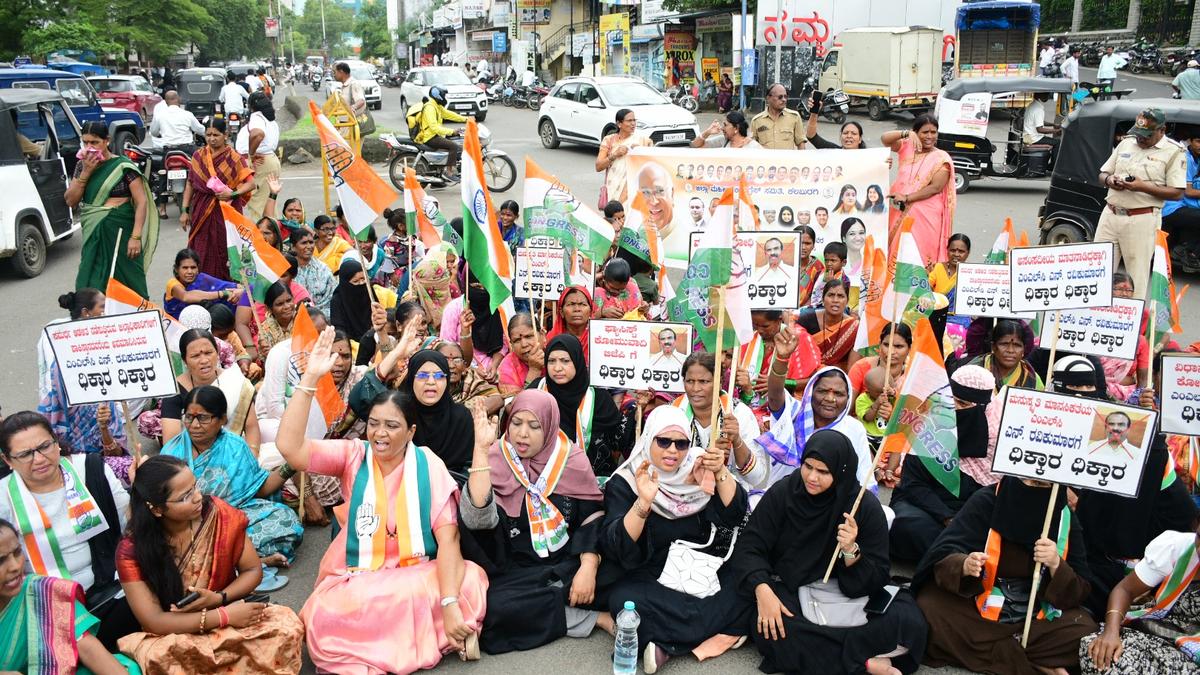
The Congress party's women's wing also took to the streets, organizing a protest procession from the district Congress party office to Jagat Circle in Kalaburagi. Their primary demand is Ravikumar's resignation from the Legislative Council, reflecting the severity of their condemnation. The act of blocking the main road at Jagat Circle for half an hour serves as a visible and disruptive expression of their discontent. Renuka Singe, the district president of the Congress party's women's wing, emphasized that Ravikumar's remarks should not be dismissed as a momentary lapse. She argued that the BJP leadership's silence in the wake of such divisive statements poses a serious threat to India's democratic and secular framework. This statement highlights the broader implications of the incident, suggesting that it has the potential to undermine the very principles upon which the Indian nation is founded.
The issue extends beyond the immediate context of Ravikumar's remarks and the protests that followed. It raises fundamental questions about the role of political leaders in promoting social harmony and upholding constitutional values. The accusations of communalism and misogyny leveled against Ravikumar strike at the heart of these concerns. The incident also underscores the importance of holding political leaders accountable for their words and actions, especially when those actions have the potential to incite hatred or discrimination. The silence of the BJP leadership in the face of these accusations has been widely criticized, suggesting a lack of commitment to addressing the issue of communalism within their ranks. This silence has further fueled the controversy and intensified calls for action.
The reactions to Ravikumar's comments showcase the deep divisions that exist within Indian society, particularly along religious and caste lines. The incident has sparked a national conversation about the need for greater tolerance and understanding, as well as the importance of protecting the rights and dignity of all citizens, regardless of their religious or social background. The protests highlight the power of collective action in challenging divisive rhetoric and demanding accountability from political leaders. They also underscore the critical role of civil society organizations and political parties in promoting social justice and upholding constitutional values. The focus on the identity of Fouzia Taranum as a Muslim woman underscores the intersectionality of discrimination, where individuals can face prejudice based on multiple aspects of their identity. This highlights the need for a nuanced understanding of social inequalities and a comprehensive approach to combating discrimination in all its forms.
The accusations made against the BJP, claiming they are fostering communal hatred, need deeper evaluation within the larger political context. Political rivals frequently accuse each other of such actions, and evaluating the validity of these claims necessitates detailed analysis of party policies, campaign rhetoric, and the behavior of its members over time. Accusations of implementing a “regressive Manuwadi worldview” are a serious claim, referencing an ancient Hindu legal text often associated with caste hierarchies. Supporting such accusations requires tangible evidence of policies that overtly promote caste-based discrimination or undermine the principles of social equality enshrined in the Indian Constitution. Without such evidence, the accusations remain serious but lack the grounding needed to evaluate them fairly. The controversy surrounding Ravikumar’s remarks offers a lens through which to assess the commitment of various political actors to secular principles and inclusive governance. The response of the BJP leadership, the actions of the government in investigating the incident, and the broader public discourse all contribute to shaping the narrative and influencing public opinion.
Moreover, this instance raises pertinent questions regarding the responsibilities and ethical boundaries of public officials in their public statements. While freedom of expression is a fundamental right, it is crucial to consider the potential impact of inflammatory rhetoric, especially when directed towards individuals or communities based on their identity. Political leaders are held to a higher standard of conduct due to their influential position and the potential for their words to incite violence or discrimination. The controversy surrounding Ravikumar’s remarks emphasizes the need for stringent guidelines and mechanisms to hold public officials accountable for hate speech and discriminatory conduct. This includes implementing codes of conduct, providing training on diversity and inclusion, and establishing independent bodies to investigate complaints of discrimination.
The protests and debates sparked by this event are a reminder of the ongoing challenges India faces in upholding its constitutional commitment to secularism and social justice. It highlights the need for continuous dialogue, education, and advocacy to promote tolerance, understanding, and mutual respect among different communities. Addressing the root causes of communalism and discrimination requires a multi-faceted approach that involves reforming educational curricula, promoting interfaith dialogue, strengthening legal frameworks, and empowering marginalized communities. It also necessitates the active participation of civil society organizations, media outlets, and religious leaders in fostering a culture of inclusivity and respect for diversity.
Ultimately, the controversy surrounding N. Ravikumar's remarks serves as a crucial test of India's commitment to its founding principles. The way this situation is handled, and the actions taken by political leaders and institutions, will have a lasting impact on the country's social fabric and its democratic credentials. This incident presents an opportunity for introspection, reflection, and renewed efforts to build a more inclusive, equitable, and just society for all its citizens. This demands a concerted effort from all stakeholders, including political parties, civil society organizations, media outlets, and individual citizens, to promote dialogue, challenge prejudice, and uphold the values of secularism and social justice. Only through such collective action can India hope to overcome the challenges of communalism and build a truly harmonious and prosperous nation.