
 |
|
Prime Minister Narendra Modi's recent four-state tour, encompassing Bihar, Sikkim, and West Bengal, underscores the central government's focus on regional development and national security. The visit to Bihar, a state gearing up for elections, was marked by a massive roadshow in Patna, where enthusiastic crowds gathered to greet the Prime Minister. The air resonated with patriotic fervor as people celebrated the success of “Operation Sindoor,” a detail absent from other readily available summaries, thus highlighting a potentially significant development in national security or counter-terrorism efforts, needing further investigation. While the article doesn't explicitly state the nature of the operation, its mention alongside the Prime Minister's earlier vow to punish perpetrators of the Pahalgam terror attack suggests a possible link. This implies a decisive action taken by the government against terrorism, which is clearly popular amongst the public. The Prime Minister's presence in Bihar ahead of elections suggests a deliberate effort to capitalize on this public sentiment and solidify the ruling party's support base. This strategic move highlights the intersection of national security concerns and political maneuvering, a common theme in contemporary politics. The scale of the roadshow further emphasizes the importance of Bihar in the upcoming elections, underscoring the state's significance in the broader national political landscape. The Prime Minister's direct engagement with the public, as evidenced by the roadshow, allows for a direct connection with voters and helps to reinforce the message of progress and development that the government seeks to promote.
The Prime Minister's visit to Sikkim focused on highlighting the state's developmental achievements. He lauded Sikkim's transformation into a model of progress and a symbol of cultural richness and heritage. The Atal Setu, a key infrastructure project, was highlighted as a significant contributor to improved connectivity between Sikkim and Darjeeling. This improved connectivity is not only vital for economic growth by facilitating trade and tourism but also crucial for strengthening national integration by connecting remote regions of the country. The Prime Minister's emphasis on the Northeast as a 'shining chapter' in India's development story reflects a broader government strategy to prioritize development in the region and integrate it more closely with the rest of the country. This focus on the Northeast aligns with the government's 'Act East' policy, which aims to strengthen economic and strategic ties with countries in Southeast Asia. By promoting development and connectivity in the Northeast, India seeks to create a more stable and prosperous region, which can serve as a gateway to Southeast Asia. The recognition of Sikkim's cultural richness further underscores the importance of preserving and promoting the unique cultural identities of different states within the Indian Union. This emphasis on cultural diversity is a key element of the government's approach to national unity and integration.
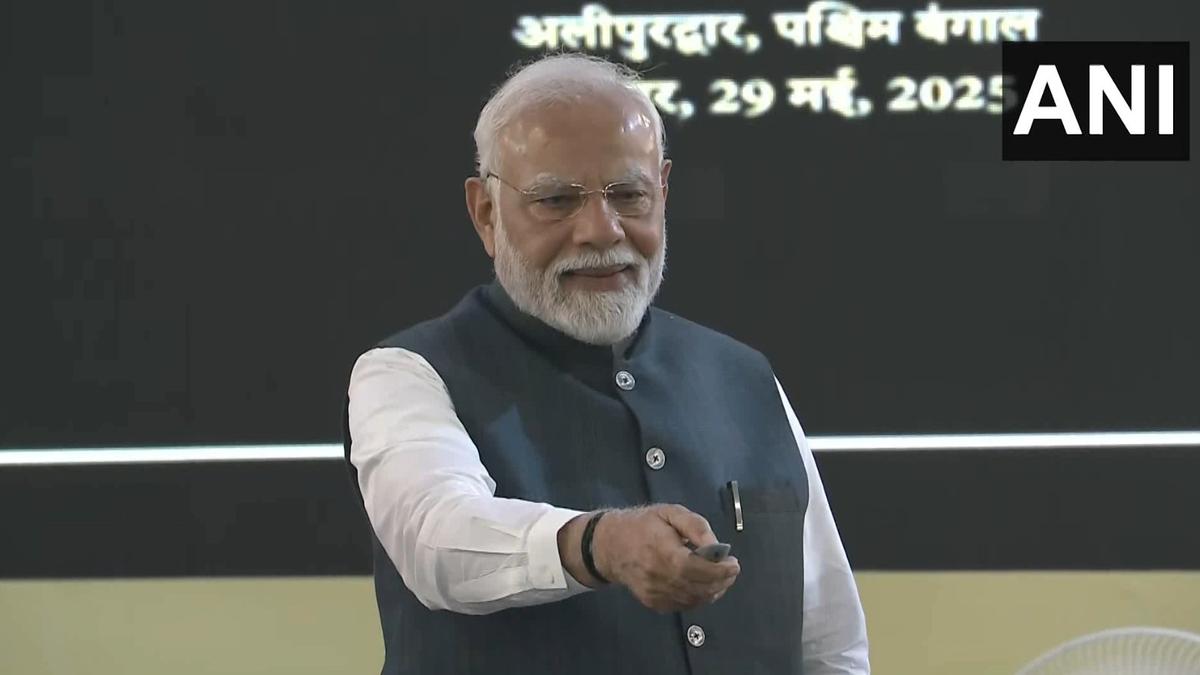
In West Bengal, Prime Minister Modi laid the foundation stone for a city gas distribution (CGD) project worth ₹1,010 crore in Alipurduar district. This project aims to provide access to cleaner and more affordable fuel to residents and businesses in the region. The Prime Minister emphasized the importance of West Bengal's development for India's overall progress towards becoming a developed nation. This highlights the central government's recognition of the critical role that West Bengal plays in the Indian economy. The CGD project is expected to create employment opportunities and boost economic activity in the Alipurduar district. The project also aligns with the government's broader efforts to promote cleaner energy and reduce carbon emissions. The development of West Bengal is particularly significant given its strategic location bordering Bangladesh and other neighboring countries. A prosperous and stable West Bengal is crucial for regional security and economic integration. The Prime Minister's focus on West Bengal's development reflects the government's commitment to inclusive growth and ensuring that all states contribute to India's overall progress. This investment in infrastructure and economic development is intended to improve the lives of the people of West Bengal and to strengthen the state's position within the Indian economy.
Analyzing the Prime Minister’s multi-state visit reveals several key themes. Firstly, the emphasis on national security, as evidenced by the mention of “Operation Sindoor” in Bihar, suggests a heightened awareness of security threats and a proactive approach to addressing them. The lack of specific details about the operation adds an element of intrigue and underscores the sensitivity of the matter. Secondly, the focus on regional development, particularly in Sikkim and West Bengal, highlights the government’s commitment to inclusive growth and ensuring that all states benefit from economic progress. The infrastructure projects and development initiatives announced during the visit are expected to have a significant impact on the lives of the people in these states. Thirdly, the political dimension of the visit is undeniable, particularly in Bihar, where elections are imminent. The Prime Minister’s roadshow and public rallies are designed to mobilize support and reinforce the ruling party’s message of progress and development. The timing of the visit suggests a strategic effort to capitalize on recent successes and solidify the party’s position in the state. Fourthly, the Prime Minister's rhetoric consistently links regional development with national progress, suggesting a unified vision for India's future. This narrative emphasizes the importance of all states contributing to the overall growth and prosperity of the nation.
Furthermore, the Prime Minister's visit underscores the importance of connectivity in driving economic growth and national integration. The Atal Setu in Sikkim is a prime example of how infrastructure projects can improve access to remote regions and facilitate trade and tourism. The city gas distribution project in West Bengal is another example of how infrastructure investments can improve the quality of life for residents and boost economic activity. The government's focus on connectivity reflects a broader strategy to create a more integrated and interconnected economy, which can enhance competitiveness and attract investment. The Prime Minister's visit also highlights the importance of public-private partnerships in driving infrastructure development. Many of the projects announced during the visit are likely to involve collaboration between the government and private sector companies. This approach allows for the efficient allocation of resources and expertise, which can accelerate the pace of development. Finally, the Prime Minister's visit underscores the importance of good governance and effective implementation of policies in achieving development goals. The success of projects like the Atal Setu and the city gas distribution project will depend on efficient planning, execution, and monitoring. The government's commitment to good governance is essential for ensuring that development initiatives deliver tangible benefits to the people. This commitment is further reinforced by the emphasis on transparency and accountability in all government activities.
Considering the context of the provided article, it is crucial to recognize its potential limitations. The article, as presented, lacks substantial detail about 'Operation Sindoor,' relying on its mere mention to convey a sense of accomplishment. Deeper analysis is required to understand its actual impact and ethical implications. Similarly, the celebratory tone regarding Sikkim's development warrants critical evaluation. While improvements may exist, it is essential to examine data related to income inequality, environmental sustainability, and the impact on indigenous communities. The West Bengal gas distribution project, while seemingly beneficial, could be assessed considering factors such as affordability for low-income households, the potential displacement of traditional energy sources, and the long-term environmental consequences of increased gas consumption. The Prime Minister's focus on regional development, therefore, needs to be examined from a more multifaceted perspective that addresses possible problems. Further exploration should consider the specific needs and concerns of each region, involving consultation with local communities. Moreover, the political motivations behind such visits are hard to dismiss. In Bihar, the roadshow appears strategically timed before the election, indicating an attempt to leverage public support and national sentiment. It is important for journalists and citizens to critically examine the claims made during political campaigns, scrutinizing their factual basis. The emphasis on 'national integration' could also mask potential power imbalances or the erosion of local cultural practices. In conclusion, while the article presents a positive depiction of the Prime Minister's activities, a balanced and well informed approach calls for independent verification of the claims made, careful consideration of the unintended consequences, and awareness of the political backdrop against which such development initiatives are promoted.
The enduring value of any political or developmental initiative hinges on its sustainability, equitable distribution of benefits, and long-term impact on the environment and society. Infrastructure projects, while essential, must be designed with ecological considerations in mind, minimizing harm to sensitive ecosystems and promoting resource efficiency. Social safety nets and inclusive policies are crucial for ensuring that the benefits of economic growth reach all segments of society, particularly the marginalized and vulnerable. Furthermore, the genuine participation of local communities in decision-making processes is essential for fostering ownership and ensuring that development initiatives align with their needs and aspirations. Transparent and accountable governance mechanisms are also vital for preventing corruption, ensuring efficient use of resources, and building public trust. Finally, a robust system of monitoring and evaluation is needed to assess the impact of development initiatives, identify areas for improvement, and ensure that they are delivering the desired results. The government's commitment to these principles will be critical for ensuring that its efforts translate into meaningful and sustainable progress for all citizens. In order for Prime Minister Modi's four-state visit to have lasting positive effects, the initiatives started must embody the concepts mentioned above. The visit highlights the significance of national security, inclusive growth, connectivity, and good governance in achieving India's development aspirations. The lasting impact of these initiatives will depend on their sustainability, equitable distribution of benefits, and genuine participation of local communities.
Moreover, the analysis of the Prime Minister's visit and its potential implications demands a focus on the intangible aspects of development, beyond the tangible infrastructure projects and economic indicators. Social cohesion, cultural preservation, and the promotion of values such as empathy, compassion, and respect for diversity are crucial for building a strong and resilient society. Education plays a pivotal role in fostering critical thinking, creativity, and a sense of social responsibility among citizens. Access to quality healthcare is essential for ensuring the well-being of the population and promoting a healthy and productive workforce. Furthermore, the promotion of gender equality and the empowerment of women are critical for unlocking the full potential of society and achieving sustainable development goals. The government's policies and programs should prioritize these intangible aspects of development alongside economic growth, creating a more holistic and equitable society. The Prime Minister's call for development in Sikkim, West Bengal, and Bihar must consider the needs of all people of the states, not just a small section. The voices of the poor and marginalized must be heard. If Prime Minister Modi's visit is to be viewed as truly successful in the future, the citizens of these four states must experience better lives and more opportunity.