
 |
|
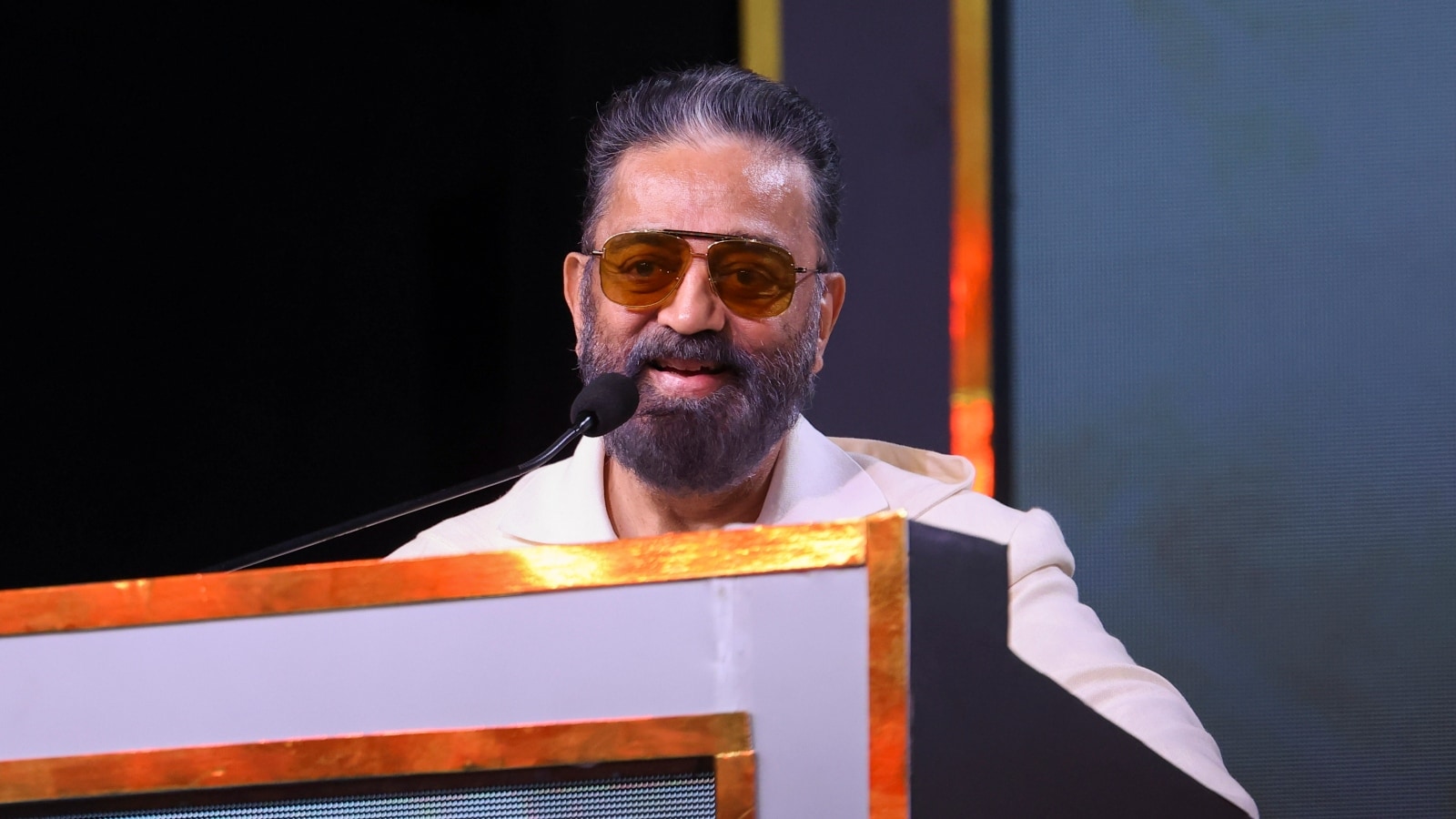
The recent controversy ignited by renowned actor and politician Kamal Haasan's assertion regarding the origin of the Kannada language highlights the deeply rooted sensitivities surrounding linguistic identity and historical narratives in India. Haasan, during a promotional event for his upcoming movie “Thug Life”, stated that Kannada originated from Tamil, implying that Tamil serves as the mother language of Kannada. This statement, made in the presence of Kannada actor Shivarajkumar, son of the esteemed late Rajkumar, immediately triggered widespread condemnation across Karnataka. The ensuing backlash underscores the complex interplay of language, culture, and regional pride, demonstrating how seemingly innocuous remarks can quickly escalate into significant political and social disputes. The furor stems from the perceived misrepresentation of the established understanding of Dravidian languages and their origins. Linguists and scholars widely agree that Kannada and Tamil, along with other South Indian languages such as Telugu, Malayalam, and Tulu, belong to the Dravidian language family. The consensus is that these languages evolved from a common ancestor known as Proto-Dravidian, a hypothetical language spoken over 2,000 years ago. This Proto-Dravidian language predates the arrival of Indo-Aryan languages like Sanskrit in the Indian subcontinent. Haasan’s statement, therefore, contradicted this widely accepted linguistic understanding and was interpreted as a slight against the historical and cultural significance of Kannada. The reaction in Karnataka was swift and unequivocal. Chief Minister Siddaramaiah and leaders from across the political spectrum united in their condemnation of Haasan's remarks, demanding an apology for what they perceived as an insult to the Kannada language and its speakers. The Karnataka Film Industry also faced immense pressure to secure an apology from Haasan, reflecting the broader public sentiment. The incident quickly transcended the realm of mere linguistic debate and took on a political dimension, demonstrating the power of language to mobilize public opinion and evoke strong emotional responses. Haasan’s refusal to apologize, claiming that his statement was made out of love, further fueled the controversy. This justification was seen as dismissive and insensitive, failing to acknowledge the genuine concerns and hurt feelings of the Kannada-speaking population. The controversy also brought attention to the silence of Shivarajkumar, who did not challenge Haasan’s statement on stage. This silence was interpreted by some as tacit approval, leading to questions and criticisms regarding his stance on the issue. The debate surrounding Haasan’s statement has also prompted a broader discussion about the complexities of linguistic relationships and the importance of historical accuracy. Kannada linguists and scholars have stepped forward to provide evidence supporting the Proto-Dravidian origin of Dravidian languages. They emphasize that Kannada and Tamil are cousin languages, belonging to the same family but evolving independently over centuries. Professor Ham Pa Nagarajaiah, a renowned Kannada scholar and linguist, described Haasan’s statement as “stupid” and completely false, underscoring the academic consensus on the matter. Professor Purushottama Bilimale, chairman of the Kannada Development Authority and a respected linguist, echoed these sentiments, describing Haasan’s remarks as insulting and inflammatory. Bilimale highlighted the dangers of claiming that one language is the mother of another, emphasizing that such claims can be rooted in a superiority complex and can lead to linguistic chauvinism. He also criticized those who claim that Sanskrit is the mother language of all Indian languages, pointing out that while Sanskrit has influenced Dravidian languages, it is not their origin. This broader context emphasizes the importance of understanding the historical and linguistic complexities of India, a nation with a rich tapestry of languages and cultures. The current controversy is not without precedent. The article draws parallels to a similar incident involving Rajaji, a prominent Indian politician and scholar, over 55 years ago. Rajaji had made similar claims about the origin of Kannada, stating that it came from Tamil and that the Kannada script originated from Telugu. His statements also sparked protests in Karnataka, and he eventually apologized for his remarks. This historical parallel highlights the enduring sensitivities surrounding linguistic identity and the potential for misinformed statements to ignite public outrage. The reference to Rajaji’s apology underscores the importance of acknowledging and rectifying errors, especially when they touch upon deeply held cultural beliefs.
Furthermore, the article delves into the historical evidence supporting the antiquity and independence of the Kannada language. It cites the work of the late Professor S Shettar, a renowned historian and linguist, who concluded that Kannada may be 200 years older than Tamil. Shettar pointed out that many Kannada words are found in Sangham literature of Tamil, suggesting early interactions and influences between the two languages. He also highlighted the close trade ties between Kannada rulers and the Greeks, noting that a book full of Kannada words was discovered at the Alexandria library over 2,000 years ago. These historical findings provide further support for the argument that Kannada is an independent and ancient language with its own distinct history and development. The article also mentions the involvement of political parties in the controversy. The BJP, which advocates for Sanskrit as the mother language of all Indian languages, has criticized Haasan and demanded an apology. This response has been met with criticism, as it highlights the perceived double standards of the BJP in promoting one language over others. The political dimension of the controversy underscores the potential for language to be used as a tool for political mobilization and ideological positioning. The article concludes by questioning whether Kamal Haasan will follow in Rajaji’s footsteps and apologize for his “tone deaf” comments. It suggests that the future of his movies may depend on his willingness to address the concerns of the Kannada-speaking population. This ending reinforces the idea that celebrities and public figures have a responsibility to be mindful of the potential impact of their words, especially when they relate to sensitive cultural and linguistic issues. The controversy surrounding Kamal Haasan's statement serves as a reminder of the importance of historical accuracy, linguistic understanding, and cultural sensitivity. It highlights the enduring power of language to shape identity, mobilize public opinion, and ignite political disputes. The incident also underscores the need for public figures to be mindful of the potential impact of their words and to engage in respectful dialogue when addressing sensitive cultural issues. The article's thorough exploration of the historical context, linguistic evidence, and political implications of the controversy provides a comprehensive understanding of the complex dynamics at play. It also emphasizes the importance of promoting mutual respect and understanding among different linguistic and cultural groups in India. The controversy further highlights the ongoing debates surrounding linguistic nationalism and the role of language in shaping national identity. In a country as diverse as India, with its myriad languages and cultures, it is essential to foster a spirit of inclusivity and respect for linguistic diversity. This requires a commitment to historical accuracy, linguistic understanding, and cultural sensitivity, as well as a willingness to engage in open and respectful dialogue. The Kamal Haasan controversy serves as a valuable lesson in the complexities of linguistic politics and the importance of responsible communication in a multicultural society. It is a reminder that language is not just a tool for communication but also a powerful symbol of identity, culture, and history. Therefore, it is essential to approach linguistic issues with sensitivity, respect, and a commitment to promoting mutual understanding.
The historical context of the Dravidian language family is crucial to understanding the current controversy. The Proto-Dravidian language, from which Kannada, Tamil, Telugu, Malayalam, and other Dravidian languages are believed to have evolved, is thought to have been spoken in the Indian subcontinent before the arrival of the Indo-Aryan languages. This linguistic history suggests that the Dravidian languages have a deep and ancient connection to the region. The theory that the Proto-Dravidian language was spoken by the Harappa and Mohenjodaro civilization adds another layer of complexity to the debate. If this theory is correct, it would mean that the Dravidian languages have been spoken in the Indian subcontinent for thousands of years, predating the arrival of the Indo-Aryans. This would further strengthen the argument that the Dravidian languages are indigenous to the region and have their own distinct history and development. The historical evidence supporting the antiquity of the Kannada language is also significant. The discovery of Kannada words in Sangham literature of Tamil suggests that there was early contact and interaction between the two languages. However, it does not necessarily mean that Kannada originated from Tamil. It is more likely that the two languages influenced each other over time. The presence of Kannada words in Sangham literature could also be evidence that Kannada was spoken in the region before Tamil. The discovery of a book full of Kannada words at the Alexandria library over 2,000 years ago is another piece of evidence that supports the antiquity of the Kannada language. This discovery suggests that Kannada was a well-established language with its own distinct vocabulary and grammar at that time. The close trade ties between Kannada rulers and the Greeks also suggest that Kannada was a language of commerce and culture. The linguistic evidence also supports the argument that Kannada is an independent language. While Kannada has borrowed words from Sanskrit, it has also retained its own distinct vocabulary and grammar. The Kannada script is also distinct from the Tamil script, although it is believed to have evolved from a common ancestor. The Kannada language also has its own unique literary tradition, which dates back to the 9th century AD. The political implications of the Kamal Haasan controversy are also significant. The controversy has highlighted the tensions between different linguistic groups in India. It has also raised questions about the role of language in shaping national identity. The BJP's response to the controversy has been criticized for its perceived double standards. The BJP has been accused of promoting Sanskrit over other Indian languages. This has led to accusations that the BJP is trying to impose a Hindu nationalist agenda on the country. The controversy has also highlighted the importance of cultural sensitivity. Kamal Haasan's statement was seen as insensitive by many Kannada speakers. This shows that it is important to be aware of the cultural sensitivities of different linguistic groups when making public statements. The controversy surrounding Kamal Haasan's statement is a complex issue with historical, linguistic, and political dimensions. It is important to understand all of these dimensions in order to fully appreciate the significance of the controversy. The controversy serves as a reminder of the importance of cultural sensitivity and linguistic diversity in India. It also highlights the need for respectful dialogue and mutual understanding between different linguistic groups.
Finally, the question remains whether Kamal Haasan will apologize for his remarks. The historical precedent of Rajaji's apology suggests that an apology may be the best way to resolve the controversy. However, Haasan has so far refused to apologize, claiming that his statement was made out of love. It is possible that Haasan will eventually change his mind and apologize. The future of his movies may depend on it. The Kannada film industry has a significant influence in Karnataka, and if the industry decides to boycott Haasan's movies, it could have a significant impact on his career. The controversy also raises questions about the role of celebrities in public discourse. Celebrities have a large platform, and their words can have a significant impact on public opinion. Therefore, it is important for celebrities to be mindful of the potential impact of their words and to avoid making statements that could be seen as insensitive or offensive. The controversy also highlights the need for more education about the Dravidian languages. Many people in India, including some politicians and celebrities, are not aware of the linguistic history of the Dravidian languages. This lack of awareness can lead to misunderstandings and controversies. The government and educational institutions should do more to promote education about the Dravidian languages. This would help to foster greater understanding and respect between different linguistic groups in India. The Kamal Haasan controversy is a complex issue with no easy solutions. However, by promoting education, cultural sensitivity, and respectful dialogue, it is possible to create a more harmonious and inclusive society in India. The controversy also serves as a reminder that language is a powerful tool that can be used to unite or divide people. Therefore, it is important to use language responsibly and to avoid making statements that could be seen as divisive or offensive. In conclusion, the controversy surrounding Kamal Haasan's statement about the origin of the Kannada language highlights the complexities of linguistic identity and historical narratives in India. The swift and widespread condemnation of his remarks underscores the deep-seated sensitivities surrounding language, culture, and regional pride. The incident serves as a reminder of the importance of historical accuracy, linguistic understanding, and cultural sensitivity in public discourse. The controversy also underscores the need for respectful dialogue and mutual understanding among different linguistic and cultural groups in India. By learning from this incident, we can strive to create a more inclusive and harmonious society where linguistic diversity is celebrated and respected. The future resolution of this controversy hinges on Kamal Haasan's willingness to address the concerns of the Kannada-speaking population, and the broader implications will continue to shape the dialogue surrounding language, identity, and cultural sensitivity in India.
Source: 'They Are Cousins, Tamil Is Not Kannada's Mother': Kannadigas Hit Back At Kamal Haasan