
 |
|
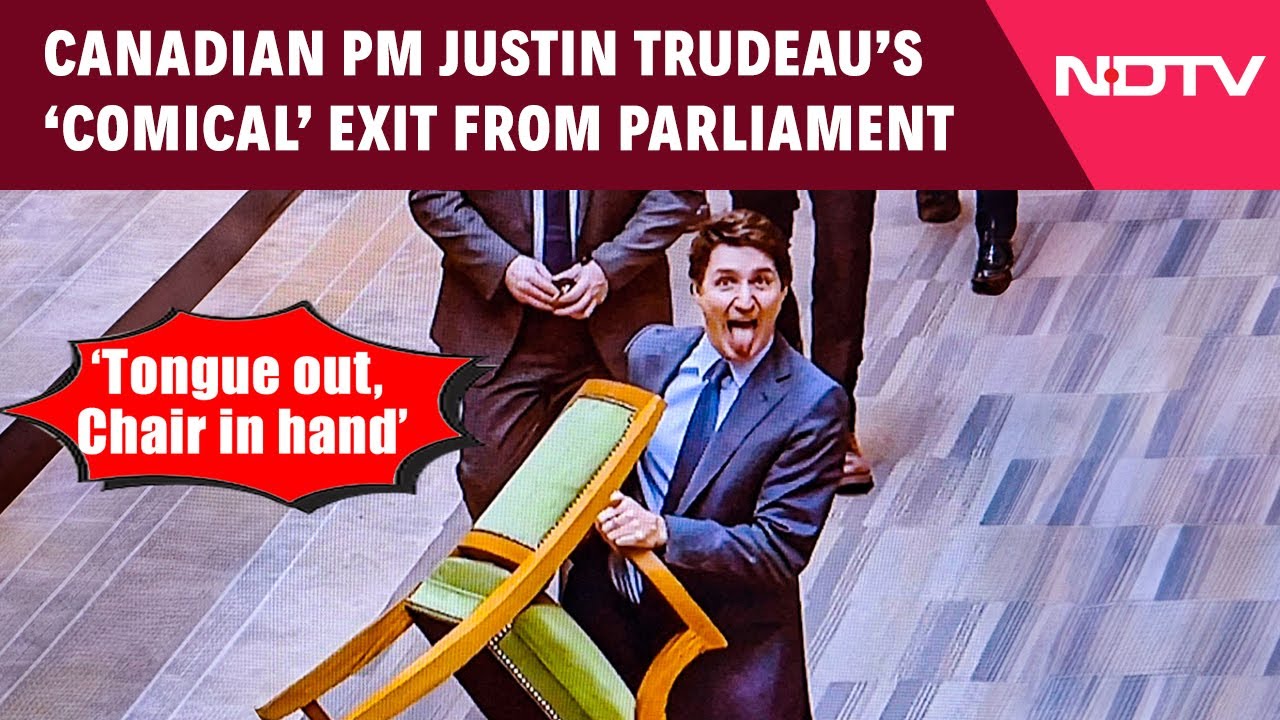
The photograph of Justin Trudeau exiting the House of Commons with a chair in hand and tongue playfully sticking out captured a moment of transition and marked the end of an era in Canadian politics. The image, rapidly disseminated across social media platforms, sparked a range of reactions, from amusement and nostalgia to reflection on his tenure as Prime Minister. The context surrounding this seemingly lighthearted scene is crucial to understanding its significance. Trudeau had previously announced his resignation as leader of the Liberal Party on January 6, 2025, paving the way for a leadership contest that culminated in Mark Carney's victory. Carney officially assumed the role on March 10, 2025, the very day the viral photograph was taken. Therefore, the image represents Trudeau's final departure from a position of direct leadership within the government. It symbolizes a handing over of power and a concluding chapter in his political career. The act of carrying a chair, a mundane task in itself, takes on symbolic weight. It could be interpreted as Trudeau literally carrying away a piece of his time in office, or perhaps humorously indicating that he is still willing to contribute to the logistics, now just in a different way. The playful expression further adds to the complexity of the image. Was it a spontaneous moment of levity, a deliberate attempt to control his narrative, or simply an instance of Trudeau being himself? Analyzing Trudeau's political career leading up to this moment is essential. He rose to prominence on a platform of progressive values, promising change and a renewed sense of optimism in Canadian politics. His tenure was marked by significant policy initiatives, including the legalization of cannabis, the implementation of a carbon tax, and investments in infrastructure. However, he also faced challenges, including controversies surrounding ethics violations, allegations of cultural appropriation, and criticisms of his handling of economic issues. These experiences undoubtedly shaped his perspective and contributed to the circumstances surrounding his resignation. Mark Carney's assumption of leadership represents a potential shift in direction for the Liberal Party. As a former Governor of the Bank of Canada and the Bank of England, Carney brings a wealth of experience in economic policy and international affairs. His leadership style and policy priorities may differ significantly from Trudeau's, potentially influencing the future trajectory of the party and the country. The photograph also serves as a reminder of the ever-present nature of social media in modern politics. A simple image, captured and shared by individuals, can rapidly gain widespread attention and become a subject of national conversation. This highlights the power of social media to shape public perception and influence political discourse. In conclusion, the viral photograph of Justin Trudeau leaving the House of Commons with a chair in hand is more than just a fleeting moment of amusement. It is a visual representation of a political transition, a symbol of the end of an era, and a reflection on the complexities of leadership and the impact of social media on modern politics. It invites viewers to contemplate Trudeau's legacy, the future of the Liberal Party under Mark Carney, and the evolving dynamics of Canadian politics.
Further extending the analysis, it is important to consider the global context surrounding Trudeau's resignation and Carney's ascendancy. The world in 2025 faces a complex web of challenges, including climate change, economic instability, geopolitical tensions, and the ongoing evolution of technology. These factors would have undoubtedly influenced Trudeau's decision to step down and the subsequent selection of Carney as his successor. The Canadian electorate, like those in many developed nations, is increasingly polarized, demanding political solutions to ever more complex issues. Climate change, with its increasing frequency and intensity of extreme weather events, places enormous pressures on governments and economies. The need for sustainable policies and innovative technologies is paramount, requiring strong leadership and international cooperation. Economic instability, fueled by global supply chain disruptions, inflation, and income inequality, also presents significant challenges. Governments must navigate these complex economic forces while ensuring that citizens have access to essential resources and opportunities. Geopolitical tensions, including conflicts, trade wars, and cybersecurity threats, contribute to a volatile global landscape. Canada, as a middle power with strong international ties, must carefully manage its relationships with other nations while safeguarding its own interests. The photograph's immediate impact also serves to illustrate the instantaneous nature of information dissemination and its influence on public perception. Within minutes of its initial posting, the image was shared across social media platforms, eliciting a range of responses. News outlets picked up on the story, amplifying its reach and adding layers of interpretation. The viral nature of the image demonstrates the power of social media to shape political narratives and influence public opinion. This presents both opportunities and challenges for political leaders. On the one hand, social media can be used to connect directly with citizens, disseminate information, and build support for policy initiatives. On the other hand, it can also be a breeding ground for misinformation, negativity, and political polarization. Leaders must navigate this complex landscape carefully, using social media responsibly and ethically to engage with the public and promote constructive dialogue. Furthermore, the image can be seen as a reflection on the changing nature of leadership itself. In an era of rapid technological change and evolving social norms, traditional models of leadership are being challenged. Citizens are demanding leaders who are authentic, transparent, and responsive to their needs. The photograph of Trudeau, with its blend of seriousness and levity, suggests a leader who is willing to be seen as human, with all the complexities and imperfections that entails.
Moreover, the act of Trudeau physically carrying a chair out of the House of Commons warrants deeper scrutiny. While on the surface it seems like a trivial act, it may possess symbolic weight. It can represent the manual labor behind the political theater, the daily grind that may not always be visible to the public. Or perhaps it's Trudeau's attempt to appear relatable, connecting to average citizens who perform similar mundane tasks every day. This could be a deliberate strategy to soften his image after a period of leadership that had its fair share of controversies. It presents a stark contrast to the often-perceived detachment of political figures from the daily realities of the population. It challenges the image of a leader solely focused on high-level policy decisions and global diplomacy, demonstrating a willingness to participate in the more basic aspects of governance. This gesture may also be interpreted as an attempt to demystify the political process and make it more accessible to the public. It suggests that even the most powerful individuals are capable of performing simple tasks and that politics is not an exclusive domain reserved for the elite. The choice to leave with the tongue sticking out is a further layer of complexity. Is it a sign of relief, a farewell gesture, a deliberate attempt to go viral, or just a momentary lapse in composure? Each interpretation casts a different light on his final act. It’s a reminder of the human element in politics, of the fact that even the most carefully orchestrated public image can be momentarily disrupted by unfiltered emotion. Furthermore, the transition of power from Trudeau to Carney deserves attention. It prompts questions about the ideological and political differences between the two leaders. What policies will Carney prioritize? Will he continue down the same path as Trudeau, or will he chart a new course? The answers to these questions will have significant implications for the future of Canada. The timing of the photograph, coinciding with Carney's official assumption of leadership, amplifies its significance. It visually marks the end of one era and the beginning of another. It encapsulates the essence of political transition, the passing of the torch from one leader to the next. The image acts as a symbolic bookmark, separating Trudeau's past leadership from Carney's future direction.
In addition to analyzing the specifics of the event and the individuals involved, it's important to consider the broader context of democratic governance. The peaceful transfer of power, as demonstrated by Trudeau's resignation and Carney's assumption of leadership, is a fundamental aspect of a functioning democracy. It underscores the importance of respecting the will of the people and upholding the rule of law. The process of selecting a new leader, whether through an election or a party leadership contest, provides an opportunity for citizens to engage in political discourse and shape the future direction of their country. This engagement is essential for maintaining a healthy and vibrant democracy. The viral photograph, in a way, became a catalyst for this public discourse. It prompted conversations about Trudeau's legacy, Carney's potential, and the overall state of Canadian politics. It served as a reminder of the importance of active citizenship and the need to hold political leaders accountable. The speed with which the image circulated also highlights the challenges of maintaining informed and nuanced political debate in the age of social media. The rapid spread of information, both accurate and inaccurate, can make it difficult for citizens to form well-reasoned opinions. It underscores the need for critical thinking skills and media literacy in order to navigate the complex information landscape. The event can be viewed as a microcosm of the broader challenges facing democratic societies around the world. The rise of populism, the spread of misinformation, and the erosion of trust in institutions are all threats to democratic governance. It is crucial for citizens to remain vigilant and actively participate in the political process in order to safeguard democratic values and institutions. Furthermore, the photo itself serves as a reminder that even in formal, structured systems of governance, humans are at the helm and that human imperfection can come to the forefront at any moment. The moment humanizes Trudeau in a way that formal political addresses and media statements often fail to do. His gesture, however unplanned, provides a snapshot into a moment that speaks a thousand words.
Source: Justin Trudeau Viral Photo | 'Tongue Out, Chair In Hand...': Canadian PM's Playful Exit