
 |
|
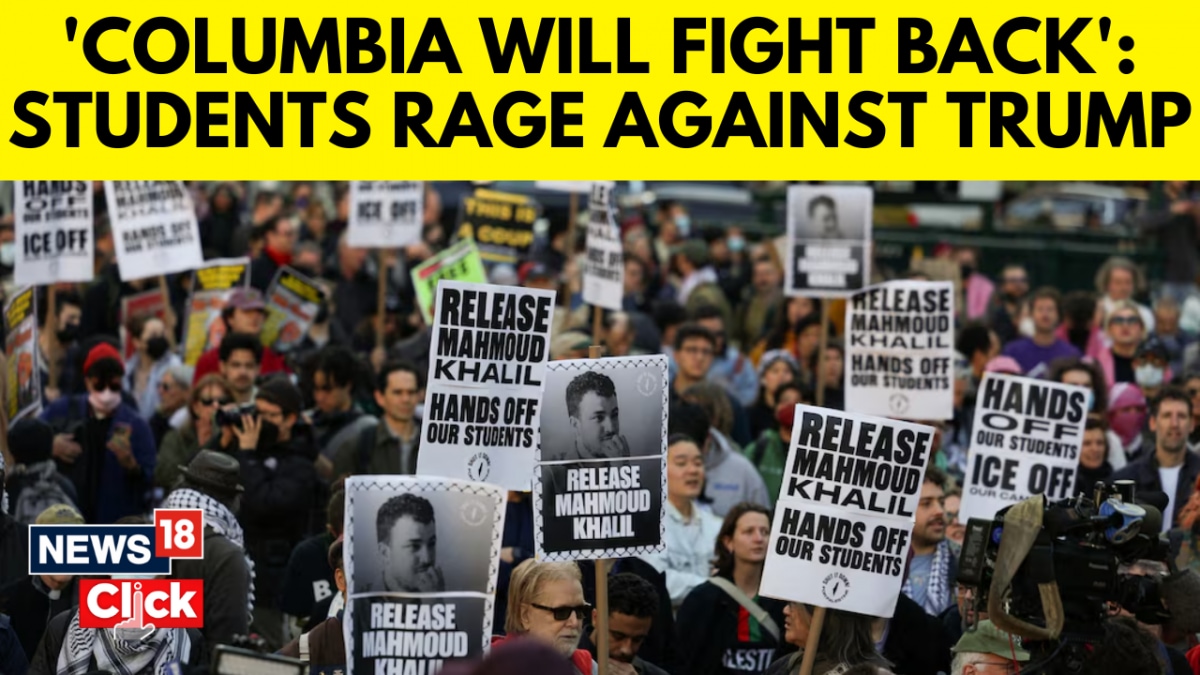
The provided article content is extremely limited and primarily focuses on copyright notices and disclaimers. Therefore, constructing a meaningful essay requires significant extrapolation and inference beyond the explicitly stated information. We can, however, discuss the context suggested by the title: 'Columbia Will Fight Back': Students Express Outrage Over Arrest Of Palestinian Activist Mahmoud Khalil.' This title points to a situation involving student activism, potential conflict with university authorities or external law enforcement, and a focus on the arrest of an individual identified as a Palestinian activist. The outrage expressed by students suggests a perceived injustice or violation of rights. The phrase 'Columbia Will Fight Back' implies a planned or potential course of action in response to the arrest, potentially involving protests, demonstrations, legal challenges, or other forms of advocacy. The arrest itself could be related to a variety of factors, ranging from violation of university policies to more serious criminal charges. The activist's identity as 'Palestinian' suggests that the arrest may be related to his political activism or advocacy for Palestinian causes. The context of ongoing geopolitical events and debates surrounding the Israeli-Palestinian conflict makes this scenario particularly sensitive and likely to attract significant attention. Student activism on university campuses has a long history, often serving as a platform for raising awareness about social and political issues. Universities, on the other hand, have a responsibility to maintain order and enforce their policies, which can sometimes lead to clashes with student protesters. The specific details of the arrest and the charges against Mahmoud Khalil are crucial to understanding the situation fully. Was the arrest related to a protest or demonstration? Was it based on credible evidence of wrongdoing? These questions would need to be answered in order to assess the legitimacy of the arrest and the validity of the students' outrage. The use of the phrase 'fight back' suggests a sense of determination and resilience on the part of the students. It implies that they are not willing to passively accept the arrest of their fellow activist and that they are prepared to take action to challenge it. This action could take many forms, including organizing rallies, circulating petitions, writing letters to university officials, or seeking legal representation for Mahmoud Khalil. The involvement of CNN in reporting the story suggests that it has attracted significant media attention. The coverage of the event could play a crucial role in shaping public opinion and influencing the actions of university authorities and law enforcement. It is important to note that the limited information available makes it difficult to draw definitive conclusions about the situation. Further investigation and reporting are needed to fully understand the context of the arrest, the motivations of the students, and the potential consequences of their actions. Without more information, this analysis remains speculative and based on inferences drawn from the limited details provided. A more comprehensive article would provide details about the reason for the arrest, Khalil's activities, the specifics of the student protests, and the university's response. Furthermore, it would explore the broader context of student activism surrounding the Israeli-Palestinian conflict. The article would also ideally present diverse viewpoints from students, faculty, and university administrators. Without these elements, the analysis is based heavily on speculation derived from the very limited title and copyright information. The phrase 'fight back' suggests a potentially adversarial relationship, requiring the university to balance freedom of expression with maintaining campus order. The specific charges against Khalil will significantly influence the public and university community's perception of the events. The media coverage, spearheaded by CNN, has the potential to influence the national conversation on student activism and the Israeli-Palestinian conflict. This incident can serve as a case study for how universities navigate complex political issues and student demonstrations while ensuring a safe and inclusive environment for all students. Analyzing the university's policies regarding protests and demonstrations is crucial to understanding the legitimacy of the students' actions and the university's response. Examining the history of student activism at Columbia University could shed light on the likely trajectory of this particular protest. Understanding the role of outside organizations and influences on the student protests will be essential in gaining a comprehensive view of the situation. This requires careful consideration of the motivations of all involved parties and a balanced presentation of the facts.
The students' 'outrage' warrants a deeper investigation. What specific grievances are they voicing? Are they challenging the legality of the arrest, the university's policies, or broader issues related to the Israeli-Palestinian conflict? Understanding the root causes of their anger is essential to formulating effective solutions. It's also critical to analyze the demographics of the protesting students. Are they primarily members of specific student groups or organizations? Do they represent a broad spectrum of the student body? The composition of the protest group can reveal valuable insights into the underlying dynamics and motivations. Furthermore, examining the university's track record on handling similar situations in the past is crucial. Has Columbia University consistently upheld principles of free speech and academic freedom? Or has it been criticized for suppressing dissenting voices? The university's past actions can provide a framework for understanding its current response. The role of social media in amplifying the students' outrage should not be overlooked. How are students using platforms like Twitter, Facebook, and Instagram to organize protests, disseminate information, and mobilize support? Social media has become an indispensable tool for student activists, enabling them to reach a wider audience and exert greater influence. Examining the legal aspects of the arrest is also crucial. What specific charges have been filed against Mahmoud Khalil? What evidence does the prosecution have to support these charges? Are there any constitutional issues at stake, such as freedom of speech or the right to protest? The legal proceedings will undoubtedly shape the narrative surrounding the arrest. The potential consequences of the students' actions should also be considered. Could they face disciplinary action from the university? Could they be arrested or prosecuted for engaging in illegal activities? The students must weigh the risks and benefits of their actions carefully. It's important to remember that the situation is constantly evolving. New information is likely to emerge in the coming days and weeks, which could significantly alter the course of events. Staying informed and analyzing the situation critically are essential. Moreover, the arrest and subsequent protests could have long-term implications for Columbia University. Will it damage the university's reputation? Will it lead to changes in university policies or practices? Will it affect the university's relationship with its students and faculty? Only time will tell. In addition, analyzing the responses of other universities and organizations to the situation can provide valuable context. Are other institutions facing similar challenges? How are they responding? Learning from the experiences of others can help Columbia University navigate this difficult situation more effectively. Finally, it's important to emphasize the need for respectful dialogue and open communication. All parties involved – students, faculty, university administrators, law enforcement – must engage in constructive conversations to address the underlying issues and find mutually agreeable solutions. Without such dialogue, the conflict is likely to escalate and become even more difficult to resolve.
The copyright and trademark information included in the original article, while seemingly insignificant, are actually very important for understanding the media landscape and the protection of intellectual property. The statement 'CNN name, logo and all associated elements ® and © 2024 Cable News Network LP, LLLP. A Time Warner Company. All rights reserved. CNN and the CNN logo are registered marks of Cable News Network, LP LLLP, displayed with permission' highlights the legal safeguards that CNN employs to protect its brand identity and content. The registration marks (®) indicate that CNN has legally registered its name and logo, preventing unauthorized use by others. The copyright symbol (©) signifies that CNN owns the exclusive rights to its content, including text, images, and videos. This protects CNN from copyright infringement, such as unauthorized reproduction or distribution of its materials. The phrase 'displayed with permission' indicates that other websites or platforms, like NEWS18.com in this case, are allowed to use the CNN name and logo under certain conditions. This often involves a licensing agreement that specifies how the brand can be used and ensures that CNN retains control over its brand image. The statement 'Use of the CNN name and/or logo on or as part of NEWS18.com does not derogate from the intellectual property rights of Cable News Network in respect of them' is a crucial disclaimer. It means that even though NEWS18.com is using the CNN name and logo, CNN's intellectual property rights are not diminished or weakened. This protects CNN from potential legal challenges that might arise from the use of its brand on another platform. The final statement '© Copyright Network18 Media and Investments Ltd 2024. All rights reserved' indicates that NEWS18.com also has copyright protection for its own content. This protects NEWS18.com from copyright infringement by others. These legal notices are standard practice for media organizations to protect their intellectual property and prevent unauthorized use of their brands and content. They play a vital role in maintaining the integrity of the media landscape and ensuring that content creators are properly compensated for their work. Without these protections, media organizations would be vulnerable to copyright infringement and brand dilution, which could undermine their business models and their ability to produce high-quality content. Furthermore, the presence of these notices highlights the importance of respecting intellectual property rights in the digital age. With the ease of copying and distributing content online, it is essential to be aware of copyright laws and to obtain permission before using copyrighted materials. Failure to do so can result in legal penalties. In the context of the article title, the copyright information underscores the power and influence of CNN as a media organization. Its coverage of the student protest at Columbia University can have a significant impact on public opinion and the actions of university authorities. By protecting its brand and content, CNN ensures that it can continue to play a vital role in informing the public and shaping the narrative surrounding important events. Finally, this analysis reveals the complex legal and ethical considerations that underpin the media landscape. Media organizations must balance their rights to protect their intellectual property with their responsibilities to inform the public and promote freedom of expression. Navigating this balance requires careful consideration of copyright laws, ethical guidelines, and the public interest.