
 |
|
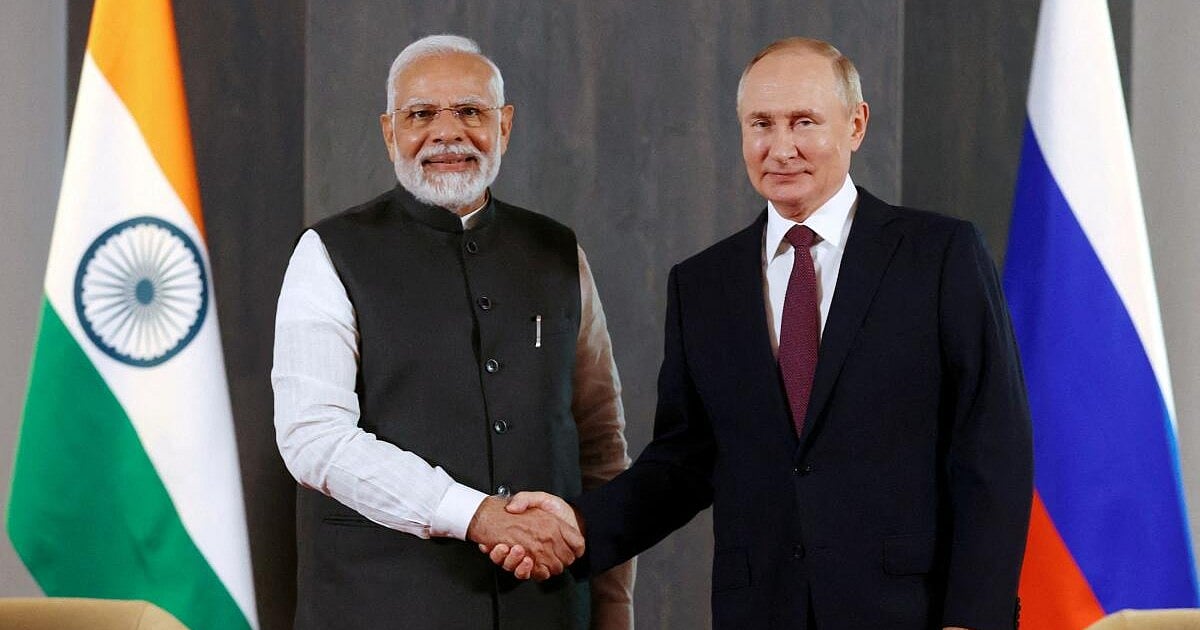
The announcement by Russian Foreign Minister Sergey Lavrov that President Vladimir Putin has accepted Prime Minister Narendra Modi's invitation to visit India marks a significant development in the ongoing strategic partnership between the two nations. This visit, currently under preparation, underscores the depth and resilience of the relationship, especially in the face of a complex and rapidly changing geopolitical landscape. The personal rapport between Putin and Modi has often been cited as a key factor driving the strengthening of bilateral ties, and this reciprocal visit further solidifies that connection. The fact that Modi chose Russia as his first foreign destination after his re-election last year is indicative of the importance India places on its relationship with Russia. This exchange of visits symbolizes a mutual commitment to fostering closer cooperation across a range of areas, including defense, energy, trade, and technology. The timing of this planned visit is particularly noteworthy, given the ongoing global tensions and the increasing pressure on Russia due to the conflict in Ukraine. India's continued engagement with Russia, despite Western sanctions and criticism, demonstrates its independent foreign policy stance and its commitment to pursuing its national interests. The visit is expected to provide an opportunity for both leaders to discuss key regional and international issues, explore new avenues for economic collaboration, and reaffirm their shared commitment to a multi-polar world order. The strengthening of India-Russia ties has significant implications for the balance of power in Asia and beyond. It reflects a growing trend of countries seeking to diversify their strategic partnerships and reduce their dependence on traditional Western powers. This visit will not only reinforce the existing bonds between India and Russia but will also likely shape the future trajectory of their relationship in the years to come. The agenda for the visit is likely to be comprehensive, covering a wide range of topics of mutual interest. Defense cooperation is expected to be a key focus, given Russia's role as a major supplier of military equipment to India. Energy security is another critical area, with ongoing discussions about expanding cooperation in the oil and gas sector. Trade relations between the two countries have been steadily growing, and both sides are keen to explore ways to further increase bilateral trade and investment. Technology transfer and collaboration in areas such as space exploration and nuclear energy are also expected to be on the agenda. The visit will also provide an opportunity for both leaders to exchange views on regional and international security issues, including the situation in Afghanistan, the fight against terrorism, and the evolving geopolitical dynamics in the Indo-Pacific region. The discussions are likely to be candid and constructive, reflecting the high level of trust and understanding between the two countries. The preparations for the visit are being closely watched by other major powers, who are keen to understand the implications of this strengthening partnership for the global balance of power. The visit is expected to generate significant media attention and will undoubtedly be analyzed and interpreted from various perspectives. The outcome of the visit will likely have a lasting impact on the relationship between India and Russia and will shape the future of their cooperation across a wide range of areas. It is a significant event that underscores the importance of bilateral relations in a rapidly changing world order.
Beyond the immediate diplomatic significance, the forthcoming meeting between Putin and Modi holds deeper implications for the evolving dynamics of international relations. India's strategic autonomy, exemplified by its continued engagement with Russia, challenges the Western-dominated narrative of isolating Moscow. This stance reflects a broader trend among emerging economies seeking to assert their independence and pursue their own foreign policy objectives. The economic dimension of the India-Russia relationship is also crucial. Despite Western sanctions, trade between the two countries has been surprisingly resilient, driven in part by India's increased imports of Russian oil at discounted prices. This economic cooperation provides a lifeline for Russia and helps to mitigate the impact of sanctions. The upcoming visit is likely to focus on strengthening economic ties further, with discussions about expanding cooperation in areas such as infrastructure development, agriculture, and pharmaceuticals. The geopolitical context of the visit is also important to consider. Both India and Russia share concerns about the rise of China and its growing influence in the region. While they have different approaches to managing this challenge, their shared interests provide a basis for closer cooperation. The visit will provide an opportunity for both leaders to exchange views on the evolving geopolitical landscape and explore ways to coordinate their policies in the face of common challenges. The success of the visit will depend on the ability of both sides to address key issues of mutual concern and to identify concrete areas for future collaboration. The visit is expected to result in the signing of several agreements and MoUs, which will provide a framework for deepening cooperation in various fields. The personal chemistry between Putin and Modi is also expected to play a role in shaping the outcome of the visit. Both leaders have invested considerable effort in building a strong personal relationship, which has helped to overcome differences and to foster a spirit of trust and understanding. The visit is a testament to the enduring strength of the India-Russia relationship, which has weathered numerous challenges and changes over the years. It is a relationship that is based on shared interests, mutual respect, and a commitment to a multi-polar world order. The visit is expected to further solidify this relationship and to lay the foundation for even closer cooperation in the future.
The historical context of the India-Russia relationship is also crucial for understanding the significance of this planned visit. Dating back to the Soviet era, India and Russia have enjoyed a strong and enduring partnership, characterized by mutual trust and strategic alignment. The Soviet Union was a key ally of India during the Cold War, providing crucial economic and military assistance. This historical legacy continues to shape the relationship today, with Russia remaining a major supplier of military equipment to India. However, the relationship has also evolved over time, adapting to the changing geopolitical landscape. In the post-Cold War era, India has diversified its foreign policy and has forged closer ties with other major powers, including the United States and Japan. Despite these shifts, Russia remains a key strategic partner for India, particularly in the areas of defense, energy, and technology. The upcoming visit provides an opportunity for both countries to reaffirm their commitment to this long-standing partnership and to explore new avenues for cooperation. The visit is also important from a symbolic perspective. It sends a message to the world that India is not aligned with any particular bloc and that it is committed to pursuing an independent foreign policy. This stance is particularly significant in the context of the ongoing global tensions and the increasing pressure on countries to choose sides. India's continued engagement with Russia demonstrates its commitment to a multi-polar world order and its belief in the importance of dialogue and diplomacy. The visit is expected to be closely watched by other major powers, who are keen to understand the implications of this strengthening partnership for the global balance of power. The outcome of the visit will likely have a lasting impact on the relationship between India and Russia and will shape the future of their cooperation across a wide range of areas. It is a significant event that underscores the importance of bilateral relations in a rapidly changing world order. The visit is also an opportunity for both countries to showcase their achievements and to highlight the benefits of their partnership. The visit is expected to include cultural events and exchanges, which will further strengthen the people-to-people ties between the two countries. The visit is a testament to the enduring strength of the India-Russia relationship and its importance for regional and global stability. The visit is expected to be a success and to further deepen the strategic partnership between the two countries.
Looking ahead, the future of the India-Russia relationship hinges on several key factors. Firstly, the ability of both countries to navigate the complex geopolitical landscape and to manage their respective relationships with other major powers will be crucial. India's growing ties with the United States and Japan, while not necessarily incompatible with its relationship with Russia, could create tensions if not carefully managed. Similarly, Russia's close relationship with China could also pose challenges for the India-Russia relationship. Secondly, the economic dimension of the relationship will be increasingly important. Both countries need to diversify their trade and investment ties and to explore new areas for economic cooperation. This will require overcoming bureaucratic hurdles and creating a more conducive environment for business. Thirdly, the security dimension of the relationship will remain a key focus. India's dependence on Russia for military equipment is likely to continue for the foreseeable future, but India is also seeking to diversify its sources of supply. Russia, in turn, is keen to maintain its position as a major arms exporter to India. Fourthly, the personal chemistry between the leaders of both countries will continue to play a role in shaping the relationship. Putin and Modi have established a strong personal rapport, which has helped to overcome differences and to foster a spirit of trust and understanding. The future leaders of both countries will need to cultivate similar relationships in order to ensure the continued success of the partnership. Finally, the overall geopolitical context will continue to be a major factor. The rise of China, the ongoing tensions between Russia and the West, and the evolving dynamics in the Indo-Pacific region will all shape the future of the India-Russia relationship. Both countries will need to adapt to these changes and to work together to promote a stable and peaceful world order. The upcoming visit is an important opportunity for both countries to reaffirm their commitment to this partnership and to lay the foundation for even closer cooperation in the future. The visit is expected to be a success and to further deepen the strategic partnership between the two countries. The India-Russia relationship is a valuable asset for both countries and for the world as a whole. It is a relationship that is based on shared interests, mutual respect, and a commitment to a multi-polar world order.