
 |
|
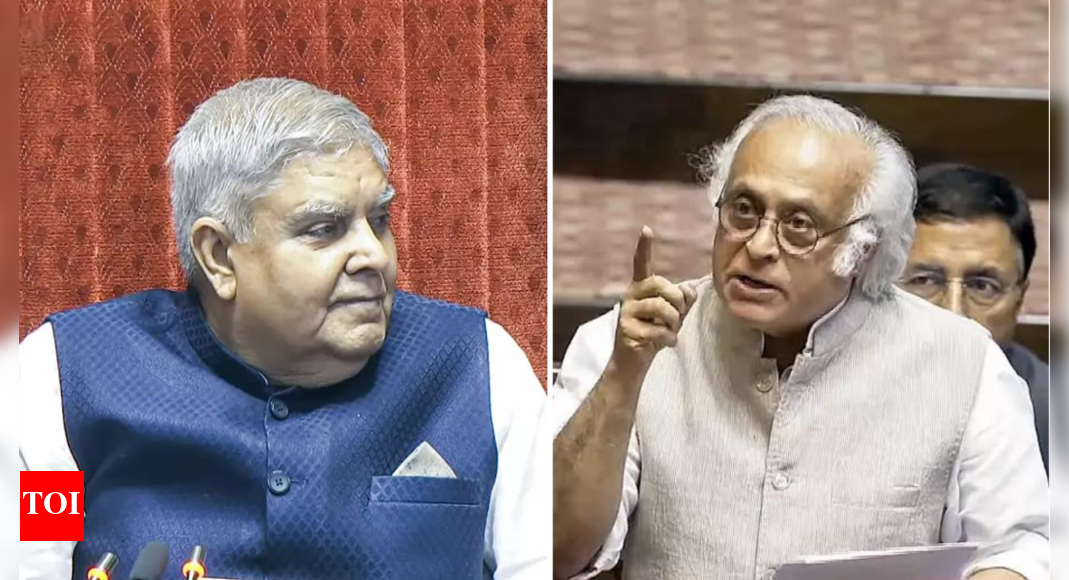
The recent rejection by Rajya Sabha Chairman Jagdeep Dhankhar of a breach of privilege notice filed by Congress chief whip Jairam Ramesh against Union Home Minister Amit Shah underscores the heightened political tensions and the increasing weaponization of parliamentary procedures in contemporary Indian politics. The notice, stemming from remarks made by Shah during a debate on the Disaster Management Bill, 2024, alleged that Shah cast aspersions on Congress parliamentary party chairperson Sonia Gandhi by suggesting that the Prime Minister's National Relief Fund (PMNRF) was controlled by one family during Congress rule. Dhankhar's dismissal of the notice, coupled with his admonishment of the misuse of privilege motions, highlights a growing concern over the politicization of parliamentary processes and the potential for these mechanisms to be used to stifle legitimate political discourse and undermine the reputations of political opponents. The incident, beyond its immediate implications, raises fundamental questions about the nature of parliamentary privilege, the boundaries of acceptable political rhetoric, and the role of the presiding officer in maintaining the integrity and decorum of the legislature. The detailed sequence of events, including Ramesh's initial complaint, Shah's defense, and Dhankhar's ultimate ruling, provides a microcosm of the broader dynamics shaping Indian democracy today. It reflects the deep-seated partisan divisions, the increasing use of legal and parliamentary instruments as political weapons, and the challenges of preserving a space for reasoned debate and compromise amidst an increasingly polarized political landscape. The episode also brings into sharp focus the evolving role of the Rajya Sabha Chairman, tasked with balancing the need to protect the rights and privileges of individual members with the imperative of ensuring the smooth functioning of the House and the protection of its institutional integrity.
The core of the controversy lies in Amit Shah's remarks concerning the PMNRF, a fund established during the Congress regime, and its alleged control by a single family. Shah's statement, as quoted in Ramesh's notice, implied that the Congress President, who was a member of the PMNRF, should answer to the people of the country regarding government funds. Jairam Ramesh interpreted these remarks as a direct and unwarranted attack on Sonia Gandhi, accusing Shah of making unfounded allegations with a premeditated motive to malign her reputation. He argued that such statements constituted a breach of privilege and contempt of the House, calling for privilege proceedings against Shah. Dhankhar, however, rejected this interpretation, citing a press release from 1948 verifying Shah's claims about the historical control of the PMNRF. He emphasized that Shah had adhered to the truth and that there was no transgression warranting a breach of privilege notice. This decision highlights the delicate balance that presiding officers must strike between protecting the rights of individual members and upholding the principle of free speech and accountability within the legislature. While Ramesh maintained that Shah's remarks indirectly referred to Sonia Gandhi and imputed motives, Dhankhar's ruling suggests that the remarks, even if perceived as critical, were based on verifiable historical information and did not constitute a violation of parliamentary privilege. The differing interpretations of Shah's remarks underscore the subjective nature of political discourse and the challenges of defining the boundaries of acceptable criticism in a highly charged political environment. It also raises questions about the extent to which historical facts and interpretations can be used to justify potentially inflammatory or partisan statements in the parliamentary arena.
Dhankhar's strong emphasis on the seriousness of privilege motions and his concern over their misuse is a crucial aspect of this episode. He expressed anguish and pain that the House was rushing to invoke breach of privilege, warning that it should not be used as a platform to ruin reputations. This statement reflects a broader concern among parliamentary experts and observers that privilege motions are increasingly being used as political tools to silence dissent and intimidate political opponents. The misuse of privilege motions can have a chilling effect on free speech and open debate within the legislature, potentially undermining the ability of parliamentarians to effectively represent their constituents and hold the government accountable. Dhankhar's reference to the S B Chauhan report on ethics and his direction to the Ethics Committee to review the report and draft updated guidelines for parliamentary conduct further underscore his commitment to upholding the dignity and credibility of the House. The Ethics Committee's review of parliamentary conduct guidelines is a significant step towards addressing the growing problem of unruly behavior and the erosion of ethical standards in the Indian legislature. By clarifying the boundaries of acceptable conduct and providing a framework for addressing ethical violations, the Ethics Committee can play a crucial role in restoring public trust in the institution of Parliament and ensuring that parliamentarians are held accountable for their actions.
The aftermath of Dhankhar's decision has seen Ramesh reiterate his stance, suggesting the issue isn't fully resolved in the political sphere. The Congress leader's continued insistence on the breach of privilege highlights the deep partisan divide and the potential for this issue to continue to be a source of political friction. While Dhankhar's ruling effectively closes the matter from a procedural standpoint, the underlying political tensions and disagreements remain. The incident serves as a reminder of the importance of fostering a culture of mutual respect and tolerance within the legislature, even amidst sharp political differences. It also underscores the need for clear and consistent rules regarding parliamentary conduct and the use of privilege motions, to prevent these mechanisms from being abused for political gain. The long-term impact of this episode will depend on how the Ethics Committee addresses the issue of parliamentary conduct and how effectively the presiding officers of both houses of Parliament are able to maintain order and decorum in the face of increasing political polarization. Ultimately, the health and vitality of Indian democracy depend on the ability of its institutions to function effectively and impartially, upholding the principles of free speech, accountability, and the rule of law.
The saga surrounding the privilege motion against Amit Shah also invites a comparative analysis with similar situations in other parliamentary democracies. The concept of parliamentary privilege exists in many countries with Westminster-style parliamentary systems, including the United Kingdom, Canada, and Australia. However, the scope and application of parliamentary privilege can vary significantly across these jurisdictions. In some countries, parliamentary privilege is more broadly defined and encompasses a wider range of actions and statements. In others, it is more narrowly construed and limited to specific circumstances, such as protecting members from legal action for statements made in Parliament. Comparing the Indian experience with that of other countries can provide valuable insights into the strengths and weaknesses of the Indian system and identify potential areas for reform. For example, some countries have established independent bodies or committees to oversee the enforcement of parliamentary privilege and to ensure that it is not abused for political purposes. Others have adopted clearer and more transparent procedures for handling privilege motions, reducing the potential for partisan bias and ensuring that all members are treated fairly. By learning from the experiences of other parliamentary democracies, India can strengthen its own system of parliamentary privilege and ensure that it serves its intended purpose of protecting the rights and privileges of parliamentarians while also upholding the principles of accountability and transparency.
Furthermore, the incident highlights the increasing role of media and public opinion in shaping parliamentary proceedings. In today's interconnected world, parliamentary debates and proceedings are often broadcast live and widely reported in the media. This heightened scrutiny can exert significant pressure on parliamentarians and presiding officers, influencing their decisions and actions. The media's portrayal of the privilege motion against Amit Shah, for example, likely played a role in shaping public perceptions of the issue and influencing the political calculations of various actors. The increasing importance of media and public opinion underscores the need for parliamentarians to be more mindful of their words and actions and to conduct themselves in a manner that upholds the dignity and credibility of the House. It also highlights the importance of media literacy and critical thinking skills among the general public, to ensure that citizens are able to form informed opinions about parliamentary proceedings and hold their representatives accountable. The media, too, has a responsibility to report on parliamentary proceedings accurately and impartially, avoiding sensationalism and bias that could undermine public trust in the institution of Parliament. In conclusion, the rejection of the privilege notice is not merely a procedural matter but a reflection of deeper trends affecting Indian democracy, including heightened political polarization, the misuse of parliamentary procedures, and the increasing role of media and public opinion. Addressing these challenges requires a multi-faceted approach, including strengthening ethical standards, clarifying the boundaries of acceptable parliamentary conduct, and fostering a culture of mutual respect and tolerance within the legislature.
Source: Why Vice President Jagdeep Dhankhar rejected Congress' privilege notice against Amit Shah