
 |
|
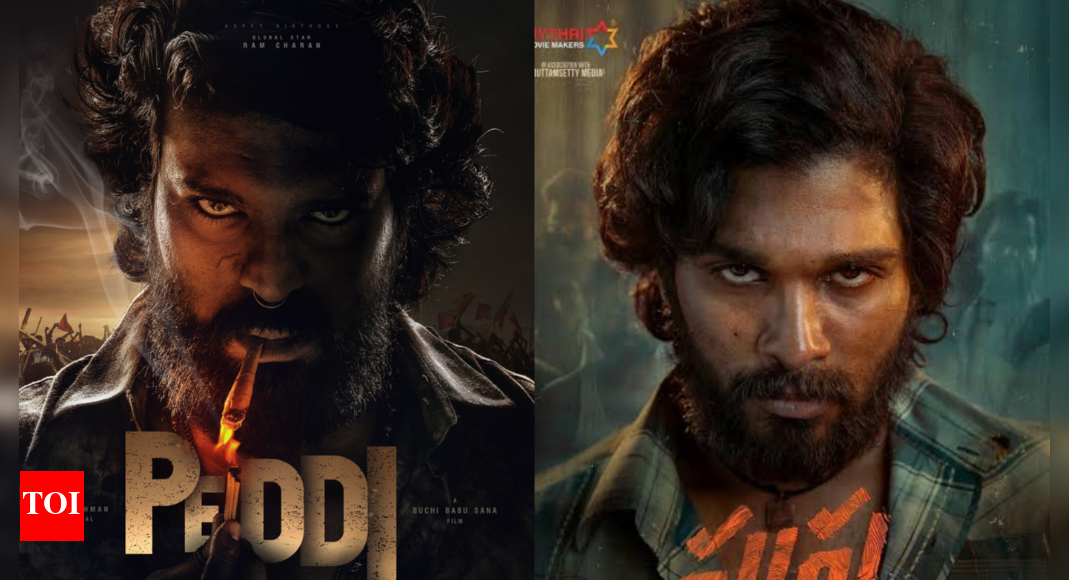
The unveiling of Ram Charan's first look in his upcoming film 'Peddi,' directed by Buchi Babu Sana, has ignited a flurry of discussion and comparison amongst fans and film enthusiasts alike. The release, coinciding with the actor's 40th birthday celebrations, provided a momentous occasion for both Ram Charan and the production team to showcase the character's initial visual identity. The immediate reaction, however, wasn't solely focused on the novelty of the 'Peddi' look itself, but rather its perceived resemblance to characters from two already established and massively popular pan-Indian films: 'Pushpa' and 'KGF.' This unexpected comparison has led to a whirlwind of online commentary, analysis, and speculation about the character's potential narrative arc and the film's overall thematic direction. The rugged avatar presented in the first look – the specific elements contributing to this perceived similarity remain somewhat ambiguous, potentially encompassing aspects of costume design, hairstyle, facial features, or even overall demeanor – has become a central point of debate. While some fans have expressed excitement at the prospect of a character drawing inspiration from these successful predecessors, others have voiced concerns about potential creative stagnation or a lack of originality. The film industry, known for its cyclical nature of borrowing and reinterpreting established tropes, often navigates a delicate balance between paying homage to successful formulas and forging its own distinct identity. The success of 'Peddi' will, to a significant extent, hinge on its ability to carve out its own unique niche within the action-drama genre, while simultaneously acknowledging and perhaps even subverting the expectations set by the 'Pushpa' and 'KGF' franchises. The director, Buchi Babu Sana, now faces the considerable challenge of addressing these comparisons head-on, either through conscious design choices that differentiate 'Peddi' from its perceived influences, or by cleverly incorporating those similarities into the narrative in a way that adds depth and intrigue. The anticipation surrounding 'Peddi' is further amplified by the promise of a star-studded cast, which suggests a significant investment and ambition on the part of the production team. The inclusion of prominent actors can attract a wider audience and potentially elevate the film's overall performance at the box office. The scheduled release date of March 2026 provides ample time for the filmmakers to refine the final product and strategically manage the audience's expectations. The success of 'Peddi' will not only contribute to Ram Charan's individual career trajectory but also impact the broader landscape of Indian cinema, potentially setting new precedents for character design, narrative structure, and thematic exploration within the action-drama genre. The initial comparisons to 'Pushpa' and 'KGF' serve as both a challenge and an opportunity for the creative team to demonstrate their ingenuity and originality in crafting a film that can stand on its own merits while simultaneously resonating with the existing fanbase of these successful franchises. The debate surrounding the first look has, in effect, transformed 'Peddi' into a highly anticipated project, with fans and critics alike eagerly awaiting further glimpses into the film's world and characters. The film's success will depend on how well it addresses the expectations set by its predecessors while forging its own identity.
The comparison between Ram Charan's 'Peddi' look and the characters from 'Pushpa' and 'KGF' raises fundamental questions about originality and influence in filmmaking. In an industry often driven by established formulas and audience expectations, the line between inspiration and imitation can become blurred. While drawing inspiration from successful films is a common practice, the challenge lies in effectively transforming those influences into something unique and innovative. The 'Pushpa' and 'KGF' franchises, both known for their raw, action-packed narratives and distinctive character designs, have established a significant benchmark for action films in the Indian film industry. Their widespread popularity and critical acclaim have undoubtedly influenced subsequent projects, including 'Peddi.' However, the mere replication of visual elements or character archetypes does not guarantee success. In fact, it can often lead to audience disappointment and accusations of creative bankruptcy. The key to creating a truly original and memorable film lies in the ability to synthesize diverse influences and create something that transcends its individual components. This requires a deep understanding of the source material, as well as a willingness to experiment and take risks. Buchi Babu Sana, as the director of 'Peddi,' faces the task of not only acknowledging the influence of 'Pushpa' and 'KGF' but also transforming those influences into something distinctly his own. This could involve reinterpreting familiar tropes, subverting audience expectations, or introducing entirely new elements to the narrative. The film's success will ultimately depend on its ability to create a compelling and original story that resonates with audiences on an emotional level. The initial comparisons to 'Pushpa' and 'KGF' serve as a reminder that originality is not simply about avoiding imitation; it is about creating something that is truly unique and meaningful. It is about taking established conventions and pushing them to their limits, exploring new territories, and challenging audience perceptions. In the context of 'Peddi,' this means creating a character that is more than just a derivative of existing archetypes. It means crafting a story that is both engaging and thought-provoking, and that leaves a lasting impression on the viewer. The challenge is significant, but the potential rewards are even greater. A successful 'Peddi' could not only elevate Ram Charan's career but also contribute to the evolution of Indian cinema, demonstrating that it is possible to draw inspiration from existing works while still creating something truly original.
The discourse surrounding 'Peddi' and its alleged similarities to other films highlights the powerful role that audience perception plays in shaping the success of a film. In the age of social media and instant feedback, audience reactions can quickly influence the narrative surrounding a project, either positively or negatively. The initial comparisons to 'Pushpa' and 'KGF' have effectively framed the discussion around 'Peddi' even before its release. This pre-existing framework can significantly impact how audiences interpret the film, potentially shaping their expectations and influencing their overall viewing experience. If the film fails to live up to these expectations, it could face criticism for being unoriginal or derivative. Conversely, if it manages to subvert expectations and deliver a truly unique experience, it could be lauded as a bold and innovative work. The power of audience perception extends beyond mere aesthetic preferences. It also encompasses a broader range of factors, including cultural context, social trends, and individual biases. A film that resonates with one audience may not necessarily appeal to another, and what is considered acceptable in one culture may be deemed offensive in another. Filmmakers must be acutely aware of these factors when crafting their stories and characters, and they must be prepared to address potential criticisms and controversies. In the case of 'Peddi,' the director and production team must carefully consider how their film will be received by audiences, both in India and abroad. They must be prepared to defend their creative choices and to address any concerns about originality or cultural sensitivity. The success of the film will ultimately depend on its ability to connect with audiences on an emotional level, to tell a compelling story, and to leave a lasting impression. However, the perception of the film, both before and after its release, will play a crucial role in shaping its overall legacy. The internet has provided a platform for immediate and often unforgiving feedback, and filmmakers must be prepared to navigate this challenging landscape. In the end, the success of 'Peddi' will depend not only on the quality of the film itself but also on how effectively it is perceived and interpreted by audiences worldwide. This requires a careful balancing act between creative vision and audience expectations, between originality and influence, and between artistic expression and cultural sensitivity. The challenge is significant, but the potential rewards are even greater. A successful 'Peddi' could not only elevate Ram Charan's career but also contribute to a broader understanding of the complex relationship between filmmaking and audience perception.
The upcoming release of 'Peddi' also raises intriguing questions about the current state of Indian cinema, particularly in the realm of action-drama films. For years, the industry has been dominated by established formulas and recurring tropes, leading to a sense of stagnation and a yearning for fresh, innovative ideas. The success of films like 'Pushpa' and 'KGF' can be attributed, in part, to their willingness to challenge conventional norms and to push the boundaries of the action-drama genre. These films introduced unique visual styles, compelling characters, and unconventional narratives that resonated with audiences on a global scale. The rise of pan-Indian cinema, with films transcending regional boundaries and appealing to diverse audiences across the country, has further fueled the demand for high-quality, innovative content. Filmmakers are now under increasing pressure to create films that can compete on a global stage, and this requires a willingness to experiment and to take risks. 'Peddi,' as a highly anticipated project featuring a popular star and a promising director, has the potential to contribute to this evolution of Indian cinema. If the film manages to successfully blend established conventions with innovative ideas, it could set a new benchmark for action-drama films and inspire other filmmakers to push the boundaries of their craft. However, the film also faces the risk of falling into the trap of simply replicating existing formulas, which could lead to audience disappointment and a missed opportunity to contribute to the growth of the industry. The success of 'Peddi' will depend on its ability to navigate this delicate balance between tradition and innovation, between familiarity and originality. The film must be able to appeal to a wide audience while also offering something new and unique that sets it apart from its predecessors. This requires a deep understanding of the genre, a keen eye for detail, and a willingness to take creative risks. The future of Indian cinema depends on the ability of filmmakers to embrace new ideas and to challenge established norms. 'Peddi' has the potential to be a significant step in this direction, but its success will ultimately depend on the vision and execution of its creative team.
Moreover, the anticipation surrounding 'Peddi' provides a valuable opportunity to reflect on the evolving nature of celebrity culture and its influence on the film industry. Ram Charan, as a prominent figure in Indian cinema, wields considerable influence over his fanbase and the broader public. His decisions regarding film projects, character choices, and public appearances can significantly impact his career trajectory and the success of the films he is involved in. The release of the first look for 'Peddi,' coinciding with Ram Charan's birthday, serves as a strategic marketing move to capitalize on the actor's popularity and to generate excitement for the upcoming film. The comparisons to 'Pushpa' and 'KGF' have further amplified the attention surrounding the project, creating a buzz that can translate into increased ticket sales and overall success. However, the influence of celebrity culture can also have its drawbacks. The intense scrutiny and expectations placed on celebrities can lead to pressure to conform to certain stereotypes or to avoid taking risks that might alienate their fanbase. This can stifle creativity and limit the range of roles and projects that celebrities are willing to pursue. It is important for celebrities to maintain a balance between appealing to their fans and staying true to their artistic vision. Ram Charan, as a seasoned actor with a proven track record, has the ability to navigate this complex landscape and to make informed decisions that benefit both his career and the film industry as a whole. The success of 'Peddi' will depend not only on the quality of the film itself but also on Ram Charan's ability to leverage his influence and to engage with his fanbase in a meaningful way. This requires a commitment to authenticity, a willingness to take risks, and a deep understanding of the evolving dynamics of celebrity culture. The future of the film industry depends, in part, on the ability of celebrities to use their influence responsibly and to promote films that are both entertaining and thought-provoking. 'Peddi' has the potential to be a significant step in this direction, but its success will ultimately depend on the choices and actions of Ram Charan and the other members of the creative team.
Source: Netizens find Ram Charan's 'Peddi' first look similar to 'Pushpa' and 'KGF'