
 |
|
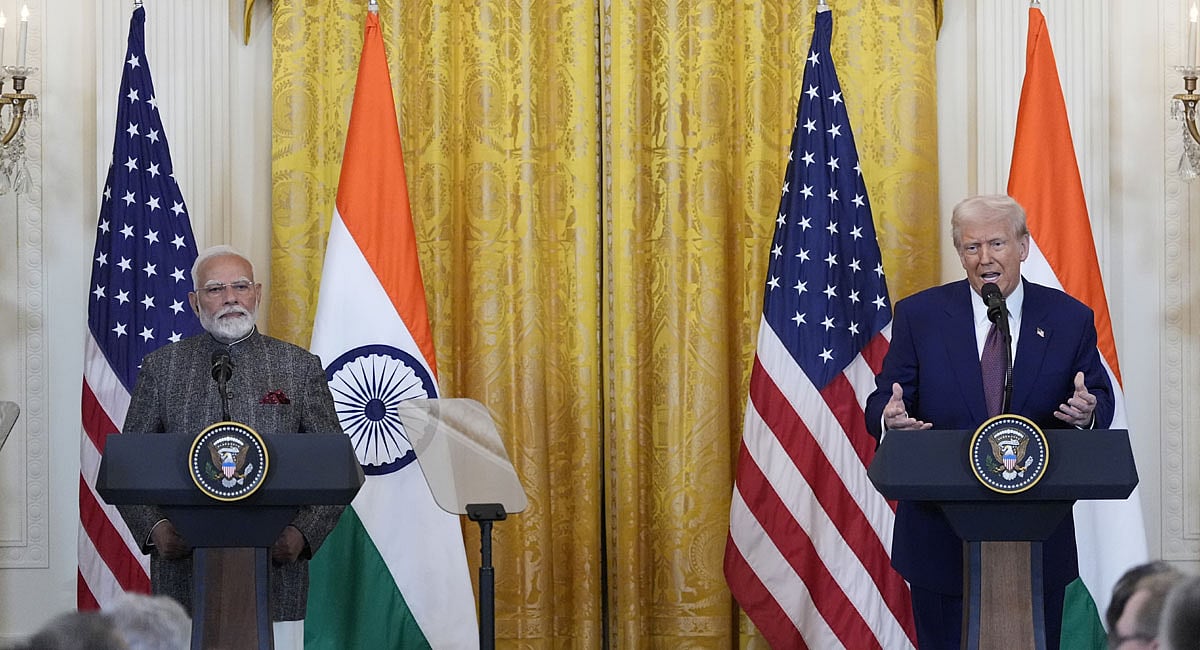
The recent meeting between Prime Minister Narendra Modi and former President Donald Trump has yielded a significant development in the burgeoning Indo-US defense partnership. The two nations are poised to sign a landmark ten-year defense framework agreement, marking a substantial escalation in their Major Defense Partnership (MDP). This agreement, far from being a mere continuation of existing collaborations, represents a transformative leap forward, promising a deeper integration of defense capabilities and a significant expansion of bilateral trade in military technology and equipment. The agreement, referred to as the COMPACT (Catalyzing Opportunities for Military Partnership, Accelerated Commerce & Technology for the 21st Century), encapsulates a broader strategic vision that extends beyond military hardware to encompass investment, trade, energy security, technological innovation, multilateral collaborations, and even people-to-people ties. However, the core of this enhanced relationship undoubtedly rests on the expansion and deepening of defense cooperation.
The heart of the defense component lies in the US's commitment to expand defense sales and co-production initiatives with India. This commitment focuses on acquiring platforms that enhance interoperability between the two nations' militaries, signifying a shared operational vision and strategic alignment. Specific examples cited include the acquisition of Javelin anti-tank missiles and Stryker vehicles. Furthermore, plans are underway to procure an additional six P-8I maritime patrol aircraft, following the successful negotiation of the previous sale. These acquisitions are not merely transactions; they represent a strategic shift towards building a more robust and integrated defense infrastructure capable of responding to contemporary and future security challenges. The procurement of sophisticated American weaponry underscores India's growing reliance on the US as a key defense partner, a significant deviation from its previous dependence on Russia and other countries. This move signifies a decisive shift in India's geo-political alignments and underscores the growing strategic convergence between the two nations.
Perhaps the most impactful aspect of the agreement revolves around the US's pledge to review the International Traffic in Arms Regulations (ITAR). This regulatory review is crucial for streamlining defense trade, facilitating technology exchange, and easing maintenance processes. The ITAR, often criticized for its bureaucratic hurdles and complexities, has historically hampered the smooth flow of defense equipment and technology between the two countries. By streamlining these regulations, the US is essentially promising to alleviate significant logistical bottlenecks that have previously frustrated cooperation. This initiative aims to make the procurement of US-made defense systems less cumbersome, guaranteeing smoother access to crucial spare parts and ensuring the ability to conduct in-country repairs. This ultimately reduces India's reliance on external sources for maintenance and upgrades, bolstering its operational independence and reducing potential vulnerabilities.
The implications of this ten-year defense framework extend far beyond the immediate acquisitions and logistical improvements. This agreement signals a long-term commitment to strategic alignment and mutual cooperation, signifying a substantial deepening of the India-US relationship in the face of shared geopolitical challenges. The framework fosters interoperability, allowing for seamless collaboration in joint exercises, information sharing, and potential responses to regional crises. This collaboration could prove instrumental in maintaining stability in the Indo-Pacific region and countering the growing influence of rival powers. Moreover, the emphasis on co-production suggests the potential for technology transfer and the development of a robust indigenous defense industry within India, promoting economic growth and self-reliance. Ultimately, the success of this framework depends on both nations’ commitment to maintaining open communication, navigating potential disagreements, and adhering to the principles of mutual respect and shared strategic objectives. This comprehensive partnership, with its focus on military modernization, technology transfer and strategic alignment, promises to reshape the geopolitical landscape of the Indo-Pacific region for the next decade and beyond.
Source: F-35 jets to undersea systems: Key details of India-US defense pact unveiled after Modi-Trump meet