
 |
|
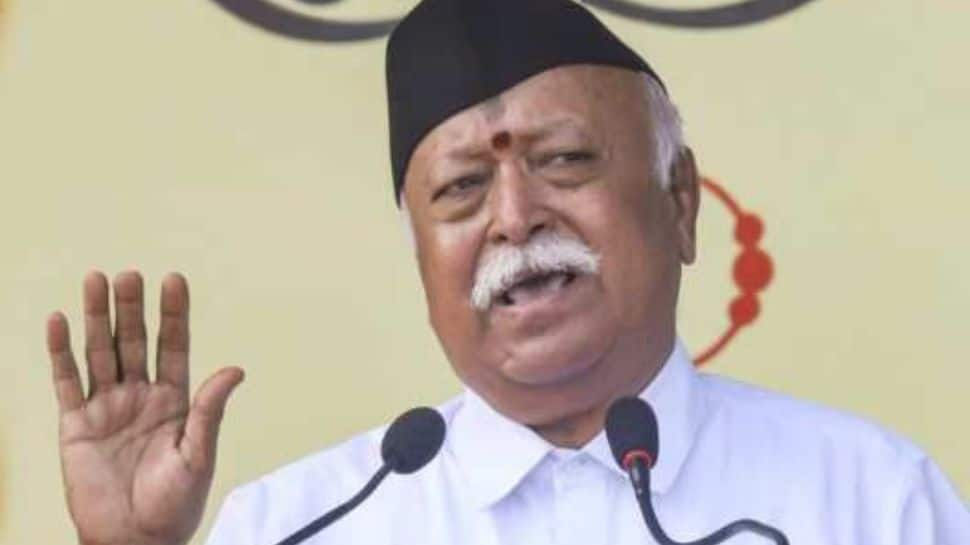
Mohan Bhagwat, the chief of the Rashtriya Swayamsevak Sangh (RSS), a prominent Hindu nationalist organization in India, recently ignited a firestorm of controversy with his call for Indian families to have at least three children. His statement, delivered during an event in Nagpur, wasn't merely a suggestion; it was a direct appeal rooted in his interpretation of demographic trends and their potential consequences for the future of India's Hindu population. Bhagwat's argument hinges on the concept of a critical fertility rate, citing demographic science that suggests a rate below 2.1 children per woman leads to population decline, potentially threatening the long-term survival of a community. He illustrated this point using historical examples of languages and societies that vanished due to dwindling populations, emphasizing that this decline is a self-inflicted wound, requiring no external factors to cause its demise. His remarks highlight a complex interplay of population dynamics, religious demographics, and political sensitivities within the Indian context.
The core of Bhagwat's argument rests on the assertion that India must maintain a fertility rate above 2.1 to ensure population stability. This threshold, he claims, is crucial for the continuity of Indian society, and he further suggests that this is implicitly acknowledged within India's population policy formulated in the late 1990s and early 2000s. Since it is impossible to have fractional children, Bhagwat's recommendation translates to a call for at least three children per family. This is particularly noteworthy considering India's recent achievement of becoming the world's most populous nation, surpassing China. However, this overall population growth masks a trend Bhagwat emphasized: a decline in the Hindu population's growth rate. Reports indicate a decrease in the Hindu percentage of the Indian population, from 80% to 78.9%, in contrast to the increased growth rate observed in the Muslim population. This demographic shift, according to Bhagwat, further underscores the urgency of his call for larger families within the Hindu community.
Bhagwat's comments, however, haven't been met with universal acceptance. They have sparked a wave of political debate, particularly in Bihar, a state where discussions on caste-based census and population control have often been contentious. Opposition parties, including the Rashtriya Janata Dal (RJD) and Janata Dal (United), have openly criticized his remarks, highlighting the perceived contradiction between Bhagwat's call for larger families and the BJP government's past promotion of population control awareness campaigns. RJD spokesperson Mrityunjay Tiwari pointed out this inconsistency, calling for a resolution to the apparent conflict between government policy and Bhagwat's statement. The Janata Dal (United) echoed these concerns, with spokesperson Arvind Nishad suggesting that Bhagwat should seek consensus with BJP leaders who often advocate for population control measures. He further emphasized the success of Bihar's Chief Minister Nitish Kumar's policies, which focused on educating women as a key strategy for population control. This highlights the complex political landscape in which Bhagwat's comments are being debated, with differing perspectives on population control and the role of the state in influencing family size.
The controversy surrounding Bhagwat's statement extends beyond the immediate political reactions. It touches upon deeper societal issues, including the role of religion in shaping demographic trends, the impact of government policies on family planning, and the ongoing debates surrounding population control in a diverse and rapidly developing nation like India. The discussion also raises questions about the potential for such pronouncements to influence social norms and family decision-making, and the ethical considerations involved in advocating for specific family sizes. The debate has highlighted the need for a nuanced understanding of population dynamics and the complexities of social engineering within a multifaceted society. While concerns about population decline are valid, the method of addressing this issue and its potential ramifications within a politically sensitive context warrant careful consideration and public discourse. The long-term consequences of Bhagwat’s call remain to be seen, but it undoubtedly represents a significant intervention in the ongoing conversation about population growth and societal well-being in India.
Source: 'Have At Least 3 Kids Or...': Mohan Bhagwat's Big Remark On Hindu Population