
 |
|
The recent agreement by the Pakistan Cricket Board (PCB) to host the Champions Trophy under a hybrid model marks the culmination of months of intense negotiations and political maneuvering within the international cricket community. The core issue revolved around India's refusal to send its team to Pakistan, citing legitimate security concerns. This refusal, while understandable from India's perspective, presented a significant challenge to the organization of the tournament, threatening its viability and potentially harming the reputation of the International Cricket Council (ICC). Pakistan's initial resistance to accommodating India's concerns highlights the complex geopolitical tensions that often intersect with the world of international sports. The eventual compromise, however, demonstrates a willingness on both sides, albeit reluctantly on Pakistan's part, to prioritize the continuation of the tournament over rigid adherence to their initial positions.
The report in the Times of India, alleging that the PCB faced the threat of losing hosting rights if a compromise was not reached, sheds light on the considerable pressure exerted by the ICC. This pressure, framed as a threat, served as a critical catalyst in persuading the PCB to relent and accept the hybrid model, whereby India's matches would be held in a neutral venue, Dubai. The statement by PCB chief Mohsin Naqvi, while carefully worded to avoid inflammatory rhetoric, subtly acknowledges the external pressure influencing the PCB's decision. His emphasis on a 'win-win' outcome suggests a calculated acceptance of the compromise, acknowledging that the alternative—losing hosting rights—would have been far less favorable for Pakistan.
The negotiation also highlights the underlying economic realities of international cricket. The PCB's request for a larger share of ICC revenue as compensation for the inconvenience and compromise reveals a deeper power imbalance within the cricketing world. The existing disparity, where the BCCI receives significantly more revenue (38%) compared to the PCB (6%), underscores the inherent financial inequalities. The ICC's offer of compensation exceeding hosting fees demonstrates an attempt to address this imbalance, but the political complexities remain. The difficulty in redistributing revenue shares among other boards highlights the challenges of achieving true equity within the ICC's financial structure. If the ICC were to agree to a larger share for Pakistan, other member boards might oppose the redistribution, potentially leaving the BCCI to absorb the additional expenses—a scenario likely to be met with resistance from the powerful and influential Indian board.
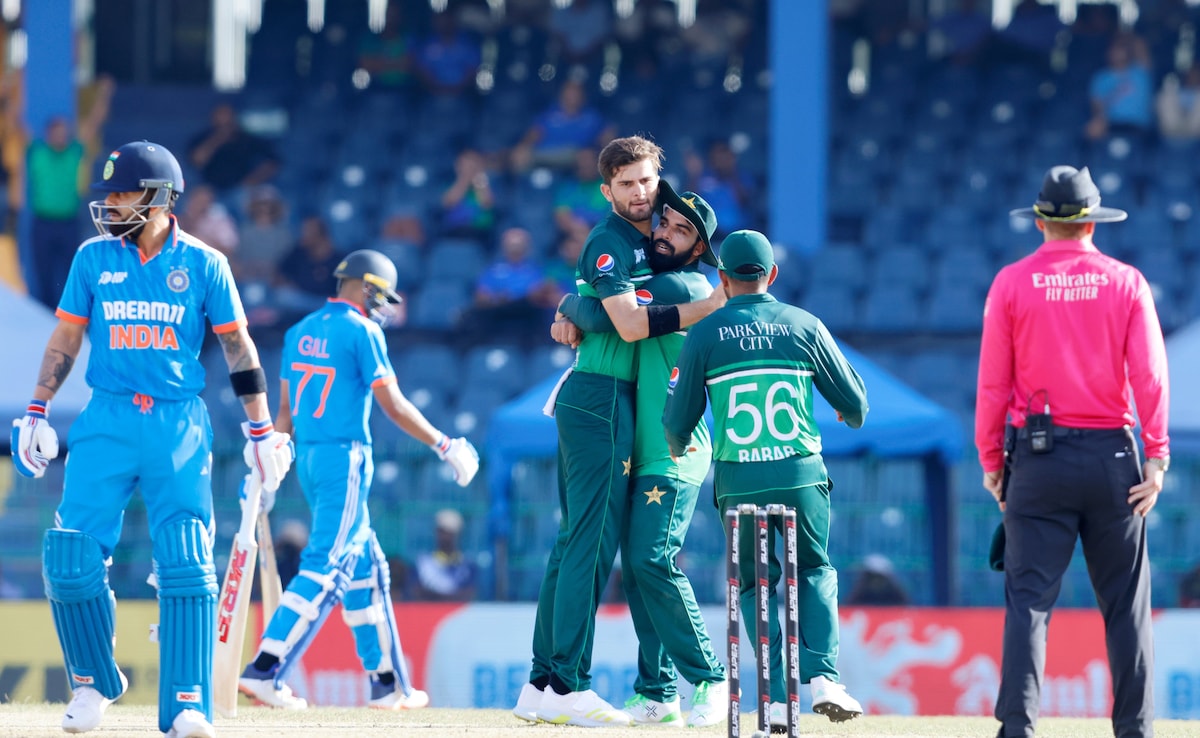
The hybrid model employed for the Champions Trophy is not unprecedented. The Asia Cup in the previous year adopted a similar arrangement, with India playing their matches in Sri Lanka due to similar security concerns. This precedent underscores the increasingly challenging security landscape in which international cricket operates, particularly in regions with heightened geopolitical tensions. The repeated need to employ hybrid models represents a significant shift from the traditional expectation that hosting nations should be responsible for the entire tournament within their territories. This shift necessitates the development of more robust and flexible models for international cricket tournaments, capable of navigating the unpredictable challenges posed by both security and political considerations.
In conclusion, the agreement on the hybrid model for the Champions Trophy represents a complex interplay of political pressures, financial considerations, and the overarching desire to maintain the integrity of the tournament. While Pakistan may have reluctantly accepted the arrangement due to the threat of losing hosting rights, the event nevertheless serves as a reminder of the challenges inherent in organizing international sporting events in a world marred by geopolitical complexities and economic inequalities. The incident also underscores the need for ongoing dialogue and compromise among member boards to ensure a more equitable and sustainable future for international cricket. The legacy of this negotiation will undoubtedly shape future discussions around hosting rights and revenue distribution within the ICC.
Source: ICC's 'Threat' That Prompted Pakistan To Agree Hybrid Model For Champions Trophy: Report