
 |
|
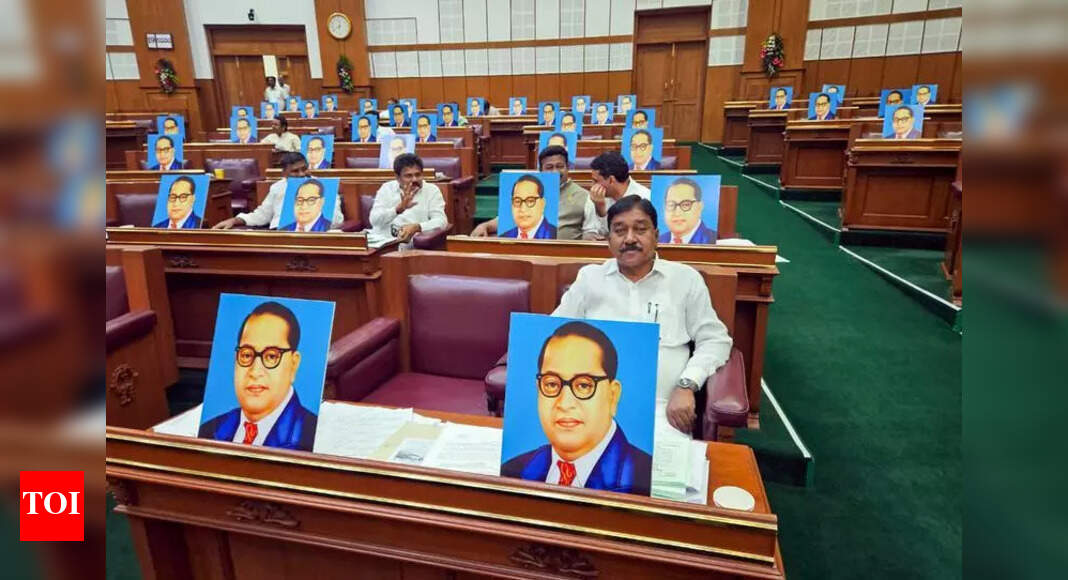
The Indian political landscape witnessed a significant clash between the ruling Bharatiya Janata Party (BJP) and the opposition Congress party, stemming from Union Home Minister Amit Shah's controversial remarks on Dr. B.R. Ambedkar. The incident unfolded in the Karnataka legislative assembly and council, leading to a chaotic scene marked by protests, counter-protests, and adjournments. The core of the conflict centered around the perceived disrespect shown towards Dr. Ambedkar, the architect of the Indian Constitution, by Shah's statements during a Rajya Sabha speech. Congress members, led by Magadi MLA H.C. Balakrishna, vehemently voiced their opposition, disrupting the proceedings with slogans and placards. Their demand for a House resolution condemning Shah's remarks set the stage for a heated confrontation with BJP legislators. The BJP responded in kind, displaying their own posters accusing Congress of insulting Ambedkar, escalating the already tense situation. The ensuing chaos forced the Speaker, U.T. Khader, to adjourn the House multiple times, ultimately resorting to a lunch break to quell the escalating conflict. The intensity of the protests is indicative of the deeply held beliefs and sensitivities surrounding Dr. Ambedkar's legacy within Indian society.
Chief Minister Siddaramaiah's intervention further amplified the political showdown. In a prepared statement, he launched a scathing attack on the BJP and its ideological parent, the Rashtriya Swayamsevak Sangh (RSS), highlighting their historical opposition to Ambedkar and the Constitution. Siddaramaiah emphasized what he described as a 'deep-rooted animosity' harbored by the BJP and RSS towards Ambedkar. He strategically connected this hostility to the Constitution, drawing attention to the pre-independence era when the Manusmriti, a text associated with caste-based discrimination, governed Indian society. Siddaramaiah's assertion that Ambedkar's action of burning the Manusmriti represented a pivotal shift towards social justice and equality formed the cornerstone of his argument. This narrative effectively framed the current political clash as a continuation of a longstanding ideological battle concerning the very foundations of India's social and political order. The BJP's counter-arguments and objections did little to deter Siddaramaiah from delivering his strongly-worded condemnation.
Siddaramaiah’s address delved into historical context, citing instances where prominent RSS figures, including founder Keshav Baliram Hedgewar, successor Madhav Sadashiv Golwalkar, and Hindutva ideologue Vinayak Damodar Savarkar, had voiced criticisms of Ambedkar’s Constitution. He bolstered his claims by quoting an editorial from the RSS mouthpiece, Organiser, which reportedly stated that the Constitution lacked ‘Indianness.’ This strategic use of historical evidence served to contextualize the current political clash within a broader narrative of ideological conflict. By highlighting the historical critiques of the Constitution by RSS leaders, Siddaramaiah aimed to demonstrate a pattern of opposition to Ambedkar’s vision and the very foundation of modern India's constitutional framework. He concluded his statement with a pointed remark, suggesting that without the Constitution, Shah would have remained an ordinary villager instead of holding his current prominent position. This statement aimed to underscore the significance of Ambedkar's contribution to the nation and to subtly challenge the legitimacy of the BJP's stance on the matter.
The political ramifications of this incident extend beyond the immediate chaos in the legislative assembly. It highlights the ongoing tensions between the BJP and Congress, two of India's most powerful political parties. The clash reveals deeper ideological differences concerning the interpretation of Indian history and the role of Dr. Ambedkar in shaping the nation's identity. The event is likely to intensify the political discourse in the run-up to future elections, with both parties potentially utilizing the incident to rally their respective bases and to further define their political positions. The accusations of disrespect towards a revered figure like Dr. Ambedkar are likely to resonate strongly with specific segments of the population, adding a sensitive layer to the ongoing political debate. The use of historical references and quotations further underscores the attempt by both sides to leverage historical narratives to support their present-day political agendas. The incident underscores the volatility of Indian politics and its susceptibility to ideological clashes fueled by historical interpretations and strong emotional attachments to national figures.
The incident serves as a reminder of the complexities of India's political landscape and the sensitive nature of debates surrounding national identity and historical figures. The highly emotional nature of the responses from both sides indicates the deep-seated feelings held by many regarding the legacy of Dr. B.R. Ambedkar. Future political discourse will likely witness a continued emphasis on the figure of Dr. Ambedkar and his contribution to the Indian Constitution, a testament to the ongoing legacy and impact of this pivotal figure in Indian history. The events underscore the importance of respectful dialogue and measured political engagement in addressing sensitive topics within the Indian context. The potential for escalating conflicts of this nature highlights the critical need for responsible political discourse and the avoidance of inflammatory rhetoric that could further exacerbate existing tensions.