
 |
|
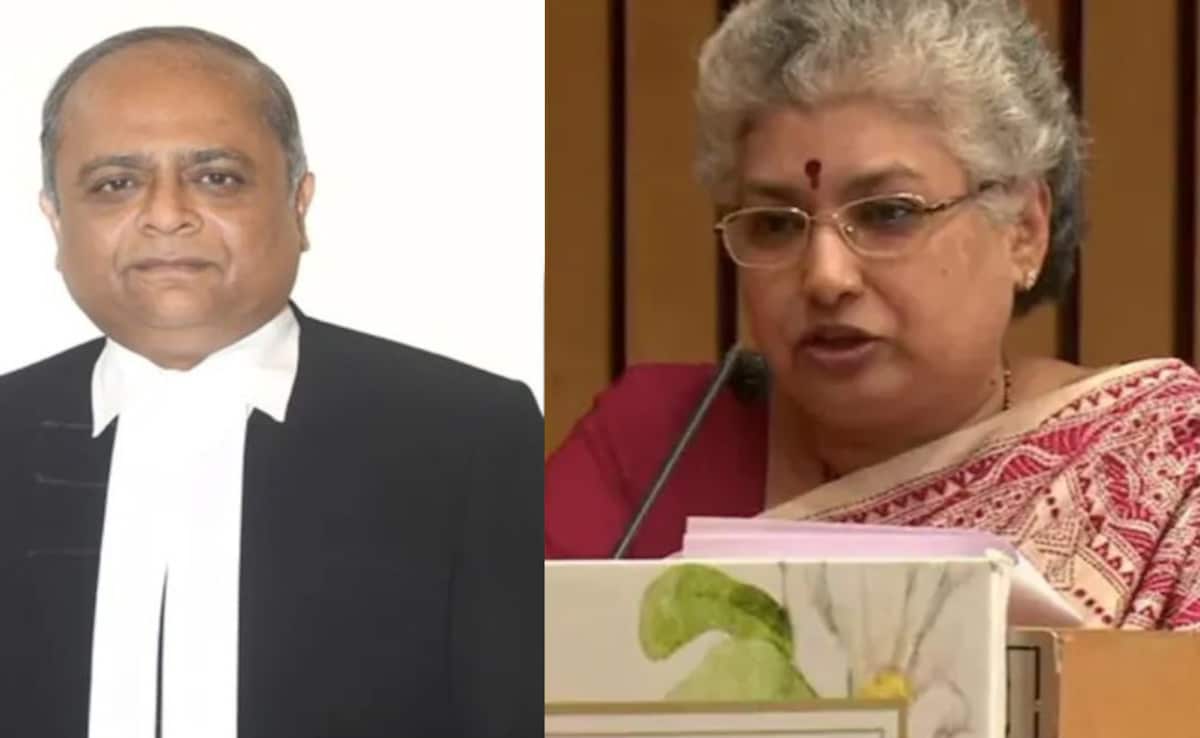
The recent elevation of Patna High Court Chief Justice Vipul Pancholi to the Supreme Court has ignited a significant controversy, primarily fueled by Justice BV Nagarathna's dissenting voice within the Collegium. This dissent, a 4:1 decision in favor of Justice Pancholi, raises fundamental questions about the transparency, fairness, and overall credibility of the judicial appointment process in India. Justice Nagarathna, poised to become India's first woman Chief Justice in 2027, reportedly expressed concerns that the appointment would be 'counterproductive' to the administration of justice and would 'erode the credibility of the Collegium system.' Her strong stance underscores the growing unease surrounding the selection criteria and the rationale behind prioritizing certain judges over others. The heart of Justice Nagarathna's dissent appears to be multifaceted. Firstly, she highlighted the existence of judges who outrank Justice Pancholi in seniority and are arguably more 'deserving' of an opportunity to serve in the highest court. This challenges the notion that merit and seniority are the primary drivers of judicial appointments, raising suspicions about potential biases or undisclosed considerations within the Collegium's decision-making process. Secondly, Justice Nagarathna's concern regarding the disproportionate representation of judges from Gujarat further complicates the issue. With Justice Pancholi's elevation, there would be three judges from Gujarat serving on the Supreme Court simultaneously, a situation that the Campaign for Judicial Accountability and Reform (CJAR) deems 'unfair' to other states. This raises questions about regional representation and whether the Collegium adequately considers the need for a diverse and balanced representation of High Courts across the country. The CJAR, a prominent organization dedicated to promoting transparency within the judiciary, has voiced its 'dismay' over the lack of detailed information accompanying the announcement of Justice Pancholi's elevation. The absence of details regarding the decision-making process represents a 'surprising departure' from previous instances and a 'mockery of earlier resolutions with respect to standards of transparency in judicial appointments.' This criticism underscores the importance of maintaining open and accountable processes in judicial appointments, as opacity can erode public trust and undermine the legitimacy of the judiciary. The CJAR's statement also points to Justice Nagarathna's previous reservations about Justice Pancholi's suitability for elevation. In May, she reportedly took the 'unusual step' of requesting the minutes of meetings related to his transfer from the Gujarat to the Patna High Court in 2023. This suggests a deeper level of scrutiny and concern on Justice Nagarathna's part, hinting at potential issues or irregularities in Justice Pancholi's past that warrant closer examination. The CJAR's analysis reveals a critical deficiency in the information provided by the Supreme Court regarding Justice Pancholi's elevation. The resolution recommending his appointment lacks crucial details, including background information on the appointee, the size of the quorum making the recommendations, and the criteria used to prioritize him over more senior candidates. This lack of transparency makes it difficult for the public to assess the fairness and impartiality of the decision-making process. The CJAR's demand for the publication of Justice Nagarathna's dissent note and the supporting documentation echoes the call for greater transparency in judicial appointments. By making such information public, the Supreme Court could demonstrate its commitment to accountability and rebuild public trust in the Collegium system. The CJAR's reference to past practices where former Chief Justices of India made similar details public further strengthens its argument for transparency. The organization argues that such transparency enhances public faith in the Collegium system. The current situation, where Justice Nagarathna's 'strong dissent note' remains unpublished despite her express request for its publication on the Supreme Court's website, stands in stark contrast to these earlier practices. The CJAR's critique extends beyond Justice Pancholi's elevation, highlighting concerns about the recommendation to elevate eight advocates, including Chief Justice BR Gavai's nephew, to the Bombay High Court. This raises concerns about potential nepotism and the need for safeguards to prevent undue influence in judicial appointments. The article also emphasizes that Justice Pancholi ranks 57th in the all-India seniority list. This fact further amplifies the concerns raised by Justice Nagarathna and the CJAR, questioning the rationale behind prioritizing a judge of relatively lower seniority over numerous more experienced and potentially more qualified candidates. In conclusion, the controversy surrounding Justice Pancholi's elevation to the Supreme Court highlights the urgent need for greater transparency, accountability, and fairness in the judicial appointment process. Justice Nagarathna's dissenting voice and the CJAR's critical analysis underscore the importance of open dialogue and public scrutiny in ensuring the integrity and legitimacy of the judiciary. The Supreme Court's response to these concerns will be crucial in maintaining public trust and upholding the principles of justice and equality.
The debate over judicial appointments is not new in India. It is a recurring theme that often surfaces when transparency is perceived to be lacking, or when there are concerns about the representation of different High Courts or the seniority principle being overlooked. The Collegium system itself has been a subject of much discussion and debate, with critics arguing that it lacks transparency and accountability. Proponents of the system, on the other hand, argue that it ensures the independence of the judiciary from political interference. The present controversy adds another layer to this ongoing debate. Justice Nagarathna's dissent is particularly significant because she is slated to become the first woman Chief Justice of India. Her voice carries considerable weight, and her concerns cannot be easily dismissed. Her emphasis on the erosion of the Collegium's credibility is a serious allegation that requires careful consideration. The CJAR's role in this controversy is also noteworthy. As an organization dedicated to promoting judicial accountability, it has consistently advocated for greater transparency in the appointment process. Its detailed analysis of the information provided by the Supreme Court highlights the deficiencies in the current system and underscores the need for reform. The concerns about the disproportionate representation of judges from Gujarat are also valid. While it is not uncommon for judges from the same High Court to serve on the Supreme Court simultaneously, the presence of three judges from Gujarat at one time does raise questions about regional representation and fairness to other High Courts. The fact that Justice Pancholi ranks 57th in the all-India seniority list is perhaps the most contentious aspect of this controversy. It is difficult to understand why a judge of relatively lower seniority was chosen over numerous more experienced and potentially more qualified candidates. The Supreme Court has yet to provide a clear explanation for this decision, which has only fueled speculation and mistrust. The larger implications of this controversy extend beyond the specific case of Justice Pancholi's elevation. It raises fundamental questions about the criteria used to select judges for the Supreme Court, the transparency of the Collegium system, and the overall accountability of the judiciary. The Supreme Court's response to these concerns will have a significant impact on public trust in the judiciary and the future of judicial appointments in India.
The call for transparency in judicial appointments is not merely a procedural demand; it is deeply rooted in the principles of democratic governance and the rule of law. A transparent and accountable appointment process strengthens public trust in the judiciary, ensuring that citizens perceive the courts as impartial arbiters of justice, free from undue influence or bias. When the process is shrouded in secrecy, it breeds suspicion and undermines the legitimacy of judicial decisions. The right to information is a cornerstone of a well-functioning democracy. It allows citizens to hold their government accountable and participate in informed decision-making. In the context of judicial appointments, access to information about the candidates, the selection criteria, and the decision-making process empowers the public to assess the qualifications and suitability of judges and to hold the Collegium accountable for its choices. The argument that transparency would compromise the independence of the judiciary is a false dichotomy. Independence is not synonymous with secrecy. A transparent appointment process can actually strengthen judicial independence by ensuring that decisions are based on merit and not on political considerations or personal connections. Moreover, public scrutiny can act as a check on potential abuses of power within the Collegium. The Supreme Court's own directives on appointments under the RTI Act and CVC Act demonstrate a commitment to transparency and accountability. The CJAR's demand for the release of Justice Nagarathna's dissent note and supporting documentation is fully consistent with these directives. By withholding this information, the Supreme Court is not only violating its own principles but also undermining public trust in the judiciary. The comparison to past practices where former Chief Justices of India made similar details public further highlights the inconsistency of the current approach. In those instances, transparency was seen as a way to enhance public faith in the Collegium system. There is no reason why the same approach should not be adopted today. The concerns about potential nepotism in the Bombay High Court appointments also underscore the need for greater scrutiny of the judicial appointment process. While it is not inherently wrong to appoint relatives of sitting or retired judges, it is essential to ensure that such appointments are based on merit and not on favoritism. Transparency can help to prevent such abuses and ensure that the process is fair and impartial. The debate over judicial appointments is ultimately a debate about the future of the Indian judiciary. A judiciary that is transparent, accountable, and independent is essential for upholding the rule of law and protecting the rights of citizens. The current controversy provides an opportunity to strengthen these principles and to build a more just and equitable society. The Supreme Court must seize this opportunity to demonstrate its commitment to transparency and accountability and to ensure that the judicial appointment process is fair, impartial, and worthy of public trust.
Source: Supreme Court Judge's 'Strong Dissent' Over Elevation Of Gujarat Judge