
 |
|
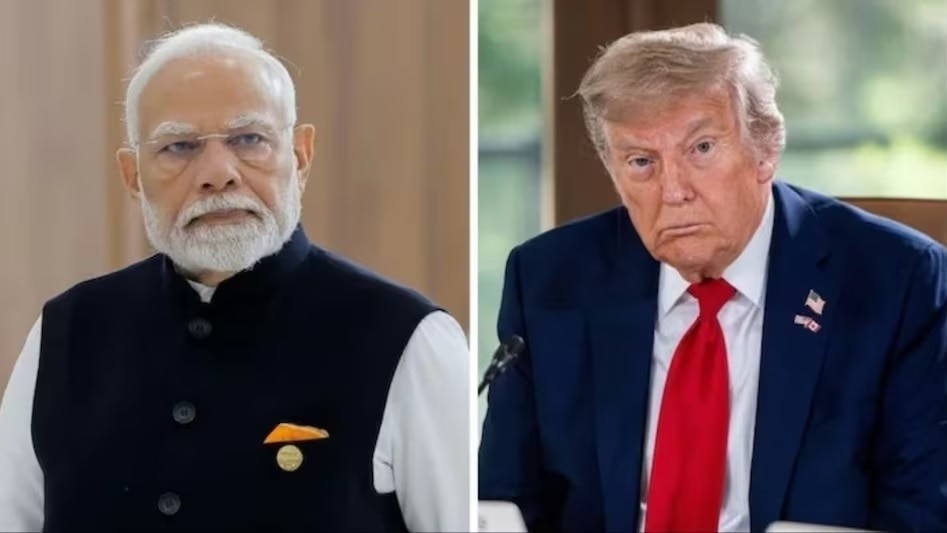
The article delves into a complex diplomatic situation involving India and the United States, specifically focusing on alleged attempts by former U.S. President Donald Trump to contact Indian Prime Minister Narendra Modi via phone calls. The core of the issue revolves around claims made by German media, specifically Frankfurter Allgemeine Zeitung, that Modi had refused to engage in phone conversations with Trump on at least four occasions in recent weeks. These alleged snubs occurred against the backdrop of an escalating trade dispute between the two nations, adding a layer of tension to the already delicate relationship. The report further suggests that Trump's frustration grew as Modi remained unresponsive to his calls, potentially indicating a deliberate strategy on the part of the Indian Prime Minister to avoid direct engagement on sensitive matters. The narrative is further complicated by contrasting accounts and a lack of official confirmation from U.S. officials. While U.S. officials have remained tight-lipped, declining to either confirm or deny the occurrence of the phone calls, the Times of India report offers an alternative perspective. According to an unnamed senior Indian diplomat quoted in the report, Modi typically avoids negotiating intricate details over the phone. This suggests that the alleged refusal to answer Trump's calls may not necessarily be a personal slight but rather a reflection of Modi's preferred approach to diplomacy and negotiation. Another source, also cited in the Times of India report, proposes a more strategic rationale behind Modi's alleged avoidance of Trump's calls. This source suggests that Modi may have been wary of Trump potentially misrepresenting the outcome of any such conversations, a concern stemming from past experiences where New Delhi has accused Trump of mischaracterizing discussions, particularly in the context of India-Pakistan tensions. The article also highlights Trump's repeated claims of having averted a potential nuclear war between India and Pakistan, statements that analysts in Washington have largely dismissed as exaggerated attempts to portray himself as a peacemaker. These claims, often accompanied by fluctuating figures regarding jets lost and timelines of escalation, have further contributed to the unease and skepticism surrounding Trump's handling of the India-Pakistan relationship. Furthermore, the article points to Modi's decision to decline Trump's last-minute invitation to the White House following the G-20 summit in Canada as another indication of the strained relationship. This decision was particularly significant given that Trump had also extended an invitation to Pakistan's then de facto military ruler, Asim Munir, ostensibly to facilitate peace talks. New Delhi criticized this move, viewing it as an unacceptable attempt to equate a perpetrator of terrorism (Pakistan) with a victim of terrorism (India). This perceived equivalence further fueled the perception that Trump's administration lacked a nuanced understanding of the complex geopolitical dynamics in the region. The growing resentment in New Delhi towards the U.S. is also highlighted by former U.S. National Security Advisor John Bolton, who noted that India felt "deeply aggrieved" at being the only country threatened with tariffs and sanctions, while Russia and China were largely spared. This perception of unfair treatment further exacerbated the tensions between the two nations, raising questions about the future trajectory of the India-U.S. relationship. The article essentially paints a picture of a relationship fraught with complexities, misunderstandings, and potential misrepresentations, leading to a situation where direct communication between the leaders became increasingly difficult and potentially counterproductive. It raises critical questions about the role of personal relationships in international diplomacy, the challenges of navigating differing communication styles, and the potential for misinterpretations to escalate tensions between nations. The alleged refusal of Modi to answer Trump's calls can be interpreted as a symptom of a deeper malaise in the relationship, reflecting a growing divergence in strategic priorities and a lack of mutual trust. The article underscores the importance of understanding the nuances of diplomatic communication and the potential consequences of misrepresenting or misinterpreting the actions and intentions of other nations. The long-term implications of these tensions remain to be seen, but the article serves as a reminder of the delicate and often unpredictable nature of international relations.
To dissect the reported friction between Prime Minister Modi and President Trump requires a multifaceted approach, considering not only the immediate context of the alleged phone call refusals but also the broader geopolitical landscape and the personalities involved. Modi's reported reluctance to engage in phone negotiations, as characterized by the Indian diplomat, speaks volumes about India's strategic approach to diplomacy. India has historically prioritized formal channels of communication and meticulously documented agreements, particularly when dealing with sensitive issues involving national security or economic interests. This preference for structured negotiations likely stems from a desire to avoid ambiguity and ensure that any commitments made are clearly defined and legally binding. Trump's communication style, on the other hand, was often characterized by its informality and spontaneity. His penchant for off-the-cuff remarks and seemingly impulsive decisions frequently caught his own administration off guard and created uncertainty in the international arena. The clash between these two contrasting approaches likely contributed to the reported unease and reluctance on Modi's part to engage in direct phone conversations with Trump. The fear of misrepresentation, as suggested by the second source quoted in the Times of India, is a crucial element to consider. Given Trump's track record of exaggerating or distorting information to suit his own narrative, it is understandable that Modi might have been wary of engaging in conversations that could be misconstrued or used to create a false impression of agreement. This concern is particularly relevant in the context of India-Pakistan relations, where Trump had previously made unsubstantiated claims of mediating a resolution to the Kashmir issue, much to the chagrin of New Delhi. Trump's repeated assertions of having prevented a nuclear war between India and Pakistan further illustrate the potential for misrepresentation and the challenges of navigating Trump's often unconventional approach to foreign policy. These claims, while seemingly intended to showcase Trump's diplomatic prowess, were largely dismissed by analysts as self-serving exaggerations that lacked any basis in reality. The fact that Trump continued to make these claims despite repeated denials from both India and Pakistan underscores the difficulty of engaging with a leader who appeared to prioritize personal aggrandizement over factual accuracy. Modi's decision to decline Trump's invitation to the White House after the G-20 summit further underscores the growing distance between the two leaders. This decision was likely influenced by a number of factors, including the perceived lack of reciprocity from the U.S., the Trump administration's increasingly protectionist trade policies, and the discomfort with Trump's approach to Pakistan. The invitation extended to Asim Munir, who at the time wielded significant influence in Pakistan, was particularly problematic for New Delhi, as it appeared to legitimize Pakistan's role in fostering terrorism and undermined India's efforts to isolate Islamabad on the international stage. John Bolton's assessment of India's growing resentment towards the U.S. provides further context for understanding the strained relationship. Bolton's observation that India felt unfairly targeted by tariffs and sanctions, while Russia and China were largely spared, reflects a perception of double standards and a lack of consistent application of U.S. foreign policy. This perception was further exacerbated by the Trump administration's decision to withdraw from the Iran nuclear deal and re-impose sanctions on Iran, a move that significantly impacted India's energy security and its strategic interests in the region. The overall picture that emerges is one of a relationship characterized by mutual distrust, differing communication styles, and conflicting strategic priorities. The reported phone call refusals, while seemingly a minor incident, serve as a microcosm of the broader challenges facing the India-U.S. relationship under the Trump administration. The article highlights the importance of understanding the nuances of diplomatic communication, the potential for misrepresentation to escalate tensions, and the need for consistent and predictable foreign policy to foster trust and cooperation between nations. It also underscores the enduring challenges of navigating the complexities of international relations in an era of rapid change and increasing geopolitical competition.
The long-term implications of the reported rift between Modi and Trump, if accurately portrayed, extend beyond the immediate diplomatic fallout and touch upon the broader dynamics of the India-U.S. strategic partnership. The relationship between India and the United States has evolved significantly over the past two decades, transforming from a Cold War-era estrangement to a burgeoning strategic alliance based on shared interests in countering terrorism, promoting regional stability, and balancing China's growing influence in the Indo-Pacific region. This partnership has been underpinned by a number of factors, including India's economic rise, its commitment to democratic values, and its growing military capabilities. The U.S., in turn, has recognized India's potential as a key strategic partner in the region and has sought to deepen cooperation across a range of areas, including defense, trade, and technology. However, the relationship has also been marked by occasional tensions and disagreements, stemming from differing perspectives on issues such as trade, climate change, and human rights. The Trump administration's policies, in particular, created a number of challenges for the India-U.S. relationship, including its protectionist trade measures, its skepticism towards multilateral institutions, and its perceived inconsistency in its approach to foreign policy. The reported tensions between Modi and Trump further exacerbated these challenges, raising questions about the resilience of the strategic partnership in the face of personality clashes and differing leadership styles. The potential for miscommunication and misrepresentation, as highlighted in the article, is a significant concern, as it can undermine trust and create obstacles to cooperation. The importance of clear and consistent communication cannot be overstated in the context of international relations, particularly between strategic partners. Misunderstandings can easily arise due to cultural differences, linguistic nuances, and differing perceptions of events. Therefore, it is crucial for leaders to engage in open and honest dialogue and to avoid making assumptions or engaging in unsubstantiated claims. The role of trust is also paramount in any strategic partnership. Trust is built over time through consistent actions, shared values, and a willingness to address disagreements in a constructive manner. When trust is eroded, it can be difficult to repair the relationship and to maintain the momentum of cooperation. The India-U.S. relationship is particularly vulnerable to erosion of trust due to the historical baggage of the Cold War and the lingering suspicions about each other's motives. The reported tensions between Modi and Trump, therefore, could have a lasting impact on the relationship if not addressed proactively. The future of the India-U.S. strategic partnership will depend on a number of factors, including the ability of both countries to overcome personality clashes, to address their differing perspectives on key issues, and to maintain a consistent and predictable approach to foreign policy. It will also require a concerted effort to build trust and to strengthen communication channels at all levels of government. The partnership remains fundamentally important for both countries, given their shared interests in promoting regional stability and balancing China's growing influence. Therefore, it is essential that both sides work to ensure that the relationship remains on a strong and sustainable footing, despite the challenges posed by individual leaders and differing perspectives. The strategic imperatives driving the partnership are too significant to be derailed by short-term political considerations or personality conflicts. A stable and robust India-U.S. relationship is not only beneficial for both countries but also for the broader Indo-Pacific region, contributing to peace, stability, and prosperity. The ability of both nations to navigate the challenges and capitalize on the opportunities that lie ahead will be crucial in shaping the future of the region and the global order.
Source: ‘Not Modi’s style to negotiate by phone’: Report quotes diplomat as Trump phone call claims swirl