
 |
|
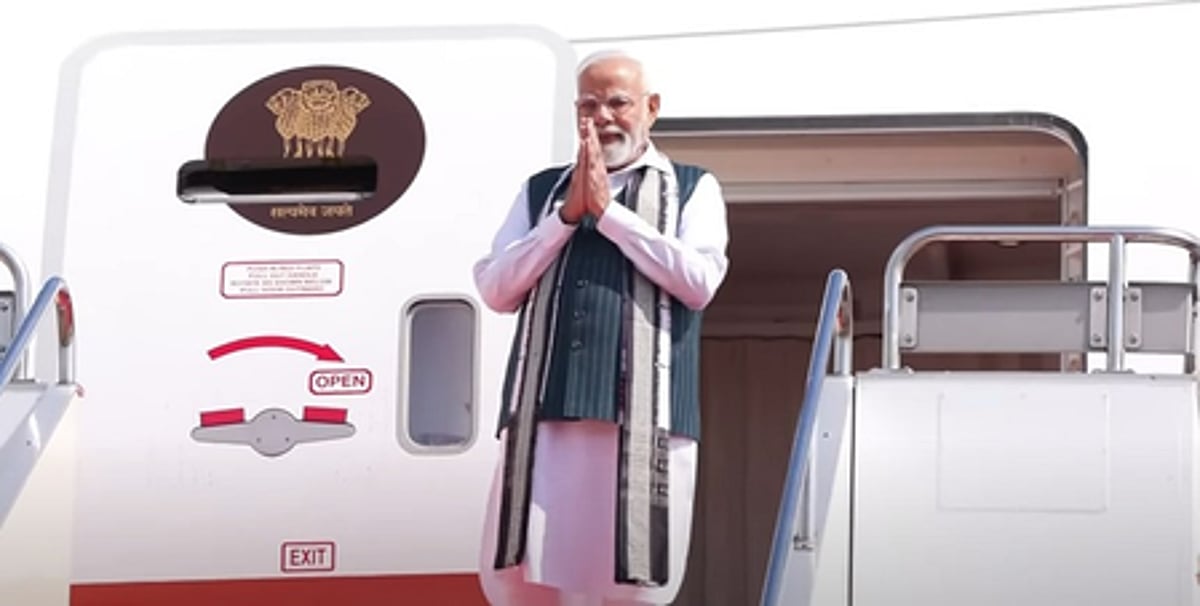
Prime Minister Narendra Modi's recent visit to Japan marks a significant step in solidifying the already strong relationship between India and Japan. The 15th India-Japan Annual Summit provided a crucial platform for the leaders of both nations to discuss key areas of cooperation and address pressing regional and global issues. This visit, PM Modi's eighth as Prime Minister, underscores the deep-rooted strategic partnership that has evolved between New Delhi and Tokyo over the years. The summit served as an opportunity to review the progress of the India-Japan Special Strategic and Global Partnership, a comprehensive framework encompassing diverse sectors such as defence and security, trade and economic cooperation, technology and innovation, and cultural and people-to-people exchanges. This multifaceted approach highlights the commitment of both countries to foster a robust and mutually beneficial relationship. The discussions between PM Modi and Prime Minister Shigeru Ishiba, their first bilateral summit-level meeting since Ishiba assumed office, were particularly important in setting the direction for future collaborations. The emphasis on defence and security cooperation reflects the shared strategic interests of India and Japan in maintaining peace and stability in the Indo-Pacific region. As major democracies in Asia, both countries recognize the importance of working together to address common challenges and promote a rules-based international order. Trade and economic cooperation remain vital pillars of the India-Japan partnership. Both nations are keen to expand bilateral trade and investment, creating new opportunities for businesses and fostering economic growth. The summit provided an opportunity to identify new areas of collaboration in sectors such as infrastructure development, manufacturing, and digital technologies. Technology and innovation are also key areas of focus. India and Japan have a strong potential to collaborate in cutting-edge fields such as artificial intelligence, robotics, and biotechnology. By combining India's talent pool and technological expertise with Japan's innovation capabilities, both countries can drive economic growth and address global challenges. The importance of cultural and people-to-people exchanges cannot be overstated. These exchanges promote mutual understanding and strengthen the bonds of friendship between the people of India and Japan. The summit likely explored ways to further enhance these exchanges, fostering greater cultural awareness and promoting tourism between the two countries. Beyond the bilateral agenda, PM Modi's visit to Japan also provided an opportunity to discuss regional and global issues of mutual concern. Both India and Japan share a common interest in promoting a stable and prosperous Indo-Pacific region. They are also committed to working together to address global challenges such as climate change, terrorism, and pandemics. The Ministry of External Affairs (MEA) highlighted the significance of the visit in reaffirming the longstanding special bond of friendship between India and Japan. This bond is based on shared values, mutual respect, and a common vision for the future. The summit served as a testament to the strength and resilience of this partnership. Furthermore, PM Modi's engagements with prominent Japanese industrialists and political leaders aimed to further boost economic cooperation and attract investment in key sectors. This outreach reflects India's commitment to creating a favorable investment climate and attracting foreign capital to support its economic growth. The visit to Japan was followed by PM Modi's departure for China to attend the 25th Meeting of the Council of Heads of State of the Shanghai Cooperation Organisation (SCO). This indicates India's engagement with multiple platforms and its commitment to regional and global cooperation. PM Modi's pre-departure statement on social media platform X reflected his confidence that his visits to Japan and China would further India's national interests and priorities, and contribute to building fruitful cooperation in advancing regional and global peace, security, and sustainable development. The fact that this was PM Modi's first visit to China in seven years, and the first since the Galwan Valley faceoff in June 2020, adds a layer of complexity to the visit. It suggests that India is seeking to engage with China despite the existing tensions and to explore areas of potential cooperation. Overall, PM Modi's visit to Japan was a significant success, reaffirming the strong strategic partnership between India and Japan and setting the stage for further collaboration in diverse areas. The visit to China, while more complex, also presents an opportunity to engage in dialogue and explore ways to manage differences and promote cooperation on issues of mutual interest. The long-term implications of these visits will depend on the extent to which India and its partners are able to translate their commitments into concrete actions and address the challenges facing the region and the world. The India-Japan partnership stands as a beacon of stability and cooperation in the Indo-Pacific, and its continued growth and development will be crucial for promoting peace and prosperity in the region. The strategic alignment of these two major Asian democracies offers a compelling counterpoint to the rising influence of other regional powers and reinforces the importance of a rules-based international order. Looking ahead, it will be important for India and Japan to continue to deepen their cooperation in areas such as defence, security, trade, and technology. They should also work together to promote sustainable development, address climate change, and combat terrorism. By strengthening their partnership, India and Japan can play a leading role in shaping a more peaceful, prosperous, and secure world. The significance of PM Modi's trip extends beyond the immediate outcomes of the summit. It reflects a broader trend in international relations, where countries are increasingly seeking to build strategic partnerships to address shared challenges and promote their national interests. In a world characterized by growing uncertainty and complexity, these partnerships are becoming more important than ever. The India-Japan partnership is a prime example of this trend, and it is likely to continue to grow in importance in the years to come. The focus on technology and innovation during the summit highlights the importance of these sectors in driving economic growth and addressing global challenges. Both India and Japan recognize the transformative potential of new technologies, and they are committed to working together to harness this potential for the benefit of their societies. This collaboration is particularly important in areas such as artificial intelligence, robotics, and biotechnology, where both countries have significant strengths. The discussions on cultural and people-to-people exchanges underscore the importance of building bridges between different cultures and promoting mutual understanding. These exchanges are essential for fostering trust and cooperation, and they can help to overcome cultural barriers and promote a more inclusive and tolerant world. The commitment of both countries to these exchanges is a testament to their shared values and their belief in the importance of building a more interconnected and harmonious world. The emphasis on regional and global issues during the summit reflects the shared responsibility of India and Japan to contribute to peace and stability in the Indo-Pacific region and beyond. Both countries are committed to working together to address challenges such as climate change, terrorism, and pandemics, and they are also working to promote a rules-based international order that is fair and equitable for all. This collaboration is essential for addressing the complex challenges facing the world today, and it demonstrates the commitment of India and Japan to working together for the common good. The strategic partnership between India and Japan is not only beneficial for the two countries themselves, but also for the broader region and the world. By working together to promote peace, prosperity, and stability, India and Japan are making a valuable contribution to a more just and equitable world. This partnership is a model for other countries to follow, and it demonstrates the power of cooperation and collaboration in addressing the challenges facing humanity. The discussions surrounding defense and security are especially pertinent given the evolving geopolitical landscape. Both India and Japan are acutely aware of the need to maintain a strong and credible defense posture in the face of emerging threats. Their commitment to enhancing defense cooperation reflects a shared understanding of the challenges facing the Indo-Pacific region and a determination to work together to safeguard their national interests and promote regional stability. This cooperation includes joint military exercises, technology transfers, and intelligence sharing, all of which contribute to strengthening their collective defense capabilities. The emphasis on trade and economy during the summit is also crucial for fostering economic growth and creating opportunities for businesses in both countries. India and Japan are two of the largest economies in Asia, and their combined economic power makes them a formidable force in the global economy. By expanding bilateral trade and investment, they can create new jobs, stimulate innovation, and promote sustainable development. This cooperation is particularly important in areas such as infrastructure development, manufacturing, and digital technologies, where both countries have significant strengths. The discussions on technology and innovation highlight the importance of these sectors in driving economic growth and addressing global challenges. Both India and Japan recognize the transformative potential of new technologies, and they are committed to working together to harness this potential for the benefit of their societies. This collaboration is particularly important in areas such as artificial intelligence, robotics, and biotechnology, where both countries have significant strengths. The focus on cultural and people-to-people exchanges underscores the importance of building bridges between different cultures and promoting mutual understanding. These exchanges are essential for fostering trust and cooperation, and they can help to overcome cultural barriers and promote a more inclusive and tolerant world. The commitment of both countries to these exchanges is a testament to their shared values and their belief in the importance of building a more interconnected and harmonious world. The emphasis on regional and global issues during the summit reflects the shared responsibility of India and Japan to contribute to peace and stability in the Indo-Pacific region and beyond. Both countries are committed to working together to address challenges such as climate change, terrorism, and pandemics, and they are also working to promote a rules-based international order that is fair and equitable for all. This collaboration is essential for addressing the complex challenges facing the world today, and it demonstrates the commitment of India and Japan to working together for the common good. The strategic partnership between India and Japan is not only beneficial for the two countries themselves, but also for the broader region and the world. By working together to promote peace, prosperity, and stability, India and Japan are making a valuable contribution to a more just and equitable world. This partnership is a model for other countries to follow, and it demonstrates the power of cooperation and collaboration in addressing the challenges facing humanity.
The India-Japan relationship has evolved significantly over the past few decades, transforming from a primarily economic partnership to a more comprehensive strategic alliance. This evolution has been driven by a number of factors, including shared strategic interests, converging values, and a growing recognition of the need to work together to address common challenges. The two countries have forged closer ties in areas such as defence, security, trade, investment, and technology, and they have also increased their cooperation on regional and global issues. The India-Japan Special Strategic and Global Partnership provides a framework for this enhanced cooperation, and it has helped to deepen the relationship across a wide range of sectors. The summit between PM Modi and Prime Minister Ishiba was an opportunity to review the progress of this partnership and to identify new areas for collaboration. The discussions between the two leaders were wide-ranging and covered a variety of topics, including defence and security cooperation, trade and investment, technology and innovation, and cultural and people-to-people exchanges. The summit also provided an opportunity to discuss regional and global issues of mutual concern, such as climate change, terrorism, and pandemics. The outcome of the summit was positive, and it reaffirmed the strong strategic partnership between India and Japan. Both leaders expressed their commitment to further deepening the relationship and to working together to address the challenges facing the region and the world. The visit to Japan was followed by PM Modi's departure for China to attend the 25th Meeting of the Council of Heads of State of the Shanghai Cooperation Organisation (SCO). This indicates India's engagement with multiple platforms and its commitment to regional and global cooperation. The fact that this was PM Modi's first visit to China in seven years, and the first since the Galwan Valley faceoff in June 2020, adds a layer of complexity to the visit. It suggests that India is seeking to engage with China despite the existing tensions and to explore areas of potential cooperation. Overall, PM Modi's visit to Japan was a significant success, reaffirming the strong strategic partnership between India and Japan and setting the stage for further collaboration in diverse areas. The visit to China, while more complex, also presents an opportunity to engage in dialogue and explore ways to manage differences and promote cooperation on issues of mutual interest. The long-term implications of these visits will depend on the extent to which India and its partners are able to translate their commitments into concrete actions and address the challenges facing the region and the world. The India-Japan partnership stands as a beacon of stability and cooperation in the Indo-Pacific, and its continued growth and development will be crucial for promoting peace and prosperity in the region. The strategic alignment of these two major Asian democracies offers a compelling counterpoint to the rising influence of other regional powers and reinforces the importance of a rules-based international order. Looking ahead, it will be important for India and Japan to continue to deepen their cooperation in areas such as defence, security, trade, and technology. They should also work together to promote sustainable development, address climate change, and combat terrorism. By strengthening their partnership, India and Japan can play a leading role in shaping a more peaceful, prosperous, and secure world. The significance of PM Modi's trip extends beyond the immediate outcomes of the summit. It reflects a broader trend in international relations, where countries are increasingly seeking to build strategic partnerships to address shared challenges and promote their national interests. In a world characterized by growing uncertainty and complexity, these partnerships are becoming more important than ever. The India-Japan partnership is a prime example of this trend, and it is likely to continue to grow in importance in the years to come. The visit was not only important for the bilateral relations between India and Japan but also served as an important platform for discussing regional and global issues. In an increasingly interconnected world, the challenges and opportunities faced by nations are often intertwined, requiring collaborative efforts to address them effectively. The leaders discussed issues such as climate change, terrorism, and pandemic preparedness, which require global cooperation to mitigate their impact. They also exchanged views on regional security and stability, recognizing the importance of maintaining a peaceful and prosperous Indo-Pacific region. The visit also facilitated the engagement of Prime Minister Modi with prominent Japanese business leaders, providing an opportunity to explore avenues for increased economic cooperation and investment. Japan is a major investor in India, and the visit aimed to further strengthen these economic ties. Prime Minister Modi highlighted the investment-friendly policies and reforms undertaken by the Indian government to attract foreign investment. He also emphasized the potential for Japanese companies to participate in India's infrastructure development and manufacturing sectors. The engagement with business leaders also served as an important platform to showcase India's economic potential and attract further investments from Japan, contributing to the growth and development of both nations. In addition to the economic and strategic dimensions, the visit also emphasized the importance of cultural and people-to-people exchanges between India and Japan. The two countries share a rich cultural heritage and have a long history of interactions. The visit aimed to further strengthen these cultural ties by promoting tourism, educational exchanges, and collaboration in arts and culture. The emphasis on cultural exchanges recognizes the importance of fostering mutual understanding and appreciation between the people of India and Japan, which can contribute to stronger and more resilient bilateral relations. Furthermore, the visit also provided an opportunity for Prime Minister Modi to interact with the Indian diaspora in Japan, recognizing their contribution to the strengthening of ties between the two countries. The Indian diaspora in Japan plays an important role in promoting cultural understanding, facilitating economic linkages, and fostering people-to-people connections. The interaction with the diaspora provided an opportunity for Prime Minister Modi to acknowledge their contributions and encourage them to continue serving as ambassadors of India in Japan. The visit to Japan by Prime Minister Modi underscored the significance of the India-Japan partnership as a cornerstone of regional stability and prosperity. The enhanced cooperation between the two countries across various sectors demonstrates their commitment to addressing common challenges and promoting shared interests. The visit has laid the foundation for further strengthening the partnership and fostering greater collaboration between India and Japan in the years to come. The emphasis on economic cooperation, strategic alignment, cultural exchanges, and diaspora engagement reflects a comprehensive approach to building a resilient and mutually beneficial relationship. As India and Japan continue to navigate the complexities of the 21st century, their partnership will play an increasingly important role in shaping the regional and global landscape.
The forthcoming Shanghai Cooperation Organisation (SCO) summit in China presents a distinct set of challenges and opportunities for India. Given the recent border tensions and lingering mistrust, the SCO summit will be a crucial platform for dialogue and engagement. India will likely seek to emphasize the importance of peaceful resolution of disputes and adherence to international norms. At the same time, the SCO provides a forum for India to engage with China on issues of mutual interest, such as counter-terrorism, climate change, and economic cooperation. India's participation in the SCO is driven by its strategic interests in Central Asia and its desire to play a role in shaping the regional security architecture. The SCO's focus on counter-terrorism aligns with India's own concerns about cross-border terrorism, and the organization provides a framework for cooperation on this front. However, India's relationship with the SCO is also complicated by the presence of Pakistan as a member. India has consistently raised concerns about Pakistan's support for terrorism and has called for greater accountability in addressing this issue. The SCO summit will therefore be an opportunity for India to reiterate its concerns and to seek greater cooperation from other member states in combating terrorism. Despite the challenges, India remains committed to engaging with the SCO and to working towards a more stable and prosperous region. The summit will be an important opportunity to promote dialogue, build trust, and identify areas for cooperation. The success of the SCO will depend on the ability of member states to overcome their differences and to work together towards common goals. India's participation in the organization is guided by its strategic interests and its commitment to regional stability. The Shanghai Cooperation Organisation (SCO) summit in China represents a significant opportunity for India to engage with key regional players and address critical issues affecting the region's stability and security. The SCO, established in 2001, is a Eurasian political, economic, and security alliance comprising eight member states, including India, China, Russia, Pakistan, and several Central Asian countries. The summit provides a platform for leaders to discuss regional challenges, strengthen cooperation, and promote multilateralism. One of the key priorities for India at the SCO summit will be to address the issue of terrorism. India has been a long-standing victim of cross-border terrorism and has consistently advocated for a united front against terrorist groups. The SCO's Regional Anti-Terrorist Structure (RATS) provides a framework for intelligence sharing and counter-terrorism cooperation among member states. India will likely push for greater collaboration within the RATS framework to enhance the effectiveness of counter-terrorism efforts in the region. Another important agenda item for India will be to promote regional connectivity and economic integration. India has been actively involved in various connectivity projects in the region, such as the Chabahar Port project in Iran, which provides access to Central Asia and Afghanistan. The SCO summit offers an opportunity to discuss ways to enhance regional connectivity, facilitate trade and investment, and promote sustainable development. India will likely emphasize the importance of respecting sovereignty and territorial integrity in connectivity initiatives, ensuring that they are carried out in a transparent and inclusive manner. Furthermore, India will also seek to strengthen its bilateral relations with other SCO member states on the sidelines of the summit. Engaging with leaders from China, Russia, and Central Asian countries will provide an opportunity to address specific concerns, enhance mutual trust, and promote cooperation in various fields. The SCO summit also provides a platform for India to reiterate its commitment to multilateralism and its vision of a multipolar world. India has been a strong advocate for reforming multilateral institutions, such as the United Nations, to make them more representative and effective. The SCO, as a regional organization, can play a complementary role in promoting multilateralism and addressing global challenges in a collaborative manner. The summit will be an opportunity for India to reiterate its commitment to multilateralism and to work with other member states to strengthen the SCO's role in the international arena. In addition to the aforementioned priorities, India will also likely address issues such as climate change, energy security, and food security at the SCO summit. These are global challenges that require collective action, and the SCO provides a platform for member states to share their experiences, exchange best practices, and coordinate their efforts. India has been at the forefront of promoting renewable energy and sustainable development, and it will likely share its initiatives and experiences with other SCO member states. The SCO summit in China is a significant event for India, providing an opportunity to address key regional challenges, strengthen cooperation with member states, and promote its vision of a stable, secure, and prosperous region. India's active participation in the SCO reflects its commitment to multilateralism and its desire to play a leading role in shaping the regional and global landscape. The summit will be an important platform for India to advance its strategic interests and contribute to the collective efforts of SCO member states in addressing common challenges.
The upcoming SCO summit in China marks a pivotal moment for India's engagement with the Eurasian region, presenting both strategic opportunities and complex challenges. As a full member of the Shanghai Cooperation Organisation (SCO), India actively participates in its various mechanisms, seeking to advance its security, economic, and geopolitical interests. However, the summit's context is significantly shaped by the ongoing border tensions with China and the broader geopolitical dynamics in the region. For India, a key priority at the SCO summit will be to address the issue of regional security, particularly the threat of terrorism emanating from Afghanistan and Pakistan. India has consistently advocated for a comprehensive approach to counter-terrorism, encompassing intelligence sharing, joint exercises, and the disruption of terrorist financing networks. The SCO's Regional Anti-Terrorist Structure (RATS) provides a valuable platform for such cooperation, and India will likely push for its further strengthening. In addition to security, India will also seek to promote regional connectivity and economic integration through the SCO. The International North-South Transport Corridor (INSTC) and the Chabahar Port project are vital initiatives for India, offering alternative trade routes to Central Asia and beyond. The SCO summit provides an opportunity to garner support for these projects and to explore new avenues for regional connectivity. However, India's participation in the SCO is not without its challenges. The presence of both China and Pakistan within the organization can create diplomatic complexities. India will need to navigate these complexities carefully, balancing its strategic interests with the need to maintain constructive dialogue with its neighbors. The summit may also provide an opportunity for bilateral meetings with other SCO member states, allowing India to address specific concerns and strengthen bilateral ties. Overall, the SCO summit in China presents a significant opportunity for India to engage with key regional players, address pressing security concerns, and promote its economic and strategic interests. However, the summit also requires careful diplomacy and a nuanced approach to navigate the complexities of the Eurasian region. India's active and constructive participation in the SCO can contribute to regional stability and promote its vision of a multi-polar world. The Shanghai Cooperation Organisation (SCO) summit in China offers India a crucial platform to navigate complex geopolitical dynamics, address regional security concerns, and promote its strategic interests in the Eurasian region. As a full member of the SCO, India actively participates in its various mechanisms, seeking to advance its security, economic, and geopolitical objectives. However, the summit's context is significantly influenced by the ongoing border tensions with China and the broader geopolitical landscape in the region. One of India's key priorities at the SCO summit is to address regional security, particularly the threat of terrorism emanating from Afghanistan and Pakistan. India has consistently advocated for a comprehensive approach to counter-terrorism, encompassing intelligence sharing, joint exercises, and disrupting terrorist financing networks. The SCO's Regional Anti-Terrorist Structure (RATS) serves as a valuable platform for such cooperation, and India will likely push for its further strengthening. In addition to security, India will also seek to promote regional connectivity and economic integration through the SCO. Initiatives like the International North-South Transport Corridor (INSTC) and the Chabahar Port project are vital for India, offering alternative trade routes to Central Asia and beyond. The SCO summit presents an opportunity to garner support for these projects and explore new avenues for regional connectivity. However, India's participation in the SCO is not without its challenges. The presence of both China and Pakistan within the organization can create diplomatic complexities. India must navigate these complexities carefully, balancing its strategic interests with the need to maintain constructive dialogue with its neighbors. The summit may also provide an opportunity for bilateral meetings with other SCO member states, allowing India to address specific concerns and strengthen bilateral ties. Overall, the SCO summit in China is a significant opportunity for India to engage with key regional players, address pressing security concerns, and promote its economic and strategic interests. However, the summit also requires careful diplomacy and a nuanced approach to navigate the complexities of the Eurasian region. India's active and constructive participation in the SCO can contribute to regional stability and promote its vision of a multi-polar world.
Source: PM Modi arrives in Tokyo to attend 15th India-Japan Annual Summit