
 |
|
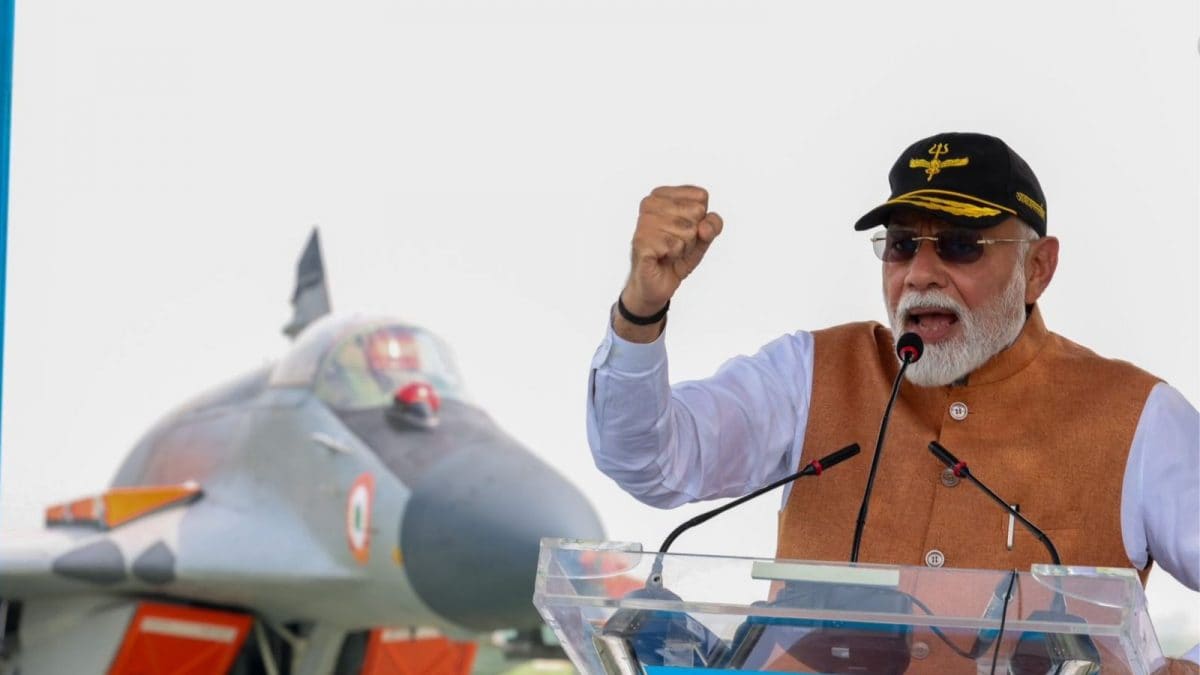
Operation Sindoor, a military operation launched by India in May 2025, marks a significant shift in India's approach to national security and counter-terrorism. Spearheaded by Prime Minister Narendra Modi, the operation targeted terrorist infrastructure in both mainland Pakistan and Pakistan-occupied Kashmir (PoK) as a response to the brutal terrorist attack in Pahalgam, Jammu and Kashmir, which claimed the lives of 26 people, including tourists. The operation not only avenged the loss of innocent lives but also redefined India’s national security doctrine, establishing a “new normal” characterized by zero tolerance for terrorism, no engagement with nuclear blackmail, and no differentiation between terrorists and their state sponsors. This decisive action, coupled with the deployment of advanced military technology and strategic communication, signals a paradigm shift in India's foreign and defense policy, emphasizing self-reliance, combat readiness, and a ruthlessly uncompromising attitude towards crushing terror. The timing of Operation Sindoor is crucial to understanding its context and implications. The Pahalgam terror attack served as a stark reminder of Pakistan’s continued role in sponsoring cross-border terrorism. The attack, which targeted civilians, including women, was described by PM Modi as a “personal tragedy” that wiped out the “sindoor” (vermilion, a symbol of married women in India) of Indian sisters and daughters. This emotional connection informed the operation's name and underscored the government's determination to protect its citizens. The naming of the operation as Sindoor was a deliberate choice, suggested by Modi himself, to send a powerful message to terrorists about the consequences of targeting Indian citizens. The operation was launched in the early hours of May 7, 2025, with the Indian Armed Forces executing 24 precision strikes on nine terrorist targets across Pakistan and PoK in just 25 minutes. Operation Sindoor was a masterclass in modern warfare, showcasing India’s evolution from traditional military tactics to a tech-driven, intelligence-led approach. The Indian Armed Forces, comprising the Army, Air Force and Navy, worked in seamless coordination, employing indigenously developed weapons like the BrahMos missile, Akash air defense system and D-4 anti-drone systems. The operation was marked by real-time intelligence, surgical strikes, and non-kinetic warfare in domains like space, cyber and electronic warfare, highlighting India’s technological edge. The success of Operation Sindoor can be attributed to several factors, including meticulous planning, precise execution, and the deployment of cutting-edge technology. The Indian Air Force (IAF) played a pivotal role, bypassing Pakistan’s Chinese-supplied defense systems to deliver precise strikes on terrorist infrastructure and later, Pakistani military targets in response to their retaliatory attacks. Satellite imagery released by India showed extensive damage to Pakistani air bases, including Rahim Yar Khan, Rafiqui, Murid, Nur Khan, Sukkur, Chunian, Pasrur, and Sialkot, with craters on runways and destroyed military installations. The IAF’s ability to neutralize Pakistan’s drone and missile attacks, including intercepting incursions in Jammu and Kashmir, Punjab, Rajasthan and Gujarat, underscored India’s formidable air defense capabilities. India's strategic communication also played a vital role in shaping the narrative surrounding Operation Sindoor. When Pakistan claimed to have destroyed Indian assets like MiG-29 jets and S-400 systems, PM Modi’s visit to the Adampur Air Base on May 13, 2025, with an intact MiG-29 and S-400 in the background, served as a visual rebuttal. This strategic move not only debunked Pakistan’s false narrative but also boosted the morale of Indian troops and citizens.
The shift in India's national security policy, as articulated by PM Modi, is a direct challenge to Pakistan’s long-standing strategy of using terrorism as a tool of statecraft while hiding behind the threat of nuclear escalation. Modi emphasized that the operation was a “new normal” in India’s national security policy, characterized by three key principles: zero tolerance for terrorism, no engagement with nuclear blackmail and no differentiation between terrorists and their state sponsors. This new doctrine signifies a departure from previous approaches that were often perceived as reactive and restrained. By adopting a proactive and assertive stance, India aims to deter future acts of terrorism and hold Pakistan accountable for its support of terrorist groups. The implications of Operation Sindoor extend beyond the immediate context of India-Pakistan relations. The operation has reshaped perceptions of India’s military and diplomatic clout on the global stage. India’s decision to brief 70 nations (excluding China) on the operation’s success underscores its intent to project strength and transparency. The operation also highlights India’s growing self-reliance in defense production. The use of indigenously developed weapons and systems demonstrates India’s commitment to achieving strategic autonomy and reducing its dependence on foreign suppliers. The launch of the BrahMos facility in Lucknow, for instance, is a firm stride towards making India a significant player in the world’s defence production ecosystem. Creating a strong development ecosystem and implementing initiatives such as setting-up of UPDIC, establishment of DRDO’s Defence Technology & Test Centre in Lucknow and hosting DefExpo in 2020, have been major milestones. The new facility in Lucknow will give a fillip to the Make-in-India initiative, Aatmanirbharta and investment in defence manufacturing. The 200-acre BrahMos Integration and Testing Facility Centre in Lucknow will have integration of booster subassemblies, avionics, propellant and Ramjet engines. The Rs 300 crore complex will pave the way for skill development for industry and entrepreneurs in a long way. The entire defence ecosystem of ancillary and sub-assemblies will be developed in the vicinity to support the complex. It will help in a big way in industrialisation and skill development of students of ITI, supervisors, and engineers. It will also ensure that people are not forced to migrate to look for job opportunities. Operation Sindoor's success also reflects PM Modi's leadership and ability to unite the nation behind a common goal. The operation received bipartisan support, with even opposition leaders like Congress MP Shashi Tharoor praising Modi’s handling of the conflict. Modi’s personal touch was also evident in his engagement with the armed forces. His visit to the Adampur Air Base, where he addressed soldiers and linked modern Indian weaponry to the legendary horse Chetak of Maharana Pratap, boosted troop morale and resonated with the public. By dedicating the operation’s success to India’s mothers, sisters, and daughters, Modi connected the fight against terrorism to a deeply emotional and cultural narrative, strengthening national resolve.
The Modi government also took proactive steps to counter misinformation and cyberattacks during Operation Sindoor. India reportedly faced significant cyberattacks from State-backed hackers in Pakistan and China. India’s robust cybersecurity measures, however, neutralized these threats, ensuring operational continuity. The government also withheld the X account of Turkish broadcaster TRT World in India, citing its role in spreading anti-India narratives, further demonstrating Modi’s commitment to safeguarding national interests. Domestically, Operation Sindoor galvanised the nation. The Bharatiya Janata Party (BJP) organised Tiranga Yatra processions across the country to honor the armed forces, with participation from retired soldiers. Public sentiment was overwhelmingly positive, with reports of parents in Uttar Pradesh and Rajasthan naming newborn girls “Sindoor” in tribute to the operation. The operation also sparked a surge in defence stocks, reflecting investor confidence in India’s military capabilities. Operation Sindoor is not without its critics and challenges. The long-term implications of the operation for India-Pakistan relations remain uncertain. Pakistan has condemned the operation and accused India of aggression. The potential for escalation remains a concern, and diplomatic efforts will be crucial in managing the conflict and preventing further hostilities. The operation’s success has also raised questions about the effectiveness of Pakistan’s counter-terrorism efforts and its ability to prevent future attacks. The international community will be closely watching Pakistan’s response to ensure that it takes credible steps to address the root causes of terrorism. The shift to a “non-contact war model,” emphasising drones, missiles, and cyber capabilities, enabled India to strike deep into enemy territory without risking large-scale troop deployments. This transformation, painstakingly built over a decade, distinguished Operation Sindoor from earlier operations like the 2016 Uri surgical strikes and the 2019 Balakot airstrikes, which relied on traditional warfare models. Needless to add, Operation Sindoor has been a “quantum leap” from the localized 2016 Surgical Strike and the single-target 2019 Balakot Airstrike, targeting multiple, high-value sites deep inside Pakistan’s heartland, including the Punjab province, near Lahore. From basic ground combat (2016) to advanced air-delivered munitions (2019) to sophisticated standoff missiles and drones (2025), Sindoor reflects India’s shift to technology-driven warfare, under the bold and visionary leadership of Prime Minister Narendra Modi. The far-sighted Modi doctrine, emphatically establishing India’s new normal, is essentially all about putting the nation first, self-reliance, combat readiness, technological agility and above all, a ruthlessly uncompromising attitude when it comes to crushing terror in any form. In conclusion, Operation Sindoor represents a significant turning point in India's approach to national security and counter-terrorism. The operation’s success has strengthened Modi’s image as a tough negotiator and a leader committed to national security. It serves as a testament to India’s resolve, military prowess, and the visionary leadership of PM Narendra Modi. As the operation remains “on hold,” the world watches to see how Pakistan responds to India’s new normal – a normal defined by strength, resolve, and zero tolerance for terrorism.
Source: Opinion | India’s New Normal: Zero Tolerance For Terror