
 |
|
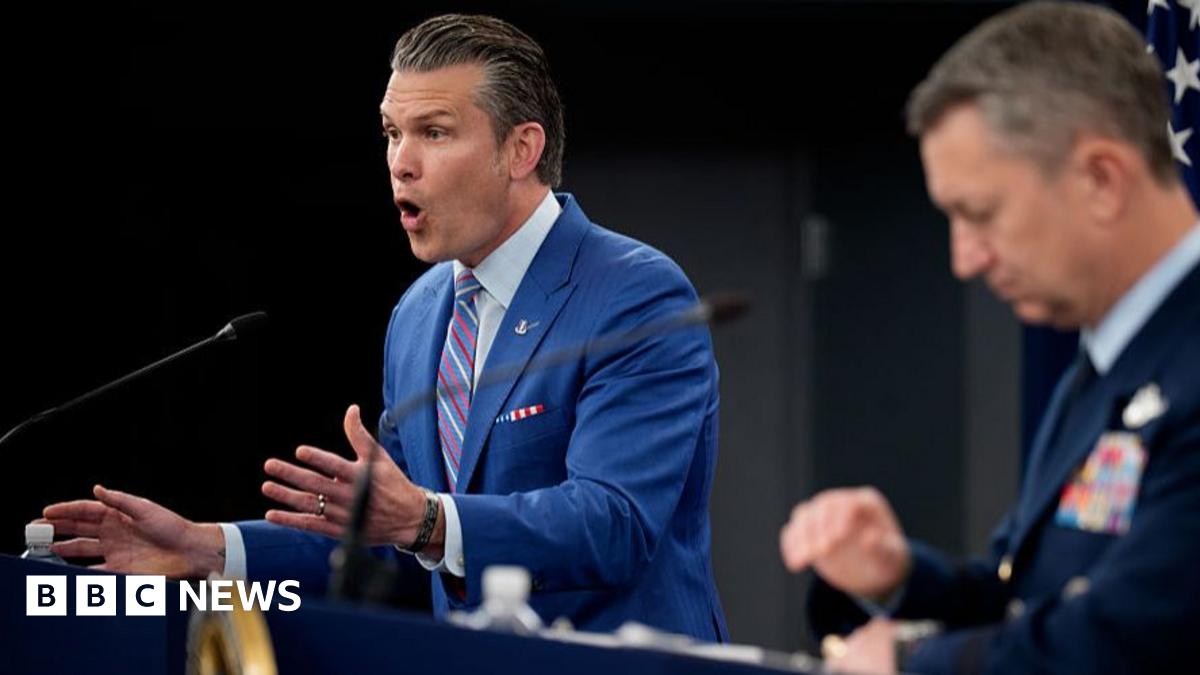
The article presents a stark contrast between the narratives emanating from the United States and Iran regarding the effectiveness of recent US strikes on Iranian nuclear facilities, specifically the Fordo site. The US Defence Secretary declared the strikes a “historic success,” claiming to have “obliterated” Iran’s nuclear program. This assertion is directly contradicted by Iran’s Supreme Leader Ayatollah Ali Khamenei, who dismissed the attacks as having “failed to achieve anything significant.” This divergence highlights the ongoing information warfare and the inherent difficulties in verifying claims made in the context of international conflict and sensitive national security matters. The author, Frank Gardner, a security correspondent, attempts to dissect these competing claims, acknowledging the tactical success of the US operation while simultaneously casting doubt on the overall strategic impact. The Pentagon briefing emphasized the precision and effectiveness of the GBU-57 bunker-busting bombs, confirming that they successfully hit their intended targets within the Fordo mountain complex. These bombs, the result of years of meticulous planning and analysis, were designed to penetrate deeply buried facilities and disrupt Iran's uranium enrichment program. The choice of targeting ventilation shafts and detonating at specific depths was intended to maximize the damage inflicted on the centrifuges and related infrastructure located underground. However, Gardner points out that tactical success does not necessarily equate to strategic victory. The crucial question of the actual state of the centrifuges, the heart of Iran's uranium enrichment capability, remains unanswered. Neither US nor UN inspectors have been granted access to the Fordo facility to independently assess the extent of the damage. This lack of transparency allows for continued speculation and competing claims regarding the program's status. Furthermore, the author raises concerns about the missing 408kg of highly enriched uranium (HEU), a significant quantity that could potentially be used to rapidly advance Iran's nuclear ambitions if it were to be diverted for illicit purposes. The disappearance of this material raises serious questions about security protocols and the overall control of nuclear materials within Iran. Another crucial unknown is the extent of Iran's retained nuclear knowledge base. Even if the physical infrastructure at Fordo has been significantly damaged, the expertise and scientific knowledge accumulated over years of research and development could enable Iran to restart its program in secret. The US briefing, described as a Pentagon briefing rather than an intelligence assessment, did not address this critical aspect, leaving open the possibility that Iran could circumvent the impact of the strikes and pursue its nuclear ambitions through clandestine means. The author concludes that while the US Air Force pilots successfully executed their mission to deliver the bunker-busting bombs with precision, the ultimate question of whether Iran's nuclear program has been truly destroyed or merely set back remains unresolved. The jury is still out, and a more comprehensive and independent assessment is needed to determine the long-term impact of the strikes and the future trajectory of Iran's nuclear ambitions. The conflict between the narratives presented by the US and Iran underscores the importance of verifying information and exercising caution when interpreting claims made by parties with vested interests in the outcome. The complexities of nuclear proliferation and the challenges of monitoring clandestine activities require a nuanced and critical approach to understanding the true state of affairs.
The strategic implications of the conflicting narratives extend far beyond the immediate aftermath of the strikes. The perception of success or failure has significant consequences for international diplomacy, regional stability, and the future of the nuclear non-proliferation regime. If the US narrative of complete obliteration is accepted, it could bolster confidence in the effectiveness of military intervention as a tool for preventing nuclear proliferation. This could embolden other nations to consider similar actions against states suspected of pursuing nuclear weapons programs. However, if the Iranian narrative of minimal impact gains traction, it could undermine the credibility of US deterrence and embolden Iran to continue its nuclear activities. It could also signal to other potential proliferators that military strikes are insufficient to halt determined nuclear programs, further weakening the non-proliferation regime. The lack of independent verification and the reliance on conflicting accounts create a dangerous environment of uncertainty and mistrust. This uncertainty can exacerbate regional tensions and increase the risk of miscalculation and escalation. In the absence of clear evidence, policymakers must make decisions based on incomplete information and potentially biased sources. This can lead to flawed assessments and ineffective policies. Furthermore, the information warfare surrounding the strikes can erode public trust in both governments and the media. When conflicting narratives are presented as equally valid, it becomes difficult for the public to discern the truth and make informed judgments about national security policy. This erosion of trust can undermine democratic processes and create fertile ground for misinformation and propaganda. The long-term consequences of the strikes and the competing narratives will depend on several factors, including the future behavior of Iran, the response of the international community, and the availability of credible information. If Iran continues to deny access to inspectors and refuses to verifiably dismantle its nuclear program, it will likely face renewed international pressure and potentially further military action. If the international community fails to unite in a strong and coordinated response, it could embolden Iran and weaken the non-proliferation regime. The availability of credible information will be crucial in shaping public opinion and informing policy decisions. Independent investigations and rigorous analysis are needed to determine the true extent of the damage to Iran's nuclear facilities and to assess the long-term implications of the strikes. Only with accurate and reliable information can policymakers make informed decisions and mitigate the risks of further escalation and proliferation.
The ongoing debate over the effectiveness of the US strikes on Iranian nuclear facilities highlights the fundamental challenges of preventing nuclear proliferation in the 21st century. Traditional methods of diplomacy and sanctions have proven insufficient to halt the determined pursuit of nuclear weapons by some states. Military intervention, while potentially effective in the short term, carries significant risks and uncertainties. The strikes on Fordo, even if successful in inflicting significant damage, have not eliminated Iran's nuclear knowledge base or its desire to acquire nuclear weapons. Furthermore, the strikes have fueled resentment and mistrust, potentially hardening Iran's resolve to pursue its nuclear ambitions. The international community needs to develop new and innovative strategies for preventing nuclear proliferation. These strategies should combine elements of diplomacy, sanctions, deterrence, and arms control. They should also address the underlying security concerns that drive states to seek nuclear weapons. For example, regional security arrangements and confidence-building measures can help to reduce tensions and create a more stable environment. Arms control agreements can limit the production and spread of nuclear weapons and related technologies. Diplomatic engagement can provide a forum for dialogue and negotiation, helping to resolve disputes and build trust. In addition to these traditional approaches, new strategies are needed to address the challenges posed by cyber warfare, disinformation, and the proliferation of dual-use technologies. Cyberattacks can be used to disrupt nuclear facilities and steal sensitive information. Disinformation campaigns can be used to manipulate public opinion and undermine trust in international institutions. The proliferation of dual-use technologies, such as advanced manufacturing equipment and artificial intelligence, can make it easier for states to develop nuclear weapons in secret. To address these challenges, the international community needs to strengthen its cyber security capabilities, combat disinformation, and develop new export controls for dual-use technologies. It also needs to invest in research and development of new technologies that can help to detect and prevent nuclear proliferation. Ultimately, the prevention of nuclear proliferation requires a multifaceted and coordinated approach that addresses the underlying security concerns, strengthens international norms, and develops new technologies. The strikes on Fordo serve as a reminder of the risks and uncertainties of military intervention. A more comprehensive and sustainable approach is needed to prevent the spread of nuclear weapons and ensure a more secure and peaceful world. The conflicting narratives surrounding the strikes underscore the importance of transparency, verification, and independent assessment in addressing nuclear proliferation challenges. Without accurate and reliable information, it is impossible to make informed decisions and develop effective policies.
The complexities of the situation surrounding Iran's nuclear program are further compounded by the geopolitical context in which it operates. Iran is a major regional power with significant influence over events in the Middle East. Its relationship with other countries in the region, particularly Saudi Arabia and Israel, is characterized by deep mistrust and rivalry. The ongoing conflicts in Syria and Yemen have further exacerbated these tensions. Iran's nuclear program is viewed by many countries in the region as a direct threat to their security. Saudi Arabia, in particular, has expressed strong concerns about Iran's nuclear ambitions and has hinted that it might pursue its own nuclear weapons program if Iran were to acquire a nuclear weapon. Israel has long maintained a policy of ambiguity regarding its own nuclear capabilities and has repeatedly warned that it will not allow Iran to develop nuclear weapons. The potential for a regional arms race is a serious concern, as it could destabilize the entire region and increase the risk of conflict. The international community has a responsibility to prevent such an outcome. This requires a coordinated effort to address the underlying security concerns of all countries in the region and to promote dialogue and cooperation. A comprehensive regional security architecture, based on principles of mutual respect and non-interference, is needed to create a more stable and peaceful environment. This architecture should include mechanisms for conflict resolution, arms control, and confidence-building measures. It should also address the root causes of extremism and terrorism, which are major sources of instability in the region. The role of external powers, such as the United States, Russia, and China, is also crucial. These countries have a responsibility to use their influence to promote stability and prevent escalation. They should avoid taking actions that could exacerbate tensions or undermine efforts to find a peaceful resolution to the Iranian nuclear issue. The Iranian nuclear issue is not simply a technical problem; it is a complex political and security challenge that requires a comprehensive and long-term solution. Military intervention is not a sustainable solution and could have disastrous consequences. A diplomatic solution, based on mutual respect and verifiable commitments, is the only way to ensure that Iran's nuclear program remains peaceful and that the region is free from the threat of nuclear weapons. The conflicting narratives surrounding the US strikes on Iranian nuclear facilities serve as a stark reminder of the challenges and complexities of addressing nuclear proliferation in a volatile geopolitical environment. A nuanced and comprehensive approach, involving diplomacy, sanctions, deterrence, and regional security cooperation, is needed to prevent a nuclear arms race and ensure a more stable and peaceful Middle East.
Source: Hegseth says US strikes on Iran were 'historically successful' after ayatollah downplays impact