
 |
|
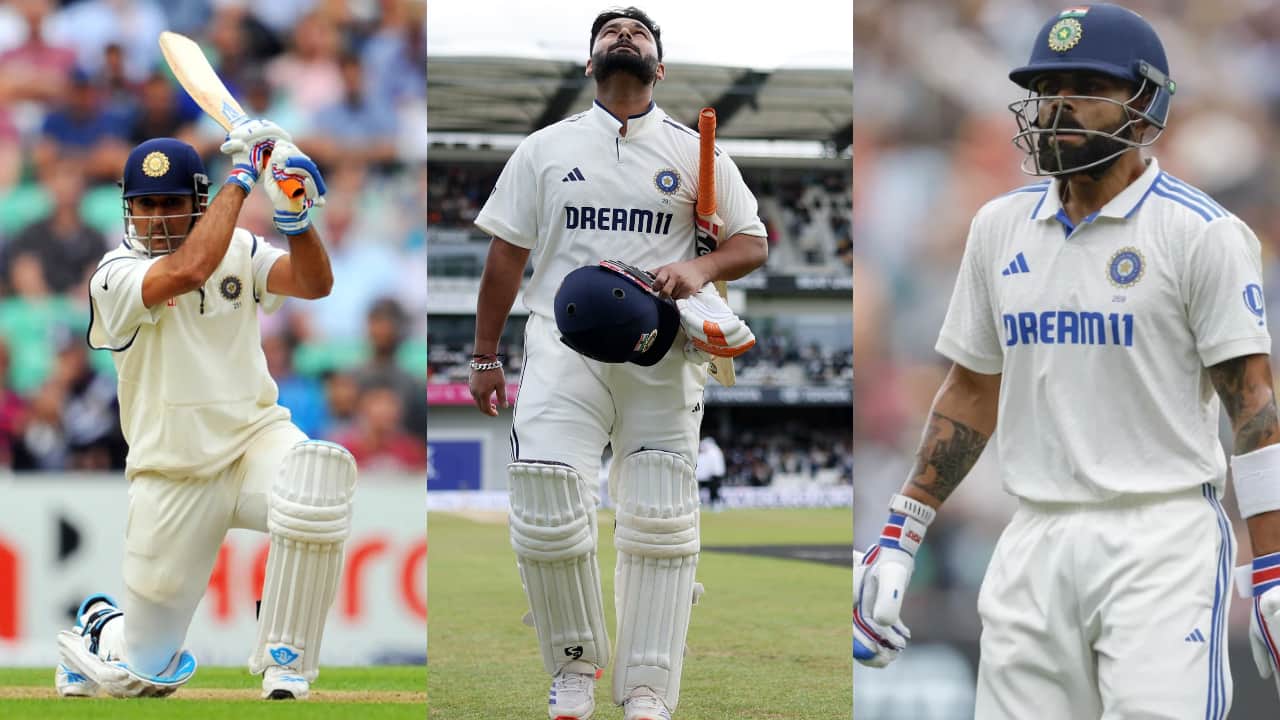
The discourse surrounding Rishabh Pant's cricketing prowess, particularly in comparison to the legendary MS Dhoni, has ignited fervent debates among analysts and fans alike. Ravichandran Ashwin, a veteran of the sport, has injected a fresh perspective into this discussion, asserting that drawing parallels between Pant and Dhoni is fundamentally flawed due to their distinct roles and batting positions. Ashwin advocates for a comparison between Pant and Virat Kohli, emphasizing Pant's potential as a top-order batsman. This viewpoint offers a nuanced understanding of Pant's capabilities and challenges conventional comparisons often made in the cricketing world. The immediate impact of Pant has been quite significant, particularly his ability to score centuries while also keeping wickets. His performance has been lauded as a breath of fresh air for Indian cricket. The debate that ensues is not just about metrics and comparisons, but the heart and soul of how the sport is perceived and the impact of a player on its evolving narrative. The comparison between Dhoni and Pant is flawed because Dhoni, historically, occupied a different slot in the batting order compared to the dynamism that Pant has been exhibiting. Dhoni, the stalwart and former captain, was primarily a middle-order batsman who often played the role of a finisher. In contrast, Pant frequently bats higher up the order, often at number five, providing him with a different scope for shaping the innings. This strategic positioning is what Ashwin points to as one of the prime reasons the comparison doesn't hold water. Dhoni's primary responsibility was to anchor the innings, stabilize the team during crises, and orchestrate the final overs with calculated aggression. His batting style was often characterized by patience, resilience, and an acute understanding of match situations. While capable of explosive hitting, Dhoni's approach was more about ensuring stability and guiding the team to victory through measured accumulation of runs. Pant, on the other hand, is known for his aggressive and fearless approach from the outset. He often takes on the bowlers early in his innings, attempting to seize momentum and put the opposition on the back foot. This proactive style has resulted in some breathtaking performances, but also occasional inconsistency. Pant's role is more akin to that of a game-changer, someone who can quickly alter the course of a match with his audacious strokeplay. The statistics also paint a contrasting picture. Dhoni's Test record, while respectable, does not include the same volume of centuries as Pant's despite playing significantly more innings. Dhoni scored six Test centuries in 144 innings, while Pant has already surpassed that mark with seven tons in just 76 innings, adding another in the second innings of the aforementioned test. This statistical disparity underscores the difference in their batting styles and roles within the team. Ashwin's assertion that Pant should be compared to Virat Kohli is rooted in the premise that Pant is primarily a batsman who also keeps wickets, while Dhoni was a wicketkeeper who could bat effectively. Kohli, a top-order batsman with a prolific record, sets a high benchmark for Pant in terms of pure batting talent and potential. Comparing Pant to Kohli allows for a more focused evaluation of his batting skills, technique, and ability to dominate opposition bowlers. This comparison also acknowledges Pant's aggressive style and his potential to become a match-winning batsman, similar to Kohli. It also takes into account the amount of time that Pant has while batting, and his demonstrated skill when facing pacers, a quality that is shared with Kohli. Kohli is known for his aggressive, dominant, and consistent performance with the bat, which is a high standard for anyone. The fact that Ashwin makes the comparison underscores the potential that Pant has. Pant's recent achievements, such as matching Dilip Vengsarkar and Sachin Tendulkar's century tally in English conditions, further strengthen the argument for considering him a top-order batsman. Tendulkar and Vengsarkar, both legends of Indian cricket, achieved their four centuries in England from 30 and 23 innings respectively. Virat Kohli, despite his stellar record, does not have as many centuries in England, highlighting the significance of Pant's accomplishment. Rahul Dravid, another iconic Indian batsman, holds the record for the most Test centuries in England with six from 23 innings. These statistical comparisons provide a context for understanding Pant's achievements and his potential to leave a lasting legacy in Test cricket. Furthermore, Pant's ability to adapt to different conditions and perform consistently across formats suggests that he has the temperament and skill to excel as a top-order batsman. His aggressive style, coupled with his technical proficiency, makes him a formidable opponent for any bowling attack. The comparisons to other greats such as Sachin Tendulkar and Dilip Vengsarkar only strengthen the position that Ashwin is forwarding in advocating for Pant to be thought of with batsmen of that caliber. The argument that Pant is following in Dhoni's footsteps is also explored, acknowledging that Pant has the potential to surpass Dhoni's legacy in Test cricket. Dhoni's impact on Indian cricket is undeniable, but Pant's unique skills and potential suggest that he could carve out his own distinct legacy. By comparing Pant to Kohli and other top-order batsmen, Ashwin is encouraging a reevaluation of Pant's role and potential within the Indian cricket team. It's a call to recognize him not just as a wicketkeeper who can bat, but as a genuine batting talent who can shape the future of Indian cricket. In conclusion, Ravichandran Ashwin's perspective on comparing Rishabh Pant to MS Dhoni offers a thoughtful and nuanced understanding of Pant's cricketing capabilities. By advocating for a comparison between Pant and Virat Kohli, Ashwin highlights Pant's potential as a top-order batsman and encourages a reevaluation of his role within the Indian cricket team. This perspective provides a fresh lens through which to view Pant's achievements and his potential to leave a lasting legacy in Test cricket. The discussion further underscores the complexity of comparing players across different eras and roles, and the importance of considering individual skills and potential when assessing their impact on the game. It also highlights the evolving nature of cricket and the need for flexible thinking in evaluating players' contributions. The comparisons are not just about individual accolades, but rather the overarching contribution to the legacy of the sport.
Source: 'Comparing MS Dhoni-Rishabh Pant not fair; should be compared with Virat Kohli': Ravichandran Ashwin