
 |
|
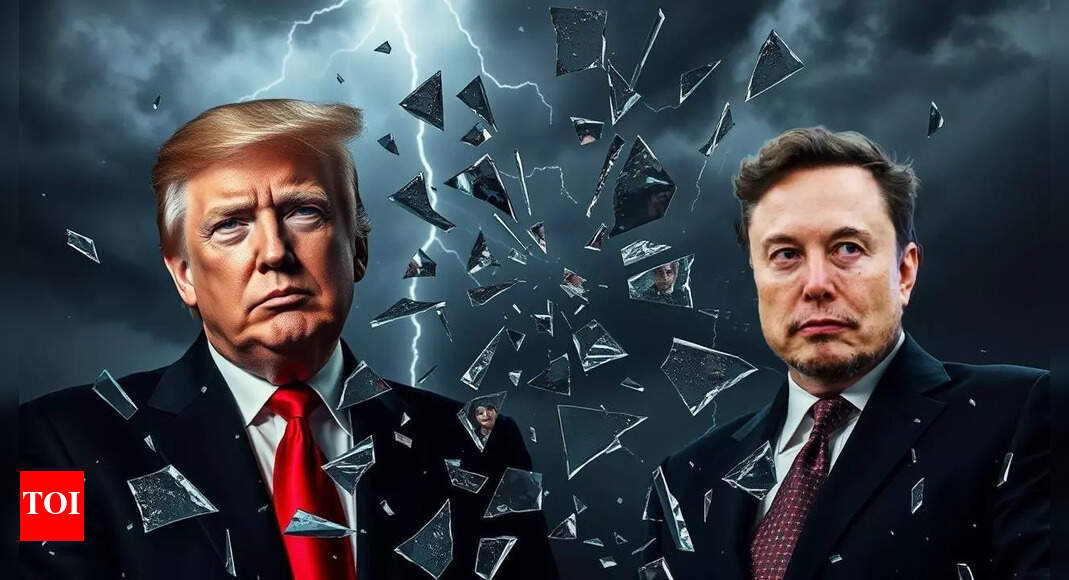
The escalating conflict between former allies Donald Trump and Elon Musk has triggered a series of repercussions affecting both their political and business ventures. What started as mutual support has devolved into public spats and strategic maneuvering, with significant ramifications for the future of Trump's legislative agenda and Musk's companies, notably Tesla and SpaceX. The heart of the dispute lies in Trump's “One Big Beautiful Bill,” a comprehensive legislative proposal that combines tax cuts, enhanced border security, and reductions in Medicaid and food aid programs. Musk has vehemently criticized the bill, focusing on its projected $2.5 trillion increase to the federal deficit, branding it a “disgusting abomination.” His opposition carries weight, not only due to his financial resources but also because of his influence among fiscally conservative lawmakers. Musk's past financial support for Trump, exceeding $250 million, underscores the shift in their relationship and the potential for him to redirect these resources against supporters of the bill. This financial leverage could manifest in supporting primary challengers or employing other tactics to sway Republican votes, as reported by the Wall Street Journal. This situation presents a precarious scenario for Trump, who needs to maintain unity within his party to advance his legislative agenda. The House Freedom Caucus has already expressed reservations about the bill's impact on the deficit, echoing Musk's concerns. With a slim majority in the House, Trump can ill afford to lose many Republican votes, making Musk's opposition a significant obstacle. Only a few Republican lawmakers, such as Reps. Thomas Massie and Warren Davidson, have publicly aligned with Musk's stance, highlighting the division within the party. Other Republicans like Rep. David Schweikert have voiced the need for significant amendments before pledging support, emphasizing concerns over national debt. The internal party tensions are rising, with one senior GOP member noting that Musk's opposition is straining relationships and undermining legislative momentum. Beyond the immediate impact on Trump's bill, the fallout from this rift could have long-term consequences. Musk's vast social media influence on X could impact critical midterm races in 2026, particularly given the Republicans' slim majority in the House. The possibility of Musk launching a new political party, supported by a strong online poll, could disrupt existing political dynamics and reshape the conservative landscape in the US. This highlights the potential for Musk's influence to extend beyond specific legislative battles and into the broader political arena.
For Elon Musk, the stakes are equally high, particularly concerning the future prospects of his companies, Tesla and SpaceX. SpaceX, under Musk’s leadership, has forged a deep and strategic relationship with multiple branches of the US government, including NASA, the Pentagon, and intelligence agencies. The company plays a crucial role in launching military satellites, supporting Ukraine via its Starlink internet network, and transporting astronauts to the International Space Station. NASA alone has committed nearly $10 billion to SpaceX through contracts for space-station missions and lunar exploration projects, including developing Starship and a deorbiting craft for the ISS. SpaceX also relies on regulatory bodies like aviation safety and environmental authorities to support its launch operations. Recent agreements, such as a $5.9 billion agreement to deliver national-security payloads and a classified $1.8 billion partnership with the National Reconnaissance Office for satellite surveillance, underscore SpaceX's expanding influence in both civilian and military aerospace sectors. However, this close relationship with the government also makes SpaceX vulnerable to political shifts. A White House official noted that Musk currently lacks allies within Donald Trump’s political circle, suggesting potential future complications in securing support or contracts if Trump returns to office. Previously, Musk seemed well-positioned to gain more government business, including participation in Trump’s proposed “Golden Dome for America” missile-defense project. Tesla, another of Musk’s flagship companies, faces its own set of challenges. Tesla requires federal-level regulatory modifications to deploy nationwide autonomous vehicles, as current regulations leave control of self-driving vehicles on public roads to individual states. The company's inability to implement autonomous driving features has been consistently attributed to regulatory obstacles. Furthermore, Tesla's investments in autonomous vehicles and humanoid robots rely heavily on vehicle sales, which have declined significantly in the US and European markets, coinciding with closer ties between Musk and Trump. Tesla also faces potential challenges from White House initiatives to relax fuel economy and emissions regulations. The company generates substantial quarterly revenue through selling regulatory credits to competing automobile manufacturers who must purchase them to avoid penalties for exceeding emission limits. The recent Congressional decision to remove California's authority to establish independent tailpipe emission standards has effectively eliminated a primary catalyst for electric vehicle investment in the United States.
The immediate financial impact of the Trump-Musk conflict was evident in Tesla's stock performance. As the spat escalated, Tesla’s shares crashed 14%, wiping out a staggering $150 billion from its market capitalization. This single-day loss was unprecedented and reflected investors' nervousness about the potential consequences of the conflict on Tesla's future prospects. The market reaction underscored the significant financial risks associated with Musk’s political stance. The broader implications of this conflict extend to the regulatory environment in which both Tesla and SpaceX operate. The ability of Tesla to gain federal approval for autonomous driving technology and navigate evolving fuel economy standards will be critical for its future growth. Similarly, SpaceX's ability to maintain its lucrative government contracts and secure regulatory approvals for its launch operations is essential for its continued success. The potential for a Trump administration to retaliate against Musk's companies is a real concern, as evidenced by Trump's warning about canceling government agreements with Musk's enterprises. This threat, advocated by Trump's supporters since Musk began criticizing his legislation, highlights the precarious position Musk's companies find themselves in. In conclusion, the fallout between Donald Trump and Elon Musk has created significant implications for both influential figures. Trump faces challenges in advancing his legislative agenda due to Musk's opposition and potential financial support for opposing candidates. Musk, on the other hand, faces potential risks to the regulatory environment and government contracts crucial for the success of Tesla and SpaceX. The conflict underscores the complex interplay between politics, business, and technology in the modern era, and the significant consequences that can arise when powerful individuals clash.
The situation for Elon Musk is particularly intricate because of the intersection of his various ventures – Tesla, SpaceX, and xAI – each reliant on different forms of government interaction. While SpaceX depends on direct government contracts and regulatory approvals for its launch operations, Tesla requires policy adjustments to enable its ambitions in autonomous driving and emissions standards. Furthermore, Musk’s pursuit of artificial intelligence through xAI is likely to necessitate navigating future regulations related to AI development and deployment. His goal to transform Tesla into a trillion-dollar AI and robotics enterprise hinges on successfully securing these regulatory modifications. The alignment, or misalignment, of political forces can significantly impact these efforts. If a Trump administration actively impedes regulatory adjustments needed by Tesla or jeopardizes SpaceX contracts, Musk’s grand plans could be severely hindered. The potential for governmental leverage over Musk's business empire is considerable, making his current political stance a calculated risk with substantial consequences. The escalating animosity between Trump and Musk underscores a deeper shift in the relationship between the tech industry and political establishments. Historically, many tech leaders have maintained a degree of neutrality or aligned strategically with various political factions to further their business interests. However, Musk's increasingly vocal and public criticisms mark a departure from this norm. His decision to challenge Trump's policy agenda directly, despite the potential risks to his companies, reflects a willingness to engage more assertively in the political arena. This change could inspire other tech leaders to adopt more active political roles, potentially reshaping the dynamics between Silicon Valley and Washington D.C. The repercussions of this conflict extend beyond the immediate political and financial spheres. They also raise questions about the responsibilities and influence of powerful individuals in shaping public policy and discourse. The ability of Musk, through his companies and social media platform X, to influence political opinion and potentially sway elections highlights the growing power of tech titans in the democratic process. This power comes with a responsibility to use it judiciously and transparently. As the clash between Trump and Musk continues, it serves as a reminder of the profound impact that individual actions and decisions can have on the political landscape and the business environment. The unfolding events will undoubtedly be closely watched by politicians, business leaders, and the public alike, as they navigate the complex interplay of power, policy, and personal ambition.
Source: US President or world’s richest man? Stakes are high for both!