
 |
|
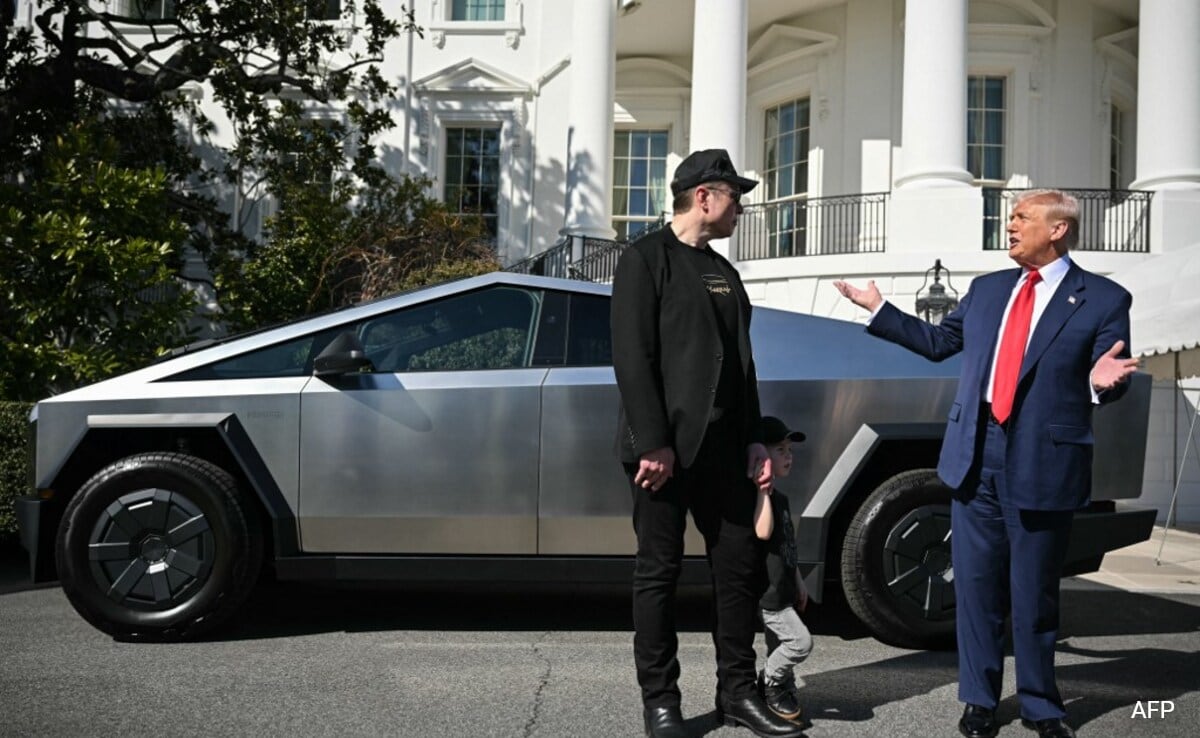
The escalating feud between Elon Musk and Donald Trump has triggered a financial earthquake, particularly for Tesla, which has witnessed a staggering $380 billion decline in valuation since the beginning of 2025. This dramatic downturn is attributed to a complex interplay of factors, primarily Musk's increasingly public political stances and the retaliatory policies enacted by a Trump administration seemingly determined to undermine the electric vehicle (EV) market. The article meticulously details the chronological unraveling of Tesla's stock performance, tracing it back to Musk's overt political engagement and culminating in a full-blown public spat with Trump. The consequences have been devastating, positioning Tesla as the worst-performing large-cap stock this year and raising serious questions about the future trajectory of the company under the weight of political headwinds. The situation underscores the inherent risks involved when a CEO, particularly one as visible and influential as Musk, intertwines personal political beliefs with the corporate image and strategic direction of a publicly traded company. The market's reaction serves as a stark reminder that investors are often wary of uncertainty and potential instability stemming from political controversies, even if the underlying business fundamentals remain sound. The article doesn't shy away from highlighting the specific policy decisions that have exacerbated Tesla's woes. Trump's advocacy for fossil fuels, encapsulated in his 'drill baby, drill' mantra and his promotion of vehicles powered by petroleum, has directly impacted the demand for EVs, thereby weakening Tesla's market position. Furthermore, the 'Big Beautiful Bill,' designed to eliminate tax benefits for EV manufacturers, poses a significant threat to Tesla's financial viability, potentially costing the company tens of billions of dollars annually. This legislative maneuver is perceived as a direct assault on the EV industry and a deliberate attempt to favor traditional automotive manufacturers reliant on internal combustion engines. The personal animosity between Musk and Trump is also a crucial element in understanding the severity of the situation. The article vividly portrays the 'no-holds-barred verbal duel' between the two billionaires, highlighting the breakdown of their former partnership and the escalating threats exchanged between them. Musk's public criticism of Trump, including accusations of 'ingratitude' for his past financial support and allegations regarding Trump's association with Jeffrey Epstein, have undoubtedly inflamed the situation and further eroded investor confidence in Tesla. The article also touches upon the broader implications of this feud for the EV industry as a whole. Trump's policies and rhetoric pose a significant challenge to the transition towards sustainable transportation, potentially slowing down the adoption of EVs and hindering efforts to combat climate change. The article emphasizes that the consequences extend beyond Tesla, impacting other EV manufacturers and potentially jeopardizing the long-term growth of the industry. Ultimately, the article paints a bleak picture of Tesla's current predicament, highlighting the vulnerability of the company to political machinations and the volatile nature of the relationship between business and politics. The question remains whether Tesla can weather this storm and navigate the challenges posed by a hostile political environment, or whether the company will continue to suffer the consequences of Musk's political entanglements.
The core of the Tesla downfall seems deeply rooted in the personal and political clash between Elon Musk and Donald Trump. Musk's initial support of Trump, allegedly crucial to Trump's election victory in 2024, appears to have soured dramatically. The article suggests that Musk's sense of betrayal, expressed through accusations of 'ingratitude,' stems from Trump's subsequent policies that directly contradict Musk's business interests, particularly in the realm of electric vehicles and renewable energy. Trump's 'America First' energy policies, which prioritize fossil fuel production and consumption, stand in stark contrast to Musk's vision of a sustainable future powered by EVs and renewable energy sources. This fundamental divergence in ideology and economic interests has fueled the escalating conflict between the two figures. The article further posits that Trump's 'Big Beautiful Bill,' designed to eliminate tax incentives for EV manufacturers, is a direct response to Musk's perceived disloyalty and a deliberate attempt to cripple Tesla's competitive advantage. The bill effectively penalizes companies like Tesla that are heavily invested in EV technology, while simultaneously benefiting traditional automotive manufacturers that rely on internal combustion engines. This policy shift has created a highly uneven playing field and has raised concerns about the fairness and impartiality of government regulations. The impact of Trump's policies extends beyond the financial realm, potentially undermining Tesla's brand image and consumer appeal. Trump's relentless promotion of gasoline-powered vehicles and his skepticism towards climate change have created a negative perception of EVs among a segment of the population, potentially hindering the adoption of Tesla vehicles. Moreover, Musk's increasingly vocal criticism of Trump has alienated some consumers who align with Trump's political views, further exacerbating the challenges faced by Tesla. The article also raises questions about the long-term implications of this feud for the broader business community. It highlights the risks associated with CEOs taking overtly political stances, particularly when those stances conflict with the interests of the ruling government. The case of Tesla serves as a cautionary tale, demonstrating how political controversies can have a significant impact on a company's financial performance and reputation. The article suggests that companies should carefully consider the potential consequences of their CEOs' political activities and should strive to maintain a neutral stance in order to avoid alienating customers and investors. The unfolding situation with Tesla also spotlights the increasingly blurred lines between business, politics, and public opinion. In today's interconnected world, social media platforms have amplified the voices of CEOs and have given them unprecedented power to influence public discourse. However, this power comes with significant responsibilities, and CEOs must exercise caution in expressing their political views, particularly when those views could potentially harm their companies or alienate stakeholders.
Looking ahead, the future of Tesla hinges on its ability to navigate the turbulent waters of political uncertainty and adapt to the evolving policy landscape. The article suggests several potential strategies that Tesla could employ to mitigate the risks associated with the Trump-Musk feud. First, Tesla could focus on diversifying its market base, reducing its reliance on the United States and expanding its presence in other countries where EV adoption is more actively supported. This would involve investing in new manufacturing facilities and distribution networks in regions such as Europe and Asia, where governments are implementing policies to incentivize the purchase of EVs and promote sustainable transportation. Second, Tesla could intensify its lobbying efforts to advocate for policies that support the EV industry and counter the negative impact of Trump's policies. This would involve working with lawmakers on both sides of the political aisle to promote the benefits of EVs and highlight the economic opportunities associated with the transition to sustainable transportation. Third, Tesla could focus on enhancing its product offerings and improving its technological capabilities to maintain its competitive edge in the EV market. This would involve investing in research and development to develop more advanced battery technology, improve vehicle performance, and enhance the overall driving experience. Finally, Tesla could attempt to mend fences with the Trump administration, seeking to find common ground and negotiate policies that are more favorable to the EV industry. This would involve engaging in dialogue with Trump officials and demonstrating the economic benefits of supporting the EV sector. However, this strategy may be difficult to execute, given the deep-seated animosity between Musk and Trump. The article also emphasizes the importance of strong leadership within Tesla to navigate the challenges posed by the political headwinds. Musk's role as CEO will be crucial in shaping the company's strategic direction and guiding it through this period of uncertainty. Musk will need to demonstrate strong leadership skills, including the ability to communicate effectively with stakeholders, build consensus among employees, and make difficult decisions in the face of adversity. The article concludes by suggesting that the Tesla saga is a reflection of the broader political and economic forces shaping the global landscape. The rise of populism, the increasing polarization of political discourse, and the growing emphasis on national interests are all contributing to the uncertainty and volatility facing businesses today. Companies must be prepared to adapt to these changing conditions and to navigate the complexities of a world where business and politics are increasingly intertwined. The future of Tesla, and the future of the EV industry as a whole, will depend on how effectively companies can respond to these challenges and seize the opportunities that lie ahead.
Source: Trump-Musk Feud: Tesla Now Worst-Performing Stock, Loses $380 Billion In 2025