
 |
|
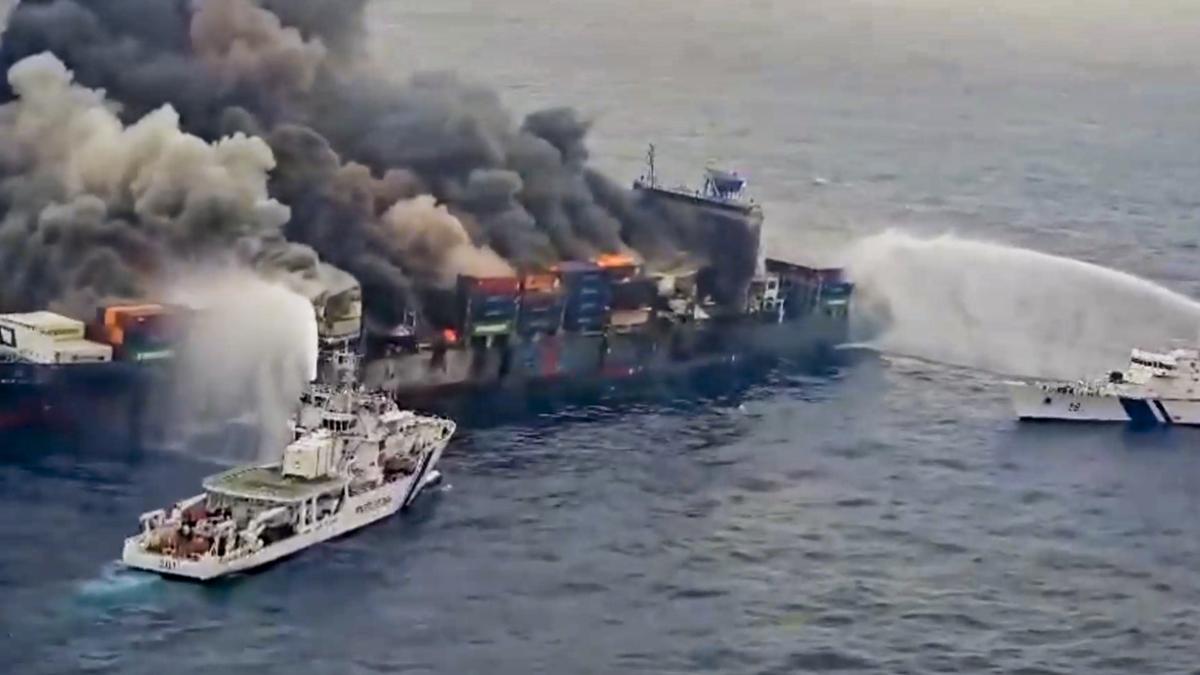
The unfolding situation involving the Singapore-flagged cargo ship, MV Wan Hai 503, ablaze in the Arabian Sea off the coast of Kerala, presents a complex and precarious scenario. While the Indian Coast Guard is actively engaged in firefighting efforts, the likelihood of salvaging the vessel appears increasingly slim, compounded by challenging environmental factors and the presence of a hazardous cargo. The article highlights the significant hurdles facing salvage operations, primarily the ship's listing and the adverse weather conditions. The report of the ship tilting at a 10-15 degree angle poses a considerable risk to its stability, potentially leading to capsizing and sinking. This instability, combined with the uncontrolled fire, severely restricts the ability of salvage teams to effectively address the situation. The monsoon season, characterized by strong winds and heavy rainfall, exacerbates the fire's spread and hinders containment efforts. These conditions are not only conducive to escalating the blaze but also impede access for firefighting personnel and equipment, further diminishing the chances of salvaging the ship. The article further elaborates on the complexities of managing a fire involving a cargo ship carrying dangerous goods. The Kerala government has confirmed that 157 containers onboard the MV Wan Hai 503 contain highly hazardous materials. This introduces an added layer of risk and difficulty to the firefighting operation, as any mishandling of these materials could result in explosions, chemical leaks, and severe environmental damage. The potential for such a catastrophe underscores the urgent need for a coordinated and cautious approach to mitigating the risks associated with the burning cargo. The comparison drawn with the MSC ELSA 3 incident, where a container ship sank off the coast of Kochi carrying hazardous cargo, serves as a stark reminder of the potential consequences of maritime accidents involving dangerous goods. While the causes of the two incidents may differ, the potential for environmental contamination and long-term ecological damage remains a significant concern. The sinking of a vessel carrying hazardous materials can release pollutants into the marine environment, impacting marine life, contaminating coastal ecosystems, and potentially affecting human health. The article emphasizes the importance of a thorough investigation to determine the precise cause of the fire on the MV Wan Hai 503. A detailed inquiry will be crucial in identifying any potential negligence, safety lapses, or equipment malfunctions that may have contributed to the incident. The findings of the investigation can then be used to implement preventative measures and improve safety protocols to minimize the risk of similar incidents occurring in the future. Moreover, the article underscores the critical role of flag state jurisdiction in ensuring maritime safety. The fact that the MV Wan Hai 503 is a Singapore-flagged vessel, known for its rigorous inspection and scrutiny standards, suggests that the incident may not be solely attributable to lax oversight. However, the article contrasts this with vessels registered under flags of convenience, such as Liberia, where regulatory oversight may be less stringent. The involvement of different flag states highlights the need for international cooperation and standardized safety regulations to ensure the safe transportation of goods by sea. The potential for any spills or debris from the sinking ship to reach the shores of Kerala during the monsoon season is another significant concern highlighted in the article. The monsoon's wave transportation effects could carry pollutants and debris towards the coastline, potentially impacting coastal communities and ecosystems. The authorities need to prepare for such a scenario, developing contingency plans for cleanup and mitigation efforts to minimize the environmental impact of the incident. The broader implications of maritime accidents involving hazardous cargoes extend beyond the immediate environmental and economic consequences. Such incidents can also erode public trust in the shipping industry and raise concerns about the safety of maritime trade. It is therefore imperative that the shipping industry, governments, and international organizations work collaboratively to address the challenges associated with the transportation of dangerous goods by sea. This includes strengthening safety regulations, improving emergency response capabilities, and promoting a culture of safety throughout the industry.
The current situation off the Kerala coast highlights the complex interplay of factors that contribute to maritime disasters, particularly those involving hazardous materials. The fire aboard the MV Wan Hai 503 is not simply an isolated incident but rather a manifestation of systemic challenges within the global shipping industry. These challenges include the increasing size and complexity of cargo vessels, the growing volume of dangerous goods transported by sea, and the inherent risks associated with operating in challenging marine environments. The article rightly points out the crucial role of weather conditions in exacerbating the situation. The monsoon season, with its strong winds and heavy rainfall, has significantly hampered firefighting efforts and increased the likelihood of the ship breaking apart and sinking. This underscores the need for better weather forecasting and risk assessment tools to help ships avoid hazardous conditions and navigate safely through challenging waters. The presence of 157 containers carrying dangerous goods adds a further layer of complexity to the crisis. The nature of these hazardous materials is not specified in the article, but they could include flammable liquids, toxic chemicals, or explosives. Any mishandling or release of these materials could have catastrophic consequences for the marine environment and human health. This highlights the need for stricter regulations and enforcement mechanisms to ensure the safe handling and transportation of dangerous goods by sea. The comparison with the sinking of the MSC ELSA 3 off the coast of Kochi is instructive. Both incidents involve container ships carrying hazardous cargo that encountered difficulties in the Arabian Sea. While the causes of the two incidents may differ, the potential for environmental damage and economic disruption is similar. This underscores the need for a comprehensive risk management approach to maritime safety, one that takes into account the potential for accidents involving hazardous materials and puts in place measures to mitigate the consequences. The article also raises important questions about the role of flag states in ensuring maritime safety. The MV Wan Hai 503 is a Singapore-flagged vessel, which typically implies a high level of regulatory oversight. However, the fact that the incident occurred despite this suggests that even the most stringent regulations are not foolproof. The article contrasts this with vessels registered under flags of convenience, where regulatory oversight may be weaker. This underscores the need for greater international cooperation to harmonize maritime safety standards and ensure that all ships, regardless of their flag state, are subject to rigorous inspection and enforcement. The potential for debris from the sinking ship to reach the shores of Kerala is a significant concern. The monsoon currents could carry pollutants and debris towards the coastline, potentially impacting coastal communities and ecosystems. This highlights the need for a comprehensive contingency plan to deal with any spills or debris that may reach the shore. The plan should include measures for cleanup, containment, and disposal of hazardous materials, as well as compensation for affected communities. The incident also has broader implications for the global shipping industry. It raises questions about the safety of maritime trade and the potential for environmental disasters. It underscores the need for a more sustainable and responsible approach to shipping, one that takes into account the environmental and social costs of maritime transportation.
Looking beyond the immediate crisis, the incident involving the MV Wan Hai 503 serves as a catalyst for reevaluating the entire maritime ecosystem. The scale and complexity of modern shipping operations demand a holistic approach that encompasses technological advancements, regulatory reforms, and a proactive safety culture. Embracing cutting-edge technologies can play a crucial role in enhancing maritime safety and preventing accidents. Advanced navigation systems, real-time monitoring of vessel conditions, and predictive maintenance tools can help ships avoid hazardous situations and detect potential problems before they escalate. Furthermore, the development and deployment of autonomous firefighting systems and remotely operated vehicles can improve the effectiveness of emergency response efforts in situations where human intervention is too risky. Regulatory reforms are also essential to address the systemic challenges within the shipping industry. This includes strengthening international safety standards, harmonizing regulations across different flag states, and improving enforcement mechanisms to ensure compliance. Governments and international organizations need to work together to create a level playing field where all ships are subject to the same rigorous standards, regardless of their flag state or operating region. The incident highlights the need for greater transparency and accountability within the shipping industry. The public has a right to know about the risks associated with maritime transportation, especially when dangerous goods are involved. Shipping companies should be required to disclose information about the cargoes they carry, the safety measures they have in place, and their emergency response plans. This information should be readily accessible to the public and to relevant authorities. A proactive safety culture is also crucial to preventing maritime accidents. This means fostering a mindset of safety awareness and risk management throughout the shipping industry, from ship owners and operators to crew members and port workers. Training programs should emphasize the importance of safety procedures, emergency preparedness, and communication skills. Companies should also create a culture where employees feel empowered to report safety concerns without fear of reprisal. The environmental implications of maritime accidents involving hazardous cargoes cannot be overstated. The release of pollutants into the marine environment can have devastating consequences for marine life, coastal ecosystems, and human health. The shipping industry has a responsibility to minimize its environmental footprint and to take proactive measures to prevent pollution. This includes investing in cleaner fuels and technologies, implementing strict waste management practices, and developing robust spill response plans. The incident also underscores the importance of international cooperation in addressing maritime emergencies. No single country or organization can effectively respond to a major maritime disaster on its own. Coordinated efforts are needed to mobilize resources, share information, and provide assistance to affected areas. The international community should work together to establish clear protocols for responding to maritime emergencies and to ensure that all countries have the capacity to participate in these efforts. In conclusion, the fire aboard the MV Wan Hai 503 is a wake-up call for the maritime industry. It highlights the inherent risks associated with the transportation of dangerous goods by sea and the need for a more comprehensive and proactive approach to maritime safety. By embracing technological advancements, implementing regulatory reforms, fostering a proactive safety culture, and promoting international cooperation, the shipping industry can reduce the risk of future accidents and protect the marine environment and human health.