
 |
|
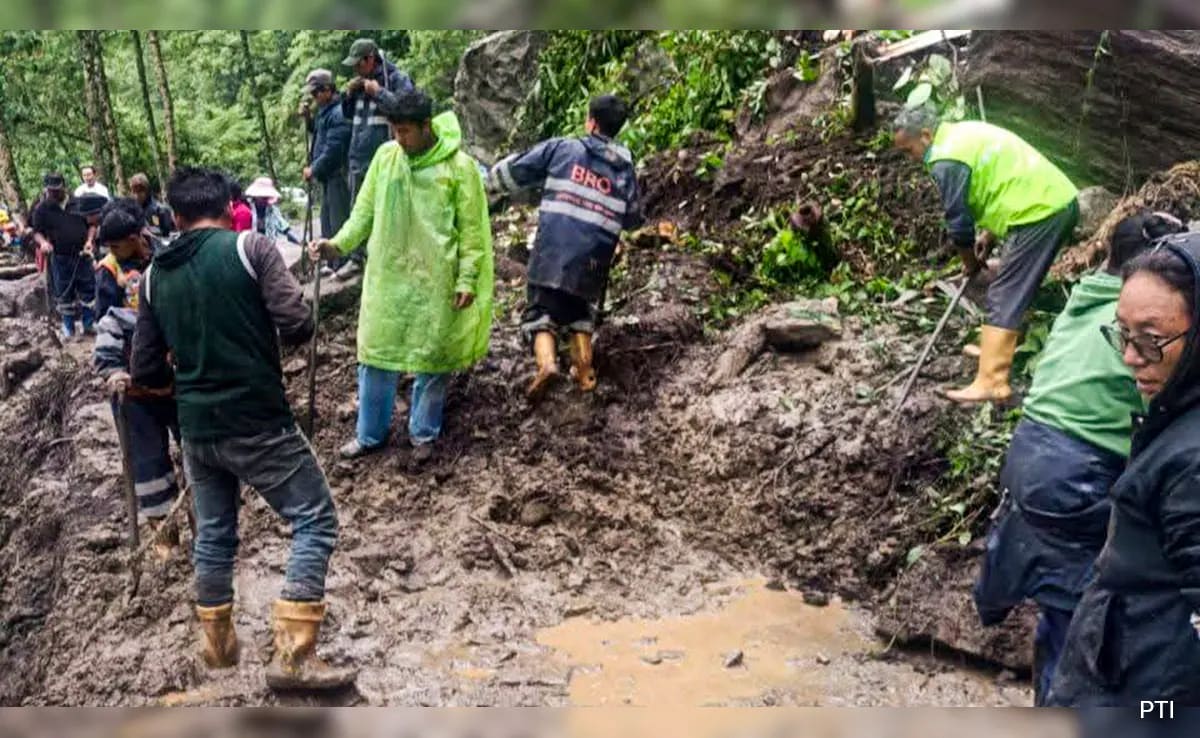
The recent landslides in Sikkim, triggered by incessant rainfall, have created a humanitarian crisis, stranding over 1,600 tourists and disrupting vital infrastructure. The disaster, which began on May 29th, has primarily affected the Mangan district, a region known for its picturesque landscapes and popular tourist destinations like Lachen, Lachung, Gurudongmar, the Valley of Flowers, and Zero Point. The intensity of the rainfall, exceeding 130 mm, has caused significant damage to roads and bridges, effectively cutting off these areas from the rest of the state and hindering rescue and relief efforts. The primary focus has been on the evacuation of stranded tourists, with over 1,600 individuals successfully moved from Lachung and Chungthang towns. This operation was made possible by the Border Roads Organisation (BRO), which worked tirelessly to restore road connectivity to Lachung, particularly focusing on repairing the damaged Phidang bridge. The BRO's efforts were crucial in establishing a one-way vehicular route, enabling the evacuation process to commence. Despite the successful evacuation of a significant number of tourists, over 100 remain stranded in Lachen village due to ongoing landslides in Chhaten. District Magistrate Anant Jain has assured that these remaining tourists will be evacuated as soon as possible, with the potential deployment of helicopters if weather conditions permit. However, the challenging terrain and unpredictable weather continue to pose significant obstacles to the evacuation efforts. The disaster has also brought to light the tragic incident involving a newly-wed couple from Uttar Pradesh, Ankita Singh and Kaushalendra Pratap Singh, who have been missing since May 29th. Their vehicle, carrying them and nine others, plunged nearly 1,000 feet into the Teesta river between Chungthang and Munshithang. Among the other missing individuals are Odisha BJP leader Itishree Jena and three members of her family. Search and rescue operations are currently underway to locate the missing individuals, but the treacherous conditions of the river and the surrounding area are making the task extremely difficult. The landslides have caused widespread damage to critical infrastructure, including bridges in Phidang and Sangkalang, which have been partially damaged. The Dikchu-Sanklang-Shipgyere road, Chungthang-Lachen-Zeema road, and Chungthang-Lachung road, which serve as essential links to Lachen and Lachung, have been completely cut off due to the formation of breaches and large-scale landslides. Furthermore, two crucial bailey bridges along the Lachen axis have been washed away, further exacerbating the connectivity crisis. The BRO teams are working diligently to clear debris, reconstruct damaged stretches, and repair the dangerous breach near the suspension bridge at Phidang. Their efforts are essential in restoring connectivity and facilitating the movement of relief supplies and personnel to the affected areas. The landslides in Sikkim are part of a larger pattern of extreme weather events affecting the northeastern states of India. At least 34 people have died in floods and landslides in Assam, Manipur, Tripura, Sikkim, and Arunachal Pradesh over the past three days. These events highlight the increasing vulnerability of the region to climate change and the urgent need for effective disaster preparedness and mitigation measures.
The socio-economic impact of the Sikkim landslides is significant. The tourism industry, a vital source of revenue and employment for the state, has been severely affected. The disruption of transportation and the damage to infrastructure have made it difficult for tourists to access popular destinations, leading to cancellations and a decline in tourism-related activities. The local communities, who rely on tourism for their livelihoods, are facing economic hardship as a result of the disaster. Furthermore, the damage to agricultural land and livestock has affected the food security of the region. Many farmers have lost their crops and animals, which are essential for their sustenance and income. The landslides have also caused displacement, forcing many people to leave their homes and seek shelter in safer areas. The displaced population is facing a lack of access to basic necessities such as food, water, and shelter. The psychological impact of the disaster on the affected communities should not be underestimated. The trauma of witnessing the destruction of their homes and livelihoods can have long-lasting effects on their mental health and well-being. The loss of loved ones and the uncertainty about the future can also contribute to feelings of anxiety, depression, and hopelessness. The disaster response efforts are being coordinated by the state government, with support from the central government and various agencies. The focus is on providing immediate relief to the affected population, including food, water, shelter, and medical assistance. The BRO is working to restore connectivity and clear debris from the roads, while the National Disaster Response Force (NDRF) is assisting in search and rescue operations. The Union Home Minister Amit Shah has assured of every possible help to the flood-hit areas. He has spoken to the Chief Ministers of Assam, Sikkim, and Arunachal Pradesh and the Governor of Manipur to assess the situation and coordinate relief efforts. The central government has also announced financial assistance to the affected states to help them cope with the disaster. The long-term recovery and reconstruction efforts will require a comprehensive and coordinated approach. This includes repairing damaged infrastructure, providing financial assistance to affected families, and promoting sustainable development practices to reduce the vulnerability of the region to future disasters.
Moving forward, a proactive and multi-faceted strategy is crucial to mitigate the impact of such disasters in the future. This includes enhancing early warning systems, improving disaster preparedness measures, and investing in resilient infrastructure. Early warning systems can provide timely information to communities at risk, allowing them to evacuate before a disaster strikes. Disaster preparedness measures, such as training for emergency responders and public awareness campaigns, can help communities to respond effectively to disasters. Investing in resilient infrastructure, such as bridges and roads that are designed to withstand extreme weather events, can reduce the damage caused by disasters. Climate change is exacerbating the risk of extreme weather events in the northeastern states of India. Rising temperatures, changing rainfall patterns, and increased frequency of cyclones are contributing to the occurrence of floods, landslides, and droughts. Addressing climate change is essential to reduce the vulnerability of the region to future disasters. This includes reducing greenhouse gas emissions, promoting sustainable land management practices, and investing in climate-resilient infrastructure. International cooperation is also essential to address the challenges posed by climate change and disaster risk reduction. Developed countries can provide financial and technical assistance to developing countries to help them adapt to climate change and build resilience to disasters. Sharing knowledge and best practices can also help countries to improve their disaster preparedness and response capabilities. The Sikkim landslides serve as a stark reminder of the devastating impact of natural disasters and the urgent need for effective disaster risk reduction measures. By investing in early warning systems, improving disaster preparedness, building resilient infrastructure, and addressing climate change, we can reduce the vulnerability of communities to future disasters and protect lives and livelihoods. Furthermore, it is crucial to ensure sustainable and responsible tourism practices within the region. Overdevelopment and unsustainable construction can exacerbate environmental vulnerabilities, increasing the risk of landslides and other disasters. Promoting eco-tourism and ensuring that tourism development is aligned with environmental sustainability principles can help to protect the natural resources of the region and reduce the risk of future disasters. Continuous monitoring and assessment of vulnerable areas are also essential. Regular geological surveys and risk assessments can help to identify areas that are prone to landslides and other disasters, allowing for targeted interventions to reduce the risk. Community participation is crucial for the success of disaster risk reduction efforts. Engaging local communities in the planning and implementation of disaster preparedness and mitigation measures can ensure that these measures are tailored to their specific needs and priorities. Finally, learning from past disasters is essential to improve future disaster risk reduction efforts. Conducting post-disaster assessments can help to identify lessons learned and inform the development of more effective disaster preparedness and response strategies. The long-term recovery and reconstruction efforts should focus on building back better, ensuring that communities are more resilient to future disasters.
Source: Over 1,600 Tourists Evacuated From Landslide-Hit Sikkim, 100 Still Stranded