
 |
|
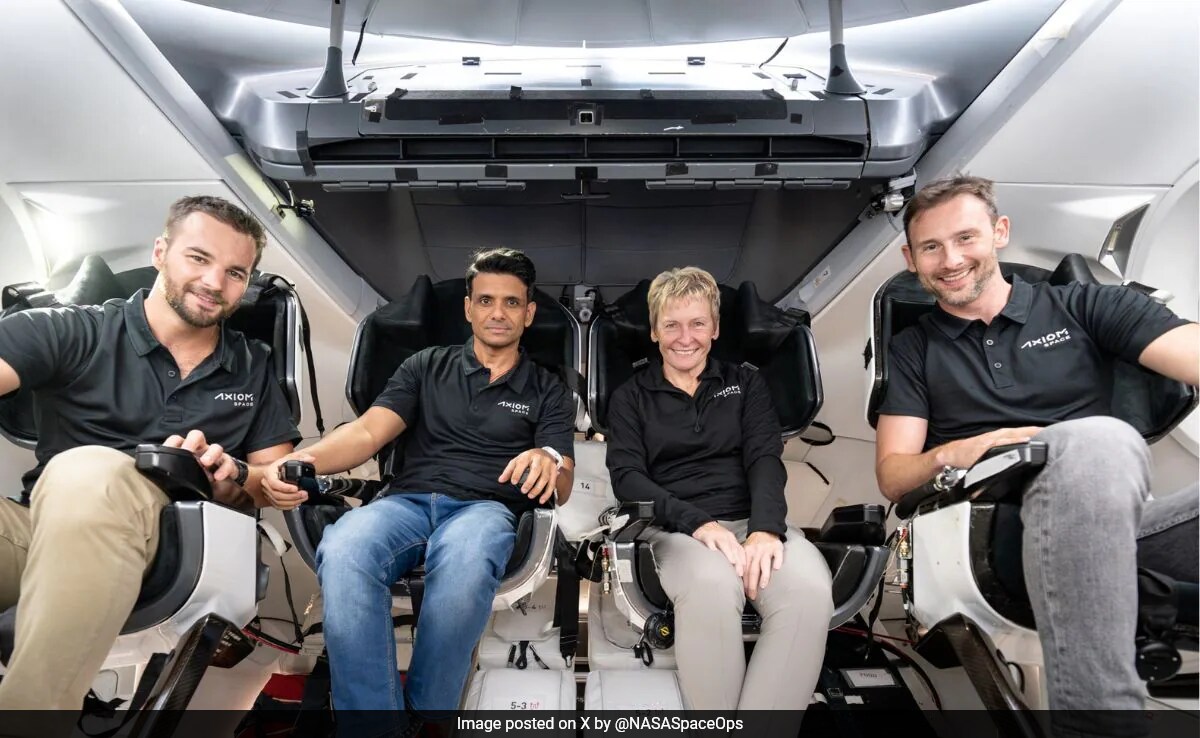
The upcoming space mission featuring Group Captain Shubhanshu Shukla, poised to become only the second Indian in space after Rakesh Sharma, is facing significant hurdles. While the nation anticipates the launch from NASA's Kennedy Space Center, multiple postponements have already dampened spirits. The Axiom-4 mission, a collaborative effort between NASA and ISRO spearheaded by the private company Axiom Space, is now grappling with both inclement weather conditions and technical complications related to the SpaceX Falcon-9 rocket, the launch vehicle for this ambitious undertaking. The Mission Readiness Review Conference revealed the extent of these challenges, highlighting potential further delays that could impact the mission's timeline. Allen Flynt, Chief of Mission Services at Axiom Space, emphasized the rigorous training undergone by the crew, including Veteran US Astronaut Peggy Whitson, Group Captain Shukla, Slawosz Uznanski-Wisniewski from Poland, and Tibor Kapu from Hungary, underscoring the commitment to safety, scientific excellence, and operational proficiency. The successful completion of a dry run served as a positive indicator, confirming the readiness of systems, teams, and procedures to support the launch. However, William Gerstenmaier, Vice-President for Build and Flight Reliability at SpaceX, disclosed a critical issue: a liquid oxygen (LOX) leak detected in the booster during its previous mission. This leak, either inadequately repaired or previously undetected, necessitates further troubleshooting to ensure the integrity of the rocket's propulsion system. Gerstenmaier reaffirmed SpaceX's unwavering dedication to human spaceflight safety, acknowledging the inherent challenges of space exploration and emphasizing the company's continuous learning and improvement. He mentioned that the dry run led to the discovery of this LOX leak during the static fire test, where the rocket's engines are ignited while it remains secured to the launch mount. The team is actively working to rectify the leak at the launch pad, installing a purge system to mitigate any potential recurrence during the launch. In addition to the LOX leak, an issue with the thrust vector control, crucial for the rocket's maneuverability, has also been identified. The components associated with this system are being replaced, with the expectation of completing all necessary work to support a launch as early as the next day. These challenges highlight the intricate and demanding nature of space missions, emphasizing the importance of thorough testing, dry runs, and crew preparation to mitigate risks and ensure a safe and successful flight. SpaceX prioritizes learning from each flight, utilizing a fleet of spacecraft to review data, identify potential issues, and implement improvements. The company's commitment to continuous learning and proactive problem-solving is paramount to maintaining safety standards and avoiding complacency.
Weather conditions in Florida, known for their unpredictable nature, have also contributed to the delays. Jimmy Taeger, Launch Weather Officer at the 45th Weather Squadron, US Space Force, acknowledged the challenges of forecasting weather in central Florida, describing it as "dicey." The possibility of isolated to scattered showers and thunderstorms poses a significant risk to the launch, particularly during the morning hours. The potential for precipitation and lightning near the ascent corridor further complicates the situation. While the probability violation (POV) number, indicating the likelihood of violating weather constraints, is relatively low at 20% for Wednesday and 25% for Thursday, the risk remains a concern. Strong winds in the ascent corridor are also a factor, although they are expected to weaken. The presence of a stalled boundary near the ascent corridor further increases the likelihood of lingering showers and thunderstorms. The decision to proceed with the launch will depend on the proximity of this boundary and the overall weather conditions at the time. SpaceX's William Gerstenmaier also addressed the potential impact of the public disagreement between US President Donald Trump and Elon Musk on the mission. Gerstenmaier emphasized the importance of remaining focused on the task at hand, avoiding distractions, and prioritizing the safety and success of the mission. He stressed the need to keep the teams focused on the vehicles, procedures, and processes, ensuring that the international crew can conduct valuable science and research on the International Space Station and return safely home. The combination of technical challenges and weather uncertainties underscores the complexities of space travel and the importance of meticulous planning and execution. The Axiom-4 mission, with its international crew and ambitious goals, represents a significant step forward in space exploration. Overcoming these obstacles will be crucial to ensuring the mission's success and furthering our understanding of the cosmos. The emphasis on safety and continuous improvement is paramount to mitigating risks and paving the way for future space endeavors. SpaceX’s proactive approach in identifying and addressing potential issues, combined with the dedication of the international team, showcases the collaborative spirit and unwavering commitment that drives progress in the field of space exploration. The mission serves as a testament to human ingenuity and the relentless pursuit of knowledge beyond our planet's boundaries.
The ongoing delays surrounding Shubhanshu Shukla's potential journey to space highlight the multifaceted challenges inherent in modern space exploration. While the aspiration to witness the launch of only the second Indian into orbit in over three decades generates palpable excitement, the mission's repeated postponements underscore the meticulous planning and unwavering safety protocols that govern such endeavors. The Axiom-4 mission, a noteworthy collaboration between NASA and ISRO, with Axiom Space at its helm, represents a significant step towards commercializing space travel and fostering international cooperation in scientific research. However, the current predicament, stemming from both meteorological uncertainties and technical complications with the SpaceX Falcon-9 rocket, serves as a stark reminder of the complexities involved in pushing the boundaries of human exploration. The revelations during the Mission Readiness Review Conference paint a detailed picture of the situation. Allen Flynt's assurance regarding the crew's extensive training and preparedness instills confidence in their ability to navigate the mission's demands. However, William Gerstenmaier's disclosure of a liquid oxygen leak detected in the booster from its previous mission raises concerns about the rocket's reliability. The team's efforts to troubleshoot and rectify the issue, including the installation of a purge system, demonstrate a proactive approach to mitigating potential risks. The discovery of a thrust vector control problem further emphasizes the need for thorough inspections and rigorous testing to ensure the safe operation of the launch vehicle. The emphasis on learning from each flight and leveraging data to improve safety protocols reflects SpaceX's commitment to continuous improvement and risk mitigation. The unpredictable weather patterns in Florida add another layer of complexity to the mission's timeline. Jimmy Taeger's candid assessment of the forecasting challenges highlights the inherent uncertainties involved in predicting meteorological conditions in the region. The potential for isolated thunderstorms and strong winds near the ascent corridor necessitates careful monitoring and flexible decision-making. Gerstenmaier's remarks concerning the potential impact of external factors, such as the disagreement between Trump and Musk, underscore the importance of maintaining focus and avoiding distractions during critical operations. The mission's success hinges on the ability of the team to remain dedicated to their tasks and prioritize safety above all else. The Axiom-4 mission, despite its current challenges, holds immense promise for advancing space exploration and fostering international collaboration. The dedication of the international crew, the expertise of the engineers and scientists involved, and the commitment to safety and continuous improvement all contribute to the potential for a successful and groundbreaking mission. Overcoming these obstacles will not only pave the way for future space endeavors but also inspire a new generation of scientists, engineers, and explorers to push the boundaries of human knowledge and exploration.
Source: Not Just Weather, Even Rocket Issues May Delay Shubhanshu Shukla's Space Foray