
 |
|
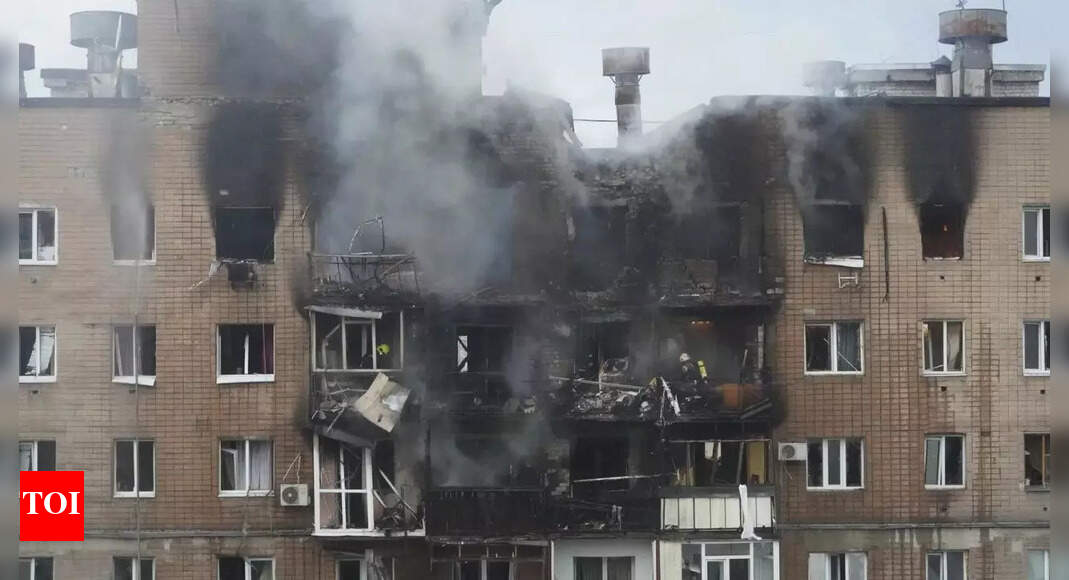
The recent escalation of the conflict in Ukraine, specifically the devastating drone and missile strike on Kharkiv, underscores the brutal reality of the ongoing war and its devastating impact on civilian populations. This attack, described as one of the most powerful since the start of the war, highlights a concerning trend: the increased reliance on drone and missile warfare, which often results in indiscriminate targeting and significant civilian casualties. The sheer scale of the assault, involving 48 Iranian-made Shahed drones, two missiles, and four aerial glide bombs, demonstrates Russia's continued capacity to inflict significant damage and terror upon Ukrainian cities. The choice of Kharkiv, a major city with a significant civilian population, as the target, further emphasizes the disregard for civilian life inherent in this military strategy. The deliberate targeting of residential areas, as evidenced by the damage to 18 apartment blocks and 13 private houses, suggests a calculated effort to demoralize the Ukrainian population and undermine their resilience. The psychological impact of such attacks, especially on vulnerable individuals such as children and the elderly, cannot be overstated. The trauma and fear experienced by those who have witnessed or survived these attacks will likely have long-lasting consequences. Furthermore, the use of Iranian-made drones raises serious questions about international arms proliferation and the role of external actors in fueling the conflict. The fact that these drones were used in an attack that resulted in civilian casualties further underscores the ethical and legal concerns associated with their deployment. The international community must address the issue of arms proliferation and hold accountable those who supply weapons that are used to target civilians. The incident in Pryluky, where a deadly overnight drone strike claimed the lives of five people, including a one-year-old child, serves as a stark reminder of the vulnerability of Ukrainian civilians to these attacks. The proximity of the Pryluky attack to the Kharkiv strike suggests a coordinated campaign aimed at inflicting maximum damage and disruption across multiple Ukrainian cities. The fact that this attack occurred just hours after the Pryluky strike, and resulted in 17 injuries, including children, a pregnant woman, and a 93-year-old woman, underscores the relentless nature of the Russian offensive and its devastating consequences for Ukrainian civilians. The targeting of civilians is a clear violation of international humanitarian law and constitutes a war crime. Those responsible for these attacks must be held accountable for their actions. The international community has a responsibility to investigate these incidents and bring the perpetrators to justice. Beyond the immediate human cost, the attacks on Kharkiv and Pryluky have significant implications for the humanitarian situation in Ukraine. The destruction of homes and infrastructure exacerbates the already dire living conditions for millions of Ukrainians who have been displaced or affected by the war. The disruption of essential services, such as water, electricity, and healthcare, further compounds the challenges faced by civilians. The international community must provide increased humanitarian assistance to Ukraine to help address the immediate needs of the affected population and to support long-term reconstruction efforts. The attacks also have significant political and strategic implications. They demonstrate Russia's continued willingness to use force to achieve its objectives in Ukraine and to disregard international norms and laws. The attacks are likely intended to put pressure on the Ukrainian government to negotiate a settlement on terms favorable to Russia. However, the attacks are also likely to strengthen the resolve of the Ukrainian people to resist Russian aggression and to defend their sovereignty and territorial integrity. The international community must continue to support Ukraine in its efforts to defend itself and to resist Russian aggression. This support should include military assistance, economic aid, and diplomatic pressure on Russia. The attacks on Kharkiv and Pryluky serve as a reminder of the urgent need for a peaceful resolution to the conflict in Ukraine. However, a lasting peace can only be achieved on the basis of respect for Ukrainian sovereignty and territorial integrity. The international community must work together to create the conditions for a negotiated settlement that addresses the root causes of the conflict and ensures the long-term security and stability of Ukraine and the wider region. The current situation demands not only immediate humanitarian aid but also a concerted effort to investigate and prosecute war crimes, and to prevent future atrocities. The world must stand in solidarity with the people of Ukraine and ensure that justice is served for the victims of these attacks. Furthermore, the international community must address the root causes of the conflict and work towards a lasting peace that respects the sovereignty and territorial integrity of Ukraine. The alternative is a continuation of the cycle of violence and suffering, with devastating consequences for Ukraine and the wider region.
The escalating conflict in Ukraine has consistently demonstrated a blatant disregard for civilian lives, as evidenced by the recent drone and missile strike on Kharkiv. This incident, along with the preceding attack on Pryluky, underscores a disturbing pattern of indiscriminate violence and deliberate targeting of residential areas. The use of weaponry like Iranian-made Shahed drones, aerial glide bombs, and missiles in densely populated urban centers indicates a calculated strategy to inflict maximum damage and terrorize the civilian population. This approach not only violates international humanitarian law but also creates a climate of fear and instability that undermines the long-term prospects for peace and reconciliation. The deliberate destruction of civilian infrastructure, including apartment buildings, private homes, and essential services, further exacerbates the suffering of the Ukrainian people. These attacks not only cause immediate casualties and displacement but also disrupt access to basic necessities like water, electricity, and healthcare, creating a humanitarian crisis of immense proportions. The psychological impact of these attacks is equally devastating, leaving survivors with lasting trauma and a sense of insecurity that will likely persist for years to come. The repeated targeting of residential areas raises serious questions about the proportionality and necessity of these attacks. Under international humanitarian law, military operations must be conducted in a way that minimizes harm to civilians and civilian objects. The attacks on Kharkiv and Pryluky appear to violate this principle, suggesting that the Russian military is deliberately targeting civilians or is failing to take adequate precautions to protect them. The use of Iranian-made Shahed drones in these attacks further implicates Iran in the conflict and raises concerns about its role in fueling the violence. The international community must hold Iran accountable for its support of the Russian military and take steps to prevent the further proliferation of these deadly weapons. The attacks on Kharkiv and Pryluky also highlight the limitations of existing international mechanisms for protecting civilians in armed conflict. The United Nations Security Council, which has primary responsibility for maintaining international peace and security, has been paralyzed by the Russian veto, preventing it from taking meaningful action to address the crisis in Ukraine. This underscores the need for reform of the Security Council to ensure that it can effectively respond to situations where civilians are at risk of mass atrocities. The international community must also explore alternative mechanisms for holding perpetrators of war crimes accountable, such as the International Criminal Court and national courts exercising universal jurisdiction. The investigation and prosecution of war crimes are essential for ensuring that those responsible for these atrocities are brought to justice and for deterring future violations of international humanitarian law. The attacks on Kharkiv and Pryluky serve as a reminder of the importance of upholding the principles of international humanitarian law and protecting civilians in armed conflict. The international community must take concrete steps to ensure that these principles are respected and that those who violate them are held accountable. This requires a multifaceted approach that includes diplomatic pressure, economic sanctions, legal action, and the provision of humanitarian assistance to victims of the conflict.
The humanitarian crisis unfolding in Ukraine is a direct consequence of the ongoing conflict, exacerbated by the deliberate targeting of civilian infrastructure and residential areas. The recent attacks on Kharkiv and Pryluky exemplify this devastating trend, highlighting the urgent need for increased humanitarian assistance and a concerted effort to protect vulnerable populations. The destruction of homes, schools, hospitals, and other essential facilities has left millions of Ukrainians displaced, without access to basic necessities, and at risk of disease and starvation. The psychological trauma inflicted by these attacks is equally profound, with many survivors suffering from anxiety, depression, and post-traumatic stress disorder. The humanitarian response to the crisis has been hampered by a number of factors, including the scale of the needs, the difficulty of accessing affected areas, and the ongoing violence. Aid organizations are struggling to provide adequate food, water, shelter, and medical care to the millions of Ukrainians who are in need. The attacks on Kharkiv and Pryluky have further complicated the humanitarian situation, disrupting aid deliveries and forcing aid workers to operate in increasingly dangerous conditions. The international community must step up its efforts to provide humanitarian assistance to Ukraine. This includes increasing funding for aid organizations, providing logistical support for aid deliveries, and working to ensure that aid reaches those who need it most. It also includes advocating for the protection of humanitarian workers and ensuring that they are able to operate safely and without interference. In addition to providing immediate humanitarian assistance, the international community must also address the root causes of the crisis. This requires a negotiated settlement to the conflict that respects Ukrainian sovereignty and territorial integrity. It also requires a commitment to long-term reconstruction and development, with a focus on building a more resilient and inclusive society. The attacks on Kharkiv and Pryluky serve as a reminder of the urgent need to protect civilians in armed conflict. This requires a renewed commitment to international humanitarian law and a concerted effort to hold perpetrators of war crimes accountable. It also requires a focus on preventing future conflicts and promoting peace and reconciliation. The international community must work together to create a more just and peaceful world, where all people are able to live in dignity and security. The situation in Ukraine is a stark reminder of the human cost of war and the urgent need for a renewed commitment to peace and security. The international community must act now to alleviate the suffering of the Ukrainian people and to prevent further atrocities. This requires a comprehensive approach that includes humanitarian assistance, diplomatic pressure, legal action, and a commitment to long-term reconstruction and development. The attacks on Kharkiv and Pryluky are a wake-up call to the world. We must not stand idly by while innocent civilians are being killed and injured. We must act now to protect them and to bring those responsible for these atrocities to justice. The future of Ukraine, and indeed the future of the international order, depends on it.
The recent attacks on Kharkiv and Pryluky, while devastating in their immediate impact, also serve as a crucial case study for understanding the evolving nature of modern warfare. The increased reliance on drone and missile strikes, particularly in densely populated urban areas, presents a complex set of challenges for both military strategists and international humanitarian organizations. The use of precision-guided munitions, while intended to minimize collateral damage, often fails to do so in practice, especially when targeting decisions are based on flawed intelligence or when the distinction between military and civilian targets is blurred. The attacks on Kharkiv and Pryluky highlight the inherent limitations of these technologies and the need for greater scrutiny of their use in armed conflict. The proliferation of drones, in particular, is a growing concern. These relatively inexpensive and easily obtainable weapons are increasingly being used by both state and non-state actors, making it more difficult to control their spread and prevent their misuse. The attacks on Kharkiv and Pryluky demonstrate the devastating potential of these weapons, particularly when they are used to target civilian populations. The international community must develop effective mechanisms for regulating the production, sale, and use of drones, and for holding accountable those who use them to commit war crimes. The attacks also raise important questions about the role of international law in regulating modern warfare. Existing laws of war, while providing a framework for protecting civilians and minimizing harm to civilian objects, are often difficult to apply in practice, particularly in the context of asymmetric conflicts and the use of new technologies. The attacks on Kharkiv and Pryluky highlight the need for a renewed effort to clarify and strengthen international humanitarian law, and to ensure that it is effectively enforced. The international community must also address the underlying causes of the conflict in Ukraine, which include geopolitical tensions, historical grievances, and economic inequalities. A lasting peace can only be achieved through a comprehensive approach that addresses these underlying causes and promotes dialogue, reconciliation, and mutual understanding. The attacks on Kharkiv and Pryluky are a reminder of the urgent need for a more just and peaceful world, where all people are able to live in dignity and security. This requires a concerted effort by the international community to address the root causes of conflict, to promote respect for international law, and to protect civilians from harm. The attacks on Kharkiv and Pryluky are a tragedy, but they can also serve as an opportunity to learn and to build a more peaceful future. By understanding the lessons of these attacks, we can better protect civilians in armed conflict and prevent future atrocities. The international community must act now to learn these lessons and to create a world where such tragedies are no longer possible. The path to peace is long and difficult, but it is a path that we must travel together. The attacks on Kharkiv and Pryluky are a reminder of the stakes involved and the urgent need for action.
The situation in Ukraine is a multifaceted crisis that demands a comprehensive and coordinated response from the international community. The recent attacks on Kharkiv and Pryluky are not isolated incidents, but rather part of a broader pattern of violence and human rights abuses that have been ongoing since the start of the conflict. These attacks highlight the urgent need for a multifaceted approach that addresses the immediate humanitarian needs of the affected population, while also working to address the underlying causes of the conflict and to promote a lasting peace. The humanitarian response to the crisis must be scaled up significantly to meet the growing needs of the Ukrainian people. This requires increased funding for aid organizations, logistical support for aid deliveries, and a commitment to ensuring that aid reaches those who need it most. The international community must also work to protect humanitarian workers and to ensure that they are able to operate safely and without interference. In addition to providing humanitarian assistance, the international community must also address the underlying causes of the conflict. This requires a negotiated settlement to the conflict that respects Ukrainian sovereignty and territorial integrity. It also requires a commitment to long-term reconstruction and development, with a focus on building a more resilient and inclusive society. The international community must also hold those responsible for war crimes and human rights abuses accountable for their actions. This requires a renewed commitment to international law and a concerted effort to investigate and prosecute perpetrators. The International Criminal Court has opened an investigation into alleged war crimes and crimes against humanity committed in Ukraine, and the international community must provide the court with the resources and support it needs to carry out its mandate effectively. Finally, the international community must work to prevent future conflicts and to promote peace and reconciliation. This requires a renewed commitment to multilateralism and a concerted effort to address the root causes of conflict, such as poverty, inequality, and discrimination. The international community must also support efforts to promote dialogue, reconciliation, and mutual understanding between different communities and cultures. The situation in Ukraine is a test of the international community's commitment to peace, justice, and human rights. The attacks on Kharkiv and Pryluky are a stark reminder of the stakes involved and the urgent need for action. The international community must rise to the challenge and work together to create a more just and peaceful world, where all people are able to live in dignity and security. The future of Ukraine, and indeed the future of the international order, depends on it. The task ahead is daunting, but it is not insurmountable. By working together, we can create a better future for all.