
 |
|
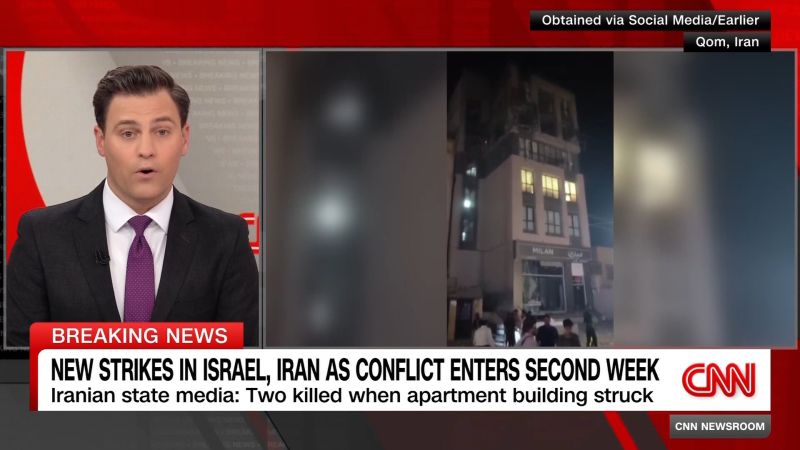
Pakistan's formal nomination of Donald Trump for the Nobel Peace Prize underscores the complex and often contradictory nature of international diplomacy. The nomination, stemming from Trump's perceived role in de-escalating tensions between India and Pakistan earlier this year, highlights the subjective interpretation of peacemaking efforts and the political motivations that often underpin such accolades. While Pakistan lauds Trump's 'decisive diplomatic intervention' and 'stellar statesmanship,' the reality of the situation is far more nuanced, marked by differing accounts of the US's involvement and the enduring fragility of the relationship between the two nuclear-armed nations. The article serves as a critical lens through which to examine the performative aspects of diplomacy, the pursuit of self-aggrandizement on the international stage, and the enduring challenges of conflict resolution in a volatile geopolitical landscape. To understand the full implications of this nomination, it's crucial to dissect the historical context of the India-Pakistan conflict, the specific events that led to the perceived crisis, and the motivations behind Pakistan's decision to nominate Trump. The India-Pakistan relationship has been fraught with tension since the partition of British India in 1947, leading to several wars and numerous skirmishes, primarily centered around the disputed region of Kashmir. This long-standing dispute has fueled a climate of mutual distrust and animosity, making any attempt at mediation a delicate and complex undertaking. The 'spike in violence' mentioned in the article refers to a period of heightened military activity along the Line of Control (LoC) in Kashmir, which resulted in casualties on both sides and raised fears of a wider conflict. While the exact details of the US's involvement in brokering a truce remain contested, it's clear that Washington sought to play a role in de-escalating the situation. Pakistan's nomination of Trump can be interpreted as a strategic move to strengthen its relationship with the United States, a key ally and a major source of economic and military assistance. By publicly acknowledging Trump's role in de-escalating tensions, Pakistan aims to curry favor with the US administration and secure continued support. However, it's also important to consider the domestic political context in Pakistan. The government may be seeking to bolster its own legitimacy by associating itself with a perceived international peacemaker. Furthermore, the nomination could be seen as a way to deflect attention from other pressing issues, such as economic challenges and internal security concerns. India's downplaying of the US's role in brokering the truce is equally revealing. New Delhi is keen to project an image of strength and independence, and it's reluctant to acknowledge the involvement of a third party in resolving its disputes with Pakistan. This reflects a long-standing policy of seeking bilateral solutions to its problems, without external interference. The contradictory accounts of how the truce was reached highlight the challenges of assessing the true impact of diplomatic interventions. It's often difficult to determine the precise role played by different actors, and the narrative can be shaped by political considerations. In this case, both Pakistan and India have their own reasons for presenting a particular version of events. The article also touches upon Trump's self-perception as a global peacemaker, a narrative that he has consistently promoted throughout his presidency. His comments about not receiving a Nobel Peace Prize, despite his efforts to resolve conflicts in various parts of the world, reflect a sense of frustration and a desire for recognition. However, his track record as a peacemaker is highly contested, with critics pointing to his disruptive foreign policy decisions, his withdrawal from international agreements, and his inflammatory rhetoric. The comparison with President Biden's efforts to negotiate an end to conflicts in Gaza and Ukraine serves to highlight the partisan nature of the debate surrounding Trump's foreign policy. While his supporters may view him as a strong and decisive leader who is willing to take risks to achieve peace, his detractors see him as a destabilizing force who has undermined international cooperation. The emergence of a new war in the Middle East, with Israel's attacks on Iran and Tehran's retaliatory strikes, underscores the complexities of conflict resolution in the region. Trump's self-imposed two-week timeline for a decision on US military involvement in Iran adds another layer of uncertainty to the situation. The article concludes by emphasizing the importance of critically examining the motivations behind diplomatic interventions and the narratives that are constructed around them. The Nobel Peace Prize, while a prestigious award, is not necessarily an objective measure of peacemaking success. It's often influenced by political considerations and subjective interpretations of events. In the case of Trump's nomination, it's essential to consider the broader context of India-Pakistan relations, US foreign policy, and the domestic political agendas of the countries involved.
The act of nominating someone for the Nobel Peace Prize, as the article rightly points out, is open to a wide array of individuals and institutions. This accessibility, while intended to democratize the process of recognizing peacemaking efforts, also opens the door to politically motivated nominations. In Pakistan's case, the nomination of Donald Trump serves as a powerful signal of its desire to maintain a strong relationship with the United States, particularly given the historical and ongoing reliance on US aid and support. The timing of the nomination, following a period of heightened tensions with India, further underscores its strategic intent. By publicly acknowledging Trump's perceived role in de-escalating the conflict, Pakistan aims to solidify its position as a responsible actor on the international stage and potentially influence future US policy decisions regarding the region. However, the Indian perspective, as presented in the article, offers a stark contrast to Pakistan's narrative. India's downplaying of US involvement reflects its long-standing policy of seeking bilateral solutions to its disputes with Pakistan, without external interference. This approach is rooted in a desire to maintain its strategic autonomy and avoid being perceived as dependent on foreign powers. The contradictory accounts of the US's role in brokering the truce highlight the inherent challenges in interpreting diplomatic events and the importance of considering multiple perspectives. The truth likely lies somewhere in between the two extremes, with the US playing a facilitating role but not necessarily the decisive one that Pakistan claims. Furthermore, the article raises questions about the criteria for awarding the Nobel Peace Prize and the extent to which political considerations influence the selection process. While the prize is intended to recognize individuals or organizations that have made significant contributions to peace, the definition of 'peace' itself is often contested and subject to interpretation. In some cases, the prize has been awarded to individuals who have played a controversial role in international affairs, raising concerns about the political motivations behind the selection. Trump's self-perception as a global peacemaker, as highlighted in the article, is also worthy of scrutiny. While he has taken credit for de-escalating tensions in various parts of the world, his foreign policy decisions have also been criticized for being disruptive and unilateral. His withdrawal from the Iran nuclear deal, for example, has been widely condemned for undermining international efforts to prevent nuclear proliferation. The contrast between Trump's self-proclaimed peacemaking efforts and his actual record raises questions about the nature of leadership and the extent to which political leaders are willing to distort reality to serve their own interests. The ongoing conflicts in the Middle East and Ukraine, as mentioned in the article, serve as a reminder of the fragility of peace and the challenges of resolving complex geopolitical disputes. The nomination of Trump for the Nobel Peace Prize, in this context, seems almost ironic, given his track record of exacerbating tensions and undermining international cooperation. In conclusion, the article provides a valuable glimpse into the complex and often contradictory nature of international diplomacy. The nomination of Trump for the Nobel Peace Prize is a political act with far-reaching implications, reflecting the strategic calculations of Pakistan, the independent stance of India, and the self-aggrandizing tendencies of Trump. It serves as a reminder that peacemaking is a multifaceted process that requires not only diplomatic skill but also a genuine commitment to international cooperation and a willingness to compromise. The Nobel Peace Prize, while a prestigious award, is not necessarily an objective measure of peacemaking success and should be viewed with a critical eye, taking into account the political context in which it is awarded.
Beyond the immediate context of India-Pakistan relations and US foreign policy, the article implicitly raises broader questions about the nature of diplomacy in the 21st century. In an era characterized by increasing globalization, interconnectedness, and the proliferation of information, traditional diplomatic approaches are being challenged by new actors and new forms of communication. Social media, for example, has become a powerful tool for shaping public opinion and influencing political discourse, often bypassing traditional diplomatic channels. The rise of non-state actors, such as multinational corporations and NGOs, has also complicated the diplomatic landscape, as these organizations often wield significant influence on international affairs. In this context, the nomination of Trump for the Nobel Peace Prize can be seen as a symptom of a broader shift in the way diplomacy is conducted and perceived. Trump's unconventional style of leadership, characterized by his use of social media, his disregard for traditional diplomatic protocols, and his willingness to challenge established norms, has both disrupted and redefined the diplomatic landscape. While some may criticize his approach as being reckless and unpredictable, others may see it as a necessary adaptation to the changing realities of the 21st century. The article also highlights the enduring challenges of conflict resolution in a world characterized by deep-seated divisions and competing interests. The India-Pakistan conflict, the ongoing wars in the Middle East and Ukraine, and the numerous other conflicts around the world serve as a reminder of the persistent threat of violence and the difficulty of achieving lasting peace. Diplomatic interventions, while often necessary, are not always successful, and they can sometimes have unintended consequences. The nomination of Trump for the Nobel Peace Prize, in this context, should be viewed with a healthy dose of skepticism. While his efforts to de-escalate tensions between India and Pakistan may have had some positive impact, it is important to recognize that the underlying causes of the conflict remain unresolved and that the risk of future escalation remains. Furthermore, the article raises ethical questions about the use of diplomacy for political gain. The nomination of Trump for the Nobel Peace Prize can be seen as a cynical attempt by Pakistan to curry favor with the US administration, regardless of the actual impact of Trump's actions on the ground. This raises questions about the integrity of the diplomatic process and the extent to which political leaders are willing to prioritize their own interests over the pursuit of genuine peace. In conclusion, the article provides a valuable platform for exploring the complexities of diplomacy in the 21st century. The nomination of Trump for the Nobel Peace Prize is a multifaceted event that reflects the changing nature of international relations, the enduring challenges of conflict resolution, and the ethical dilemmas of political leadership. It serves as a reminder that diplomacy is not simply a matter of negotiating agreements and issuing statements, but rather a complex and dynamic process that requires a deep understanding of history, culture, and the human condition. Ultimately, the pursuit of peace requires not only diplomatic skill but also a genuine commitment to justice, equality, and the well-being of all people.
Source: Pakistan nominates Trump for Nobel Peace Prize, praising ‘stellar statemanship’