
 |
|
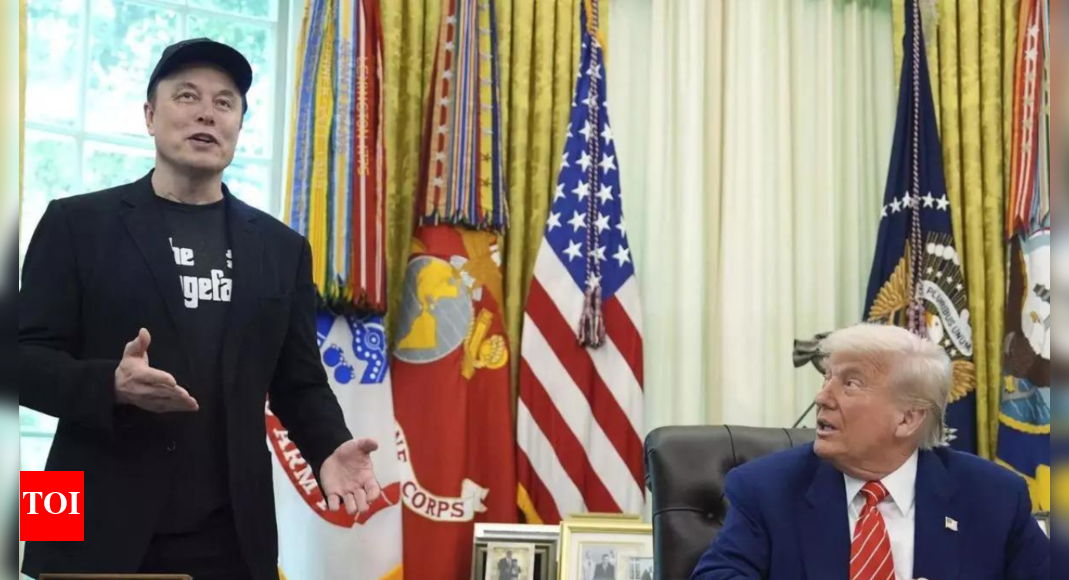
The brief article highlights the complexities of modern political discourse and the influence of social media. The reconciliation attempt between Elon Musk and Donald Trump, following a period of public disagreement, underscores the evolving nature of relationships in the public sphere. While the details of their policy disagreements and personal attacks remain undisclosed in this short piece, the act of reaching out and expressing regret speaks volumes about the potential for mending fences, even after heated exchanges. Musk's initial critical social media posts suggest a willingness to engage in public criticism, likely driven by a genuine concern or disagreement with Trump's policies or actions. The subsequent apology, however, indicates a shift in strategy, possibly stemming from a realization of the potential negative consequences of prolonged conflict or a desire to maintain a working relationship. Trump's acceptance of the apology, as conveyed by the White House, signals a willingness to move past the previous animosity. This acceptance could be motivated by a desire to avoid further public disputes, maintain a positive image, or explore potential collaborations with Musk, given his prominent role in the technology sector. The dynamics between influential figures like Musk and Trump are often shaped by a combination of personal beliefs, political considerations, and business interests. This particular incident exemplifies how these factors can intertwine to create a complex and sometimes unpredictable interplay. It also highlights the power of social media as a platform for both criticism and reconciliation. The fact that the initial conflict and subsequent apology played out on social media demonstrates the pervasive influence of these platforms on public discourse and the ability of individuals to shape narratives and influence public opinion. The article raises several questions about the underlying motivations and potential consequences of this reconciliation. What specific policy disagreements led to the initial feud? What prompted Musk to apologize? What impact, if any, will this reconciliation have on future policy decisions or collaborations between the two? These questions remain unanswered, but the article provides a glimpse into the ever-shifting landscape of politics and the complex relationships that exist between influential figures.
The importance of this interaction, though briefly documented, lies in its illustration of the mechanisms of power and influence within the political and business realms. Elon Musk, as the head of multiple pioneering technological companies, holds considerable sway in shaping public opinion and influencing technological advancements. His criticism of a sitting president, even through the medium of social media, carries significant weight. Trump, as the former president, also commands considerable influence. This influence stems not only from his past position but also from the ardent support he continues to enjoy from a significant portion of the population. Their interaction, therefore, transcends a mere personal disagreement. It becomes a symbolic representation of the complex relationship between technology, business, and politics. The fact that Musk initiated the reconciliation suggests an understanding of the potential ramifications of alienating a powerful figure, even one no longer in office. It could be viewed as a pragmatic decision, aimed at safeguarding his business interests or maintaining a level of access to political circles. Conversely, Trump's acceptance of the apology could be interpreted as a strategic move to avoid further public disputes and maintain a semblance of unity, particularly within his own political base. The article, in its brevity, also hints at the challenges of navigating the complexities of public discourse in the digital age. Social media provides a platform for immediate and unfiltered communication, allowing individuals to express their opinions directly to a vast audience. However, this immediacy can also lead to impulsivity and the escalation of conflicts. The Musk-Trump feud serves as a case in point, demonstrating how disagreements can quickly spiral out of control in the online environment. The subsequent reconciliation, however, suggests that even in the age of instant communication, there is still room for diplomacy and the potential for mending fractured relationships.
Further, the article underscores the crucial role of public perception in shaping political and business narratives. Both Musk and Trump are acutely aware of their public image and the impact of their actions on public opinion. Musk's apology, whether sincere or strategic, can be seen as an attempt to mitigate any negative perceptions associated with his previous criticism of Trump. Similarly, Trump's acceptance of the apology can be interpreted as an effort to project an image of magnanimity and willingness to forgive. The White House's statement affirming Trump's appreciation of the apology is a clear indication of the importance placed on managing public perception. It suggests a desire to portray Trump as a leader who is open to reconciliation and not prone to holding grudges. The article also raises questions about the extent to which personal relationships influence political decision-making. While policy disagreements may have been at the root of the initial feud, the subsequent reconciliation suggests that personal considerations can also play a role in shaping political dynamics. The fact that Musk reached out to Trump personally, rather than relying on intermediaries, indicates a desire to establish a direct line of communication and potentially rebuild a working relationship. This underscores the importance of personal connections in the political arena, even in an era of increasing polarization and ideological divides. It also highlights the potential for individuals to bridge these divides through dialogue and a willingness to compromise. In conclusion, the article, despite its brevity, provides valuable insights into the complex interplay of politics, business, and social media. It highlights the evolving nature of relationships in the public sphere, the challenges of navigating public discourse in the digital age, and the crucial role of public perception in shaping political narratives. The reconciliation between Musk and Trump serves as a reminder that even in an era of increasing polarization, there is still room for diplomacy and the potential for mending fractured relationships.
The situation described in the article can also be analyzed through the lens of game theory, a framework that examines strategic interactions between individuals or entities. In this context, both Musk and Trump can be seen as players making strategic choices to maximize their own payoffs. Musk's initial criticism of Trump could be interpreted as a move aimed at signaling his disapproval of certain policies or actions, potentially to gain favor with a particular segment of the population or to exert influence on policy decisions. However, this move also carried the risk of alienating Trump and incurring potential negative consequences for his businesses. His subsequent apology, therefore, can be seen as a strategic adjustment, aimed at mitigating those risks and potentially improving his standing with Trump. Trump's response, accepting the apology, can also be analyzed from a game-theoretic perspective. By accepting the apology, Trump avoided a prolonged public feud, which could have damaged his own reputation and potentially hindered his ability to advance his agenda. Accepting the apology also allowed him to maintain a position of power and magnanimity, reinforcing his image as a leader who is open to reconciliation. The game-theoretic framework highlights the importance of considering the potential consequences of one's actions and the strategic choices made by other players. In this case, both Musk and Trump made decisions that were aimed at maximizing their own interests, while also taking into account the potential reactions of the other player. The outcome, a reconciliation, can be seen as a Nash equilibrium, a situation in which neither player has an incentive to deviate from their chosen strategy, given the strategies of the other players. This analysis underscores the strategic nature of interactions between powerful figures in the political and business realms.
Furthermore, the article can be examined from the perspective of public relations and reputation management. Both Musk and Trump are highly skilled in managing their public image and shaping public perception. Musk's initial criticism of Trump, while potentially motivated by genuine disagreement, also served to position him as an independent thinker and a champion of certain values. This can be seen as a strategic move to enhance his reputation and appeal to a broader audience. The subsequent apology, however, can be viewed as a damage control measure, aimed at mitigating any negative repercussions from his previous criticism. Trump's acceptance of the apology, and the White House's statement emphasizing his appreciation, are clear examples of reputation management. By portraying Trump as a leader who is open to reconciliation, his team sought to counteract any negative perceptions associated with his previous actions or statements. The article highlights the importance of public relations in shaping political and business narratives. In today's media-saturated environment, public perception can have a significant impact on the success or failure of individuals and organizations. Effective public relations strategies involve carefully crafting messages, managing media coverage, and responding to public criticism in a timely and appropriate manner. The Musk-Trump interaction serves as a case study in how public relations can be used to shape narratives, manage reputations, and influence public opinion.
Another angle to consider is the ethical dimension of the interaction between Musk and Trump. While strategic considerations and public relations undoubtedly played a role in their actions, it is important to examine the ethical implications of their choices. Musk's initial criticism of Trump could be seen as an ethical act, particularly if it was motivated by a genuine concern for the well-being of society or the environment. Publicly challenging a powerful figure, even at the risk of personal or professional repercussions, can be considered a courageous act of ethical leadership. However, the subsequent apology raises questions about the sincerity of his previous criticism. If the apology was motivated solely by strategic considerations, rather than a genuine change of heart, it could be seen as a form of hypocrisy. Trump's acceptance of the apology also raises ethical questions. While forgiveness is generally considered a virtuous act, it is important to consider the potential implications of forgiving someone who has engaged in unethical or harmful behavior. If Trump's acceptance of the apology was motivated solely by political expediency, rather than a genuine desire to reconcile, it could be seen as a betrayal of his own values. The ethical dimension of the Musk-Trump interaction underscores the challenges of navigating complex moral dilemmas in the public sphere. Individuals in positions of power often face conflicting obligations and pressures, making it difficult to make decisions that are both ethical and strategically sound. The Musk-Trump interaction serves as a reminder of the importance of ethical leadership and the need to prioritize the well-being of society over personal gain.
The dynamics between Musk and Trump can also be understood in the context of the broader political landscape. The increasing polarization of political discourse has made it more difficult for individuals to engage in constructive dialogue and find common ground. The Musk-Trump feud is a symptom of this polarization, reflecting the deep divisions that exist within society. However, the subsequent reconciliation offers a glimmer of hope, suggesting that it is still possible for individuals with differing views to bridge their differences and find common ground. The fact that Musk, a prominent figure in the technology sector, reached out to Trump, a leading figure in the Republican Party, suggests a potential for cross-partisan collaboration. This could be particularly important in addressing complex challenges such as climate change, economic inequality, and technological disruption. The reconciliation between Musk and Trump could serve as a model for other leaders, encouraging them to engage in dialogue and find common ground, even when they disagree on fundamental issues. The article highlights the importance of fostering a more civil and constructive political discourse, one that is based on mutual respect and a willingness to compromise. This is essential for addressing the challenges facing society and building a more just and equitable future.
In addition, the short news piece can be analyzed through the lens of media studies. The very existence of the article, even with its limited information, demonstrates the media's role in shaping public perception of individuals and events. The way the article is framed – focusing on the apology and Trump's acceptance – is a deliberate choice that influences how readers understand the situation. The headline, "Musk apologizes to Trump after online feud; Trump appreciates it," steers the narrative towards reconciliation and positive resolution. This framing could be intended to create a more optimistic outlook on political discourse, or it could be a strategic choice to appeal to a specific audience. Furthermore, the brevity of the article highlights the challenges of conveying complex information in a concise manner. The article provides a basic outline of the events, but it lacks the depth and nuance necessary to fully understand the underlying motivations and implications. This is a common characteristic of news articles, which often prioritize brevity and accessibility over thoroughness. The article's reliance on social media as a source of information also reflects the changing landscape of journalism. Social media has become an increasingly important source of news and information, but it also poses challenges in terms of accuracy and credibility. Journalists must carefully verify information obtained from social media before publishing it, and they must be aware of the potential for bias and manipulation. The Musk-Trump interaction highlights the media's role in shaping public perception of individuals and events, and it underscores the challenges of conveying complex information in a concise and accurate manner.
Lastly, examining the article within the context of leadership studies provides additional insights. Musk, as a prominent entrepreneur and innovator, embodies a certain style of leadership characterized by boldness, risk-taking, and a willingness to challenge the status quo. His initial criticism of Trump could be seen as an example of his willingness to speak his mind and stand up for his beliefs. However, his subsequent apology suggests a more pragmatic approach to leadership, one that recognizes the importance of building relationships and maintaining alliances. Trump, as a former president, embodies a different style of leadership characterized by assertiveness, decisiveness, and a focus on achieving tangible results. His acceptance of Musk's apology could be seen as an example of his willingness to forgive and move forward, but it could also be interpreted as a strategic move to maintain his position of power and influence. The Musk-Trump interaction highlights the diverse styles of leadership that exist in the political and business realms. Effective leaders are able to adapt their approach to different situations and to build relationships with individuals from diverse backgrounds and perspectives. The article underscores the importance of leadership skills such as communication, negotiation, and conflict resolution in navigating complex challenges and achieving shared goals. The reconciliation between Musk and Trump suggests that even individuals with differing styles and beliefs can find common ground and work together to achieve mutual objectives.