
 |
|
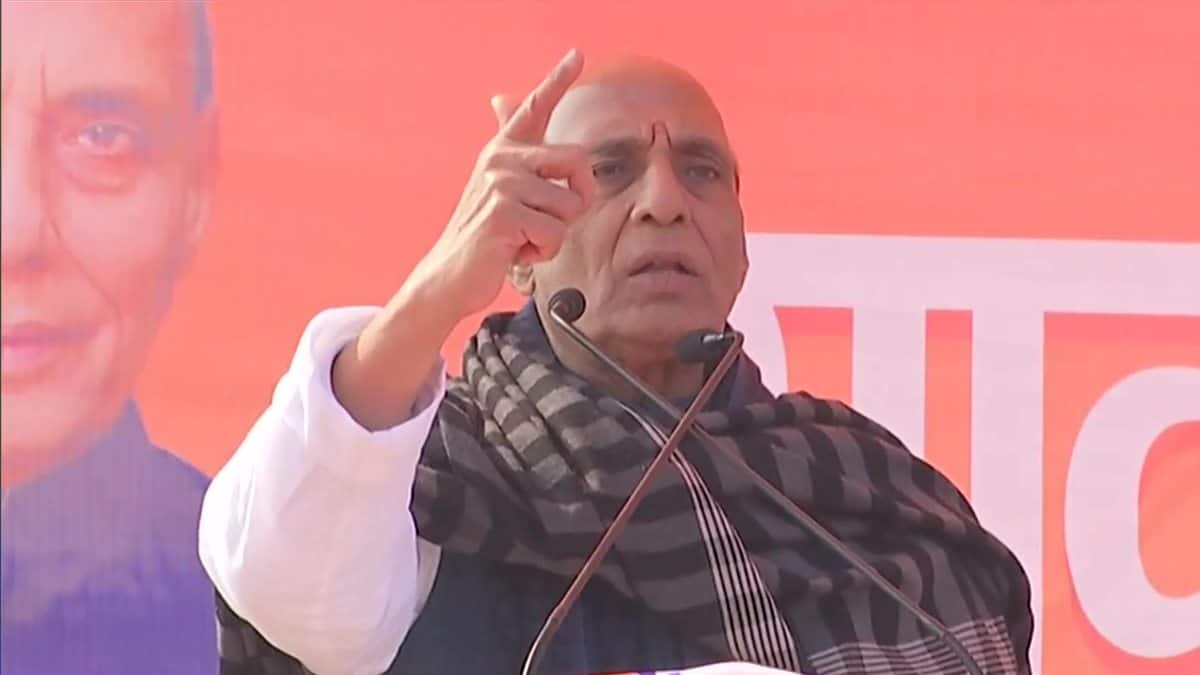
In a resolute address delivered on June 10, 2025, in Dehradun, Uttarakhand, India's Defence Minister Rajnath Singh once again forcefully implored the international community to cease all forms of financial assistance to Pakistan, asserting that such funding directly fuels the infrastructure of terrorism. Speaking at a dialogue centered on ‘National Security & Terrorism,’ Singh articulated a stark and uncompromising stance, characterizing Pakistan as a veritable 'nursery of terrorism' that should not be sustained through external monetary support. He emphasized that terrorism cannot be allowed to simply fade away naturally, as it poses a persistent and grave threat to the entirety of humanity. Singh underscored the urgent necessity for a permanent and comprehensive solution to eradicate terrorism, highlighting Operation Sindoor as a pivotal and historically significant action undertaken against terror infrastructure. The Defence Minister's assertions were not merely condemnations but also a call to action, urging the global community to recognize the inextricable link between financial aid to Pakistan and the perpetuation of terrorist activities. His pronouncements reflect India's deepening concern over the continued presence and proliferation of terrorist organizations operating from Pakistani soil, and the perceived inadequacy of existing international measures to effectively address this critical security challenge. Singh's strong words underscore the Indian government's resolve to combat terrorism through a multi-faceted approach, combining military action with diplomatic pressure and a concerted effort to isolate Pakistan on the global stage. The speech acts as a clear message to the international community that India will continue to advocate for a more assertive and coordinated global response to terrorism, with a particular focus on disrupting the financial networks that enable terrorist groups to operate and expand their reach. This issue is especially fraught given the complex geopolitical landscape and the varying interests of different nations in the region, making a unified global approach particularly challenging to achieve. However, India's unwavering commitment to combating terrorism suggests that it will continue to press the international community to take a stronger stance against Pakistan's alleged support for terrorist activities. The potential consequences of inaction, according to Singh's address, are dire, with the continued spread of terrorism posing a significant threat to global peace, security, and prosperity. The challenge lies in translating these concerns into tangible action that effectively dismantles terrorist networks and holds accountable those who support them.
Singh's remarks extended beyond merely identifying Pakistan as a source of the problem. He proudly highlighted the transformation of India's security apparatus under the leadership of Prime Minister Narendra Modi over the past eleven years. He asserted that the government has fundamentally altered the approach to national security issues, adopting a more proactive and decisive stance. This shift, he argued, was visibly demonstrated during Operation Sindoor. Branding terrorism as an 'epidemic destined to perish,' the Defence Minister vehemently insisted that it cannot be passively allowed to die a natural death. He articulated that its mere existence would continue to challenge global peace, development, and prosperity, making a permanent resolution imperative. Singh went further, dismantling the justifications often used to rationalize terrorism. He emphatically stated that terrorists are not fighters with a legitimate cause, asserting that no religious, ideological, or political objective could ever justify terrorism. He firmly stated that no human objective can ever be achieved through bloodshed and violence. He directly accused Pakistan of providing shelter, training, and assistance to terrorists on its soil, and attempting to legitimize their actions. He emphasized the critical need to eliminate these terrorists and dismantle their entire infrastructure. This statement not only serves as a condemnation of Pakistan's actions but also as a call for decisive and comprehensive measures to combat terrorism, moving beyond merely containing its spread to actively dismantling the networks that enable it. It signifies a shift towards a more proactive and aggressive strategy in addressing the root causes of terrorism, including the alleged support provided by state actors. This position is likely to further intensify tensions between India and Pakistan, as it directly challenges Pakistan's narrative and accuses it of complicity in terrorist activities. The international implications of this approach are also significant, potentially impacting diplomatic relations and strategic alliances. The success of this strategy hinges on garnering international support and cooperation in isolating and pressuring Pakistan to take concrete steps to address terrorism emanating from its soil. This requires a delicate balance between diplomatic engagement and assertive action, ensuring that efforts to combat terrorism do not inadvertently destabilize the region or escalate existing conflicts.
Raksha Mantri (Defence Minister) Singh described Operation Sindoor as the 'biggest action taken against terrorism in Indian history,' a response to the 'cowardly terror attack on innocent people in Pahalgam, J&K.' He characterized the Pahalgam incident as an attack on the social unity of the country, prompting a robust Indian response that involved the destruction of terror bases and related infrastructure in Pakistan and PoK (Pakistan-occupied Kashmir). This claim highlights the significance India attributes to Operation Sindoor, portraying it as a decisive and impactful strike against terrorism. It also implicitly justifies the operation as a legitimate act of self-defense in response to a direct attack on Indian citizens. The reference to Pahalgam and the attack on social unity underscores the perceived threat that terrorism poses to the fabric of Indian society and the government's determination to protect its citizens. Furthermore, Singh linked the operation to the abrogation of Article 370, claiming that it ushered in an era of peace and progress in J&K. He suggested that Pakistan's inability to tolerate this progress led to the Pahalgam terror attack. This connection frames the issue of terrorism in J&K within the broader context of India's political and developmental agenda in the region. He pointed to the Udhampur-Srinagar-Baramulla railway link as a 'shining example' of the government's relentless pursuit of progress in J&K, emphasizing the positive developments taking place despite the challenges posed by terrorism. He further expressed optimism that PoK would eventually join India, stating 'I, too, am Bharat.' This statement reflects India's long-standing claim to PoK and its aspiration for the eventual reunification of the region. The assertion that PoK will eventually join India is likely to further inflame tensions with Pakistan and could be interpreted as a provocative statement that undermines ongoing diplomatic efforts to resolve the Kashmir dispute. The international community will likely view these statements with caution, as they have the potential to destabilize the region and escalate tensions between India and Pakistan.
Rajnath Singh emphasized the importance of preventing future terror incidents similar to the one in Pahalgam, calling for heightened vigilance not only at the government level but also among the public. He described terrorism as a 'distorted moral reasoning,' the 'biggest curse on humanity,' a 'major threat to peaceful co-existence & democracy,' and an 'obstacle in the path of progress.' He reiterated that the fight against terrorism is not merely a security issue but a battle to protect the fundamental values of humanity. This framing underscores the ethical and moral dimensions of the fight against terrorism, positioning it as a struggle for the preservation of universal values. The emphasis on public vigilance highlights the role that citizens can play in preventing and combating terrorism, suggesting that a whole-of-society approach is necessary to effectively address the threat. The characterization of terrorism as an obstacle to progress suggests that it not only undermines security but also hinders economic development and social progress. The broader implications of this approach are that the fight against terrorism requires not only military and security measures but also efforts to promote education, economic opportunity, and social inclusion, addressing the root causes of radicalization and extremism. This comprehensive approach to counter-terrorism aligns with international best practices and recognizes the complex and multifaceted nature of the challenge. This involves promoting tolerance, dialogue, and understanding between different cultures and communities, countering extremist ideologies, and preventing the spread of hate speech and misinformation. It also requires strengthening law enforcement capabilities, enhancing intelligence sharing, and improving border security to prevent the flow of terrorists and weapons.
Singh expressed his astonishment at the United Nations Security Council's decision to appoint Pakistan as the Vice-Chair of the Counter-Terrorism Panel, particularly given that the panel was formed in the aftermath of the 9/11 terror attacks. He pointedly stated that Pakistan had provided shelter to the mastermind of the 9/11 attacks and that its land has been used as a safe haven for global terrorist organizations. He highlighted the fact that individuals like Hafiz Saeed and Masood Azhar, who are widely recognized as terrorists, roam freely in Pakistan and that senior officers of the Pakistan Army attend their funerals. He questioned the international system's intentions and policies, asking how a country with such a track record could be expected to lead the global community against terrorism. This criticism of the UN Security Council's decision highlights the deep skepticism and frustration that India feels regarding the international community's approach to terrorism. It questions the credibility and effectiveness of the UN's counter-terrorism efforts and suggests that they may be compromised by political considerations or a lack of understanding of the realities on the ground. The specific references to Hafiz Saeed and Masood Azhar underscore the fact that Pakistan has not taken sufficient action to dismantle terrorist organizations operating within its borders. The observation that senior Pakistani military officers attend the funerals of terrorists further suggests a level of support or tacit approval for these activities. The broader implications of this criticism are that the UN and other international organizations need to be more rigorous in their assessments of countries' counter-terrorism efforts and that they should be held accountable for their decisions. It also suggests that India may need to pursue alternative strategies to address the threat of terrorism, working with like-minded countries to build a more effective and coordinated response.
Offering a provocative suggestion, Singh advised Pakistan to seek India's help if it is unable to take action against terrorism on its own soil. He stated that the Indian Armed Forces are capable of taking effective action against terrorism on either side of the border, a capability that Pakistan witnessed firsthand during Operation Sindoor. He described Pakistan as 'stubborn' and emphasized the need for the entire world to exert strategic, diplomatic, and economic pressure on Islamabad to address terrorism emanating from its soil. This offer of assistance, while seemingly conciliatory, carries a strong undercurrent of threat. It suggests that India is willing and able to take unilateral action against terrorism in Pakistan if necessary, potentially violating Pakistan's sovereignty. The reference to Operation Sindoor serves as a reminder of India's military capabilities and its willingness to use them. The characterization of Pakistan as stubborn underscores the perceived intransigence of the Pakistani government and its unwillingness to address the issue of terrorism effectively. The call for international pressure on Pakistan highlights the need for a coordinated global effort to address the threat of terrorism. This pressure could include sanctions, diplomatic isolation, and the withholding of financial aid. The broader implications of this approach are that the international community needs to adopt a more assertive and coordinated approach to address the issue of terrorism emanating from Pakistan. This requires a willingness to hold Pakistan accountable for its actions and to take concrete measures to pressure it to dismantle terrorist organizations operating within its borders. This could include sanctions, diplomatic isolation, and the withholding of financial aid. It also requires strengthening regional cooperation and intelligence sharing to prevent the flow of terrorists and weapons across borders.
Finally, Rajnath Singh drew attention to the increasing prevalence of information warfare in the 21st century, urging individuals to become 'social soldiers' by identifying falsehoods, stopping rumors, and promoting awareness within society. He emphasized that while data and information are a powerful tool, they also present a significant challenge. He recounted that during Operation Sindoor, Pakistan attempted to undermine the morale of Indian soldiers and citizens through the dissemination of fake videos, manipulated news, and false posts. He noted that while military actions had ceased, information warfare continues unabated. He warned that individuals who share false news without critical thought unknowingly become weapons of the enemy. He called on all citizens to become 'first responders' in the fight against misinformation. This emphasis on information warfare underscores the growing importance of cyber security and media literacy in the fight against terrorism. It recognizes that terrorists are not only using physical violence but also propaganda and disinformation to achieve their goals. The reference to Operation Sindoor highlights the specific tactics used by Pakistan to undermine Indian morale and sow discord. The call for citizens to become 'social soldiers' and 'first responders' emphasizes the importance of individual responsibility in combating misinformation and promoting accurate information. The broader implications of this approach are that governments, civil society organizations, and media outlets need to work together to promote media literacy, counter disinformation, and enhance cyber security. This includes educating citizens about how to identify false news, how to verify information, and how to report suspicious activity online. It also requires developing technologies and strategies to detect and counter disinformation campaigns. The challenge is to strike a balance between protecting freedom of speech and preventing the spread of harmful misinformation. This requires a careful consideration of ethical and legal issues, as well as a commitment to transparency and accountability.