
 |
|
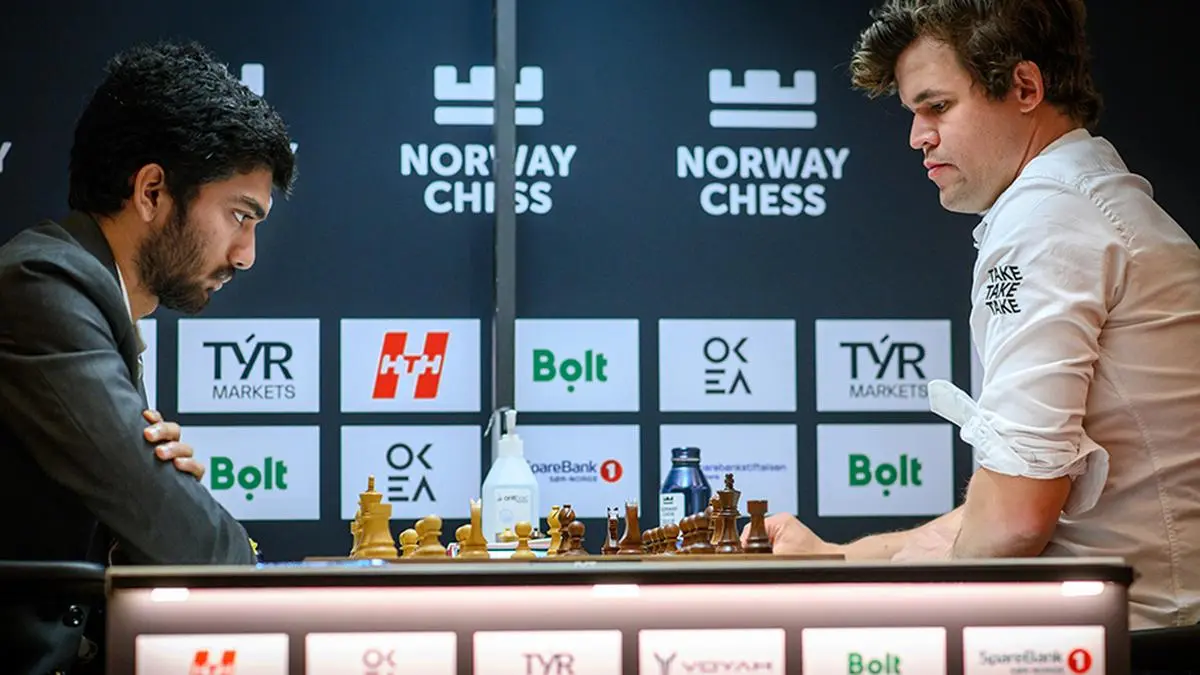
The world of chess witnessed a seismic shift on June 1, 2025, as India's Gukesh Dommaraju, the reigning world champion, achieved a momentous victory over Magnus Carlsen in the classical format of the game at the prestigious Norway Chess tournament. This win, the first of its kind for Gukesh against Carlsen in classical chess, not only marked a personal milestone for the young champion but also served as a powerful statement to the chess world, silencing critics who questioned his legitimacy as the successor to the throne Carlsen voluntarily relinquished in 2023. The narrative surrounding Gukesh's ascendancy to the world championship had been subtly but persistently shadowed by Carlsen's aura. Despite Gukesh's impressive victory at the Candidates Tournament and his subsequent defeat of Ding Liren to claim the title, the absence of a classical win against Carlsen, widely regarded as one of the greatest players of all time, fueled doubts and whispers about the true pecking order in the chess world. Gukesh himself was acutely aware of this perception, humbly acknowledging Carlsen's superior standing even after becoming world champion. This victory at Norway Chess, therefore, transcends a mere tournament win; it represents a symbolic validation of Gukesh's reign and a powerful boost to his confidence as he navigates the challenges of being the world's top player. The significance of this victory is further amplified by the context of Carlsen's dominance in the classical format. For years, Carlsen has reigned supreme, setting unprecedented records, including the highest ELO rating in history and a remarkable unbeaten streak of 125 games at the highest level. His decision to relinquish the world championship title in 2023 stemmed from a declining interest in the classical format, but his formidable skills remained undiminished. Even with a reduced focus on classical chess, Carlsen continued to demonstrate his prowess against top players, making Gukesh's win all the more noteworthy. The match itself was a gripping affair, characterized by intense strategic battles and dramatic twists. In their first encounter at Norway Chess, Carlsen emerged victorious after a long and arduous 55-move game, capitalizing on a single blunder by Gukesh in the endgame. Carlsen's subsequent social media post, quoting a line from the television series “The Wire” – “YOU COME AT THE KING, YOU BEST NOT MISS” – added fuel to the fire, with its dual interpretation subtly asserting his continued dominance. However, Gukesh responded with unwavering resolve in their second match. Despite appearing to be on the verge of defeat early on, he displayed remarkable resilience and defensive skills. Capitalizing on a crucial blunder by Carlsen in the time scramble, Gukesh seized the opportunity and held on for the win. The intensity of the moment was palpable, with Carlsen's frustration manifesting in a visible display of emotion as he slammed his fist on the table. The win, though acknowledged by Gukesh himself as being somewhat fortunate, was nonetheless a testament to his fighting spirit and his ability to capitalize on his opponent's mistakes. It underscored his capacity to withstand pressure and emerge victorious even in the face of adversity.
The victory's impact extends beyond the immediate tournament standings. It addresses the lingering questions about Gukesh's worthiness as world champion, bolstering his credibility and silencing the voices that had cast doubt on his achievement. The comparison drawn to Anatoly Karpov's situation in 1975, when he became world champion by default after Bobby Fischer's refusal to defend his title, is particularly apt. Karpov faced the challenge of proving himself as a deserving champion, a task he accomplished by dominating the chess world for the next decade. Gukesh, similarly, has now taken a significant step towards solidifying his position as a legitimate and formidable force in the world of chess. The comments from veteran Grandmaster Dibyendu Barua further highlight the importance of this victory. Barua emphasizes that the win will not only boost Gukesh's confidence for the remainder of the Norway Chess tournament but also for his future games. He points out that defeating Carlsen, widely regarded as the world's best player, is a significant accomplishment that reaffirms Gukesh's status as world champion. Barua also suggests that Gukesh's next challenge is to ascend to the world number one ranking, a goal that he believes is achievable with continued consistency and dedication. The significance of Gukesh's win is also reflected in the fact that it was followed by another significant victory against India's number one player, Arjun Erigaisi, in the very next round of the Norway Chess tournament. This win, also Gukesh's first against Erigaisi in the classical format, demonstrates his continued momentum and his ability to build upon his success. It underscores his growing confidence and his determination to establish himself as a dominant force in the chess world. In conclusion, Gukesh's victory over Magnus Carlsen at the Norway Chess tournament represents a pivotal moment in his career. It is a victory that transcends the confines of a single tournament, addressing lingering doubts about his legitimacy as world champion and bolstering his confidence for future challenges. The win is a testament to his fighting spirit, his resilience, and his ability to capitalize on his opponent's mistakes. It is a victory that has silenced his critics and paved the way for him to establish himself as a dominant force in the world of chess.
Moreover, the victory is a stark reminder that even legends like Magnus Carlsen are not invincible. It showcases the ever-evolving landscape of chess, where young talents like Gukesh are constantly pushing the boundaries and challenging the established order. Carlsen's own words after the game, acknowledging Gukesh's fighting spirit and his deservedness of the win, speak volumes about the respect that the young champion has earned. The future encounters between Gukesh and Carlsen are sure to be highly anticipated events, as the chess world watches with bated breath to see how this rivalry unfolds. Will Gukesh continue to build upon this victory and solidify his position as a dominant force, or will Carlsen reclaim his dominance and reassert his position as the undisputed king of chess? Only time will tell. However, one thing is certain: Gukesh's victory at Norway Chess has injected a new sense of excitement and anticipation into the world of chess, and it has firmly established him as a force to be reckoned with. The chess world is entering a new era, and Gukesh Dommaraju is poised to be at the forefront of this exciting new chapter. This victory serves as an inspiration to aspiring chess players around the world, demonstrating that with hard work, dedication, and a unwavering belief in oneself, anything is possible. Gukesh's journey is a testament to the power of perseverance and the pursuit of excellence, and his victory over Carlsen is a symbol of hope and inspiration for the next generation of chess champions. The legacy of this match will resonate throughout the chess world for years to come, inspiring countless players to dream big and strive for greatness. The young king has arrived, and the chess world is ready to witness his reign.
Source: Norway Chess 2025: World Champion Gukesh Beats Carlsen in Shocking First Classical Victory