
 |
|
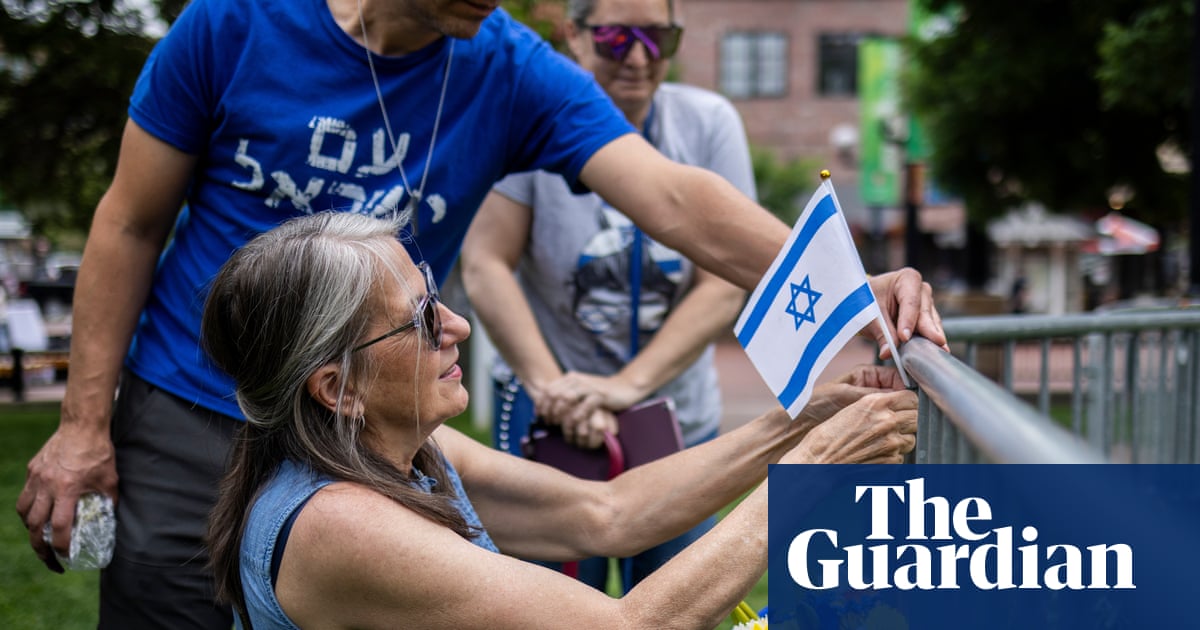
The article discusses how the Trump administration and right-wing media are leveraging the attack in Boulder, Colorado, allegedly committed by Mohamed Sabry Soliman, to promote a stricter deportation agenda and criticize the Biden administration's immigration policies. Soliman, an Egyptian national who overstayed his tourist visa, is accused of attacking an event for Israeli hostages while shouting “Free Palestine.” This incident has provided ammunition for the right, who are framing it as a consequence of lax border security and using it to justify calls for increased deportations and stricter immigration controls. The swiftness with which the right has seized upon this event is contrasted with their reactions to attacks against Palestinians and Muslims in the US, highlighting a perceived double standard. Furthermore, the article notes that the Trump administration has previously linked support for Palestinians to deportations among college students, suggesting a broader pattern of using anti-Israel sentiment as a basis for immigration enforcement. Stephen Miller, a former Trump administration official, characterized the attack as a “terror attack” committed by an “illegal alien,” while Donald Trump himself blamed the incident on Biden’s “ridiculous Open Border Policy.” Right-wing outlets like The Gateway Pundit have amplified this narrative, further solidifying the connection between the attack and the issue of immigration. The article also mentions that the attack occurred shortly after the Trump administration designated Colorado and several of its cities as “sanctuary” jurisdictions, a designation that was later removed following pushback. This context adds another layer to the narrative, suggesting that the attack is being used to justify challenges to sanctuary policies and to promote a more aggressive approach to immigration enforcement at the state and local levels. The article also explores the narrative pushed by some right-wing commentators, like Laura Loomer, who argue that the focus should be on the suspect's alleged "Islamic ideology" rather than his immigration status, revealing a broader concern about "Islamic terrorism." This perspective suggests that some on the right are seeking to frame the attack not just as a failure of immigration policy but as a manifestation of a larger threat posed by radical Islam. The article also references studies that contradict the claim that immigrants are more likely to commit crimes, citing research that shows undocumented immigrants have lower offending rates compared to documented immigrants and US-born citizens. The National Institute of Justice (NIJ) recently removed a webpage highlighting this data, indicating a potential effort to suppress information that challenges the prevailing narrative. This removal is linked to compliance with Trump executive orders, suggesting a political motivation behind the decision. Finally, the article notes that this is the second recent attack in which the perpetrator called for a free Palestine, although the first attack was carried out by a US citizen. These attacks are occurring against a backdrop of rising support for using violence to achieve political goals, particularly in relation to the Gaza war. The article effectively demonstrates how a single incident can be quickly politicized and used to advance broader political agendas, particularly in the context of highly charged issues like immigration and the Israeli-Palestinian conflict.
The politicization of the Boulder attack underscores the increasingly polarized nature of the debate surrounding immigration in the United States. The right-wing's immediate focus on Soliman's immigration status serves to dehumanize him and frame him as an outsider who poses a threat to national security. This tactic is consistent with a broader strategy of associating immigrants with crime and terrorism, which has been a hallmark of the Trump administration's rhetoric. By emphasizing Soliman's status as an "illegal alien," the right-wing media and political figures are able to appeal to nativist sentiments and galvanize support for stricter border enforcement. The contrast between the right's response to this attack and their reactions to attacks against Palestinians and Muslims highlights a clear bias. While attacks against Muslims and Palestinians are often downplayed or ignored, attacks committed by individuals perceived as aligned with anti-Israel or pro-Palestinian causes are quickly seized upon to justify anti-immigration policies. This double standard fuels resentment and distrust among minority communities and contributes to a climate of fear and division. The article's mention of the Trump administration's designation of Colorado as a "sanctuary" jurisdiction further illustrates the political dimensions of the issue. Sanctuary policies, which limit cooperation between local law enforcement and federal immigration authorities, have been a target of conservative ire for years. By linking the Boulder attack to Colorado's sanctuary status, the right-wing is attempting to portray these policies as dangerous and irresponsible, arguing that they enable criminals and terrorists to evade deportation. The removal of the NIJ webpage highlighting the lower crime rates of undocumented immigrants is a particularly troubling development. This action suggests that the government is willing to suppress scientific evidence in order to advance a particular political agenda. By removing information that challenges the narrative that immigrants are more likely to commit crimes, the Trump administration is effectively manipulating public opinion and justifying discriminatory policies.
The analysis presented in the article reveals the complex interplay between immigration policy, national security concerns, and political opportunism. The Boulder attack, while tragic, is being exploited by the right-wing to advance a pre-existing agenda of stricter border enforcement and increased deportations. This exploitation highlights the dangers of using isolated incidents to justify broad policy changes, particularly when those changes are based on prejudice and misinformation. It is crucial to critically examine the claims being made by political actors and to rely on evidence-based analysis rather than fear-mongering rhetoric. The article also raises important questions about the role of media in shaping public perceptions of immigration. The right-wing media's focus on Soliman's immigration status, coupled with their tendency to amplify anti-immigrant narratives, contributes to a climate of fear and hostility towards immigrants. It is essential for media outlets to report on immigration issues fairly and accurately, providing context and avoiding sensationalism. Furthermore, the article underscores the importance of protecting the rights of immigrants and ensuring that they are treated with dignity and respect. The demonization of immigrants not only harms individuals and families but also undermines the values of inclusivity and diversity that are essential to a healthy democracy. In conclusion, the article provides a valuable analysis of the political dynamics surrounding the Boulder attack and its implications for immigration policy in the United States. By exposing the exploitation of tragedy for political gain, the article encourages readers to critically examine the narratives being promoted by political actors and to advocate for policies that are based on evidence and guided by principles of justice and compassion. The manipulation of the attack by political figures and right-wing media showcases the intense polarization in US political discourse. The eagerness to immediately attribute blame and tie it to broader political goals demonstrates a departure from reasoned discussion and highlights a concerning trend of exploiting tragedies for political advancement. The focus on the suspect's immigration status, while ignoring the potential for other motivating factors, exemplifies a biased approach to understanding the event. This selective emphasis serves to reinforce pre-existing narratives about the dangers of immigration and distracts from a more comprehensive analysis of the circumstances surrounding the attack. The quick condemnation and association with "open border" policies are also indicative of a rush to judgment, potentially prejudicing the legal process and undermining the pursuit of justice. The article's implicit call for media literacy and critical thinking is essential in navigating the complex and often misleading information landscape. By encouraging readers to question the narratives being presented and to seek out diverse perspectives, the article empowers them to form their own informed opinions and resist the manipulation of political actors and media outlets. The events surrounding the Boulder attack serve as a stark reminder of the importance of responsible journalism and the need for a more nuanced and empathetic approach to discussing complex issues like immigration. The emphasis on data and facts also reveals the importance of evidence-based policy making. The article’s contrast of the suspect's immigration status against the data that demonstrates immigrants are less likely to commit crimes exposes the way that policy decisions can be based on prejudice and fear rather than actual data. The article's conclusion calls for immigration policy decisions to be based on evidence and guided by principles of justice and compassion, which is important. The article implicitly condemns the politicization of tragedy. This is clear when the text says that "The Boulder attack, while tragic, is being exploited by the right-wing to advance a pre-existing agenda of stricter border enforcement and increased deportations." This is not the first time that this has occurred in US Politics, so it is important to condemn such action when it does.
Source: Trump administration uses Colorado suspect’s status to push deportation agenda