
 |
|
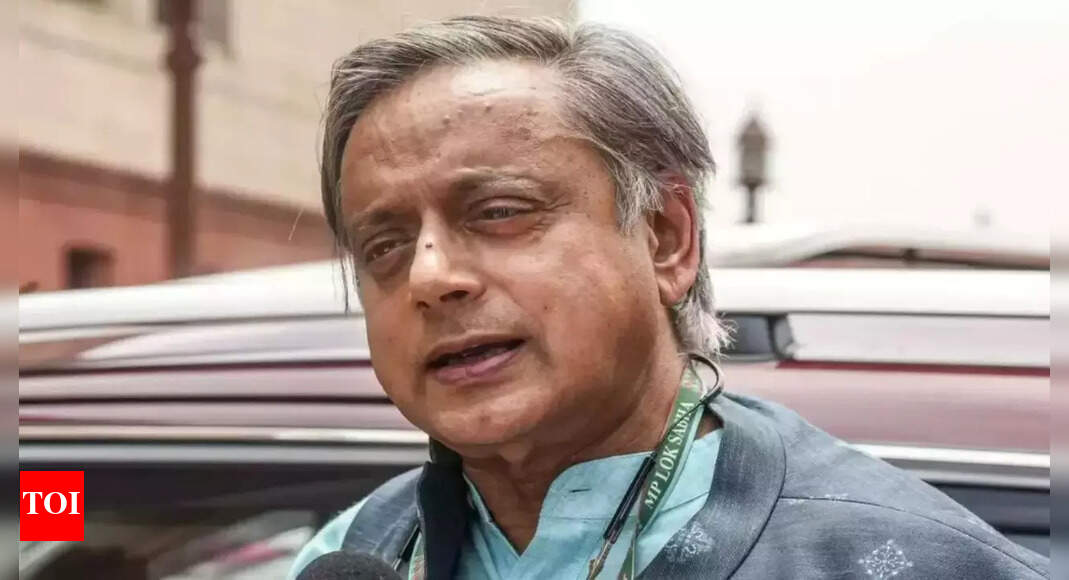
Shashi Tharoor, a prominent leader within the Indian National Congress, has delivered a sharp critique of former US President Donald Trump's recent statements concerning the intricate and often volatile relationship between India and Pakistan. Tharoor's analysis, presented as a detailed four-point assessment, paints a picture of 'deep disappointment' regarding Trump's pronouncements, suggesting that they could potentially undermine decades of carefully cultivated diplomatic progress. The core of Tharoor's argument revolves around four key concerns that he believes stem directly from Trump's remarks. These concerns encompass the perception of equivalence between India and Pakistan, the granting of an unearned negotiating advantage to Pakistan, the inadvertent internationalization of the Kashmir dispute, and the re-emergence of a hyphenated view of India and Pakistan on the global stage. The initial point of contention, as articulated by Tharoor, centers on the implication of a false equivalence between India and Pakistan. He argues that Trump's comments seemingly disregard the well-documented history of Pakistan's links to cross-border terrorism, a reality that the United States has previously acknowledged and condemned. By presenting the two nations as somehow equally responsible for the ongoing tensions, Tharoor suggests that Trump is overlooking the critical distinction between a victim of terrorism and a state that has, at times, been accused of sponsoring or supporting such activities. This perceived equivalence, Tharoor contends, undermines India's position and diminishes the gravity of the threats it faces from terrorist groups operating within Pakistan's borders. The second point raised by Tharoor pertains to the negotiating framework that Trump's remarks inadvertently provide to Pakistan. Tharoor asserts that Pakistan has not earned the right to such a framework, particularly given its past actions and its continued support for terrorist activities. He emphasizes India's unwavering stance against negotiating under duress, stating unequivocally that India will never engage in dialogue with a 'terrorist gun pointed at its head.' By offering Pakistan a perceived seat at the negotiating table without any preconditions or accountability, Tharoor argues that Trump is rewarding bad behavior and potentially emboldening Pakistan to continue its support for terrorism as a means of achieving its political objectives. Furthermore, Tharoor expresses concern that Trump's statements risk internationalizing the Kashmir dispute, a move that he believes directly serves the interests of terrorist groups operating in the region. India has consistently maintained that the Kashmir issue is an internal affair and has vehemently rejected any attempts at foreign mediation or intervention. Tharoor argues that Trump's comments, by suggesting the need for US involvement in resolving the dispute, undermine India's sovereignty and provide a platform for terrorists to further their agenda. He contends that internationalizing the Kashmir issue would only exacerbate tensions, embolden extremist elements, and potentially destabilize the entire region. Finally, Tharoor highlights the risk of 're-hyphenating' India and Pakistan in the global imagination. For decades, world leaders have been consciously discouraged from treating India and Pakistan as a single entity or from combining visits to both countries. This policy, initiated by President Clinton in 2000, was intended to recognize India's distinct identity and its growing importance on the global stage, separate from its relationship with Pakistan. Tharoor argues that Trump's comments risk reversing this progress by once again associating India with Pakistan in the minds of world leaders and the general public. He believes that this 're-hyphenation' would be a significant setback for India's diplomatic efforts and would undermine its ability to project itself as a major global power. Trump's claim regarding leveraging trade to ease tensions between India and Pakistan has also drawn criticism. Trump suggested he pressured both nations into de-escalating by threatening to withhold trade opportunities. 'I said, ‘Come on, we're going to do a lot of trade with you guys. Let’s stop it, let’s stop it. If you stop it, we're doing trade. If you don't stop it, we're not going to do any trade.’ People have never really used trade the way I used it, I can tell you. And all of a sudden they said, ‘I think we're gonna stop,’ and they have,' Trump stated. This statement was met with skepticism and calls for clarification, especially from the Congress party in India. The Congress party questioned Prime Minister Narendra Modi about Trump's claims, seeking transparency on whether trade considerations influenced the halt of operations against Pakistan and whether India had consented to American mediation on Kashmir. Jairam Ramesh, the Congress general secretary, took to social media to voice these concerns, stating, 'The prime minister, his drumbeaters, and his apologists should answer... Has India agreed to US mediation? Has India agreed to a ‘neutral site’ for a dialogue with Pakistan? Will India now give in to US demands for opening Indian markets in autos, agriculture, and other areas?' The Congress party emphasized the need for 'painstaking diplomacy and collective resolve' in the face of these challenges, cautioning against simplistic solutions. They reiterated their unwavering support for the Indian armed forces, while simultaneously pressing the Prime Minister for answers regarding the implications of Trump's statements. In conclusion, Shashi Tharoor's critique of Donald Trump's remarks on India-Pakistan relations underscores the complexities and sensitivities involved in navigating this long-standing conflict. Tharoor's four-point analysis highlights the potential risks of misperceptions, unintended consequences, and the erosion of diplomatic progress. The Congress party's demand for transparency and accountability further amplifies the concerns surrounding Trump's statements and their potential impact on India's national interests. The situation requires careful consideration and a commitment to diplomacy, ensuring that any efforts to de-escalate tensions are based on sound principles and a clear understanding of the historical context.
The broader context of these events involves a recent ceasefire agreement between India and Pakistan, reached after heightened cross-border tensions triggered by a terror attack in Pahalgam. This ceasefire was the outcome of direct engagement between Indian and Pakistani officials, with Pakistan agreeing to the terms of 'no preconditions, no postconditions, and no links to other issues.' While the ceasefire represents a positive step towards de-escalation, the underlying issues that fuel the conflict remain unresolved. Trump's comments, therefore, have the potential to either facilitate or hinder the peace process, depending on how they are interpreted and acted upon by all parties involved. The international community's response to Trump's remarks has been varied, with some expressing cautious optimism and others voicing concerns about the potential for unintended consequences. Many observers recognize the need for a balanced approach that acknowledges India's legitimate security concerns while also encouraging dialogue and cooperation between India and Pakistan. The United States, as a major global power, has a crucial role to play in fostering a conducive environment for peace and stability in the region. However, any US involvement must be carefully calibrated to avoid exacerbating existing tensions or undermining India's sovereignty. The challenges facing India and Pakistan are multifaceted and deeply rooted in history. The Kashmir dispute, in particular, remains a major source of contention, with both countries claiming the territory as their own. Terrorist groups operating in the region further complicate the situation, posing a significant threat to both India and Pakistan. Overcoming these challenges requires a comprehensive approach that addresses the underlying causes of conflict, promotes economic development, and fosters people-to-people exchanges. Dialogue and diplomacy are essential tools for building trust and finding common ground. However, any meaningful dialogue must be based on mutual respect, transparency, and a genuine commitment to peaceful resolution. The international community can play a constructive role by supporting these efforts and providing assistance to both India and Pakistan. However, external intervention should be carefully managed to avoid creating new problems or exacerbating existing ones. Ultimately, the responsibility for resolving the conflict rests with India and Pakistan themselves. The leaders of both countries must demonstrate the political will to overcome their differences and work towards a peaceful and prosperous future for their people. This requires a shift in mindset, from confrontation to cooperation, and a willingness to compromise on long-held positions. The path to peace will not be easy, but it is essential for the long-term stability and security of the region.
The implications of Trump's approach to foreign policy, specifically in the context of India-Pakistan relations, are significant and warrant careful consideration. His unconventional style, characterized by a willingness to challenge established norms and a focus on transactional diplomacy, has both proponents and detractors. Some argue that his approach can break through entrenched gridlock and lead to innovative solutions, while others fear that it can undermine international institutions and destabilize delicate relationships. In the case of India and Pakistan, Trump's willingness to use trade as leverage to influence their behavior raises questions about the ethics and effectiveness of such tactics. While economic pressure can be a powerful tool, it can also have unintended consequences, such as harming innocent civilians or exacerbating existing tensions. Moreover, it is not clear that trade threats alone are sufficient to address the complex underlying issues that drive the conflict between India and Pakistan. A more nuanced approach, one that combines economic incentives with diplomatic engagement and security cooperation, may be more effective in achieving lasting peace and stability. The role of the media in shaping public opinion and influencing policy decisions cannot be overstated. In the age of social media and 24-hour news cycles, information travels at lightning speed, and public perceptions can be easily swayed by biased or inaccurate reporting. It is therefore essential that journalists and media outlets adhere to the highest standards of accuracy, objectivity, and fairness. In the context of India-Pakistan relations, the media has a particular responsibility to avoid sensationalism and to provide balanced coverage of the issues at stake. Sensationalized reporting can inflame tensions, promote mistrust, and make it more difficult to find common ground. Balanced coverage, on the other hand, can help to educate the public, promote understanding, and create a more conducive environment for dialogue and reconciliation. The future of India-Pakistan relations hinges on a number of factors, including the political will of both countries, the role of the international community, and the ability of the media to provide accurate and balanced reporting. There are no easy solutions to the challenges facing India and Pakistan, but with careful planning, sustained effort, and a commitment to peaceful resolution, it is possible to build a more stable and prosperous future for the region. This requires a long-term perspective, a willingness to compromise, and a recognition that the interests of both countries are intertwined. Ultimately, the goal should be to create a relationship based on mutual respect, trust, and cooperation, one that benefits the people of both India and Pakistan. The global landscape is constantly evolving, and the challenges facing India and Pakistan are likely to become even more complex in the years ahead. Climate change, economic inequality, and the rise of extremism are just some of the issues that will require innovative solutions and collaborative efforts. By working together, India and Pakistan can overcome these challenges and create a brighter future for their people. The key is to focus on areas of common interest, such as trade, investment, and environmental protection, and to build trust through people-to-people exchanges and cultural initiatives. The path to peace may be long and arduous, but the rewards are well worth the effort. A peaceful and prosperous South Asia would not only benefit the people of India and Pakistan but would also contribute to global stability and security.
The long-term implications of Shashi Tharoor's analysis extend beyond the immediate context of Donald Trump's comments. His critique serves as a reminder of the importance of consistency and nuance in foreign policy, particularly when dealing with complex and sensitive issues like the India-Pakistan relationship. Tharoor's emphasis on avoiding false equivalencies, promoting responsible negotiating frameworks, and resisting the internationalization of the Kashmir dispute underscores the need for a principled and strategic approach. The role of domestic politics in shaping foreign policy decisions is also evident in this situation. Trump's comments, likely motivated by a desire to project strength and decisiveness, may have inadvertently undermined India's position and emboldened Pakistan. This highlights the importance of understanding the domestic political context of other countries and tailoring foreign policy accordingly. The need for proactive diplomacy is also highlighted. Rather than simply reacting to events, India must actively engage with the international community to shape perceptions and advance its interests. This includes building strong relationships with key partners, such as the United States, and effectively communicating its perspectives on issues like Kashmir and cross-border terrorism. The importance of economic development in promoting peace and stability is also worth noting. By focusing on economic growth and job creation, India can create opportunities for its citizens and reduce the appeal of extremism and violence. Similarly, promoting economic cooperation with Pakistan can help to build trust and interdependence, making conflict less likely. The challenges facing India and Pakistan are not insurmountable. By adopting a long-term perspective, embracing proactive diplomacy, and focusing on economic development, both countries can work towards a more peaceful and prosperous future. However, this requires strong leadership, a commitment to dialogue, and a willingness to compromise. The international community has a role to play in supporting these efforts, but ultimately the responsibility for resolving the conflict rests with India and Pakistan themselves. The legacy of colonialism, the complexities of identity politics, and the enduring geopolitical rivalries continue to shape the relationship between India and Pakistan. Addressing these historical grievances and fostering a sense of shared identity will be crucial for building lasting peace. The role of civil society organizations, educational institutions, and cultural exchange programs in promoting understanding and reconciliation cannot be overstated. These initiatives can help to break down stereotypes, foster empathy, and create a sense of shared humanity. The importance of addressing the root causes of extremism and violence is also paramount. This includes promoting education, combating poverty, and addressing social grievances. By creating a more just and equitable society, India can reduce the appeal of extremist ideologies and foster a culture of peace and tolerance. The path to peace will not be easy, but it is essential for the long-term stability and security of the region. By embracing dialogue, promoting economic development, and addressing the root causes of conflict, India and Pakistan can create a brighter future for their people.
Finally, it is essential to recognize that the resolution of the India-Pakistan conflict is not simply a matter of bilateral relations. It has significant implications for regional and global security. A stable and peaceful South Asia is crucial for preventing the spread of terrorism, promoting economic growth, and addressing global challenges like climate change and pandemics. The international community must therefore remain engaged in supporting the peace process, providing assistance to both India and Pakistan, and working towards a more just and equitable world order. The challenges facing humanity are immense, but by working together, we can overcome them and create a brighter future for all. The India-Pakistan conflict is just one example of the many challenges that require global cooperation and collective action. By embracing dialogue, promoting understanding, and addressing the root causes of conflict, we can build a more peaceful and prosperous world. The need for visionary leadership, both within India and Pakistan and on the global stage, is more pressing than ever. Leaders who are willing to challenge conventional wisdom, take risks for peace, and inspire their people to work towards a common goal are essential for overcoming the obstacles that stand in the way of a brighter future. The power of hope and the belief that a better world is possible should never be underestimated. By focusing on the positive, celebrating successes, and inspiring others to join the cause, we can create a momentum for change that is unstoppable. The India-Pakistan conflict is a reminder that even the most intractable problems can be solved with courage, determination, and a commitment to peace. The future is not predetermined. It is shaped by the choices we make today. By choosing dialogue over confrontation, cooperation over competition, and peace over violence, we can create a world where all people can live in dignity and security. The time for action is now. Let us all work together to build a more just, peaceful, and sustainable world for ourselves and for future generations.
Source: India-Pakistan tensions: Shashi Tharoor lists 4 reasons why Trump’s remarks are 'disappointing'