
 |
|
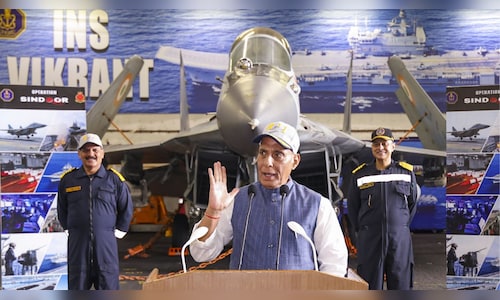
Defence Minister Rajnath Singh issued a strong warning to Pakistan, stating that the Indian Navy would initiate retaliatory actions if Pakistan engages in any “unholy acts.” This statement, delivered to Indian Navy personnel aboard the INS Vikrant in Goa, underscores India's heightened security posture and its willingness to respond forcefully to perceived threats. Singh's remarks emphasized the Indian Navy's capabilities and its strategic importance in maintaining regional stability. The reference to “unholy acts” strongly suggests concerns about cross-border terrorism and potential provocations from Pakistan. By explicitly mentioning the Navy as the first line of response, Singh signals a significant shift in India's deterrence strategy, potentially deviating from traditional land-based or air force-led retaliatory measures. This approach leverages the Navy's reach and strategic positioning to provide a swift and decisive response. This deployment of India's naval power as a deterrent reflects a broader strategic calculation, aimed at not only protecting India's maritime interests but also sending a clear message to Pakistan about the potential consequences of engaging in hostile activities. The minister's mention of Operation Sindoor further reinforces this message, highlighting the Navy's historical successes in silently but effectively neutralizing Pakistani aggression. The implicit threat of further division of Pakistan into four parts underscores the gravity of Singh's warning, invoking the historical context of the 1971 war and the creation of Bangladesh. This historical reference serves as a stark reminder of India's past military successes and its willingness to take decisive action when provoked. The minister’s strong words come amidst ongoing tensions between India and Pakistan, fueled by cross-border terrorism and unresolved territorial disputes. By asserting India's resolve to use “every method” to eliminate terrorism, Singh reiterates India's commitment to protecting its sovereignty and security. This statement is likely intended to deter future terrorist attacks and send a strong signal to Pakistan that any such actions will be met with severe consequences. The Defence Minister's visit to the INS Vikrant and his review of its operational readiness further highlights India's commitment to strengthening its naval capabilities. The INS Vikrant, India's first indigenously built aircraft carrier, symbolizes India's growing self-reliance in defense manufacturing and its ambition to become a major maritime power. The deployment of the INS Vikrant in the Arabian Sea underscores India's strategic interests in the region and its ability to project power far beyond its borders. Singh's remarks can also be interpreted as a message to the international community, signaling India's commitment to maintaining regional stability and combating terrorism. By showcasing its naval strength and its willingness to use it, India seeks to project an image of a responsible and capable security provider in the Indian Ocean region. This message is particularly relevant in the context of growing geopolitical competition in the region, with China's increasing naval presence raising concerns among India and its allies. The Indian Navy's role in maintaining maritime security, protecting sea lanes of communication, and responding to humanitarian crises is becoming increasingly important. Singh's emphasis on the Navy's silent service and its ability to tie down the Pakistani Army highlights its strategic value in both peacetime and wartime scenarios. The Navy's ability to operate discreetly and effectively makes it a powerful instrument of statecraft, capable of deterring potential adversaries and protecting India's national interests.
The statement from Rajnath Singh is not merely a declaration of intent; it is a carefully calibrated message designed to achieve several strategic objectives. Firstly, it aims to deter Pakistan from engaging in further acts of terrorism or aggression against India. By explicitly stating that the Indian Navy will initiate retaliatory actions, Singh creates a credible threat that Pakistan must take seriously. This threat is further amplified by the reference to Operation Sindoor and the potential for further division of Pakistan. Secondly, Singh's remarks are intended to reassure the Indian public and signal the government's commitment to protecting national security. In the face of ongoing threats, it is crucial for the government to project an image of strength and resolve. By highlighting the capabilities of the Indian Navy and its readiness to respond to any provocation, Singh seeks to bolster public confidence in the government's ability to safeguard the country. Thirdly, the statement serves as a message to the international community, particularly to countries concerned about regional stability and the threat of terrorism. By demonstrating its willingness to take decisive action against terrorism, India seeks to position itself as a reliable partner in the global fight against terrorism. This message is especially important in the context of India's efforts to strengthen its strategic partnerships with countries such as the United States, Japan, and Australia. Fourthly, Singh's remarks are intended to send a signal to China, which has been increasing its naval presence in the Indian Ocean region. By showcasing the capabilities of the Indian Navy and its commitment to maintaining maritime security, India seeks to deter any potential Chinese aggression and protect its strategic interests in the region. This message is particularly relevant in the context of ongoing border disputes between India and China and the growing competition for influence in the Indo-Pacific region. The strategic implications of Singh's statement are far-reaching. By signaling a shift in India's deterrence strategy, the government is sending a clear message to Pakistan and other potential adversaries that any attack on India will be met with a swift and decisive response. This approach leverages the Indian Navy's unique capabilities and strategic positioning to provide a credible deterrent against aggression. The emphasis on self-reliance in defense manufacturing, as exemplified by the INS Vikrant, further strengthens India's strategic autonomy and reduces its dependence on foreign suppliers. This is crucial for maintaining India's ability to respond effectively to security threats without being constrained by external factors.
The historical context of the 1971 war and the creation of Bangladesh is crucial to understanding the significance of Rajnath Singh's remarks. The war, which resulted in the liberation of East Pakistan and the formation of Bangladesh, was a decisive victory for India and a humiliating defeat for Pakistan. The Indian Navy played a crucial role in the war, successfully blockading Pakistani ports and disrupting its maritime supply lines. The reference to Operation Sindoor, while not widely publicized, highlights the Indian Navy's ability to silently but effectively neutralize Pakistani aggression. The threat of further division of Pakistan into four parts underscores the gravity of Singh's warning and serves as a stark reminder of India's past military successes. This historical context adds weight to Singh's statement and reinforces the message that India is willing to take decisive action when provoked. The current geopolitical landscape further amplifies the significance of Singh's remarks. The ongoing tensions between India and Pakistan, fueled by cross-border terrorism and unresolved territorial disputes, create a volatile security environment. The rise of extremist groups and the proliferation of weapons of mass destruction add to the complexity of the challenges facing India. In this context, it is crucial for India to maintain a strong and credible deterrent against aggression. Singh's statement is intended to send a clear message to Pakistan that any attempt to destabilize India will be met with severe consequences. The growing strategic competition in the Indo-Pacific region, particularly the rise of China, further underscores the importance of India's naval capabilities. China's increasing naval presence in the Indian Ocean region poses a challenge to India's strategic interests and its ability to maintain maritime security. In this context, it is crucial for India to strengthen its naval capabilities and forge strategic partnerships with like-minded countries. Singh's visit to the INS Vikrant and his review of its operational readiness demonstrate India's commitment to strengthening its naval capabilities and its ability to project power far beyond its borders. The INS Vikrant symbolizes India's growing self-reliance in defense manufacturing and its ambition to become a major maritime power. The government's commitment to strengthening the Indian Navy is a crucial component of its broader strategy to protect India's national interests and maintain regional stability. The statement is a multi-faceted strategic communication designed to deter aggression, reassure the public, signal commitment, and bolster its geopolitical standing. It highlights the crucial role the Navy plays in achieving these objectives.
Source: 'Indian Navy will do the opening if...' Rajnath Singh warns Pakistan