
 |
|
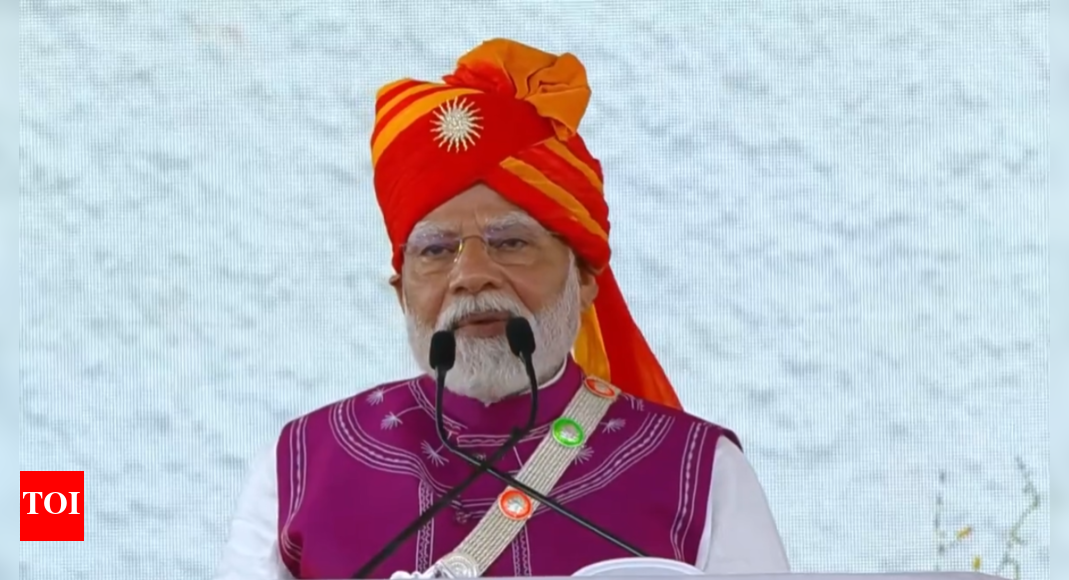
Prime Minister Narendra Modi's recent address in Dahod, Gujarat, delivered on May 26, 2024, which marked the tenth anniversary of his assuming office, offered a multifaceted perspective on India's developmental trajectory, its security concerns, and its relationship with Pakistan. The speech, laden with historical context and political messaging, served not only as a progress report on his administration's achievements but also as a clarion call for continued national unity and resolve. Modi's remarks about Pakistan, particularly his assertion that its "only aim" since partition was "enmity with Bharat," underscore the persistent tensions that have defined the Indo-Pakistani relationship for decades. This statement, while perhaps seen as inflammatory by some, reflects a widely held perception in India regarding Pakistan's historical approach. Modi contrasted this with India's focus on "eliminating poverty and building a developed nation," highlighting a narrative of progress and self-improvement that has been central to his political appeal. The assertion is not merely a rhetorical device, but a reflection of India's concerted efforts to diversify its economy, strengthen its infrastructure, and improve its social indicators. The focus on development as a counterpoint to perceived Pakistani hostility serves to reinforce the image of India as a responsible and forward-looking nation on the global stage. It's important to consider the historical context that informs Modi's statement. The partition of India in 1947 was a traumatic event that resulted in widespread violence and displacement. The legacy of this division continues to shape relations between the two countries, with issues such as Kashmir remaining a major point of contention. Pakistan's alleged support for cross-border terrorism has further strained ties, leading to periodic escalations and diplomatic crises. Modi's reference to "enmity" likely encompasses these various aspects of the relationship, painting a picture of a neighbor consistently seeking to undermine India's progress. However, it's also worth noting that there are voices within Pakistan that advocate for improved relations with India. These voices often emphasize the potential benefits of economic cooperation and cultural exchange, arguing that a peaceful and prosperous region is in the best interest of both countries. Modi's statement, while reflecting a prevalent Indian viewpoint, may also serve to marginalize these voices and reinforce a cycle of mistrust. The mention of Operation Sindoor, launched by Indian Armed Forces after the Pahalgam attack, further underscores the security challenges faced by India. Modi's description of the operation as an "expression of the culture and sentiments of us Indians" suggests a desire to frame it not merely as a military action, but as a defense of national honor and values. This framing is significant, as it appeals to a sense of collective identity and purpose, mobilizing support for the government's actions. The details of the Pahalgam attack, in which 26 people were killed, are particularly harrowing. Modi's recounting of the incident, emphasizing the brutality of the terrorists and the suffering of the victims, serves to galvanize public outrage and justify the use of force. His assertion that "Modi did what the countrymen had given me the responsibility of Prime Servant for" reinforces his image as a strong and decisive leader, willing to take action to protect the nation. The reference to wiping out terror bases in 22 minutes is likely intended to project an image of swift and effective retribution, deterring future attacks. This narrative of strength and resolve is a key element of Modi's political appeal, resonating with voters who prioritize security and national pride. However, it's important to consider the potential consequences of such rhetoric. While strong action against terrorism is undoubtedly necessary, it's also crucial to avoid escalating tensions and fueling cycles of violence. A more nuanced approach, combining security measures with diplomatic efforts to address the root causes of conflict, may be more effective in the long run. Modi's speech also touched upon India's developmental trajectory, highlighting the "unimaginable and unprecedented" decisions taken by his government. He emphasized the importance of building a "Viksit Bharat," a truly developed India, and the need for the country to be self-reliant in manufacturing. The focus on economic development is central to Modi's vision for India. He has consistently emphasized the importance of infrastructure development, industrial growth, and job creation as key drivers of progress. His government has launched numerous initiatives aimed at boosting the economy, including the Make in India campaign, which seeks to attract foreign investment and promote domestic manufacturing. The dedication of a state-of-the-art locomotive manufacturing plant in Dahod is a concrete example of this vision in action. The plant, set to produce 9000 HP electric locomotives for both domestic use and export, represents a significant investment in India's industrial capacity. The flagging off of new train services, including the Vande Bharat Express, further underscores the government's commitment to improving transportation infrastructure. These initiatives are not only intended to boost economic growth, but also to improve the quality of life for ordinary citizens. Better transportation infrastructure can facilitate trade, reduce travel times, and improve access to essential services. The overall narrative of Modi's speech is one of progress, strength, and national unity. He presents India as a nation on the rise, overcoming challenges and pursuing its aspirations with determination. His remarks about Pakistan, while controversial, reflect a prevalent sentiment in India and serve to reinforce his image as a strong and decisive leader. The focus on economic development and infrastructure improvement further enhances his appeal, particularly among voters who prioritize progress and prosperity. However, it's important to critically examine the underlying assumptions and potential consequences of Modi's rhetoric. A more nuanced approach to foreign relations, combined with a focus on inclusive development and social justice, may be necessary to ensure a truly prosperous and equitable future for India.
The significance of Narendra Modi's speech on May 26, 2024, extends beyond its immediate context as a political rally in Dahod, Gujarat. It represents a continuation of a carefully constructed narrative aimed at solidifying his leadership and shaping India's national identity. The deliberate contrast drawn between India and Pakistan is a recurring theme in Modi's public addresses, often serving to highlight India's perceived moral and developmental superiority. While such rhetoric may resonate with a domestic audience, it also carries the risk of exacerbating tensions and hindering efforts towards regional peace and cooperation. The assertion that Pakistan's sole aim since partition has been to harbor enmity towards India is a simplification of a complex and multifaceted historical relationship. While it is undeniable that the two countries have been locked in conflict and competition for decades, attributing all animosity solely to Pakistan overlooks the role of India's own policies and actions in shaping the dynamics of the relationship. For instance, India's involvement in the creation of Bangladesh in 1971, its stance on the Kashmir issue, and its perceived dominance in the region have all contributed to Pakistan's sense of insecurity and resentment. A more balanced and nuanced understanding of the historical context is essential for fostering constructive dialogue and finding common ground. Modi's emphasis on India's focus on development and poverty alleviation is a welcome departure from the often-hyperbolic rhetoric surrounding national security. However, it is important to critically assess the extent to which his government's policies have actually translated into tangible improvements in the lives of ordinary Indians. While India has undoubtedly made significant strides in economic growth and infrastructure development under Modi's leadership, inequality remains a major challenge. The benefits of economic growth have not been evenly distributed, and a significant portion of the population continues to struggle with poverty, unemployment, and lack of access to basic services. A truly "Viksit Bharat" must address these inequalities and ensure that all citizens have the opportunity to participate in and benefit from the country's progress. The mention of Operation Sindoor and its portrayal as an expression of Indian culture and sentiments raise important questions about the relationship between national identity, military action, and public opinion. While it is understandable that the government would want to project an image of strength and resolve in the face of terrorism, it is crucial to avoid conflating military action with cultural values. The glorification of violence can have dangerous consequences, particularly in a society as diverse and complex as India. It is important to promote a culture of peace and non-violence, and to emphasize the importance of dialogue and diplomacy in resolving conflicts. Modi's recounting of the Pahalgam attack and his assertion that "Modi did what the countrymen had given me the responsibility of Prime Servant for" highlight the personalization of power that has become a hallmark of his leadership. While it is important for leaders to take responsibility for their actions, it is also crucial to avoid creating a cult of personality. A healthy democracy requires accountability, transparency, and respect for dissent. The emphasis on Modi's personal role in decision-making can undermine these principles and lead to a concentration of power in the hands of a few individuals. The developmental initiatives highlighted in Modi's speech, such as the locomotive manufacturing plant and the new train services, represent important investments in India's infrastructure. However, it is important to ensure that these projects are implemented in a sustainable and equitable manner. Environmental considerations must be taken into account, and the rights of affected communities must be respected. Infrastructure development should not come at the expense of social justice or environmental sustainability. In conclusion, Narendra Modi's speech on May 26, 2024, provides valuable insights into his political strategy, his vision for India, and his approach to foreign relations. While his rhetoric may resonate with a domestic audience, it is important to critically assess the underlying assumptions and potential consequences of his policies. A more nuanced and balanced approach, combining economic growth with social justice, environmental sustainability, and regional cooperation, is essential for building a truly prosperous and equitable future for India.
Delving deeper into the layers of Prime Minister Modi's address, it's crucial to recognize the inherent performance aspect of political speeches, especially those delivered to galvanize support and solidify a leader's image. The carefully constructed narrative, the strategic contrasts, and the emotional appeals all contribute to a broader project of nation-building, one that is deeply intertwined with the persona of the leader himself. The continual emphasis on Pakistan as the antithesis to India's progress serves a dual purpose. First, it reinforces a sense of national unity by identifying a common adversary, fostering a collective identity based on shared historical grievances and perceived threats. Second, it allows Modi to position himself as the strong leader, the protector of the nation, capable of standing up to external aggression and safeguarding India's interests. This is a classic political strategy, often employed during times of uncertainty or perceived crisis. However, the long-term consequences of such rhetoric can be detrimental, perpetuating cycles of mistrust and hindering efforts towards reconciliation. The persistent focus on enmity can overshadow opportunities for dialogue and cooperation, ultimately undermining regional stability. It's important to remember that national identity is not a fixed entity, but a fluid and evolving construct. It can be shaped by various factors, including historical narratives, cultural values, and political ideologies. While it is natural for nations to define themselves in relation to others, it is crucial to avoid creating a sense of exclusion or animosity. A more inclusive and cosmopolitan approach to national identity can foster greater understanding and cooperation across borders. The emphasis on India's developmental achievements under Modi's leadership is undoubtedly a key element of his political appeal. The narrative of progress and transformation resonates with a population eager to see improvements in their living standards and opportunities for advancement. However, it's important to critically examine the metrics used to measure this progress. While economic growth is undoubtedly important, it is not the sole determinant of national well-being. Factors such as social equity, environmental sustainability, and access to healthcare and education are equally crucial. A truly developed nation must prioritize all of these aspects, ensuring that the benefits of progress are shared by all its citizens. The focus on Operation Sindoor and its portrayal as an expression of Indian culture raises complex ethical and philosophical questions. While it is understandable that the government would want to project an image of strength and resolve in the face of terrorism, it is important to avoid glorifying violence or conflating military action with cultural values. A more nuanced approach would acknowledge the human cost of conflict and emphasize the importance of seeking peaceful solutions. It's also important to consider the potential impact of such rhetoric on public opinion. The constant exposure to images of violence and aggression can desensitize individuals and normalize the use of force. This can have long-term consequences for social cohesion and the promotion of peace. The recounting of the Pahalgam attack and the emphasis on Modi's personal role in responding to the crisis highlights the growing trend of personalized leadership in contemporary politics. While it is natural for leaders to take responsibility for their actions, it is important to avoid creating a cult of personality. A healthy democracy requires a balance of power, accountability, and transparency. The concentration of decision-making in the hands of a few individuals can undermine these principles and lead to authoritarian tendencies. It's crucial for citizens to remain vigilant and hold their leaders accountable, ensuring that they are acting in the best interests of the nation as a whole. In conclusion, Prime Minister Modi's speech on May 26, 2024, is a complex and multifaceted communication that reflects his political strategy, his vision for India, and his approach to foreign relations. While his rhetoric may resonate with some, it is important to critically examine the underlying assumptions and potential consequences of his policies. A more nuanced and balanced approach, one that prioritizes dialogue, cooperation, and inclusivity, is essential for building a truly prosperous and peaceful future for India and the region.
Moreover, a critical analysis of Modi's speech necessitates an exploration of the psychological underpinnings of his rhetoric and its impact on the Indian psyche. The constant emphasis on national pride, strength, and resilience taps into deep-seated emotions and aspirations, creating a powerful sense of collective identity and purpose. This can be a powerful tool for mobilizing support and fostering social cohesion, but it also carries the risk of creating a sense of superiority and intolerance towards others. The contrast between India and Pakistan, often framed in moral terms, can reinforce existing prejudices and stereotypes, making it more difficult to bridge the divide and build trust. The portrayal of Pakistan as the 'other,' the source of all problems, allows for a simplification of complex issues and a deflection of responsibility for internal challenges. This can be a convenient political strategy, but it ultimately undermines the process of self-reflection and critical analysis that is essential for progress. The emphasis on Modi's personal role in leading the nation taps into a deep-seated desire for strong leadership, particularly in times of uncertainty and perceived crisis. The image of Modi as the decisive and effective leader, the one who gets things done, resonates with a population yearning for stability and security. However, this can also create a dependence on a single individual and undermine the importance of democratic institutions and processes. The personalization of power can lead to a weakening of accountability and transparency, as decisions are increasingly made behind closed doors without proper consultation or oversight. The glorification of military action and the emphasis on national security can also have a detrimental impact on the Indian psyche. The constant exposure to images of violence and aggression can create a sense of fear and anxiety, leading to a demand for more security measures and a willingness to sacrifice civil liberties in the name of safety. This can ultimately erode the foundations of a democratic society and create a climate of suspicion and intolerance. It's important to remember that national security is not the only value that matters. Freedom, justice, equality, and compassion are equally important and must be protected. A healthy society is one that can balance the need for security with the protection of civil liberties and the promotion of social justice. The developmental initiatives highlighted in Modi's speech undoubtedly represent progress in many areas, but it's crucial to consider the human cost of this progress. The relentless pursuit of economic growth can lead to environmental degradation, social displacement, and the exploitation of labor. It's important to ensure that development is sustainable and equitable, and that the benefits are shared by all members of society. A truly developed nation is one that prioritizes the well-being of its citizens, not just its economic output. This requires a shift in focus from quantitative measures of progress to qualitative indicators of human flourishing. It requires a greater emphasis on education, healthcare, social justice, and environmental sustainability. It also requires a greater willingness to listen to the voices of marginalized communities and to address their concerns. In conclusion, Modi's speech on May 26, 2024, offers a valuable window into the psychological dynamics of contemporary Indian politics. The rhetoric of national pride, strength, and resilience taps into deep-seated emotions and aspirations, creating a powerful sense of collective identity and purpose. However, it's important to critically examine the potential downsides of this approach and to ensure that the pursuit of national greatness does not come at the expense of democratic values, social justice, and environmental sustainability.
Analyzing the broader context, Modi's speech should also be seen as a carefully crafted communication aimed at influencing international perceptions of India. The portrayal of India as a responsible and peace-loving nation, committed to development and progress, serves to enhance its global standing and attract foreign investment. The contrast with Pakistan, often depicted as a destabilizing force in the region, allows India to position itself as a reliable partner for Western powers seeking to counter terrorism and promote regional stability. This strategic positioning is particularly important in the context of the growing geopolitical competition between the United States and China. India is increasingly seen as a key player in the Indo-Pacific region, and its relationship with the United States has deepened in recent years. The portrayal of India as a democratic and secular nation, committed to the rule of law, is essential for maintaining this partnership and attracting Western support. However, it's important to acknowledge that there are also concerns about the erosion of democratic norms and the rise of Hindu nationalism in India. These concerns have been raised by human rights organizations and international observers, and they could potentially undermine India's standing on the global stage. The emphasis on economic development and infrastructure improvement also serves to project an image of India as a rising economic power, capable of competing with China on the global stage. The dedication of the locomotive manufacturing plant and the flagging off of new train services are concrete examples of India's growing industrial capacity and its commitment to modernizing its infrastructure. These projects also serve to attract foreign investment and create jobs for Indian citizens. However, it's important to ensure that economic development is sustainable and equitable, and that it benefits all members of society. The growing inequality in India is a major challenge, and it could potentially undermine the country's long-term prospects for economic growth and social stability. The portrayal of Operation Sindoor as an expression of Indian culture can also be seen as an attempt to justify the use of force in the eyes of the international community. By framing military action in cultural terms, the government seeks to create a sense of legitimacy and to deflect criticism from human rights organizations and other international observers. However, it's important to remember that the use of force should always be a last resort, and that it should be conducted in accordance with international law and human rights standards. The emphasis on Modi's personal role in leading the nation can also be seen as an attempt to enhance India's international standing. Modi is a charismatic and influential leader, and his personal relationships with other world leaders can be an asset for India's foreign policy. However, it's important to ensure that India's foreign policy is based on principles and values, and not just on personal relationships. A reliance on personal diplomacy can be risky, as it can be easily undermined by changes in leadership or shifts in political alignments. In conclusion, Modi's speech on May 26, 2024, is a complex and multifaceted communication that reflects India's domestic political dynamics, its vision for the future, and its approach to foreign relations. The speech is carefully crafted to project an image of India as a responsible, prosperous, and strong nation, capable of playing a leading role in the international community. However, it's important to critically examine the underlying assumptions and potential consequences of Modi's policies, and to ensure that India's rise to prominence is based on sustainable development, social justice, and respect for democratic values.
Source: 'After Partition, Pakistan had just one goal — to hate India': PM Modi in Gujarat