
 |
|
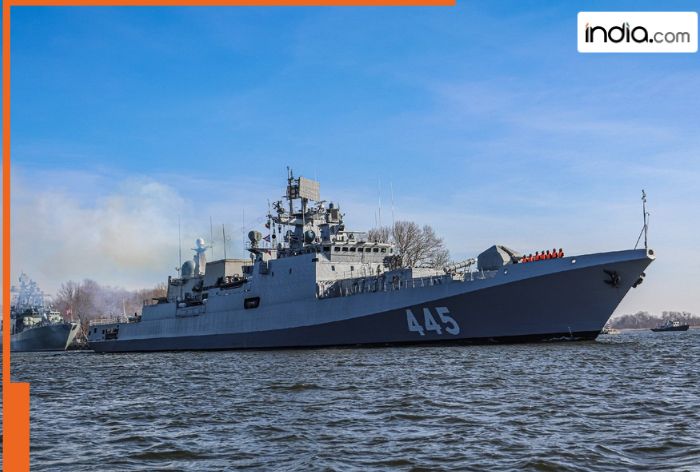
The geopolitical landscape between India and Pakistan remains fraught with tension, a dynamic often punctuated by military advancements and strategic posturing. The recent induction of the Multi Role Stealth Guided Missile Frigate 'Tamal' into the Indian Navy fleet serves as a stark reminder of this ongoing rivalry and underscores the ever-present anxieties within Pakistan regarding India's burgeoning naval capabilities. This development, reported by India.com, highlights not only India's commitment to modernizing its defense forces but also the perceived threat it poses to its neighbor, Pakistan. The article meticulously details the features and capabilities of the 'Tamal,' emphasizing its role in potentially shifting the naval balance of power in the region. The narrative paints a picture of sleepless nights for Pakistan, a nation perpetually concerned about India's strategic maneuvers and its potential to dominate the seas. The fear, according to the article, stems from Pakistan's ambition to 'win the war against India,' a dream that may be dashed by the sheer might of the Indian Navy, bolstered by assets like the 'Tamal.' The psychological impact of such military acquisitions cannot be understated. They serve as both a deterrent and a symbol of strength, influencing the perceptions and calculations of opposing nations. In Pakistan's case, the introduction of 'Tamal' likely reinforces existing insecurities and intensifies the sense of vulnerability, particularly in the face of India's perceived aggression. The article further elaborates on the 'Tamal's' construction and acquisition, noting that it is being built at Russia's Yantar shipyard and that the naval crew is currently undergoing training in Russia. The expedited delivery schedule, with the ship expected to be delivered by May 28 instead of June next year, suggests a sense of urgency and determination on India's part to rapidly enhance its naval capabilities. This sense of urgency could be interpreted as a response to perceived threats or as a proactive measure to maintain its strategic advantage in the region. The Indo-Russian collaboration in the production of these warships highlights the complex geopolitical relationships that underpin the arms trade and defense cooperation. Russia's role in providing India with advanced military technology underscores the strategic alignment between the two countries and their shared interests in maintaining regional stability, albeit through different means. The agreement between Russia and India, signed in 2016, entrusted Russia with the task of building four Talwar-class stealth frigates, further solidifying this partnership. The induction of INS Tushil in December 2024, followed by the impending arrival of INS Tamal, represents a significant step forward in fulfilling this agreement and enhancing India's naval prowess. The article emphasizes the 'Tamal's' status as one of the world's deadliest warships, equipped with the Brahmos anti-ship missile. This particular weapon system is a source of significant concern for Pakistan, as it possesses the capability to inflict substantial damage on enemy vessels and potentially alter the course of naval engagements. The Brahmos missile, known for its speed and accuracy, represents a formidable offensive capability that reinforces India's naval dominance. The inclusion of anti-submarine warfare capabilities further enhances the 'Tamal's' versatility and its ability to operate in a wide range of scenarios. The ship's design, specifically tailored for anti-submarine warfare, underscores India's commitment to protecting its maritime interests and countering potential threats from underwater adversaries. The presence of anti-submarine rockets and torpedoes further reinforces this capability, making the 'Tamal' a formidable opponent in any naval encounter. The article provides detailed specifications of the INS Tamal, noting its weight of 3900 tonnes and its capacity to deploy a helicopter. These details contribute to a comprehensive understanding of the ship's capabilities and its role in the Indian Navy's overall strategy. The ability to deploy a helicopter enhances the 'Tamal's' surveillance and reconnaissance capabilities, allowing it to monitor a wider area and respond effectively to emerging threats. The article concludes by highlighting the INS Tamal as the last imported warship of the Indian Navy, signaling a shift towards indigenous production and self-reliance in defense manufacturing. This declaration underscores India's ambition to become a major player in the global defense industry and to reduce its dependence on foreign suppliers. The Indian Navy's stated intention to refrain from purchasing warships from abroad after the 'Tamal' marks a significant milestone in its journey towards self-sufficiency and technological independence.
The strategic implications of India's naval expansion extend beyond the immediate context of Indo-Pakistani relations. India's growing maritime power plays a crucial role in maintaining regional stability and safeguarding its economic interests in the Indian Ocean. The Indian Ocean is a vital waterway for global trade and energy transportation, and India's naval presence is essential for protecting these critical sea lanes. The INS Tamal, along with other modern warships, enhances India's ability to project power and influence in the region, deterring potential threats and ensuring the free flow of commerce. The Indo-Pacific region is increasingly becoming a focal point of geopolitical competition, with major powers vying for influence and control. India's naval modernization efforts are part of a broader strategy to assert its role as a leading maritime power in the region and to counter the growing influence of China. The Indian Navy's presence in the Indian Ocean serves as a counterbalance to China's expanding naval footprint and helps to maintain a balance of power in the region. The acquisition of advanced warships like the INS Tamal is not merely a matter of military strength; it also has significant economic implications. A strong and capable navy is essential for protecting India's maritime trade routes and ensuring the security of its offshore assets, such as oil and gas platforms. The Indian Navy also plays a crucial role in disaster relief operations and humanitarian assistance, responding to natural disasters and providing aid to countries in need. The INS Tamal, with its versatile capabilities, can be deployed in a wide range of scenarios, from combat operations to humanitarian missions. The ongoing rivalry between India and Pakistan has a long and complex history, marked by multiple wars and periods of heightened tension. The introduction of advanced weapons systems like the INS Tamal adds another layer of complexity to this relationship, potentially escalating the risk of conflict. The need for dialogue and diplomacy is paramount in managing this rivalry and preventing it from spiraling out of control. Both India and Pakistan have a responsibility to exercise restraint and to pursue peaceful means of resolving their differences. The international community also has a role to play in facilitating dialogue and promoting stability in the region. The United Nations, along with other international organizations, can provide a platform for India and Pakistan to engage in constructive discussions and to address their underlying concerns. The arms race between India and Pakistan is a dangerous and unsustainable path. Both countries would benefit from reducing their military spending and investing in social and economic development. The resources that are currently being spent on weapons could be used to improve education, healthcare, and infrastructure, ultimately leading to a better quality of life for the citizens of both countries. The focus should be on building trust and cooperation, rather than on acquiring more weapons. A peaceful and prosperous South Asia is in the interest of all countries in the region, and it is only through dialogue and diplomacy that this goal can be achieved. The Indian Navy's modernization efforts are not solely focused on acquiring new warships; they also include upgrading existing vessels and investing in advanced technologies. The Indian Navy is also working to improve its training and operational capabilities, ensuring that its personnel are well-prepared to meet the challenges of the modern maritime environment. The Indian Navy's commitment to self-reliance and indigenous production is also a key element of its modernization strategy. The Indian government is encouraging domestic defense manufacturers to develop and produce advanced weapons systems, reducing the country's dependence on foreign suppliers. This effort is creating jobs and promoting technological innovation in India.
The global implications of naval power, particularly in regions marked by geopolitical tensions like the Indo-Pacific, are multifaceted and far-reaching. The introduction of advanced warships like the INS Tamal into the Indian Navy not only alters the strategic dynamics between India and Pakistan but also contributes to the broader security architecture of the region. These developments necessitate a deeper understanding of the interplay between naval capabilities, regional stability, and international relations. The projection of naval power is a critical instrument of statecraft, enabling nations to protect their maritime interests, secure trade routes, and deter potential adversaries. In the case of India, the modernization of its naval fleet is driven by a combination of factors, including the need to safeguard its vast coastline, protect its offshore assets, and maintain a credible presence in the Indian Ocean. The INS Tamal, equipped with advanced weaponry and sensors, enhances India's ability to project power and influence in the region, sending a clear message to potential rivals. The balance of power in the Indo-Pacific is a complex and evolving phenomenon, characterized by the rise of China as a major naval power and the increasing assertiveness of other regional actors. India's naval modernization efforts are seen by some as a response to China's growing maritime ambitions, as both countries vie for influence and control in the region. The competition between India and China is not limited to the naval domain; it also extends to other areas, such as economic development, technological innovation, and diplomatic influence. However, the naval dimension is particularly important, as it directly affects the security of maritime trade routes and the stability of the region. The role of international law and maritime norms is crucial in maintaining peace and stability in the Indo-Pacific. The United Nations Convention on the Law of the Sea (UNCLOS) provides a framework for regulating maritime activities and resolving disputes. However, the interpretation and implementation of UNCLOS are often contested, leading to tensions and conflicts. The South China Sea dispute is a prime example of how conflicting claims over maritime territory can escalate into major security challenges. The INS Tamal, as a symbol of India's naval power, also serves as a reminder of the importance of respecting international law and upholding maritime norms. The cooperation between India and Russia in the defense sector is a significant aspect of their bilateral relationship. Russia has been a long-standing supplier of military equipment to India, and the two countries have a shared interest in maintaining regional stability. The construction of the INS Tamal at Russia's Yantar shipyard is a testament to this partnership. However, the increasing competition in the global arms market is creating new challenges for both India and Russia. Other countries, such as the United States, France, and Israel, are also seeking to sell their weapons systems to India. The Indian government is pursuing a diversified procurement strategy, seeking to acquire the best available technology from various sources. The future of naval power in the Indo-Pacific will depend on a number of factors, including technological innovation, economic development, and political stability. The development of new weapons systems, such as hypersonic missiles and unmanned underwater vehicles, will likely have a significant impact on naval warfare. Economic growth will enable countries to invest more in their navies, while political stability will reduce the risk of conflict. The key to maintaining peace and stability in the region is to promote dialogue and cooperation, rather than confrontation and competition. The Association of Southeast Asian Nations (ASEAN) plays a crucial role in fostering regional cooperation and promoting a rules-based order. The East Asia Summit (EAS) provides a platform for leaders from across the region to discuss security challenges and to find common ground. The participation of major powers, such as the United States, China, and India, is essential for the success of these initiatives. The long-term goal should be to create a security architecture that is inclusive, transparent, and based on mutual respect.
The narrative presented in the article, particularly the repeated phrase 'More sleepless nights for Pakistan,' warrants a critical examination regarding potential biases and intended audience. While the article aims to report on the induction of the INS Tamal into the Indian Navy, the framing of the information exhibits a degree of triumphalism that could be perceived as provocative or insensitive, especially considering the already tense relations between India and Pakistan. The repeated emphasis on Pakistan's anxieties serves to amplify the perceived threat and reinforces a sense of rivalry, potentially undermining efforts towards de-escalation and dialogue. It is important to consider the potential impact of such narratives on public opinion in both countries. Sensationalized reporting and the use of emotionally charged language can contribute to a climate of fear and mistrust, making it more difficult to find common ground and to resolve long-standing disputes. A more objective and balanced approach would involve focusing on the strategic implications of the INS Tamal's induction without resorting to language that could be interpreted as aggressive or inflammatory. The article's focus on the technical specifications and capabilities of the INS Tamal, while informative, also serves to highlight India's military superiority. This emphasis on military strength can be seen as a form of deterrence, intended to discourage Pakistan from engaging in any hostile actions. However, it can also be interpreted as a form of intimidation, potentially fueling an arms race and increasing the risk of miscalculation. A more constructive approach would involve emphasizing the importance of arms control and confidence-building measures, rather than simply focusing on military capabilities. The article's reliance on unnamed sources and generalizations about Pakistan's fears raises questions about the reliability of the information presented. It is important to verify the accuracy of such claims and to avoid perpetuating stereotypes or biases. A more responsible approach would involve providing specific evidence to support the claims made and to present a more nuanced and balanced perspective on the situation. The media has a crucial role to play in shaping public perceptions and influencing policy decisions. It is important for journalists to exercise caution and to avoid sensationalizing events or promoting biased narratives. A more responsible approach would involve providing accurate, objective, and balanced reporting, focusing on the facts and avoiding emotionally charged language. The article's conclusion, which highlights India's shift towards indigenous defense production, underscores the country's ambition to become a major player in the global arms market. This ambition, while understandable, also raises concerns about the potential for increased arms exports and the proliferation of weapons in the region. A more responsible approach would involve promoting responsible arms trade practices and working to reduce the overall demand for weapons. The promotion of peace and stability in the Indo-Pacific requires a multifaceted approach, involving diplomatic engagement, economic cooperation, and security dialogue. Military strength is an important component of national security, but it should not be the sole focus. A more holistic approach would involve addressing the underlying causes of conflict and promoting mutual understanding and respect. The media can play a crucial role in fostering this understanding by providing accurate, objective, and balanced reporting and by promoting dialogue and cooperation. The long-term goal should be to create a region that is characterized by peace, prosperity, and stability, where all countries can coexist peacefully and cooperate to address common challenges.