
 |
|
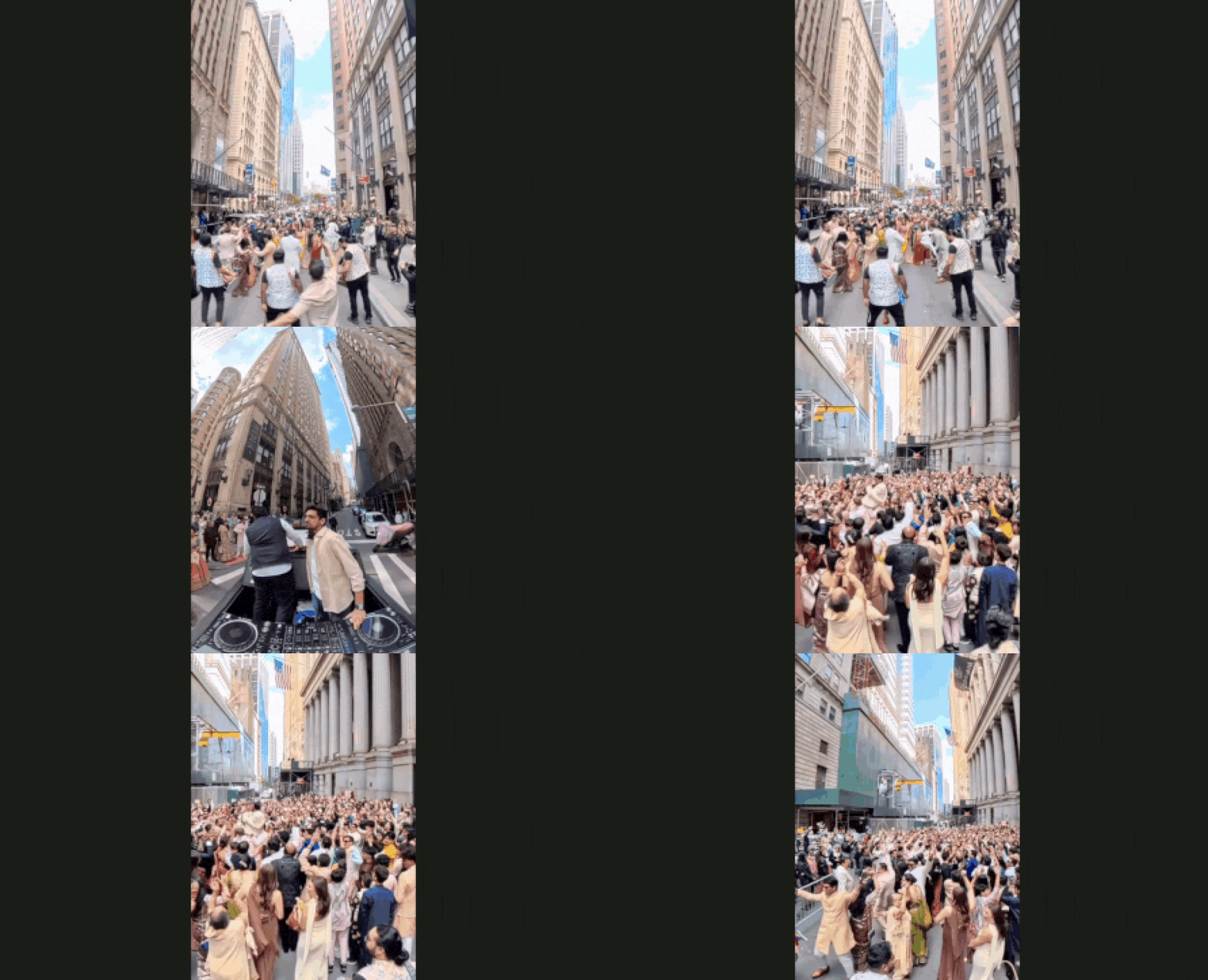
The intersection of tradition and modernity often manifests in unexpected and vibrant ways, and the recent spectacle of an Indian baraat procession taking over Wall Street is a perfect illustration of this phenomenon. A 400-person wedding celebration, complete with dhols, dancing, and the infectious energy of bhangra music, temporarily brought Manhattan’s financial district to a standstill. This event, captured in a viral video, sparked a flurry of reactions online, ranging from celebration of cultural fusion to questions about the appropriateness of disrupting a major business hub. Regardless of individual perspectives, the incident highlights the evolving landscape of global cities, where diverse cultures increasingly intertwine and challenge conventional norms. The image of guests in lehengas and sherwanis dancing amidst skyscrapers, while traders paused their hectic day to observe, is a potent symbol of this cultural collision and the ongoing negotiation between tradition and progress. It begs the question of how cities can accommodate such expressions of cultural identity while maintaining their functional efficiency and addressing potential disruptions to daily life. The Wall Street baraat underscores the importance of fostering intercultural understanding and creating spaces where different traditions can coexist and enrich the urban environment.
The scale of the Wall Street baraat, involving 400 participants, suggests a significant logistical undertaking and a clear intention to make a statement. Choosing Wall Street as the backdrop for such a vibrant and traditionally significant event was undoubtedly a deliberate act, imbuing the celebration with an added layer of meaning. The juxtaposition of the financial district, often perceived as a symbol of Western capitalism and corporate culture, with the colorful and exuberant traditions of an Indian wedding, creates a powerful visual contrast. This contrast can be interpreted in various ways. On one hand, it can be seen as a reclaiming of space, a demonstration of the growing influence and visibility of Indian culture within the global arena. The baraat essentially transformed a symbol of financial power into a temporary space of cultural expression and celebration. On the other hand, it could also be viewed as a commentary on the homogenizing forces of globalization, where traditional practices are adapted and recontextualized within a globalized urban environment. The act of dancing to bhangra beats amidst the skyscrapers of Wall Street simultaneously celebrates cultural heritage and acknowledges the transformative effects of globalization on these traditions. The wedding procession becomes a performance, a spectacle intended for a global audience, amplified by the power of social media. This performative aspect raises questions about authenticity and the potential for cultural appropriation, highlighting the complexities of cultural exchange in the modern world.
The online reactions to the Wall Street baraat provide valuable insights into the diverse perspectives surrounding this event. The comments ranged from celebratory expressions of cultural pride to critical assessments of the perceived disruption and ostentatious display of wealth. The user who commented “Wall Street to Wedding Street in under 10 minutes” encapsulates the sense of playful subversion and cultural reappropriation that resonated with many viewers. This sentiment reflects a desire to break free from the constraints of corporate culture and inject a sense of joy and spontaneity into a typically formal and regimented environment. The joke about ringing the NYSE bell with a shehnai further reinforces this desire to challenge established norms and introduce traditional elements into unexpected contexts. However, the negative reactions, which criticized the disruption and labeled it a “display of wealth,” highlight the potential for cultural events to be perceived as insensitive or disruptive to others. These criticisms raise legitimate concerns about the balance between individual expression and collective responsibility. While celebrating cultural diversity is essential, it is also important to consider the impact of such celebrations on the wider community and to ensure that they are conducted in a respectful and considerate manner. Finding this balance requires open dialogue and a willingness to engage with different perspectives, recognizing that cultural expressions are inherently complex and multifaceted.
The role of social media in amplifying the impact of the Wall Street baraat cannot be overstated. The video shared by DJ AJ, the soundtrack provider for the event, quickly went viral, reaching a global audience and sparking a widespread conversation about cultural fusion, tradition, and globalization. Social media platforms serve as powerful tools for disseminating information, sharing experiences, and fostering dialogue across geographical boundaries. In this case, the viral video transformed a local event into a global spectacle, allowing individuals from all over the world to witness and engage with the cultural performance. However, the reliance on social media also raises questions about the potential for misrepresentation and the selective framing of events. Viral videos often capture only a fleeting moment in time, potentially neglecting the broader context and nuances of the situation. Furthermore, the algorithms that govern social media platforms can amplify certain voices and perspectives while marginalizing others, leading to a skewed representation of public opinion. Therefore, it is crucial to approach social media content with a critical eye, recognizing its potential for both positive and negative impacts on our understanding of the world.
The implications of the Wall Street baraat extend beyond the immediate event itself, raising broader questions about the evolving role of cultural expression in global cities. As cities become increasingly diverse and interconnected, the potential for cultural collisions and fusions will only continue to grow. Navigating these interactions requires a commitment to intercultural understanding, a willingness to embrace difference, and a sensitivity to the potential impacts of cultural expressions on the wider community. Urban planners, policymakers, and community leaders have a responsibility to create spaces and policies that support cultural diversity while ensuring that all residents can coexist peacefully and respectfully. This may involve developing guidelines for public gatherings, providing resources for cultural education, and fostering dialogue between different communities. Furthermore, it is important to recognize that cultural expression is not simply a matter of individual choice but also a reflection of broader social and political dynamics. The Wall Street baraat, in its own way, represents a challenge to the established order, a demand for recognition and visibility within a globalized urban environment. Responding to this challenge requires a willingness to engage with the underlying issues of inequality, marginalization, and cultural representation that often fuel such expressions of identity.
The groom's decision to walk on foot, eschewing the traditional horse, is another interesting aspect of the event. While seemingly a minor detail, this choice can be interpreted as a conscious effort to modernize or adapt the traditional baraat procession to a contemporary urban setting. The horse, traditionally a symbol of royalty and status, may have seemed out of place or impractical in the context of Wall Street. By choosing to walk, the groom may have been signaling a desire to connect with the event on a more personal and egalitarian level, emphasizing the importance of community and shared experience over ostentatious displays of wealth. This subtle modification of tradition highlights the ongoing negotiation between cultural heritage and contemporary values that characterizes many diasporic communities. It also underscores the agency of individuals within these communities to adapt and reinterpret traditional practices in ways that resonate with their own experiences and aspirations. The groom's decision to walk, rather than ride, becomes a symbolic gesture, reflecting the evolving nature of tradition in a globalized world.
The Wall Street baraat serves as a microcosm of the broader challenges and opportunities facing global cities in the 21st century. As cities become increasingly diverse and interconnected, the potential for cultural clashes and misunderstandings will only continue to grow. However, these interactions also offer the opportunity for profound cultural exchange and innovation. By embracing diversity, fostering intercultural dialogue, and creating inclusive spaces for cultural expression, cities can become vibrant centers of creativity and progress. The Wall Street baraat, despite the controversy it generated, ultimately serves as a reminder of the power of culture to transform and enrich our urban environments. It highlights the importance of recognizing and celebrating the diverse traditions that make our cities unique and vibrant. It also underscores the need for ongoing dialogue and engagement to ensure that cultural expressions are conducted in a respectful and considerate manner, contributing to a more inclusive and harmonious urban landscape. The key is to find a balance between preserving cultural heritage and adapting to the demands of a rapidly changing world, ensuring that all residents feel welcome and valued within the global city.
In conclusion, the Wall Street baraat was more than just a wedding procession; it was a cultural statement, a performance, and a catalyst for conversation. It highlighted the complexities of cultural fusion in a globalized world, the challenges of balancing tradition and modernity, and the power of social media to amplify cultural expressions. While the event sparked debate and controversy, it ultimately served as a reminder of the importance of embracing diversity, fostering intercultural understanding, and creating inclusive spaces for cultural expression in our cities. The image of lehengas and sherwanis dancing amidst the skyscrapers of Wall Street will likely remain a potent symbol of the evolving relationship between tradition and progress, reminding us that even the most established institutions can be transformed, if only momentarily, by the power of culture. The legacy of the Wall Street baraat lies not only in the spectacle itself, but also in the conversations it sparked and the questions it raised about the future of cultural expression in global cities. As we move forward, it is crucial to continue engaging with these questions, striving to create urban environments that are both vibrant and inclusive, where diverse cultures can coexist and thrive.