
 |
|
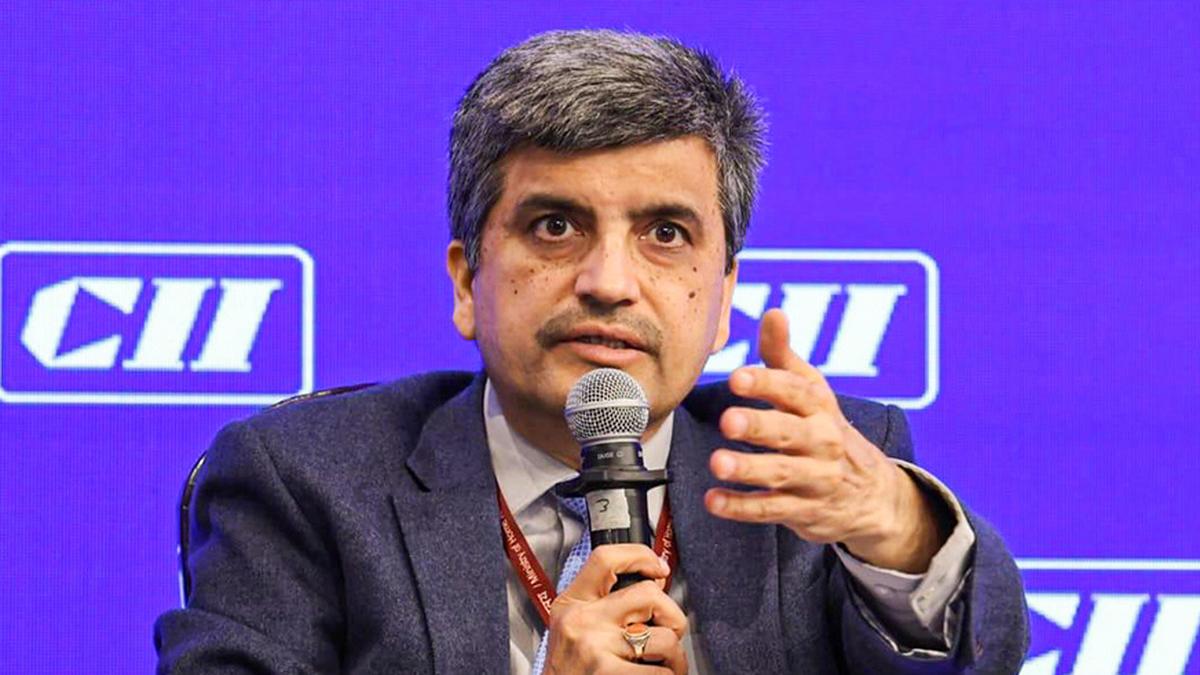
The imposition of tariffs by the United States on India represents a significant economic challenge, potentially shaving off a notable portion of the nation's Gross Domestic Product (GDP) growth. According to India's Finance Secretary, Ajay Seth, the direct impact of these tariffs could lead to a reduction of between 0.2 and 0.5 percentage points in India's GDP growth rate. This assessment was shared during a Hudson Institute event held on the sidelines of the Spring Meetings of the International Monetary Fund (IMF) and World Bank in Washington D.C. The implication is that the protectionist trade policies of the U.S. administration, led by Donald Trump (in this hypothetical 2025 scenario), are creating headwinds for the Indian economy, hindering its ability to achieve its full potential. This highlights the interconnectedness of the global economy and the vulnerability of individual nations to the trade policies of major economic powers. The statement by Mr. Seth underscores the tangible consequences of trade disputes and the importance of fostering a stable and predictable international trade environment for sustained economic growth. These tariffs impact Indian exporters, making their products more expensive and less competitive in the U.S. market. This reduces demand for Indian goods, leading to lower production, job losses, and ultimately, slower economic growth. Furthermore, the uncertainty surrounding trade relations can discourage investment, both domestic and foreign, as businesses hesitate to commit capital in the face of unpredictable trade policies. This slowdown in investment can further dampen economic growth and hinder the creation of new jobs. The projected reduction in GDP growth, while seemingly small, can have a significant impact on the lives of ordinary Indians. It can lead to lower incomes, fewer job opportunities, and reduced access to essential goods and services. This is especially concerning for a country like India, which is striving to lift millions of its citizens out of poverty and improve their living standards. The tariffs can also exacerbate existing inequalities, disproportionately affecting vulnerable populations and hindering efforts to achieve inclusive and sustainable economic growth. Therefore, addressing the challenges posed by U.S. tariffs is crucial for India to maintain its economic momentum and achieve its long-term development goals. Beyond the direct impact of the tariffs, Mr. Seth also emphasized the importance of considering the "second order (effects)" of trade turmoil. These effects refer to the broader consequences of trade disputes on the global economy. When trade tensions escalate, they can lead to increased uncertainty, reduced business confidence, and a slowdown in global economic growth. This, in turn, can negatively impact India's exports and its overall economic performance. As a major trading nation, India relies on a healthy global economy to drive demand for its goods and services. A slowdown in global growth can therefore have a significant impact on India's economic prospects. The second-order effects of trade turmoil can also manifest in the form of financial market volatility. When investors become concerned about the impact of trade disputes on the global economy, they may become more risk-averse and pull their investments out of emerging markets like India. This can lead to a depreciation of the Indian rupee and increased borrowing costs for Indian businesses, further dampening economic growth. Moreover, the global uncertainty caused by trade disputes can disrupt supply chains and lead to increased costs for businesses. This can particularly affect industries that rely on imported inputs, making them less competitive and reducing their profitability. Therefore, it is crucial for India to actively engage in multilateral efforts to promote a stable and predictable international trade environment and to mitigate the risks associated with trade turmoil.
Despite the challenges posed by U.S. tariffs, Mr. Seth expressed optimism about India's long-term economic prospects. He stated that he expected a potential growth rate of around 7% could be achieved over the next decade. This reflects India's strong economic fundamentals, including its large and growing population, its increasing urbanization, and its expanding middle class. India also possesses a dynamic and innovative private sector that is driving growth in various sectors, including technology, manufacturing, and services. However, Mr. Seth also cautioned that India needed to expand its economy at a rate faster than 7% to achieve its ambitious longer-term targets. This implies that India needs to undertake further reforms to enhance its productivity, improve its infrastructure, and create a more favorable business environment. Key areas for reform include streamlining regulations, reducing bureaucratic hurdles, and investing in education and healthcare. India also needs to address its infrastructure deficit, which is a major constraint on its economic growth. This includes improving its transportation networks, its power supply, and its water resources. Furthermore, India needs to strengthen its institutions and governance structures to ensure transparency, accountability, and the rule of law. This is essential for attracting investment, fostering innovation, and promoting inclusive and sustainable economic growth. The government of India has been actively pursuing reforms in various areas, including taxation, labor laws, and land acquisition. However, progress has been slow and uneven, and further efforts are needed to accelerate the pace of reform. To achieve its ambitious growth targets, India needs to unleash the full potential of its economy by creating a more conducive environment for businesses to thrive. This includes reducing the cost of doing business, improving access to finance, and fostering innovation and entrepreneurship. India also needs to invest in its human capital by improving the quality of education and healthcare and by providing its citizens with the skills they need to succeed in the global economy. Moreover, India needs to address its social and environmental challenges to ensure that its economic growth is sustainable and inclusive. This includes reducing poverty, inequality, and pollution, and promoting sustainable use of natural resources. By addressing these challenges, India can create a more prosperous and equitable society for all its citizens. While the 7% growth target is attainable, India cannot rest on its laurels. Strategic policy adjustments are crucial.
In addition to discussing the economic impact of U.S. tariffs, Mr. Seth also mentioned that the delegation from India was in Washington D.C. for further negotiations on trade with the U.S. administration. However, he declined to provide further details on what meetings were planned. This suggests that India is actively seeking to resolve the trade disputes with the U.S. and to forge a more stable and predictable trade relationship. Trade negotiations can be a complex and protracted process, requiring compromise and flexibility from both sides. However, they are essential for resolving trade disputes and for promoting mutually beneficial trade relations. India and the U.S. have a long history of trade cooperation, and both countries have a strong interest in maintaining a healthy trade relationship. The U.S. is one of India's largest trading partners, and India is an important market for U.S. goods and services. A stable and predictable trade relationship is therefore in the best interests of both countries. The outcome of the trade negotiations between India and the U.S. will have a significant impact on the economic prospects of both countries. A successful resolution of the trade disputes can boost trade and investment, create jobs, and promote economic growth. Conversely, a failure to reach an agreement can lead to increased trade tensions, reduced trade flows, and slower economic growth. Therefore, it is crucial for both sides to approach the negotiations with a spirit of compromise and to work towards a mutually beneficial outcome. The negotiations between India and the U.S. are also taking place in the context of a changing global trade landscape. The rise of protectionism and the erosion of the multilateral trading system pose significant challenges to global trade. In this environment, it is even more important for countries to work together to promote a stable and predictable international trade environment. India and the U.S., as two of the world's largest economies, have a responsibility to play a leading role in shaping the future of global trade. By working together, they can help to ensure that trade remains a driver of economic growth and development for all countries. The negotiation itself is a positive sign, demonstrating a willingness to engage and find common ground. The specifics, however, remain shrouded, adding an element of uncertainty to the overall outlook. The world watches, hopeful for a resolution that benefits both nations and contributes to global economic stability.
Source: U.S. tariffs could shave up to half a percentage point off India GDP, says Finance Secretary