
 |
|
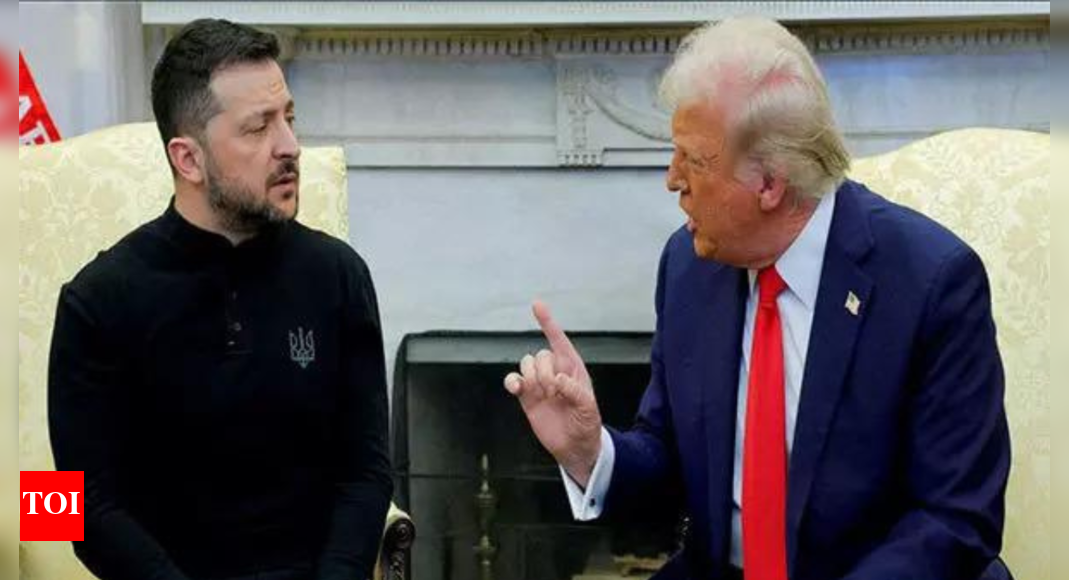
The ongoing conflict between Russia and Ukraine continues to be a complex and multifaceted issue, fraught with historical grievances, geopolitical maneuvering, and devastating human consequences. The recent exchange between former US President Donald Trump and Ukrainian President Volodymyr Zelenskyy highlights the divergent perspectives and challenges in finding a path towards a peaceful resolution. Trump's criticism of Zelenskyy's unwavering stance on Crimea, coupled with Zelenskyy's firm defense of Ukraine's territorial integrity, underscores the deep-seated disagreements that impede progress in peace negotiations. Trump's intervention, despite no longer holding office, injects a familiar element of unpredictability into the already volatile situation. His previous relationship with Putin and his sometimes-sympathetic remarks towards Russia add weight to his pronouncements, even as they draw criticism for potentially undermining Ukraine's position. The core of the disagreement lies in the status of Crimea, a region annexed by Russia in 2014. For Ukraine, Crimea represents an integral part of its territory, and any compromise on its sovereignty is seen as a betrayal of national interests and a concession to aggression. Zelenskyy's refusal to legally recognize the occupation of Crimea is rooted in this principle, and he maintains that there is 'nothing to talk about' on this issue. This unyielding stance, however, is viewed by Trump as an obstacle to peace. Trump argues that Crimea was effectively lost under the Obama administration and should not be a sticking point in negotiations. He questions why Ukraine did not fight for Crimea when it was initially annexed, suggesting that its current refusal to compromise is prolonging the conflict and leading to unnecessary bloodshed. Trump's perspective reflects a pragmatic, some might say cynical, view of international relations, where territorial integrity is secondary to achieving a swift resolution, even if it means accepting the status quo. He prioritizes ending the war and preventing further loss of life, even if it requires Ukraine to make concessions that it finds unacceptable. Zelenskyy, on the other hand, emphasizes the importance of upholding international law and defending Ukraine's sovereignty. He cites the 2018 Crimea Declaration from the US State Department, which reaffirms the US refusal to recognize Russia's claims of sovereignty over the territory. This highlights the complex interplay between domestic political considerations and international alliances in shaping Ukraine's negotiating position. Zelenskyy must balance the desire for a peaceful resolution with the need to maintain public support and reassure his allies that he will not compromise on core principles. The contrasting viewpoints of Trump and Zelenskyy illustrate the fundamental challenges in resolving the conflict. Trump's focus on pragmatism and ending the war quickly clashes with Zelenskyy's emphasis on principle and defending Ukraine's territorial integrity. These divergent perspectives are further complicated by the involvement of other international actors, each with their own interests and agendas. The United States, under the Biden administration, has provided significant military and financial assistance to Ukraine, but there are also signs of growing fatigue and pressure to find a diplomatic solution. The Biden-era initiative to freeze territorial lines and allow Russia to retain occupied areas has met with resistance in Kyiv, highlighting the tension between supporting Ukraine's sovereignty and seeking a pragmatic resolution to the conflict. The positions taken by other countries, such as the UK, France, and Germany, also influence the dynamics of the conflict. These countries have expressed support for Ukraine's sovereignty and territorial integrity, but they also recognize the need for a negotiated settlement. The peace summit planned in London reflects this desire to find a diplomatic solution, even if it requires compromises from all sides. JD Vance, Vice President of the United States, further complicated the situation by calling the current US proposal 'very fair' and stating that it’s now up to both Ukraine and Russia to accept or walk away, thus injecting a sense of urgency and potentially putting pressure on both sides to make concessions. The underlying issue of Crimea is inextricably linked to the broader geopolitical context. Russia views Crimea as strategically important for its access to the Black Sea and its projection of power in the region. Annexing Crimea has also been seen as a way to bolster domestic support for Putin and to demonstrate Russia's willingness to challenge the Western-led international order. For Ukraine, losing Crimea would not only be a territorial loss but also a symbolic blow to its national identity and its aspirations for closer integration with Europe. It would also embolden Russia and create a precedent for further territorial aggression. The conflict in Ukraine is therefore not just a local dispute but a reflection of deeper tensions between Russia and the West. Finding a resolution that addresses the concerns of all parties involved will require a delicate balance of diplomacy, compromise, and a willingness to acknowledge the legitimate security interests of all sides. The exchange between Trump and Zelenskyy serves as a reminder of the complexities and challenges in achieving lasting peace in Ukraine. It underscores the importance of understanding the different perspectives and interests at play and the need for creative solutions that can bridge the divide between pragmatism and principle.
Furthermore, the rhetoric employed by both Trump and Zelenskyy carries significant weight, not only in shaping public opinion but also in influencing the actions of other international stakeholders. Trump's use of social media, specifically his posts on Truth Social, allows him to directly address his supporters and bypass traditional media outlets. This unfiltered communication can be particularly effective in shaping public perceptions of the conflict and influencing the political discourse. His repeated criticisms of Zelenskyy and his emphasis on the need for Ukraine to compromise can be seen as an attempt to pressure Zelenskyy into accepting a negotiated settlement that is more favorable to Russia. Zelenskyy, on the other hand, utilizes social media to rally support for Ukraine and to counter what he perceives as misinformation or propaganda from Russia. His emphasis on Ukraine's sovereignty and its right to defend its territory is intended to galvanize international support and to deter further Russian aggression. His citation of the 2018 Crimea Declaration from the US State Department serves as a reminder of the US commitment to upholding international law and defending Ukraine's territorial integrity. The exchange between Trump and Zelenskyy also highlights the challenges of managing expectations and maintaining unity within the international community. The Biden administration's efforts to coordinate a unified response to the conflict have been complicated by differing views among its allies. Some countries, such as the UK and the Baltic states, have taken a more hawkish stance towards Russia and have advocated for stronger sanctions and increased military assistance to Ukraine. Others, such as Germany and France, have emphasized the need for dialogue and diplomatic solutions. These divergent perspectives can make it difficult to forge a consensus on a comprehensive strategy for resolving the conflict. The role of international organizations, such as the United Nations and the European Union, is also crucial in shaping the response to the conflict. These organizations can provide a platform for dialogue and negotiation, as well as humanitarian assistance to those affected by the war. However, their effectiveness is often limited by political divisions and the veto power of permanent members of the UN Security Council. In addition to the political and diplomatic challenges, the conflict in Ukraine has also had significant economic and social consequences. The war has disrupted trade and supply chains, leading to rising food and energy prices around the world. It has also displaced millions of people, creating a humanitarian crisis that requires a coordinated international response. The long-term economic and social costs of the conflict are likely to be significant, particularly for Ukraine and Russia. The conflict has also raised concerns about the potential for escalation and the use of nuclear weapons. The risk of miscalculation or accidental escalation is ever-present, and the consequences of a nuclear conflict would be catastrophic. Therefore, it is essential to maintain open channels of communication and to exercise restraint in the use of military force. Ultimately, the resolution of the conflict in Ukraine will require a combination of political, diplomatic, economic, and social efforts. It will also require a willingness to compromise and to address the legitimate security concerns of all parties involved. The exchange between Trump and Zelenskyy serves as a reminder of the complexities and challenges in achieving lasting peace, and the critical need for nuanced and collaborative approaches.
Furthermore, the potential involvement of other global leaders, as hinted at by Trump's mention of potential meetings with Vladimir Putin, adds another layer of complexity to the situation. Direct engagement with Putin could be seen as a way to de-escalate tensions and find a common ground, but it also risks legitimizing Russia's actions and undermining the international consensus against the invasion of Ukraine. Trump's past relationship with Putin raises questions about his impartiality and his commitment to defending Ukraine's sovereignty. His critics argue that he may be more willing to accept Russia's demands in order to achieve a quick resolution, even if it means sacrificing Ukraine's interests. Conversely, supporters might argue that Trump's unique ability to connect with Putin could lead to a breakthrough in negotiations that other leaders have been unable to achieve. The position taken by Vice President JD Vance further emphasizes the growing desire within some circles in the US to see an end to the conflict, even if it means accepting a compromise that is not entirely favorable to Ukraine. Vance's assertion that the US proposal is 'very fair' and that it is up to both Ukraine and Russia to accept or walk away suggests a shift towards a more pragmatic approach, where the focus is on achieving stability and preventing further loss of life, rather than on upholding abstract principles of international law. This perspective reflects a growing sense of war fatigue among some segments of the US public, who are increasingly questioning the cost of supporting Ukraine and the potential risks of escalation. However, it also risks alienating Ukraine and undermining its confidence in the US commitment to its security. The long-term consequences of the conflict in Ukraine extend beyond the immediate humanitarian crisis and the geopolitical tensions. The war has exposed deep divisions within the international community and has challenged the existing world order. It has also raised questions about the effectiveness of international institutions and the ability of the international community to prevent and resolve conflicts. Finding a lasting solution to the conflict will require a fundamental re-evaluation of the principles and mechanisms that govern international relations. It will also require a willingness to address the underlying causes of the conflict, including historical grievances, geopolitical rivalries, and economic inequalities. The exchange between Trump and Zelenskyy serves as a reminder of the urgent need for a comprehensive and sustainable peace process that addresses the root causes of the conflict and promotes long-term stability in the region. Only through a concerted and collaborative effort can the international community hope to achieve a lasting peace in Ukraine and prevent future conflicts from erupting in other parts of the world.
In conclusion, the exchange between Trump and Zelenskyy, viewed against the backdrop of the ongoing conflict, reveals the intricate tapestry of geopolitical considerations, diverging national interests, and the profound human cost of war. Trump’s pronouncements inject a familiar element of disruption into the equation, challenging the established narratives and highlighting the complexities inherent in finding a resolution acceptable to all parties. Zelenskyy, faced with the imperative of defending his nation’s sovereignty and navigating the treacherous waters of international diplomacy, finds himself caught between the unwavering demands of his people and the pragmatic compromises often required in the pursuit of peace. The status of Crimea, a symbolic and strategic point of contention, underscores the deep-seated disagreements that hinder progress. The involvement of other global leaders, including the potential engagement of Putin, adds another layer of uncertainty, raising questions about the path forward and the potential for breakthroughs or setbacks. The position articulated by Vice President Vance reflects a growing sentiment within some quarters to prioritize a swift resolution, even if it necessitates difficult compromises. The broader consequences of the conflict extend far beyond the immediate crisis, impacting global economies, international alliances, and the very foundations of the international order. Finding a lasting solution requires a comprehensive and collaborative approach, one that acknowledges the legitimate concerns of all stakeholders and seeks to address the underlying causes of the conflict. The exchange between Trump and Zelenskyy serves as a stark reminder of the formidable challenges that lie ahead and the urgent need for creative and sustainable solutions that can pave the way for a future of peace and stability in Ukraine and beyond. The echoes of this exchange will undoubtedly resonate as the world continues to grapple with the complexities of this conflict and the search for a durable resolution that respects the sovereignty of nations, addresses the security concerns of all parties, and prioritizes the well-being of the countless individuals whose lives have been forever altered by the ravages of war.
Source: 'Harder to negotiate': Trump, Zelenskyy spar again as Ukraine stands firm on Crimea