
 |
|
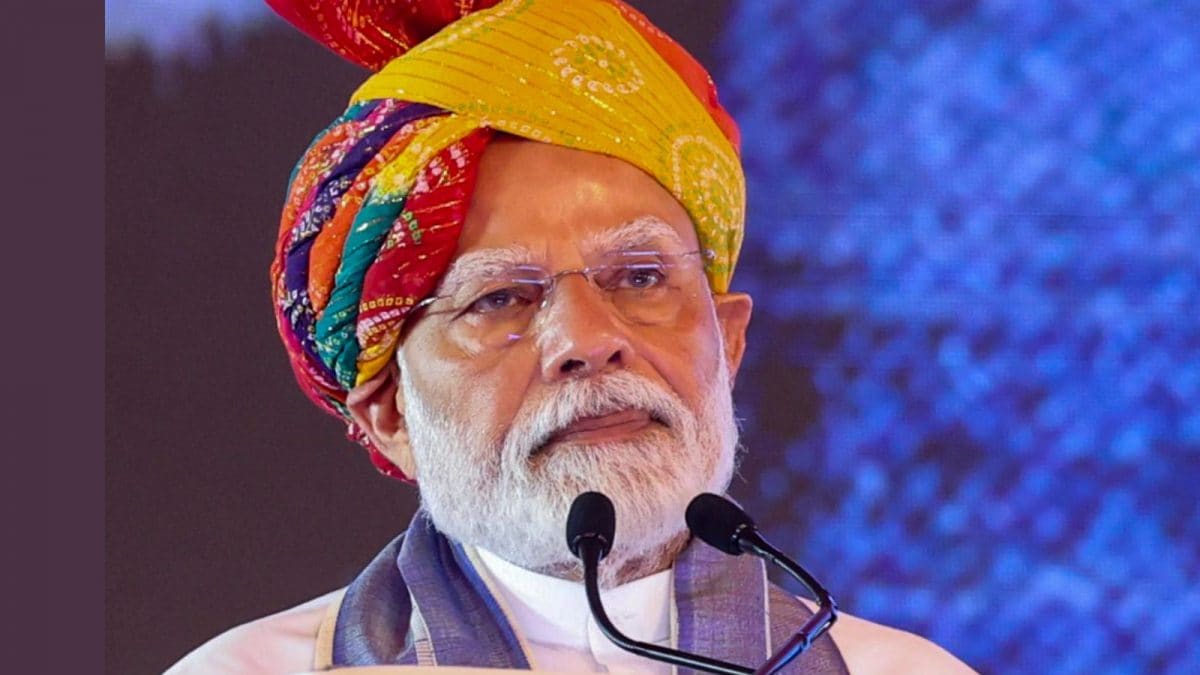
Prime Minister Narendra Modi launched a scathing attack on the Congress party, addressing several key issues including the Waqf law, Muslim appeasement, reservations in Karnataka, and deforestation in Telangana. Modi framed his arguments around the concept of social justice and accused the Congress of betraying the ideals of Dr. Babasaheb Ambedkar, the architect of the Indian Constitution. His speeches, delivered on Ambedkar Jayanti, were a clear attempt to discredit the Congress and position the BJP as the true champion of social justice and minority rights. The timing of these attacks is significant, given the upcoming elections and the ongoing legal challenges to the Waqf law in the Supreme Court. Modi's direct challenge to the Congress regarding the appointment of a Muslim party president is a calculated move to expose what he perceives as hypocrisy within the party. He claims that Congress uses Muslims as a vote bank without genuinely empowering them or addressing their needs. This strategy is designed to appeal to both Hindu voters who may be wary of Muslim appeasement and segments of the Muslim population who feel marginalized by the Congress. The defense of the Waqf law is crucial, as it directly addresses concerns about property rights and social justice for Muslims. Modi argues that the new law will protect the interests of the poor and marginalized within the Muslim community, while also preventing land grabbing and corruption. This framing contrasts sharply with the Congress's alleged support for a law that, according to Modi, benefited only a few powerful individuals. The attacks on the Karnataka government's reservation policies and the Telangana government's handling of forest lands further reinforce the narrative of Congress incompetence and disregard for constitutional principles. Modi accuses the Karnataka government of violating the Constitution by providing reservations based on religion, while also criticizing the Telangana government for prioritizing development over environmental protection. These accusations serve to create a negative image of Congress-ruled states and highlight the perceived failures of their governance. In essence, Modi's speeches are a comprehensive indictment of the Congress party, aimed at undermining their credibility and rallying support for the BJP. The strategic use of Ambedkar's legacy and the emphasis on social justice are key elements of this approach, designed to resonate with a wide range of voters. The specific issues raised, from the Waqf law to reservations, are carefully chosen to exploit existing anxieties and divisions within Indian society. The challenge to Congress to appoint a Muslim party president serves as a bold, attention-grabbing statement designed to highlight perceived hypocrisy and lack of genuine commitment to Muslim empowerment. The Prime Minister also criticized Congress for what he described as appeasement politics that have historically harmed the Muslim community, rendering them uneducated and impoverished while only benefiting a small number of fundamentalists. He claimed that Congress uses the concept of social justice envisioned by Dr. Ambedkar as a tool for appeasement rather than true social upliftment. This critique aims to dismantle Congress’s long-standing claim to be a party of social justice and to recast the BJP as the true defender of minority rights and genuine social progress. The emphasis on protecting tribal lands within the Waqf law is another example of appealing to a specific demographic while simultaneously criticizing the Congress. By framing the issue as a choice between Congress corruption and BJP protection, Modi seeks to solidify his support among tribal communities and further delegitimize the Congress party. The Prime Minister's message is crafted to be both persuasive and divisive. By targeting specific policies and practices of Congress-ruled states, Modi aims to create a clear contrast between his governance model and that of his political rivals. The repeated references to Ambedkar and the Constitution are designed to lend legitimacy to his arguments and to portray the BJP as the true inheritor of Ambedkar's vision. The strategic use of rhetoric and carefully chosen examples allows Modi to frame the political debate on his own terms and to position the BJP as the party of progress and social justice.
The Waqf law, a crucial point of contention, became a central theme in Modi's address. He asserted that the revised law, unlike its predecessor from 2013 under the UPA government, is designed to truly protect the rights of the poor and marginalized within the Muslim community, including Pasmanda families, Muslim women, especially widows, and children. Modi contrasted this with the previous legislation, which he claimed was exploited by land mafias to loot land belonging to Dalits, backward communities, tribals, and widows. The Prime Minister emphasized that the changes made under his government's Waqf law specifically prohibit the Waqf Board from seizing the land, houses, or properties of tribal communities anywhere in India. He criticized the UPA's amendments to the original Waqf law, alleging that they elevated the law above the Constitution of India, thereby facilitating the exploitation of vulnerable populations. In Modi's vision, the new Waqf law embodies the true spirit of social justice as envisioned by Babasaheb Ambedkar and enshrined in the Constitution. By correcting the alleged injustices of the past, Modi claimed his government has safeguarded the interests of the poor and marginalized, ensuring that Muslim youth are not relegated to lives of poverty, such as mending punctured bicycles. The political significance of Modi's defense of the Waqf law lies in its timing, just ahead of Supreme Court hearings on petitions challenging the law. His statements can be interpreted as an attempt to influence public opinion and potentially sway the judiciary's perspective. Furthermore, it directly addresses concerns within the Muslim community about property rights and social justice, issues that are often exploited by political opportunists. This defense also solidifies the BJP's narrative of being a protector of minority rights and a champion of social justice, contrary to accusations of anti-Muslim bias. The attack on Congress for failing to appoint a Muslim party president further underscores this point. Modi challenged the party's sincerity in advocating for Muslim rights, accusing them of using Muslims as a mere vote bank rather than empowering them. This audacious challenge forces Congress to address the issue of representation and leadership within its ranks, potentially exposing any perceived hypocrisy or shortcomings in their commitment to Muslim inclusion. Modi’s narrative of Congress’s appeasement politics causing harm to Muslims by keeping them uneducated and poor is a powerful accusation aimed at eroding the party's credibility within the community. This narrative suggests that Congress’s policies, rather than empowering Muslims, have served to perpetuate their marginalization and dependence on the party. By attacking Congress on these issues, Modi aims to undermine their claim to represent Muslim interests and to attract Muslim voters to the BJP fold.
Beyond the Waqf law and Muslim representation, Modi also targeted the Karnataka government for providing reservations based on religion, arguing that this violates the fundamental principles of the Constitution and undermines the ideals of Dr. Babasaheb Ambedkar. He pointed out that the Constitution provides reservations for Scheduled Castes (SC), Scheduled Tribes (ST), and Other Backward Classes (OBC), but explicitly prohibits reservations based on religious affiliation. The Prime Minister accused the Congress government in Karnataka of betraying Ambedkar’s vision by prioritizing political games over social justice, effectively snatching the rights of SC, ST, and OBC communities to provide reservations based on religion. This criticism comes in the wake of a caste census presented to the Karnataka Cabinet, indicating a potential shift in the state's reservation policies. Modi’s attack on Karnataka's reservation policies aligns with the BJP's broader strategy of opposing what they perceive as minority appeasement and upholding the principle of equality before the law. By invoking Ambedkar's name and the Constitution, Modi seeks to legitimize his position and appeal to voters who believe in a meritocratic system and oppose religious-based preferences. The criticism of the Telangana government for bulldozing forest lands adds another dimension to Modi's assault on the Congress. He accused the government of forgetting promises made to the people and damaging the environment by destroying forests that were once protected. This accusation resonates with concerns about environmental degradation and the potential displacement of tribal communities who depend on forests for their livelihood. Modi highlighted the Supreme Court's intervention to halt the Telangana government's actions, portraying his government as a protector of the environment and the rights of tribal communities. The Prime Minister's broadside against Congress is an attempt to paint a comprehensive picture of a party that is corrupt, hypocritical, and out of touch with the needs of the people. By attacking them on multiple fronts, from the Waqf law to reservations to environmental policy, Modi seeks to create a negative image of the Congress that will resonate with voters across different demographics. The strategic use of Ambedkar's legacy, the emphasis on social justice, and the carefully chosen examples are all designed to reinforce this negative image and to position the BJP as the only viable alternative. This multifaceted strategy reflects a deliberate and well-orchestrated effort to discredit the Congress and to solidify the BJP's dominance in Indian politics. The ultimate goal is to persuade voters that the BJP is the only party capable of delivering good governance, protecting minority rights, and promoting social justice in accordance with the Constitution.
Source: Waqf, Muslims To Karnataka, Telangana: PM Modi’s 5 Key Topics Had One Big Message Against Congress