
 |
|
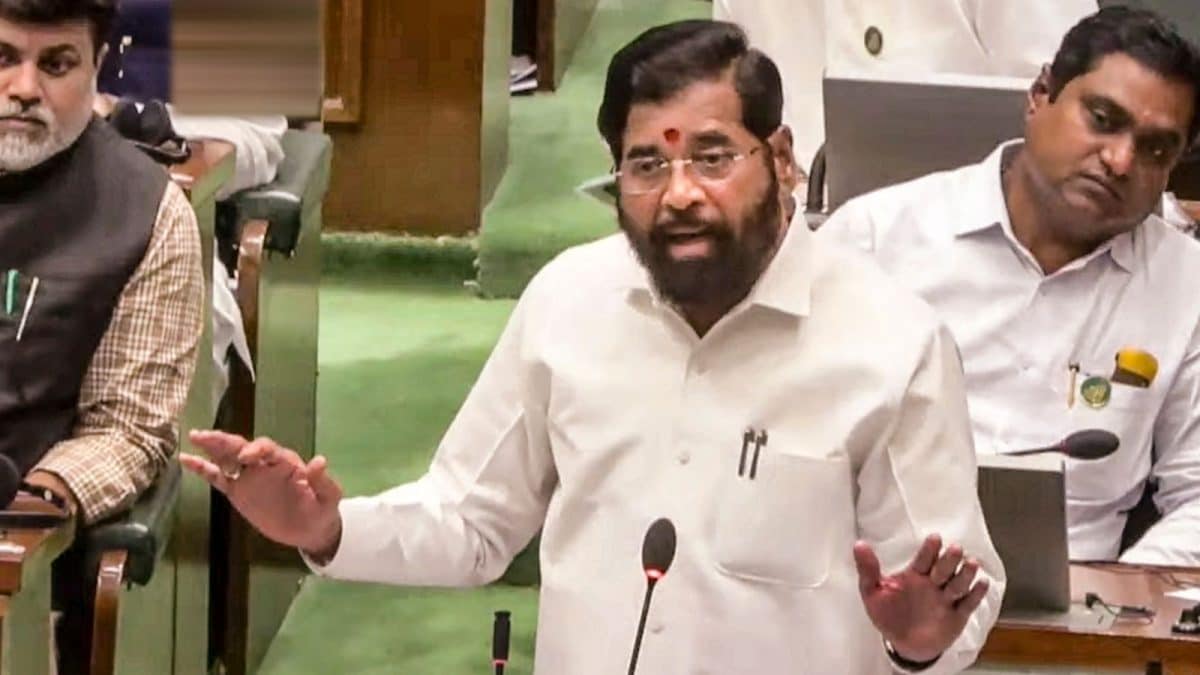
The article details Maharashtra Deputy Chief Minister Eknath Shinde's response to the controversy surrounding comedian Kunal Kamra's remarks, alongside the recognition Shinde received from the 'Adya Jagatguru Shri Sant Tukaram Maharaj Puraskar'. Shinde's comments are framed within the context of his adherence to the principles of Shiv Sena founder Bal Thackeray, specifically the “80 per cent social work and 20 per cent politics” philosophy. This assertion serves as both a defense against Kamra's criticisms and a reaffirmation of Shinde's commitment to public service. The article further explores the reactions to Kamra's satirical commentary, including the filing of a First Information Report (FIR) and protests by Shiv Sena workers. The core narrative revolves around the intersection of political philosophy, public image, and freedom of expression, all set against the backdrop of Maharashtra's political landscape. Shinde's invocation of Bal Thackeray's philosophy is strategically important. Bal Thackeray remains a highly revered figure in Maharashtra, particularly within the Shiv Sena and its affiliated groups. By aligning himself with Thackeray's ideology, Shinde seeks to legitimize his actions and garner support from the party's base. The emphasis on social work also attempts to counter the potential negative impact of Kamra's accusations, portraying Shinde as a leader primarily focused on the welfare of the common man rather than solely on political maneuvering. The controversy involving Kunal Kamra highlights the delicate balance between freedom of speech and the potential for defamation or incitement. Kamra's satirical remarks, which labelled Shinde a “traitor”, clearly struck a nerve, leading to a swift and forceful response. The filing of an FIR and the protests by Shiv Sena workers underscore the sensitivity surrounding political criticism, particularly when directed at individuals in positions of power. The article also implicitly raises questions about the limits of artistic expression and the responsibility of comedians and other public figures to consider the potential consequences of their words. The resolution passed by the Maharashtra assembly congratulating Shinde for receiving the award can be interpreted as a show of solidarity and support from his political allies. This public endorsement serves to reinforce Shinde's standing within the government and the broader political community. The article further notes that Chief Minister Devendra Fadnavis demanded an apology from Kamra, highlighting the seriousness with which the government is treating the matter. The Deputy CM's response is also interesting. He dedicates the award to the people of Maharashtra, reinforcing that he is a man of the people. He says that they voted the Mahayuti to a landslide victory because of the work he has done as Chief Minister. He believes he is a common man and that they should work together to improve people's lives. This is a further way to connect with the people of Maharashtra and ensure that he is seen as one of them. The actions of Shiv Sena workers, including the alleged ransacking of the studio and hotel premises, illustrate the intensity of emotions surrounding the controversy. These actions, while condemned by some, also demonstrate the unwavering loyalty of certain segments of the Shiv Sena to Shinde. The article does not explicitly endorse or condemn these actions, but it does acknowledge their occurrence as a significant aspect of the unfolding events. The article's overall tone is neutral, presenting the facts of the case without taking a clear partisan stance. The focus remains on reporting the events as they transpired, allowing readers to form their own opinions about the merits of each side's arguments. The reliance on direct quotes from Shinde and other figures helps to maintain objectivity and ensure that the article accurately reflects the various perspectives involved.
The broader implications of this incident extend beyond the specific individuals involved. It underscores the ongoing tensions between political figures and those who critique them, particularly in an era of heightened social media scrutiny and instantaneous information dissemination. The case also raises concerns about the potential chilling effect of legal action and public pressure on freedom of speech and artistic expression. Comedians and satirists often play a vital role in holding those in power accountable, and any perceived attempt to stifle their voices can have a detrimental impact on the health of a democratic society. The article's focus on Shinde's past achievements as Chief Minister highlights the importance of his track record in shaping public perception. By emphasizing his efforts to improve the lives of ordinary citizens, Shinde seeks to bolster his credibility and deflect criticism stemming from the Kamra controversy. The article further notes the congratulatory messages Shinde received from his political allies. This support demonstrates that despite the controversy he continues to have support within the government. However, the political ramifications of the incident remain to be seen. It is possible that the controversy could damage Shinde's reputation or embolden his critics. Alternatively, it could galvanize his supporters and strengthen his position within the Shiv Sena. The outcome will depend on a variety of factors, including the public's reaction to Kamra's remarks, the government's response to the protests, and Shinde's ability to effectively manage the crisis. The role of social media in amplifying the controversy cannot be overlooked. Kamra's initial remarks were shared widely online, sparking debate and outrage across various platforms. The speed and reach of social media have fundamentally altered the way in which political controversies unfold, making it increasingly difficult for politicians to control the narrative. The article also implicitly touches on the issue of regional politics in Maharashtra. The Shiv Sena is a party with deep roots in the state, and its ideology is often intertwined with regional pride and identity. The controversy involving Shinde and Kamra can therefore be seen as a microcosm of the broader political and cultural dynamics at play in Maharashtra. Understanding the historical context and the specific nuances of the state's political landscape is crucial for fully comprehending the significance of this incident. Furthermore, the article doesn't clarify what was meant by traitor. This word implies that Shinde betrayed the people, but the article does not clarify whether the people mean the Maharashtra citizens or the Shiv Sena group from which he broke away. However, for most, this refers to breaking away from Uddhav Thackeray's faction. This is a key point, since it is what led to the protests and the complaints against Kamra.
In conclusion, the article provides a detailed account of the controversy surrounding Eknath Shinde and Kunal Kamra, highlighting the interplay of political philosophy, freedom of expression, and public image. Shinde's defense of his actions by invoking Bal Thackeray's ideology underscores the importance of historical context and party affiliation in Maharashtra politics. Kamra's satirical remarks, and the subsequent reactions, illustrate the delicate balance between artistic expression and the potential for legal and social consequences. The article also serves as a reminder of the power of social media to amplify political controversies and shape public opinion. The incident underscores the complexities of navigating the current political climate, where public figures are increasingly subject to scrutiny and criticism. The ability to effectively manage crises, maintain public support, and uphold the principles of free speech are essential for navigating the challenges of contemporary politics. The deputy CM's dedication of the award to the people of Maharashtra is important to note. As mentioned previously this is a classic political move in order to connect with the citizens and garner support from the party's base. Also, it shows that Shinde has learned from his mistakes. He is trying to improve his image and solidify his position within the Shiv Sena. The Deputy CM should also attempt to reach out to the public and listen to their concerns. One approach is to use social media in a manner that allows for a constructive discussion in which people can express themselves without being ridiculed or attacked. There is a strong need for both sides to find common ground and come to a reasonable solution. With a better approach Shinde can win the trust of the public. In conclusion, this issue is a classic political story. It entails one man trying to defend himself against slander and improve his public image. All while the other man is simply trying to get a laugh. However, the case is not as simple as it sounds, and has a lot of complex factors. Ultimately, it is up to the people to decide who they believe and what they think is right. The article concludes, in a very objective view, that the incident shows the current complications of politics, and the need for public figures to be able to uphold free speech. The incident also highlights the importance of the press providing a complete account of the facts.