
 |
|
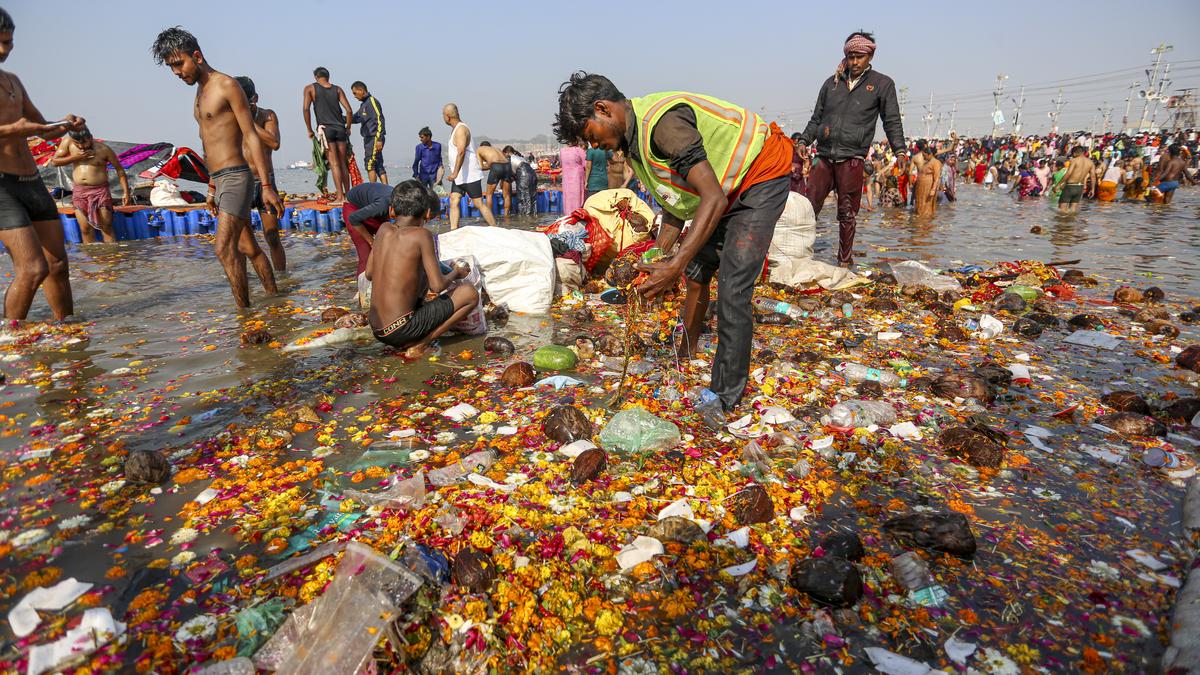
The Uttar Pradesh Chief Minister, Yogi Adityanath, has firmly refuted claims of fecal contamination at the Sangam, the confluence of the Ganga and Yamuna rivers, ahead of the Maha Kumbh Mela 2025. His statement directly counters a National Green Tribunal report suggesting potentially high levels of faecal bacteria in the water. Adityanath asserted that recent reports from both the Uttar Pradesh Pollution Control Board and the Central Pollution Control Board confirm the water's suitability for bathing and ritualistic purposes, a key aspect of the Kumbh Mela. He emphasized the continuous monitoring of water quality, highlighting that fecal coliform levels in January and February were well within acceptable limits, below 2,500 MPN per 100 ml. This assertion forms the core of his defense against criticisms surrounding the environmental health of the Sangam.
The CM's statement takes on a distinctly political tone, directly addressing the opposition Samajwadi Party (SP). He contrasted the current state of the rivers with their condition during the SP's tenure, citing an incident in 2013 where the Prime Minister of Mauritius declined to take a dip due to the poor water quality. This narrative positions the current government's efforts in a positive light, emphasizing improvements in sewage treatment and water quality management. He proudly announced that 81 drains have been tapped, treating 261 million liters of sewage daily, contributing to the improved water quality. The strategic use of this comparison aims to discredit the opposition and bolster the government's image in handling the environmental concerns surrounding the Kumbh Mela.
Beyond the immediate issue of water quality, Adityanath's statement delves into a broader comparison between the 2013 and 2025 Maha Kumbh Melas. He painted a stark picture of the 2013 event under SP rule, characterizing it as marred by corruption, mismanagement, administrative negligence, and chaos. This sets the stage for showcasing the improvements in infrastructure and logistical arrangements for the 2025 event. He highlighted significant increases in the Kumbh Mela area, the number of sectors, parking space, and the construction of permanent infrastructure like ghats and riverfronts. These numerical comparisons serve to amplify the government's claim of superior planning and execution for the 2025 event, contrasting it with the alleged shortcomings of the previous administration. The mention of the 2013 stampede at Prayagraj station further emphasizes the perceived difference in management capabilities between the two administrations.
The significant expansion of infrastructure is a central point of Adityanath’s argument. He underscored the increase in temporary ghats from 4 km in 2013 to 12 km in 2025, alongside the construction of nine permanent ghats and seven riverfronts, improvements far beyond what was present in 2013. Similarly, the expansion of the parking area from 635 hectares to 1,850 hectares, capable of accommodating over 600,000 four-wheelers, further demonstrates the scale of improvements implemented. The addition of 14 flyovers and nine ROBs (Road Over Bridges) since 2019, in contrast to the absence of such infrastructure in 2013, serves as another compelling argument in favour of the current government’s preparedness for the 2025 Maha Kumbh Mela. This detailed comparison of infrastructure development is clearly intended to contrast the effectiveness of the current administration with that of its predecessor.
In conclusion, Yogi Adityanath's statement isn’t merely a response to concerns about water quality; it's a comprehensive political strategy designed to highlight the government's achievements and deflect criticism. By juxtaposing the current Kumbh preparations with the perceived failings of the previous administration, he aims to solidify the government’s image and garner public support. The meticulous comparison of infrastructure improvements, coupled with the rebuttal of environmental concerns, forms a robust defense of the government's handling of the Maha Kumbh 2025. The use of specific figures and contrasts underscores the political dimension of this statement, transforming what could be a simple environmental update into a significant political declaration.
Source: Maha Kumbh 2025: Uttar Pradesh CM Yogi Adityanath refutes claims of faecal contamination at Sangam