
 |
|
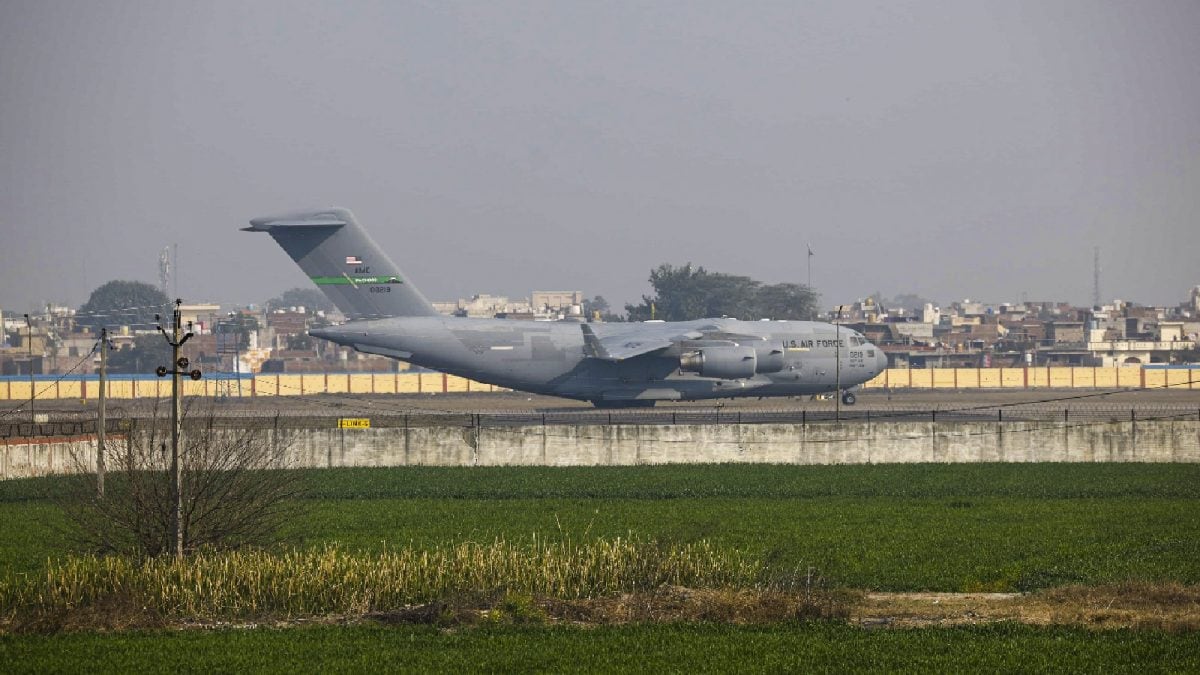
The recent deportation of 333 Indian nationals from the United States has ignited a political firestorm in India, particularly focusing on the disproportionate number of deportees from Punjab and the choice of Amritsar as the landing location for the repatriation flights. Of the total deportees, a staggering 126 hailed from Punjab, representing almost 38% of the total, significantly higher than any other state. Haryana followed with 110 deportees, accounting for another 33%. This concentration of deportees from Punjab and Haryana (a combined 71%) has led to intense scrutiny of the situation and accusations of deliberate targeting. The fact that all three flights carrying these deportees landed at Amritsar's Shri Guru Ramdas Ji International Airport, rather than a major airport like Delhi, has fueled further controversy and accusations of political maneuvering.
The choice of Amritsar as the landing site has become a central point of contention. Punjab's Chief Minister, Bhagwant Mann, has publicly criticized the central government, alleging that the selection of Amritsar was a deliberate attempt to tarnish the image of his state. He questioned why the flights, carrying individuals under the duress of restraint, didn't land at a more appropriate and centrally located airport like Delhi, which possesses the facilities and infrastructure to manage a situation of this magnitude. This criticism has been echoed by opposition parties, who have seized upon the issue to target the central government. The government's response has been largely based on citing US policy, implemented since 2012, mandating the restraint of deportees during these flights for safety reasons. However, this hasn't quelled the ongoing political debate.
Beyond the numbers and the location of the landings, the conditions under which the deportees were returned also became a focal point of criticism. Reports indicate that the male deportees were restrained with chains on their hands, waist, and feet during the flights. This practice has been condemned by opposition parties, especially considering the recent meeting between Prime Minister Narendra Modi and US President Joe Biden. The opposition argues that such treatment is dehumanizing and that India should have protested more strongly against these conditions. The external affairs ministry attempted to address these concerns by clarifying that the women and children on the February 15th and 16th flights were not restrained, but this clarification has done little to extinguish the controversy surrounding the treatment of the male deportees. The overall situation highlights the complex interplay of international relations, domestic politics, and human rights concerns.
Further complicating the narrative, government sources claim that a total of 18 similar flights carrying deportees have arrived in Amritsar between 2020 and 2024. The fact that these deportations continued consistently under both the Trump and Biden administrations suggests a deeper, underlying cause beyond simple changes in US policy. This underscores the need for a more comprehensive investigation into the root causes of these deportations, and the systemic issues that might be leading to such a disproportionate number of individuals from Punjab and Haryana being affected. The analysis must extend beyond the immediate political fallout to address the underlying social and economic factors potentially contributing to the situation. This might include examining issues such as immigration policies, economic opportunities, and the reasons individuals from these regions might be more susceptible to deportation.
Moving forward, the incident serves as a stark reminder of the complexities involved in international repatriation efforts. It necessitates a dialogue not only between the Indian and US governments but also within India itself. The concerns raised about the treatment of deportees highlight the need for robust protection measures and transparent procedures to safeguard the rights and dignity of all individuals involved in such processes. A more thorough understanding of the reasons behind the concentration of deportees from Punjab and Haryana is needed, and a reassessment of the process of deportation to ensure fairness, transparency, and the protection of the human rights of all those affected is essential. The event underscores the need for a more transparent and accountable process, to ensure that such incidents are handled in a way that minimizes harm and upholds international humanitarian standards.
Source: Highest Number Of Deportees From Punjab: 126 Out Of 333 From State Where US Planes Landed