
 |
|
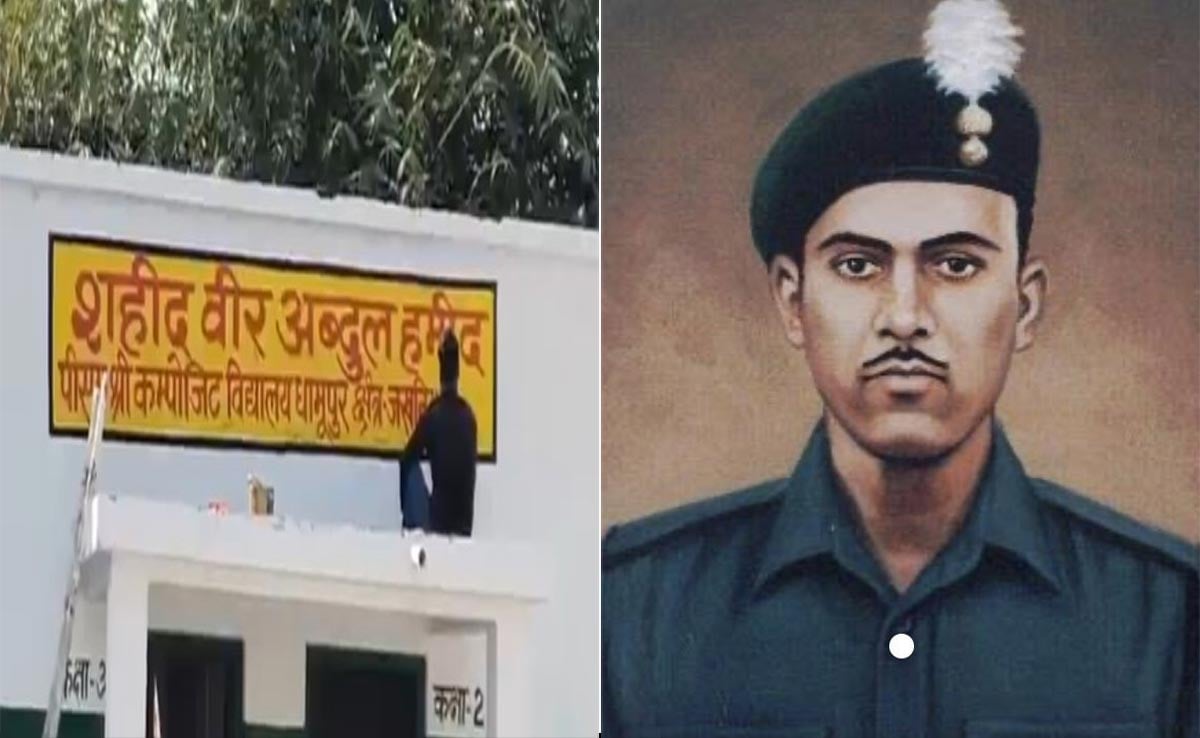
The recent controversy surrounding the removal and subsequent reinstatement of Param Vir Chakra awardee Abdul Hamid's name from a government primary school in Ghazipur, Uttar Pradesh, highlights a complex interplay of local politics, historical reverence, and the delicate balance between commemorating national heroes and implementing administrative changes. The initial decision by the Basic Education Department to replace Hamid's name with "PM Shri Composite School" sparked outrage among his family and the wider community. This seemingly innocuous act of repainting a school sign became a focal point of political debate, revealing underlying tensions and differing perspectives on the importance of remembering historical figures, especially those who sacrificed their lives for the nation.
The family's protest, led by Hamid's grandson Jameel Ahmad, underscores the deep personal connection and emotional investment individuals have in the memory of their ancestors, particularly when those ancestors achieved national recognition for their bravery and sacrifice. Their initial disappointment at the administration's attempt to merely add Hamid's name to a wall instead of restoring it to the main entrance speaks volumes about the symbolic significance of the school's name. The main entrance represents the primary identification of the institution, and relegating Hamid's name to a secondary location felt disrespectful and diminished his contribution. The eventual reinstatement of his name, although a positive resolution, highlights the unnecessary friction and potential damage caused by a poorly executed administrative decision.
The political ramifications of this incident were significant, with Samajwadi Party president Akhilesh Yadav seizing the opportunity to criticize the BJP-led state government. Yadav's statement, accusing the government of prioritizing certain individuals over national heroes, underscores the deeply partisan nature of the controversy. His words, though politically charged, touched upon a critical aspect of the debate: the responsibility of the government to honour and remember those who have served the country. The incident became a platform for political point-scoring, diverting attention from the initial issue of respect for a war hero to a broader discussion about the political climate and the priorities of the ruling party. The use of social media platforms like X (formerly Twitter) amplified the message and broadened the audience, increasing the pressure on authorities to resolve the situation.
The controversy around Abdul Hamid's name raises important questions about the balance between modernization and the preservation of historical memory. While the 'PM Shri Composite School' designation might reflect broader educational initiatives, the erasure of Hamid's name seemed insensitive and ill-considered. This event prompts a broader discussion on the process for naming and renaming public institutions, particularly those named after individuals who have made significant contributions to the nation. Should such changes require a more extensive consultation process, particularly when it involves replacing a name associated with a national hero? This situation calls for a review of current procedures to ensure such sensitive decisions are made with due diligence and sensitivity, and to prevent similar controversies in the future.
Furthermore, the incident highlights the power of public pressure and social activism in holding authorities accountable. The family's persistence, combined with the political attention garnered through social media and prominent political figures, played a pivotal role in ensuring the reinstatement of Hamid's name. This serves as a reminder of the importance of citizen engagement in preserving historical memory and promoting ethical governance. The episode could potentially serve as a case study in civic engagement and the effective utilization of social media to raise awareness and influence decision-making processes related to historical commemoration. It also underscores the need for greater transparency and accountability in government actions.
In conclusion, the seemingly minor incident of repainting a school sign in Ghazipur has evolved into a significant political and social issue, highlighting concerns over the treatment of national heroes, the balance between administrative changes and historical remembrance, and the role of public engagement in upholding ethical governance. The controversy serves as a powerful reminder of the importance of preserving historical memory and ensuring that the sacrifices made by national heroes are duly recognized and honored. It also points towards the need for a more sensitive and carefully considered approach to decisions concerning the renaming or alteration of public institutions bearing the names of those who have contributed significantly to the nation.
Source: 1965 War Hero Abdul Hamid's Name Restored At UP School After Row