
 |
|
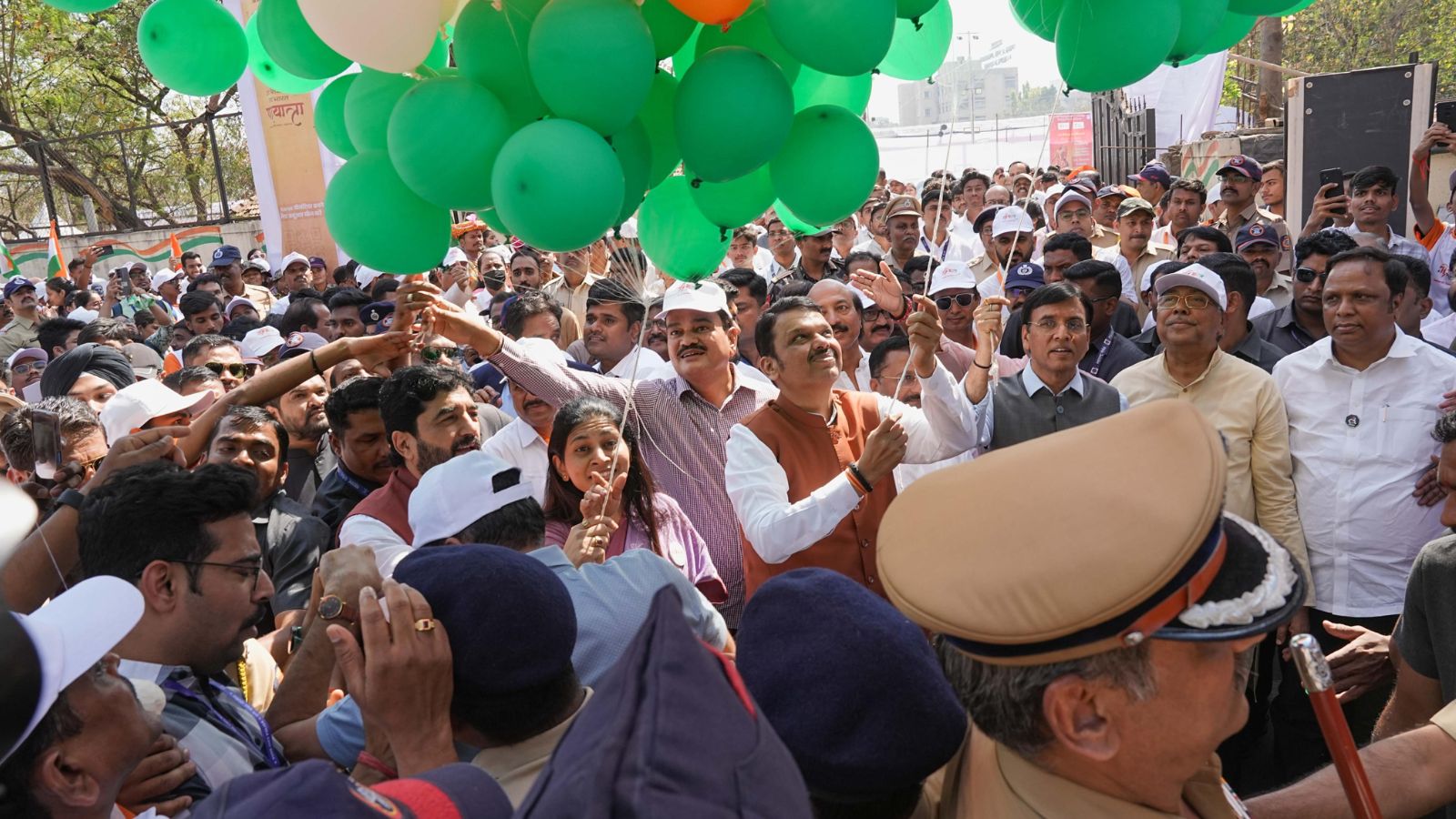
The recent political events in Maharashtra have cast a shadow on the unity of the ruling Mahayuti alliance. The conspicuous absence of Deputy Chief Ministers Ajit Pawar and Eknath Shinde from a padyatra (foot march) organized by the central government in Pune, following a joint appearance at Shivaji Maharaj's birth anniversary celebrations, has fueled speculation about fissures within the coalition. The padyatra, commemorating Shivaji Maharaj's birth anniversary, was a large-scale event involving over 20,000 youths and organized by the Union Youth Affairs and Sports Ministry in collaboration with the Maharashtra government. While the event ostensibly aimed at celebrating a historical figure and promoting youth engagement, its execution and the notable absences revealed underlying political dynamics.
The padyatra, which marched from the College of Engineering Pune (CoEP) to the Fergusson College ground, became a predominantly BJP affair. Chief Minister Devendra Fadnavis led the march, accompanied by a significant number of BJP ministers, MPs, and MLAs. The noticeable scarcity of NCP and Shiv Sena representatives, despite their presence in the Mahayuti government, signaled a potential imbalance of power or a deliberate strategy within the alliance. The only NCP leader present was Maharashtra’s youth affairs and sports minister Dattatraya Bharne. This stark contrast highlighted the BJP's apparent dominance in the organization and execution of the state-level event, raising questions about the relative strength and influence of the coalition partners.
The absence of Ajit Pawar and Eknath Shinde added further fuel to the speculations of internal friction. Pawar, who was scheduled to attend both the padyatra and the inauguration of the second phase of Shivsrushti (a project dedicated to Shivaji Maharaj), skipped both events. Similarly, Shinde only attended the Shivneri Fort celebrations before returning to Mumbai. Chief Minister Fadnavis's explanation, citing prior commitments for the Deputy Chief Ministers, failed to entirely quell the doubts surrounding their absence. A local NCP leader even mentioned the local party unit's lack of awareness regarding the padyatra, suggesting a communication breakdown or deliberate exclusion from the event's planning.
The inauguration ceremony of Shivsrushti further underscored the BJP’s prominence. While Fadnavis was present, along with several BJP ministers and MLAs, the representation from the NCP and Shiv Sena remained minimal. This event, where Fadnavis announced a significant financial contribution of Rs 50 crore towards the project's completion, also served as a platform to showcase the BJP's commitment to the project and, by extension, their political influence. The contrast between the joint appearance at Shivneri Fort and the separate actions at the subsequent events raises questions about the nature and durability of the Mahayuti alliance.
The disparity in attendance at the different events, coupled with the statements made by the involved parties, exposes potential underlying tensions within the ruling coalition. The BJP's overwhelming presence at the padyatra, contrasted with the limited participation of NCP and Shiv Sena leaders, could be interpreted as an attempt to consolidate its power base and assert its dominance within the alliance. The absence of clear communication and coordination regarding the padyatra, as indicated by the NCP leader's comments, raises concerns about the efficiency and collaboration within the coalition government. The question of whether this reflects a genuine rift, a calculated strategic move, or simply a logistical oversight remains unanswered but casts a shadow over the proclaimed unity of the Mahayuti alliance. Further observation of the coalition’s actions and statements will be necessary to fully understand the political implications of these events.
The strategic implications of this apparent power imbalance are significant. While the Mahayuti alliance is currently in power, the differing levels of engagement and the apparent lack of coordination raise concerns about its longevity and effectiveness. The BJP's demonstrated ability to independently organize and dominate such a large-scale government event hints at a potentially dominant role within the coalition, leaving the NCP and Shiv Sena with comparatively less influence and visibility. This imbalance could lead to future conflicts and potentially affect policy-making and governance in the state. The actions of the key players, particularly the Deputy Chief Ministers, will closely be scrutinized for any further indications of growing divergence or potential collaboration in the coming weeks and months.