
 |
|
The ongoing investigation by the U.S. Securities and Exchange Commission (SEC) into alleged bribery schemes involving Gautam Adani and his associates has sparked a political debate in India. The SEC's request for assistance from the Indian government to serve legal documents on Adani, coupled with Prime Minister Narendra Modi's previous characterization of the Adani issue as a 'personal matter,' has led the Congress party to question the Modi government's intentions. The Congress, the principal opposition party, is demanding clarity on whether the government will cooperate with the SEC's investigation. This situation highlights the complex interplay between domestic politics and international legal proceedings, particularly when high-profile business figures are involved. The potential implications of this case extend beyond the Adani group, impacting India's image on the global stage and potentially affecting its economic relations with the United States.
The Adani Group, a major Indian conglomerate, faces serious allegations of paying $250 million in bribes to Indian officials to secure favorable solar power contracts. These allegations, if proven, constitute violations of U.S. law. While the Adani Group vehemently denies these accusations, the SEC's pursuit of the case indicates a considerable amount of evidence suggesting wrongdoing. The SEC's announcement that it has formally requested assistance from Indian authorities adds a significant layer of complexity. The Indian government’s response, or lack thereof, will be closely scrutinized both domestically and internationally. A refusal to cooperate could damage India's standing with the United States, while full cooperation might raise questions about transparency and accountability within India.
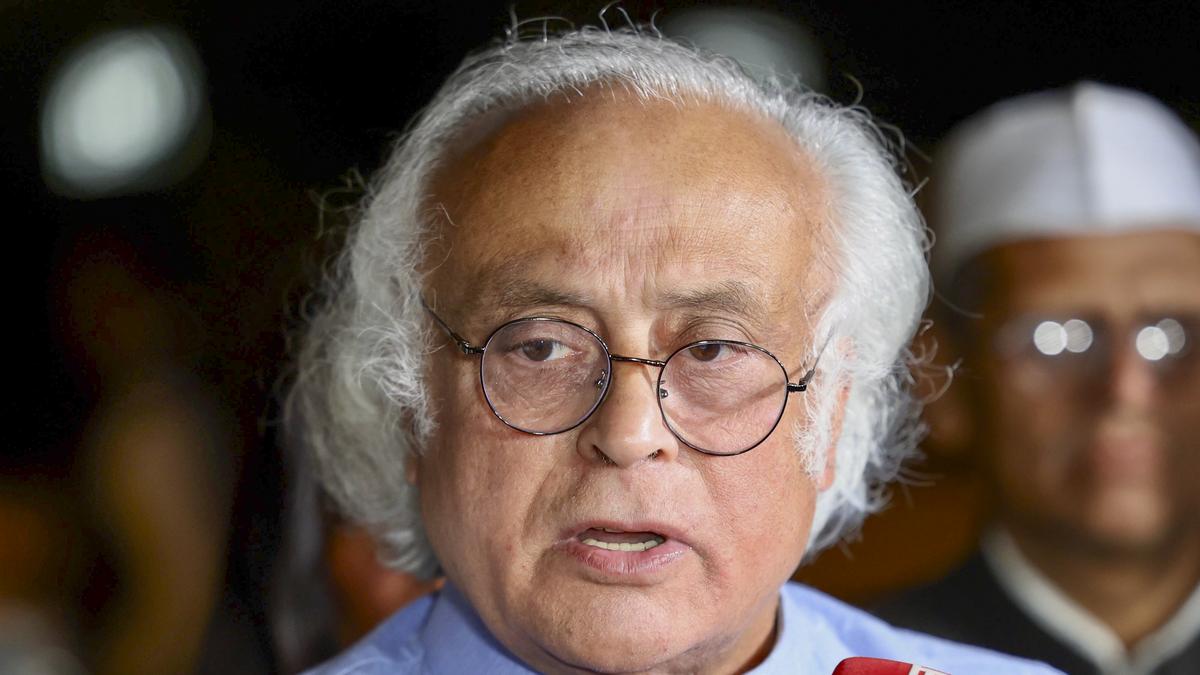
Beyond the immediate implications of the SEC investigation, Congress leader Jairam Ramesh has also raised concerns about potential threats to India's Goods and Services Tax (GST) system. Ramesh links the ongoing discussions about reciprocal tariffs between the United States and India, initiated by President Donald Trump, to the potential destabilization of the GST. He argues that the structure of the GST, which applies to imports but not exports, makes it vulnerable to retaliatory tariffs from the US. This raises concerns about India's economic sovereignty and its ability to withstand external pressure on its domestic tax policies. Ramesh uses this situation to criticize the Modi government, suggesting a lack of strong countermeasures in the face of external economic threats.
The Congress party's criticism extends beyond the immediate Adani case. The party has long advocated for reforms to the GST system, aiming to simplify compliance procedures and reduce tax rates. The potential threat from President Trump's policy positions, coupled with the ongoing Adani controversy, provides the Congress with an opportunity to highlight what they view as failings in the Modi government's economic management. They are portraying the situation as a test of the government's commitment to national sovereignty and economic stability. The combination of the Adani investigation and the GST concerns, therefore, becomes a broader political battleground, with implications reaching far beyond the immediate legal proceedings.
The interplay between domestic politics and international relations is evident in this situation. The Modi government faces a delicate balancing act: cooperating with the U.S. in the investigation could lead to domestic criticism, while non-cooperation might damage international relations. The Congress is adeptly exploiting this tension to highlight its own policy proposals and to criticize the Modi government's handling of the situation. The ultimate outcome of the SEC's investigation and the Indian government's response will have far-reaching consequences, affecting not only the Adani Group but also the broader political and economic landscape in India.